Underworld Guardians: Dragons and Serpents of the Chthonic Realm
🌌 Discover the captivating world of dragons and serpents within underworld mythology themes, revealing their roles as guardians and symbols of mystery…
Read article
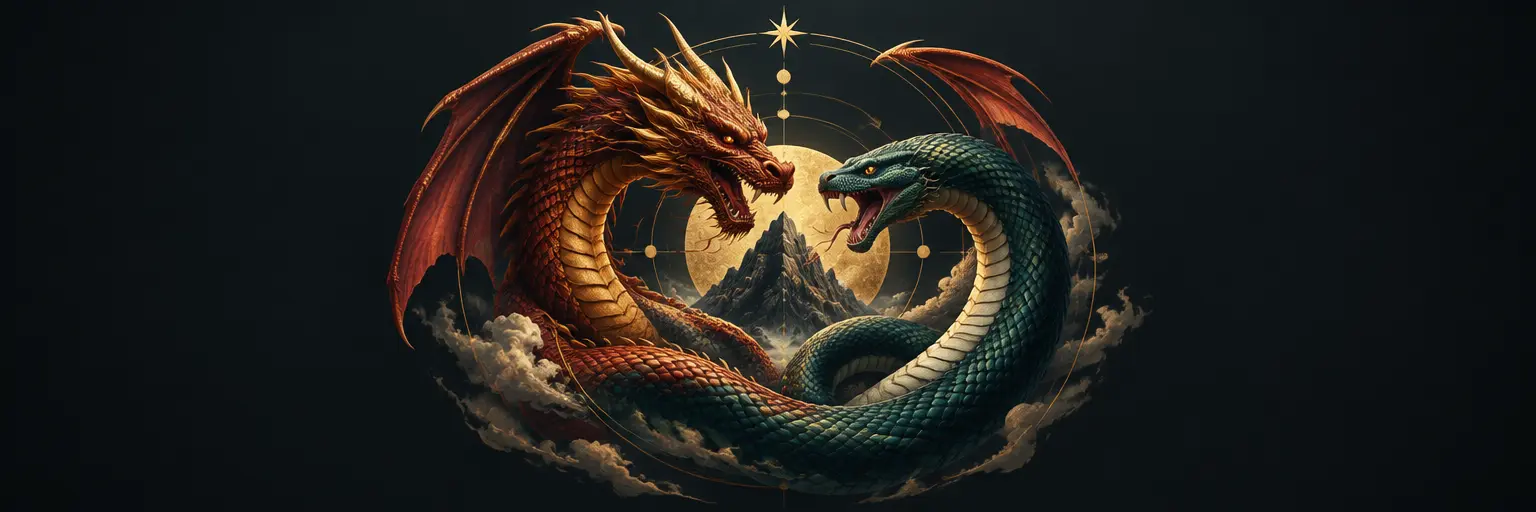
Dragons and serpents have slithered through humanity’s oldest tales, from the fire-breathing tyrants of European lore to the wise, benevolent lung of Eastern myth. These magnificent beings embody the eternal struggle between chaos and order, destruction and rebirth, fear and veneration. Across civilizations—from the Norse Midgard Serpent encircling the world to the feathered serpent Quetzalcoatl of Mesoamerica—these creatures symbolize raw power, hidden knowledge, and the untamed forces of nature itself. Dive into the myths that shaped our ancestors’ worldview, discovering how dragon-slaying heroes, shape-shifting serpents, and cosmic ouroboros reflect our deepest human fears and aspirations. Whether as guardians of treasure or bringers of storms, dragons and serpents remain enduring icons in literature, film, and modern fantasy, proving that these ancient symbols still ignite our imagination today. Explore their origins, meanings, and the captivating legends that keep them alive in our collective consciousness.
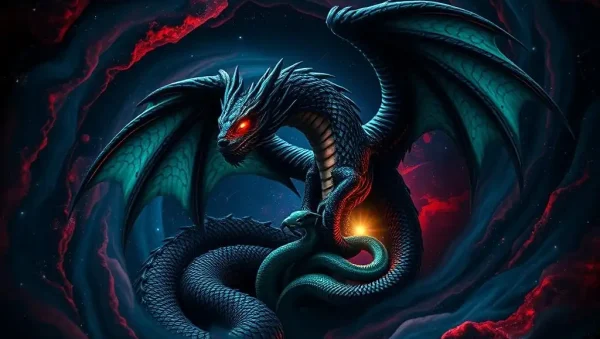
🌌 Discover the captivating world of dragons and serpents within underworld mythology themes, revealing their roles as guardians and symbols of mystery…
Read article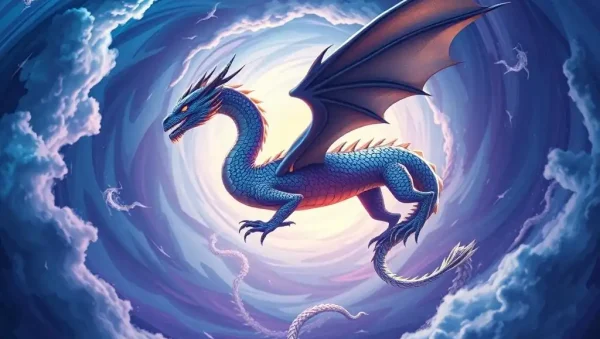
🌬️ Dive into "Whispers on the Wind" to uncover the enchanting air dragons mythology symbolism, revealing how these majestic sky serpents inspire…
Read article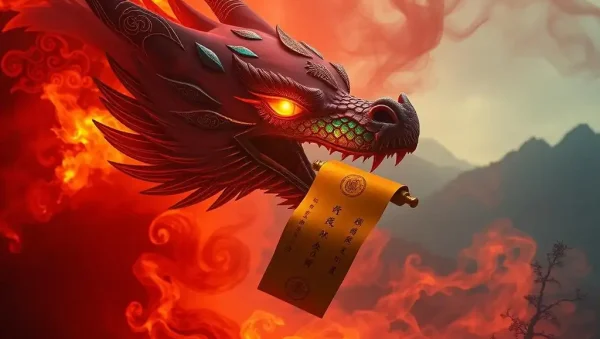
🔥 Discover the captivating world of dragon legends worldwide, exploring their symbolism across cultures. From mighty roars to subtle whispers, these mythical…
Read article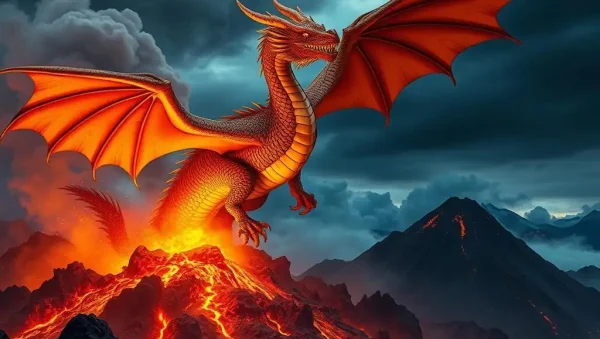
🔥 Discover how dragon myths and volcanic eruptions intertwine, revealing humanity's fascination with Earth's fiery core. Explore legendary tales that link dragons…
Read articleWelcome to our deep dive into Dragons and Serpents, a mesmerizing subcategory within Mythical Creatures and Beings. Here, we unravel the global tapestry of winged fire-breathers, cosmic serpents, and chthonic worms that have slithered through human imagination for millennia. From the hoarding drakes of European folklore to the benevolent lung of Chinese mythology, this space is your gateway to understanding how these creatures shaped ancient cosmologies and still influence modern fantasy. Whether you are a student, writer, or myth enthusiast, expect to find rich symbolism, historical evolution, and cross-cultural comparisons that illuminate why these beings remain humanity's most enduring monsters and mentors.
European dragons are often depicted as greedy, fire-breathing lizards guarding treasures or abducting maidens, a trope cemented by medieval bestiaries and Norse sagas. In this section, you’ll explore the transformation of the dragon from a symbol of chaotic wilderness in Greek myth (Python, Ladon) to a demonized creature in Christian allegory, where saints like George defeated it as a metaphor for triumph over paganism. We’ll dissect the physical traits—scales, wings, venomous breath—and their role in heroic epics, such as Beowulf’s final battle and the Volsunga Saga’s Fafnir, whose greed turned him into a dragon. Expect analyses of how modern authors like J.R.R. Tolkien and George R.R. Martin reimagined these beasts, blending ancient fears with psychological depth, making them more than mere obstacles but complex antagonists with tragic arcs.
For SEO-rich content, we emphasize keywords like medieval dragon lore, dragon hoards, and dragon-slayer myths. You’ll also find comparative tables linking specific dragon types—the wyvern, the lindworm, and the amphiptere—to their regional origins. Each entry includes etymological breakdowns and cultural contexts, helping you trace how a single mythos evolved from oral tradition to high fantasy. By the end, you’ll grasp why the European dragon became the benchmark for villainy in Western storytelling, yet also see instances of wise, ancient guardians in Celtic and Slavic tales. This is your resource for academic study or creative inspiration, with citations to primary texts like the Prose Edda and Historia Regum Britanniae for deeper verification.
Across Asia, serpents and dragons hold vastly different meanings—as water deities, emperors’ ancestors, and cosmic forces. This section focuses on the naga of Hindu and Buddhist mythology, semi-divine beings with human torsos and snake bodies, who guard treasures but also control rain and fertility. You’ll explore the famous Samudra Manthan (Churning of the Ocean) where the serpent Vasuki serves as a rope, and the naga king Muchalinda sheltering the Buddha from storms. Moving east, we examine the Chinese lung, a horned, wingless dragon symbolizing imperial power, yang energy, and benevolent weather. Unlike their European counterparts, these dragons are wise, bringers of prosperity, and deeply intertwined with Taoist and Confucian cosmology. We also cover the Japanese ryū and Korean yong, highlighting regional variations in appearance and worship, from shrine festivals to dragon boat races.
Expect to learn about the four Dragon Kings of Chinese seas and their roles in classical novels like Journey to the West. We’ll decode the iconography of the five-clawed versus three-clawed dragons and their political implications. For SEO, we target phrases like Asian dragon symbolism, naga in Buddhism, and Chinese water dragons. Each subsection is accompanied by images, pronunciation guides, and historical timelines. You’ll also discover how these serpentine deities influenced contemporary pop culture—from Studio Ghibli’s Spirited Away to the Pokémon character Gyarados—demonstrating their lasting appeal. This is your definitive guide to understanding the east’s reverence for the serpent as a source of life, not terror.
Mesoamerican and Andean cultures give us the feathered serpent, a hybrid being that bridges earth and sky, such as Quetzalcoatl in Aztec mythology and Kukulkan in Maya lore. This section explores the profound theological importance of these deities, who represent wind, intellect, creation, and the planet Venus. Unlike dragons of conflict, these serpents are civilizers: they bring maize, arts, calendar science, and moral laws. We’ll delve into the archaeological evidence from Teotihuacan’s Temple of the Feathered Serpent and Chichen Itza’s equinox phenomenon, where shadows create a serpent-snake climbing the pyramid. You’ll also encounter the less-known Andean Amaru, a double-headed serpent that traverses the underworld and heavens, symbolizing the flow of water and cosmic order. We compare these with the Egyptian Uraeus cobra and the Mesopotamian Mušḫuššu, illustrating a global archetype of the serpent as a liminal guardian.
Key terms for SEO include Quetzalcoatl myths, feathered serpent deity, and Mesoamerican cosmovision. We provide scholarly interpretations from ethnographers like Michael Coe and David Carrasco, plus primary source translations from the Popol Vuh and Florentine Codex. Each deity’s page outlines its attributes, associated rituals, and modern reinterpretations in Chicano art and new-age spirituality. This section is ideal for those interested in comparative religion, anthropology, or post-colonial studies. We also answer why the feathered serpent is often mislabeled as a dragon—clarifying anatomical and symbolic distinctions that enrich your understanding of mythological classification.
Every dragon needs its hero, and this section catalogs the most iconic dragon-slayer narratives across cultures, from St. George to Sigurd. We analyze the structural patterns of these myths—the hero’s quest, the dragon’s lair, the test of courage—using Joseph Campbell’s hero’s journey framework. You’ll explore the psychological and sociopolitical interpretations: dragons often represent the untamed id, foreign invaders, or the hero’s own shadow self. We include detailed battle tactics, such as the use of shields, lances, and even poisoned arrows, as narrated in the Nibelungenlied and Beowulf. Additionally, we cover less-known slayers like the Celtic warrior Fionn mac Cumhaill and the Slavic Dobrynya Nikitich, revealing regional variations in hero ethics—some slay for treasure, others for liberation, and a few even befriend the dragon after a clever dialogue.
SEO focus areas: famous dragon battles, legendary dragon slayers, and heroic combat in myth. For each tale, we provide source references, historical context, and a discussion of the dragon’s death implications (e.g., gold cursed, land purified). We also examine feminist retellings, such as the princess who outwits the dragon, and eco-critical readings where the dragon is a guardian of nature. This is valuable for writers seeking archetypal templates or educators designing comparative myth lessons. Expect interactive timelines and maps showing the spread of these stories via trade routes and crusades, proving that dragon lore is a living, global conversation.
Beyond stories, dragons and serpents are powerful psychological and cultural symbols—representing chaos, wisdom, fertility, evil, or the unconscious mind. This section interprets them through the lenses of Carl Jung’s archetypes, Freudian dream analysis, and modern semiotics. You’ll learn how the ouroboros (serpent eating its tail) symbolizes eternity and cyclical time, appearing alchemical texts and modern logos like the Infinity symbol. We also explore the snake’s role in healing through the Rod of Asclepius versus the biblical Serpent of Eden, highlighting contradictory values. As for dragons, we trace their transition from pagan menace to corporate mascot—think Welsh flag draig, Chinese zodiac years, and fantasy franchises like Dungeons & Dragons, Game of Thrones, and The Hobbit movies. We discuss how these creatures now embody environmental forces, AI anxieties, or personal growth in modern literature and games.
Long-tail SEO terms include dragon symbolism in psychology, ouroboros meaning, and serpent in modern media. We include examples from advertising, video game mechanics (e.g., dragon bosses as skill checks), and spiritual movements like modern Druidry that venerate dragons as earth energies. This section also addresses common misconceptions, such as why dragons have no dinosaur ancestors but share mythic DNA with real pythons and crocodiles. By the end, you’ll be equipped to analyze any dragon or serpent appearance in film, literature, or art with a critical eye. We provide a glossary of interpretive terms and a bibliography of key academic works, making this a scholarly yet accessible resource.
Dragons typically have legs, wings, and often breathe fire or possess multiple heads, while serpents are wingless and legless, though they can be colossal. However, the boundary is fluid—many cultures (e.g., Chinese) call serpents “dragons” for their divine powers. Symbolically, serpents often represent chthonic wisdom or renewal, while dragons are more associated with elemental forces, wealth, or cosmic order.
No. While Western European traditions often demonized dragons as greedy or satanic, East Asian and Mesoamerican cultures revered them as beneficent deities bringing rain, good fortune, and knowledge. Even in Europe, some dragons like the Lambton Worm had tragic backstories. The moral alignment of dragons is entirely culture-specific, not universal.
This universal motif likely stems from human encounters with real reptiles (crocodiles, pythons) combined with shared psychological fears of predators and fascination with flight. Additionally, trade routes and migrations spread mythic imagery. Some scholars propose a common archaeological origin in Neolithic snake worship, adapting to local environments—hence feathered serpents in the Americas and fire-breathing dragons in Europe.
Fire-breathing is a later literary addition, popularized by medieval romances and solidified by modern fantasy. Earlier myths had dragons spitting venom, causing floods, or controlling thunder. The first explicit fire-breathing dragon appears in the Greek tale of Jason and the Golden Fleece (Chimera). It became dominant only after the thirteenth century, likely influenced by gunpowder and smelting imagery.
Start by choosing a cultural template—European (treasure, hubris), Asian (wisdom, elements), or Mesoamerican (deity, dualism)—and subvert expectations. Give your dragon a unique biology (e.g., ice breath, psychic bonds) and a motivation beyond hoarding gold, such as ecological guardianship or revenge. Study how modern authors integrate dragon politics (e.g., His Majesty’s Dragon) to create compelling arcs. Always ground your dragon in consistent rules that affect plot and character choices.