
Dragons and Volcanoes: Mythic Links to Earth's Fiery Heart

Welcome to Mythology and Legends!
Delve into the enthralling world of myths and folklore, where ancient narratives whisper secrets of humanity's past. Ever wondered if the fiery breath of Dragon myths holds a deeper connection to the earth's raw power? Prepare to uncover the surprising links to volcanic eruptions and discover how these legendary creatures may be more grounded in reality than you ever imagined. Explore the article below and ignite your curiosity!
- Volcanoes and Mythical Creatures: Exploring Earth's Fiery Tales
- Introduction: Unveiling the Connection Between Volcanic Activity and Mythical Creatures
- Mythical Creatures as Embodiments of Volcanic Power: A Global Perspective
- The Archetype of the Fire Creature: A Metaphor for Volcanic Eruptions
- Specific Myths and Their Volcanic Origins
- Scientific Perspectives: Understanding the Geological Basis of Mythological Creatures
- The Legacy of Myths: How Volcanoes Continue to Inspire Imagination
- Conclusion: The Eternal Dance of Myths and Volcanoes in Human Imagination
-
Frequently Asked Questions
- What is the central argument connecting dragon myths and volcanic eruptions?
- How might early cultures have interpreted volcanic activity through the lens of dragon mythology?
- Does the article suggest a direct, causal link between every dragon myth and a specific volcanic event?
- What role does folklore play in understanding the relationship between dragon myths and volcanic activity?
- What impact do these dragon myths, potentially linked to volcanic eruptions, have on contemporary society?
- Final Reflection: Embracing the Fiery Heart of Myth and Reality
- Ignite Your Inner Mythmaker!
Volcanoes and Mythical Creatures: Exploring Earth's Fiery Tales
Introduction: Unveiling the Connection Between Volcanic Activity and Mythical Creatures
The Enduring Power of Myth and Volcanic Legends
Myths serve as foundational narratives for human cultures, offering explanations for the inexplicable and embodying core beliefs about the world. Among the most compelling and persistent are those tied to dramatic natural phenomena, particularly volcanic activity. The raw, destructive, and unpredictable power of a volcanic eruption has long captured the human imagination, giving rise to potent legends and figures. These stories often feature powerful beings, sometimes benevolent guardians, sometimes terrifying destroyers, intrinsically linked to the fiery mountains.
This deep connection between myth and volcanoes is evident across disparate cultures, suggesting a universal human response to such overwhelming geological forces. Tales of dragons guarding hoards within mountains, gods forging weapons in volcanic fires, or spirits dwelling within craters speak to humanity's awe and fear. Exploring these mythic links reveals not only ancient interpretations of geological events but also the enduring power of storytelling to grapple with the immense scale of Earth's inner workings.
Setting the Stage: Examining the Link Between Natural Phenomena and Mythical Creatures
Natural phenomena, from the gentle cycle of seasons to catastrophic events like earthquakes and volcanic eruptions, have always been fertile ground for myth-making. Early humans observed the world around them and sought to understand its forces, often personifying them or attributing them to the actions of powerful, unseen beings. Volcanoes, with their earth-shaking tremors, explosive blasts, and rivers of molten rock, represent one of nature's most dramatic displays of power, making them prime candidates for mythic interpretation.
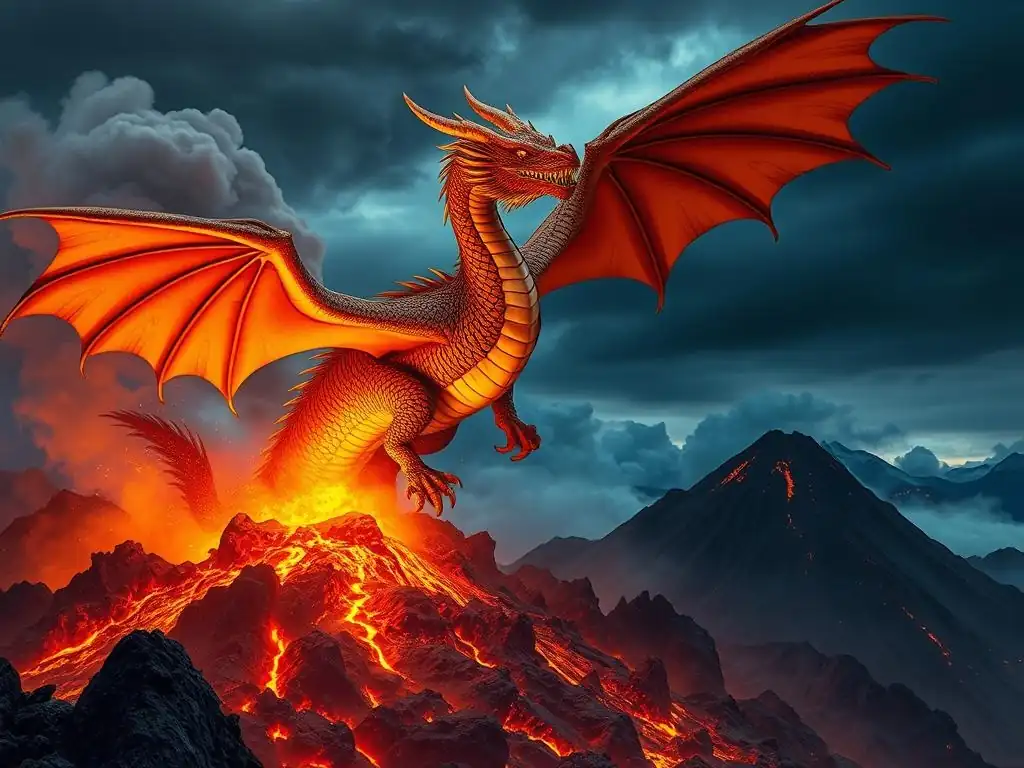
The link between such powerful natural events and mythical creatures is particularly strong. A roaring eruption might be seen as the bellow of a monstrous beast, while glowing lava could be interpreted as the fiery breath of a dragon. The very landscape shaped by volcanic activity – jagged peaks, deep craters, steaming vents – provides a dramatic stage for mythic narratives. Many dragon myths volcanic eruptions explicitly connect these legendary beasts to mountains of fire, depicting them as dwelling within or even causing the fiery outbursts.
Mythical Creatures as Embodiments of Volcanic Power: A Global Perspective
Ancient Beliefs: Creatures as Guardians or Manifestations of Volcanoes
Across ancient cultures situated near active volcanic regions, beliefs often emerged that linked powerful mythical creatures directly to these fiery mountains. These creatures were frequently seen as either guardians of the volcano, protecting its secrets or treasures, or as manifestations of the volcano's power itself. The unpredictable nature of eruptions could be attributed to the temperament of the creature dwelling within. For example, some traditions speak of giant serpents or dragons coiled deep beneath volcanic peaks, their stirrings causing tremors and their fiery breath igniting the summit.
In certain mythologies, creatures weren't just inhabitants but were thought to be the volcano in some form. Their bodies might be the mountain itself, their blood the lava, and their roars the eruption. This intertwining of creature and geological feature highlights the profound impact volcanoes had on the worldview of people living in their shadow, shaping their myths about powerful beings that controlled the very earth and fire beneath their feet.
Cross-Cultural Comparisons: Similarities in Creature Lore and Volcanic Eruptions Worldwide
Despite geographical separation, numerous cultures developed mythologies featuring powerful beings associated with fire, earth, and mountains, often mirroring the characteristics of volcanic activity. These cross-cultural parallels suggest a shared human experience of confronting and interpreting the awesome power of volcanoes through the lens of myth. While the specific creatures and deities differ, the underlying theme of a powerful entity controlling or embodying fiery geological forces remains remarkably consistent, including various dragon myths volcanic eruptions tales found globally.
From the Pacific islands to the Mediterranean and beyond, myths describe beings whose actions resemble volcanic phenomena: unpredictable fury, immense heat, destructive outflows, and the reshaping of the landscape. Examining these diverse mythologies side-by-side reveals a common thread of human wonder and fear in the face of Earth's fiery heart.
Pele in Hawaiian Mythology: Goddess of Volcanoes
Pele is perhaps one of the most well-known and revered deities directly associated with volcanic activity. As the goddess of volcanoes, lightning, fire, and dance in Hawaiian religion, she is believed to reside in the crater of Kīlauea, one of the world's most active volcanoes. Her temper is often linked to the behavior of the volcano; eruptions, lava flows, and seismic activity are seen as expressions of her moods.
Hawaiian oral traditions recount numerous stories of Pele's journeys across the islands and her interactions with people and other deities. These narratives often explain specific geological features as results of her actions – a cliff formed where she struck the earth, a lava field left by her fiery footsteps. Her potent connection to the land and its fiery core makes her a living embodiment of the volcanic forces that constantly reshape the Hawaiian islands.
Vulcan in Roman Mythology: God of Fire and Forges
In Roman mythology, Vulcan (Hephaestus in Greek mythology) is the god of fire, volcanoes, metalworking, and the forge. He is often depicted working in his forge, traditionally located beneath Mount Etna in Sicily, a highly active stratovolcano. The smoke, tremors, and eruptions of Etna were often attributed to Vulcan's vigorous hammering and crafting of weapons and armor for the gods.
Vulcan's domain is explicitly tied to the earth's fiery interior and its surface manifestations. His physical attributes – sometimes depicted as lame, perhaps reflecting the rugged, uneven volcanic terrain – and his association with the intense heat required for metalworking firmly link him to the power and processes of volcanoes. His myths provide a classical European parallel to the idea of a powerful deity residing within or controlling volcanic forces.
Fire Giants in Norse Mythology: Association with Volcanic Landscapes
In Norse mythology, the realm of Muspelheim is a primordial land of fire, guarded by the giant Surtr, whose name means "black" or "swarthy." While not explicitly linked to specific terrestrial volcanoes in the same way as Pele or Vulcan, Muspelheim represents an extreme, fiery environment that resonates with volcanic landscapes. Surtr is depicted wielding a flaming sword brighter than the sun, and at Ragnarök, he is foretold to emerge from Muspelheim, bringing fire that will consume the world.
The imagery of Muspelheim and Surtr evokes the destructive, overwhelming power of fire and heat, akin to a massive volcanic event or flood basalt eruption. While Norse lands have less dramatic volcanism than Hawaii or Sicily, Iceland, settled by Norse peoples, is highly volcanic. The concept of a realm of fire and powerful fire beings like the Jötnar (giants) from Muspelheim reflects an awareness and mythic interpretation of extreme heat and geological forces, potentially influenced by observations of geothermal activity or distant volcanic reports.
The Archetype of the Fire Creature: A Metaphor for Volcanic Eruptions
Fire as a Symbol of Destruction and Renewal: Parallels Between Creatures and Volcanoes
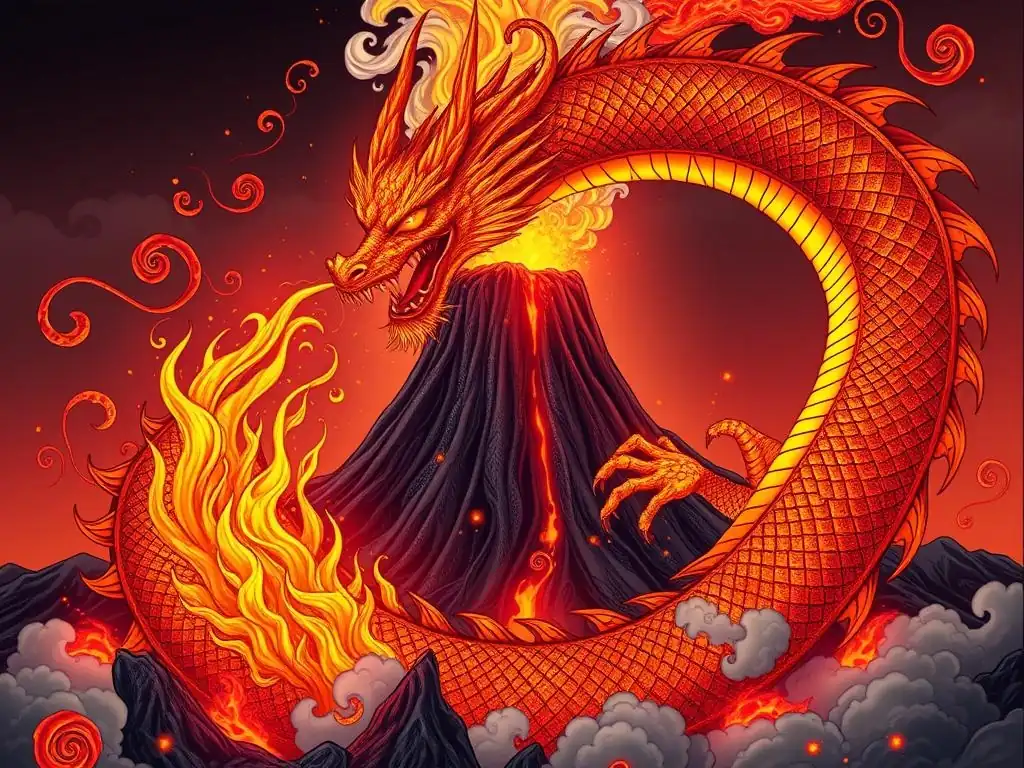
Fire is a primal force, universally recognized for its dual nature: immense destructive power and the capacity for purification and renewal. This duality is mirrored compellingly in both volcanic eruptions and the mythical creatures associated with them, particularly dragons. A volcanic eruption lays waste to the landscape, burying forests and structures under ash and lava, much like the destructive breath of a dragon might incinerate everything in its path.
Yet, volcanic ash enriches the soil over time, and new land is created by lava flows, offering a foundation for new life. Similarly, in some mythologies, fiery creatures or their actions can inadvertently lead to new beginnings or the release of pent-up energy necessary for change. The phoenix, reborn from flames, is a clear example of fire's renewal aspect, but even destructive dragon myths volcanic eruptions can be seen as part of a larger, sometimes chaotic, cycle of the earth's energy.
The Creature's Fury: Comparing Mythic Power with Volcanic Explosions and Lava Flows
The description of a mythical creature's power often draws striking parallels to the physical phenomena of volcanic eruptions. The sudden, explosive roar of a dragon might echo the detonation of a stratovolcano's summit. A creature's fiery breath scorching the earth resembles a pyroclastic flow, a superheated avalanche of gas and ash that annihilates everything in its path at incredible speed.
The slow, inexorable creep of a lava flow can be likened to the powerful, unstoppable movement of a massive serpentine creature or beast. The sheer, overwhelming force attributed to these mythical beings – capable of leveling mountains or reshaping land – directly mirrors the scale of destruction and transformation wrought by significant volcanic events. These comparisons highlight how human observation of volcanic power was translated into vivid, creature-based narratives.
Physical Attributes and Volcanic Features: Similarities in Myth and Reality
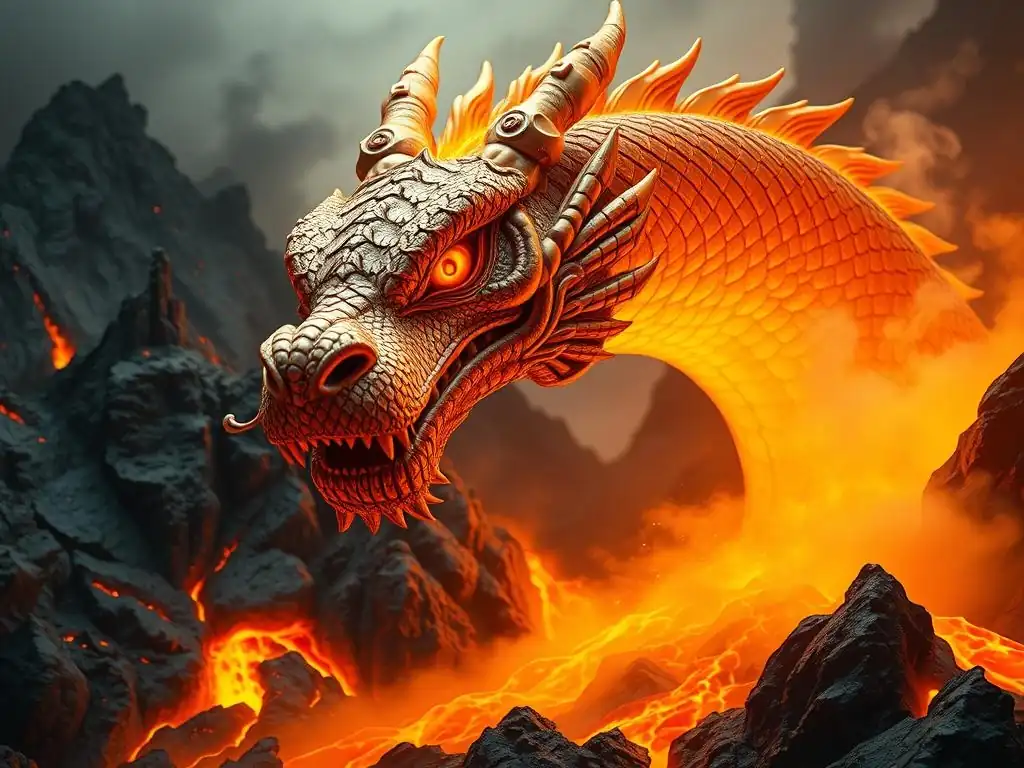
Beyond their fiery abilities, the physical descriptions of mythical creatures associated with volcanoes often seem to draw inspiration from volcanic landscapes and materials. The tough, scaly hide of a dragon or giant might be described as being like rock, obsidian, or cooled basalt – textures commonly found in volcanic regions. Their eyes might glow like molten rock or fiery vents.
Creatures are often said to dwell in caves, fissures, or deep underground lairs, mirroring the lava tubes, volcanic caves, and vents that characterize active volcanic areas. The imagery of smoke billowing from a dragon's nostrils or a giant's forge parallels the steam and gases constantly emitted by fumaroles and active craters. These specific details in mythic descriptions suggest a close observation of volcanic environments influencing the form and dwelling places of these powerful creatures.
Specific Myths and Their Volcanic Origins
Examining the Stories: Case Studies of Myths Potentially Inspired by Volcanic Events
Many specific myths from around the world contain elements that strongly suggest inspiration from volcanic activity. While direct causal links are hard to prove conclusively, the narrative details often align remarkably well with known geological phenomena. These case studies provide fascinating insights into how ancient peoples interpreted and incorporated the dramatic events of volcanic eruptions into their cultural stories, sometimes giving rise to specific dragon myths volcanic eruptions.
For instance, myths describing mountains that periodically roar or breathe fire are clear candidates for volcanic inspiration. Stories of heroes battling fiery beasts emerging from the earth or of lands devastated by infernos could easily be symbolic representations of confronting or surviving volcanic eruptions. These narratives often serve not just as entertainment but as cultural memory, preserving observations of past geological events.
The Legend of the Thunderbird and Volcanic Storms
The Thunderbird is a powerful spirit in the mythology of various Indigenous peoples of North America. Often described as a massive bird, its flapping wings are said to create thunder, and its eyes or beak flash lightning. While not directly a fire creature, some interpretations and related myths connect the Thunderbird's power to mountain regions and dramatic atmospheric events. Large volcanic eruptions, particularly explosive ones, can generate their own intense thunderstorms through ash plumes carrying electrical charges.
The immense power and awe associated with the Thunderbird, capable of controlling the skies and unleashing powerful storms, bear a resemblance to the terrifying atmospheric effects that can accompany major volcanic events, known as "volcanic lightning." While not every Thunderbird myth relates to volcanoes, the connection between massive natural power, mountains (where some legends place its nest), and dramatic storms suggests a potential link in some regional variations, especially in areas with both volcanic and storm activity.
Analyzing the Narrative: How Volcanic Activity Shapes the Creature's Character and Role
Analyzing the narrative structure of myths potentially inspired by volcanic activity reveals how these geological forces shape the very character and role of the mythical creatures involved. Creatures linked to volcanoes are almost universally portrayed as immensely powerful and often unpredictable, reflecting the nature of eruptions themselves. Their motivations might be tied to the volcano's state – anger causing an eruption, calm bringing quiescence.
The role of these creatures often involves guarding sacred or dangerous places (the volcano), acting as agents of divine or natural fury, or representing the untamed, wild power of the earth. Dragon myths volcanic eruptions frequently depict the dragon as a formidable, awe-inspiring force, capable of both immense destruction and sometimes possessing ancient wisdom tied to the deep earth. Their actions in the myth often mirror the observed effects of volcanic events on the landscape and human settlements.
Identifying Volcanic Features in Myths: Craters, Lava Flows, and Geothermal Activity
Myths often contain descriptions of landscapes or events that closely match specific volcanic features. Tales of journeys to the underworld might describe fiery pits (craters or calderas) or rivers of fire (lava flows). Stories featuring heroes navigating treacherous, steaming terrain could be inspired by areas of geothermal activity like hot springs, geysers, and fumaroles.
In some dragon myths volcanic eruptions, the dragon's lair is explicitly located within a mountain cave that emits smoke or heat, strongly suggesting a volcanic vent or lava tube. Descriptions of the land being "scorched" or "turned to glass" after a creature's rampage align with the effects of pyroclastic flows or the vitrification caused by extreme heat on rock. These specific details embedded within the narratives provide clues to the geological observations that may have underpinned the myth's creation.
Scientific Perspectives: Understanding the Geological Basis of Mythological Creatures
The Influence of Volcanic Landscapes on Early Cultures and Myth-Making
Living in proximity to active volcanic landscapes profoundly influenced early human cultures. The constant presence of potentially destructive power, alongside the visible evidence of Earth's dynamic nature – steaming ground, periodic tremors, the reshaping of the land – necessitated explanations and ways to cope. Mythology provided a framework for understanding these powerful forces, often by attributing them to the actions of powerful beings.
Cultures living near volcanoes like Mount Vesuvius, Mount Fuji, or those in the Pacific Ring of Fire developed rich mythologies where volcanoes played a central role. The very survival of these communities depended on respecting or appeasing the forces embodied by these mountains. This direct, tangible interaction with volcanic activity made it an unavoidable and central theme in their worldview and subsequent myth-making, including tales of formidable creatures like those found in dragon myths volcanic eruptions.
Geological Phenomena and the Birth of Myths: How Volcanoes May Have Inspired Creature Lore
From a scientific perspective, many specific geological phenomena associated with volcanoes could directly inspire elements of creature lore. The deep, resonant rumbling before an eruption might sound like the growl of a beast. The sudden, violent expulsion of ash and rock could be seen as the creature spitting or vomiting. The glowing, liquid rock flowing downhill is easily envisioned as fiery blood or breath.
Specific features like basalt columns (formed by cooling lava) might look like giant's causeways or monstrous formations. Sulfur vents emitting noxious gases could be interpreted as the creature's foul breath or the fumes from its internal fires. Even seismic activity preceding an eruption could be seen as the creature stirring in its sleep. These observable, often terrifying, geological events provided a rich source of inspiration for creating powerful, earth-shaking mythical beings.
Modern Interpretations: Reconciling Mythology and Scientific Understanding of Volcanic Creatures
Today, science offers detailed explanations for the processes behind volcanic eruptions, seismic activity, and geothermal phenomena. We understand plate tectonics, magma chambers, and the physics of lava flows. This scientific understanding does not diminish the value or power of the myths; rather, it highlights the ingenuity of early humans in seeking to explain their world with the tools they had – observation, imagination, and storytelling.
Modern interpretations often see volcanic myths not as literal accounts but as profound metaphorical and symbolic representations of natural power. Reconciling mythology and science involves appreciating the myths as cultural artifacts that reflect human awe, fear, and attempts to find meaning in the face of overwhelming forces. The dragon myths volcanic eruptions, for example, can be viewed as powerful metaphors for the destructive and transformative power latent within the earth itself.
The Legacy of Myths: How Volcanoes Continue to Inspire Imagination
Creatures in Contemporary Art and Literature: Drawing Inspiration from Volcanic Imagery
The powerful imagery and narratives associated with volcanoes and their mythical inhabitants continue to inspire contemporary art, literature, film, and video games. The archetype of the fiery mountain, the creature guarding immense power within it, and the destructive force of nature are compelling themes that resonate with modern audiences. Dragons, in particular, remain popular figures often depicted in volcanic or mountainous settings, breathing fire and representing formidable power.
From fantasy novels featuring quests to volcanic peaks guarded by beasts to video games where players explore fiery dungeons within mountains, the link between mythical creatures and volcanic landscapes persists. Artists use the dramatic visuals of eruptions, molten rock, and jagged volcanic terrain to create striking backdrops for these legendary beings. This ongoing inspiration demonstrates the enduring power of these ancient mythic connections.
The Enduring Appeal of Volcanic Myths: A Symbol of Power, Destruction, and the Earth's Inner Fire
The enduring appeal of myths featuring volcanoes and their associated creatures lies in their ability to symbolize fundamental aspects of existence: immense power, unpredictable destruction, and the raw, untamed energy of the natural world. These stories, including countless dragon myths volcanic eruptions, tap into a primal human fascination with fire and the deep earth. They serve as reminders of forces far greater than ourselves.
Volcanic myths offer a window into humanity's historical relationship with the powerful, sometimes terrifying, forces of nature. They embody the awe and respect that active volcanoes command and provide a symbolic language for discussing power, danger, and the dynamic processes that shape our planet. The image of a creature embodying volcanic fury remains a potent symbol in the collective human imagination.
Conclusion: The Eternal Dance of Myths and Volcanoes in Human Imagination
Reflecting on the Mythic Connection Between Creatures and the Earth's Fiery Core
The exploration of myths linking creatures like dragons and giants to volcanoes reveals a profound and widespread human tendency to personify or create powerful entities associated with Earth's most dramatic displays of power. From Pele residing in Kīlauea's crater to Roman myths of Vulcan forging beneath Etna and global dragon myths volcanic eruptions, the connection is undeniable. These narratives are more than just stories; they are cultural interpretations of geological forces that shaped landscapes and lives.
Reflecting on this mythic connection highlights how early cultures sought to understand, explain, and perhaps even appease the unpredictable power of volcanoes. The creatures born from these myths serve as powerful symbols of the Earth's fiery core – its immense energy, its capacity for both creation and destruction, and its fundamental role in the planet's ongoing transformation.
The Continuing Relevance of Myths in Understanding Our Relationship with Nature and Its Power
Even in a scientific age, volcanic myths retain their relevance. They remind us of humanity's deep-seated need to create narratives that help us understand and relate to the natural world, particularly its most powerful and uncontrollable aspects. These stories, including the rich tapestry of dragon myths volcanic eruptions, serve as cultural touchstones that embody our awe, fear, and respect for the forces that shape our planet.
Furthermore, these myths offer valuable insights into how different cultures perceived and interacted with their environment. They underscore the fact that long before geological science, humans were keen observers of natural phenomena, weaving their observations into compelling stories that continue to resonate today, symbolizing the eternal, powerful dance between the earth's inner fire and the human imagination.
Frequently Asked Questions
What is the central argument connecting dragon myths and volcanic eruptions?
The central argument posits that some dragon myths may have originated from ancient observations of volcanic eruptions. People interpreted the fiery displays and destructive power as the work of mythical creatures.
How might early cultures have interpreted volcanic activity through the lens of dragon mythology?
Early cultures, lacking scientific understanding, might have attributed eruptions to powerful, dragon-like beings dwelling beneath the earth. These dragons were seen as responsible for the smoke, fire, and earth-shaking events.
Does the article suggest a direct, causal link between every dragon myth and a specific volcanic event?
No, the article suggests a possible connection, not a definite causation. It proposes that some dragon myths could be inspired by real-world volcanic phenomena, but acknowledges other sources for dragon lore.
What role does folklore play in understanding the relationship between dragon myths and volcanic activity?
Folklore provides a rich source of cultural interpretations and narratives surrounding both dragons and volcanoes. Examining these stories can reveal how societies made sense of natural disasters through mythic frameworks.
What impact do these dragon myths, potentially linked to volcanic eruptions, have on contemporary society?
These myths continue to shape our understanding of nature's power and unpredictability. They also influence art, literature, and popular culture, serving as powerful metaphors for both creation and destruction.
Final Reflection: Embracing the Fiery Heart of Myth and Reality
The enduring power of dragon myths, inextricably linked to the volatile beauty of volcanic eruptions, continues to resonate in our modern world. From the awe-inspiring power of nature's fiery displays to the enduring narratives woven around them, the connection between dragons and volcanoes offers a potent reminder of humanity's enduring fascination with the untamed forces of the Earth. This fascination, far from being a relic of the past, remains a vital lens through which we understand both our history and our relationship with the planet.
The enduring presence of dragons in our collective consciousness, shaped by volcanic landscapes and the unpredictable nature of geological events, speaks volumes about our innate need to both understand and mythologize the forces that shape our world. Myth is the language of the soul,
as Joseph Campbell so eloquently stated. This language, expressed through the imagery of dragons and volcanoes, allows us to grapple with concepts of power, destruction, creation, and renewal – themes as relevant today as they were millennia ago. The stories we tell, whether ancient myths or modern interpretations, reflect our deepest anxieties and aspirations, offering a framework for understanding our place within the grand, often terrifying, scheme of things.
Consider the power of these ancient narratives. They are not simply tales of the past; they are living metaphors. You, the reader, are invited to reflect on your own relationship with the natural world. How do you perceive the power of nature? What stories do you tell yourself about the forces that shape your life? By understanding the enduring connection between dragon myths and volcanic eruptions, we can gain a deeper appreciation for the potent forces that shape our world, and perhaps, find a more meaningful connection to the planet we call home.
Ignite Your Inner Mythmaker!
Thanks for exploring the fascinating connection between dragons and volcanoes! We hope you unearthed some captivating insights into mythology and geology. Ready to delve deeper?
- Craft your own dragon myth: Let your imagination soar! Describe a new volcanic dragon, its habitat, powers, and the legends surrounding it. Share your creation in the comments below!
- Explore real-world volcano myths: Research local legends in your area connected to volcanic activity. You might be surprised by what you discover!
- Share this article: Let your friends and family discover the fiery heart of mythology too!
What unique dragon myth will you create, inspired by the power of volcanoes?