
Underworld Guardians: Dragons and Serpents of the Chthonic Realm

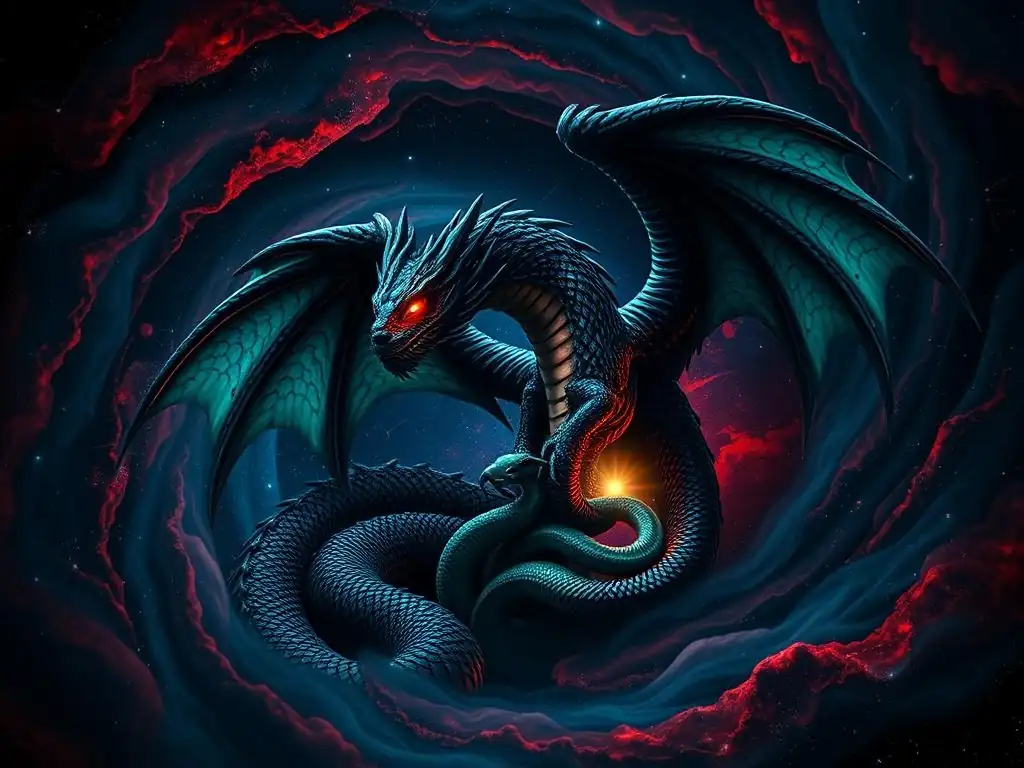
Welcome, seeker of forgotten lore.
Prepare to descend into the shadows, for here at Mythology and Legends, we delve into the heart of ancient narratives. Are you ready to unravel the mysteries that lurk beneath the surface? Our exploration of Dragons, Serpents, and Underworld Mythology Themes begins now, promising a journey through chilling tales and profound symbolism. What secrets do these chthonic guardians hold, and how do they continue to echo in our modern world? Let the descent begin...
- Introduction: Dragons and Serpents as Underworld Guardians in Mythology
-
Frequently Asked Questions
- What role do dragons and serpents typically play in underworld mythology?
- Are dragons and serpents always malevolent figures in underworld narratives?
- How do different cultures depict the appearance of underworld dragons and serpents?
- What is the significance of dragons and serpents guarding treasures in the underworld?
- How have these underworld dragon and serpent myths influenced contemporary society?
- Final Reflection: Echoes of the Deep: Dragons, Serpents, and Our Enduring Fascination
- Unleash Your Inner Mythologist: Delve Deeper into Chthonic Lore!
Introduction: Dragons and Serpents as Underworld Guardians in Mythology
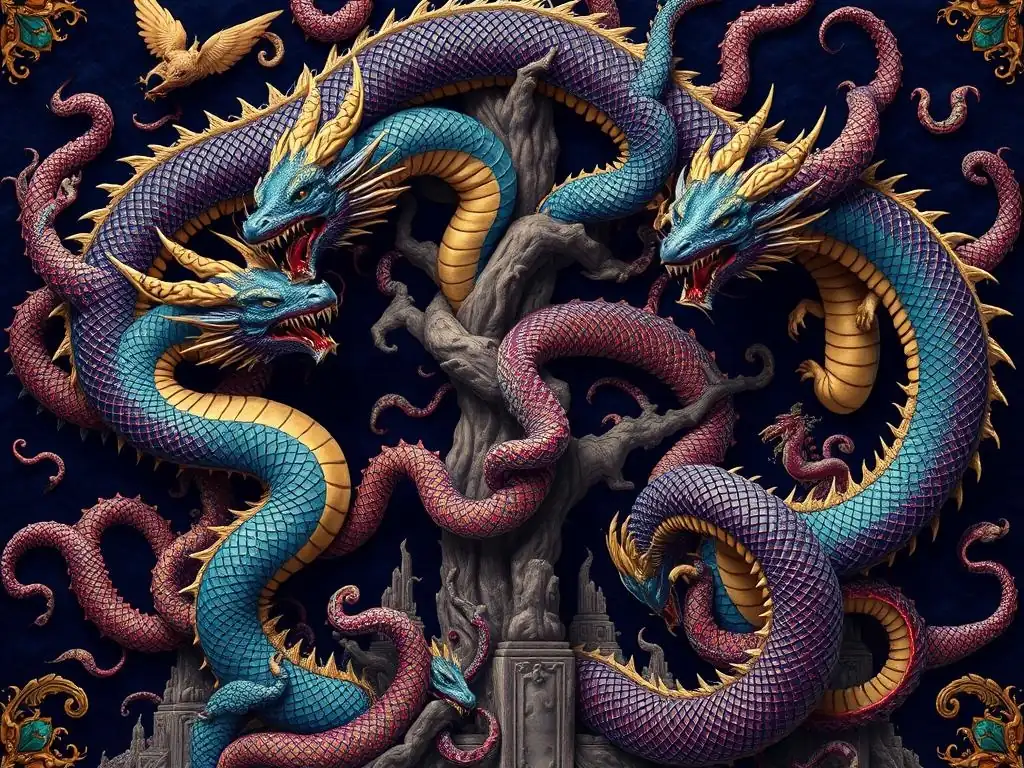
Exploring the Chthonic Realm: Defining the Underworld in Mythology
The concept of an "underworld" or "chthonic realm" is a cornerstone across countless mythologies worldwide. Far more than just a simple burial place, these subterranean or hidden dimensions represent complex spiritual landscapes, often serving as the destination for souls after death. In Greek mythology, this is the realm of Hades, a shadowy domain where departed spirits reside, sometimes judged, sometimes simply existing in a state of decreased vitality.
Similarly, Norse mythology features Helheim, ruled by the goddess Hel, a cold and gloomy place for those who did not die in battle. These realms are typically separated from the world of the living by natural barriers like rivers (the Styx in Greek myth) or vast distances, necessitating guardians or gatekeepers to control passage.
These underworlds are not always solely negative spaces; they can also be sources of primeval power, hidden knowledge, or even the roots of creation. The Egyptian Duat, for instance, is a perilous journey for the sun god Ra each night, a place of both danger (like the serpent Apep) and rebirth. Mesoamerican mythologies often depict the underworld, such as Mictlan, as a multi-layered journey of transformation for the soul.
The very nature of these realms – hidden, ancient, connected to the earth's depths – lends itself to association with creatures embodying primordial forces. These are the fundamental landscapes where many dragons serpents underworld mythology themes unfold, with these creatures playing pivotal roles in their structure and accessibility.
Dragons and Serpents: Symbolic Representations Across Cultures
Dragons and serpents are among the most universally recognized and potent symbols in mythology, embodying a vast spectrum of meanings that are often contradictory. On one hand, they represent chaos, destruction, and primeval power, forces that predate and often threaten cosmic order.
The serpent Apep in Egyptian myth, for instance, is the embodiment of chaos, constantly attempting to devour the sun god Ra and plunge the world into eternal darkness. In other traditions, like the slaying of Tiamat by Marduk in Babylonian myth, the serpentine or draconic figure represents the untamed, chaotic waters from which creation emerges through violent subjugation.
Conversely, dragons and serpents also symbolize wisdom, healing, cyclic renewal, and protection. The Ouroboros, a serpent eating its own tail, is a powerful symbol of eternity and cyclical nature, themes often relevant to life, death, and rebirth explored in underworld narratives.
In some Asian mythologies, dragons are benevolent forces associated with water, rain, and good fortune, capable of ascending to the heavens or dwelling in the depths of the sea and earth. This duality – their capacity for both destruction and creation, chaos and wisdom, death and rebirth – makes them uniquely suited to inhabit and guard the complex, often paradoxical, realms of the underworld, contributing significantly to the rich tapestry of dragons serpents underworld mythology themes.
Frequently Asked Questions
What role do dragons and serpents typically play in underworld mythology?
Dragons and serpents are often depicted as guardians of the underworld, acting as protectors of its secrets, treasures, or the souls of the deceased. They represent chaos and the unknown, embodying the dangers of the chthonic realm.
Are dragons and serpents always malevolent figures in underworld narratives?
No, while often portrayed as fearsome, dragons and serpents can also be ambiguous or even benevolent in some cultures. They might act as guides or testers for those who venture into the underworld.
How do different cultures depict the appearance of underworld dragons and serpents?
Their appearance varies widely, but often includes features that emphasize their power and connection to the earth. Common traits are scales, claws, and serpentine bodies, sometimes with fire or other elemental powers.
What is the significance of dragons and serpents guarding treasures in the underworld?
Guarding treasures symbolizes the protection of hidden knowledge and power. The treasure itself can represent spiritual enlightenment or forbidden wisdom found in the underworld.
How have these underworld dragon and serpent myths influenced contemporary society?
These myths have profoundly impacted literature, art, and popular culture, shaping our understanding of death, the afterlife, and the struggle between good and evil. They continue to inspire fantasy narratives and symbolic representations.
Final Reflection: Echoes of the Deep: Dragons, Serpents, and Our Enduring Fascination
The enduring power of dragons and serpents in mythology reflects our own deep-seated anxieties and aspirations regarding the unknown. These creatures, guardians of the underworld and symbols of both destruction and creation, continue to resonate powerfully in our collective consciousness, shaping our narratives and influencing our understanding of the world around us. Their presence in countless stories, from ancient epics to modern fantasy, speaks to a primal connection, a fascination that transcends time and culture.
The chthonic realm, that liminal space between life and death, order and chaos, continues to exert a powerful pull on our imaginations. These mythical beings are not simply monsters; they are complex archetypes representing the forces of nature, the mysteries of the subconscious, and the ever-present tension between creation and destruction. The serpent, in its cyclical shedding of skin, embodies the eternal renewal of life, even as it represents the destructive power of the underworld.
This duality is precisely what makes them so compelling, forcing us to confront our own internal conflicts and the ambiguous nature of existence.
Consider the symbolism of these creatures in your own life. What aspects of the underworld – the unknown, the subconscious, the transformative power of change – do you grapple with? How do the stories of dragons and serpents, with their potent blend of fear and fascination, resonate with your own experiences? Let their enduring presence in mythology inspire you to explore the depths of your own being, to embrace the transformative power of the unknown, and to find meaning in the intricate dance between light and shadow, creation and destruction.
Unleash Your Inner Mythologist: Delve Deeper into Chthonic Lore!
Thanks for exploring the fascinating world of Underworld Guardians with us! We hope you gained a new appreciation for the rich symbolism and power of dragons and serpents in mythology. Ready to take your exploration further?
- Craft your own Chthonic creature: Let your imagination run wild! Design a new mythical beast incorporating elements from the dragons and serpents we discussed – what powers would it wield? What would its weaknesses be?
- Share your favorite Chthonic myth or legend: Engage with our community on social media using #ChthonicCreatures and let’s discuss the most captivating stories.
- Explore related articles on our site: Discover the connections between these creatures and other mythological beings. You might be surprised by what you find!
What unique powers would your Chthonic guardian possess? Share your ideas in the comments below!