Orisha Symbols: Identifying and Invoking the Deities
✨ Discover the rich significance of Orisha symbols, their meanings, and how they serve as powerful tools for invoking divine energy. Explore…
Read article
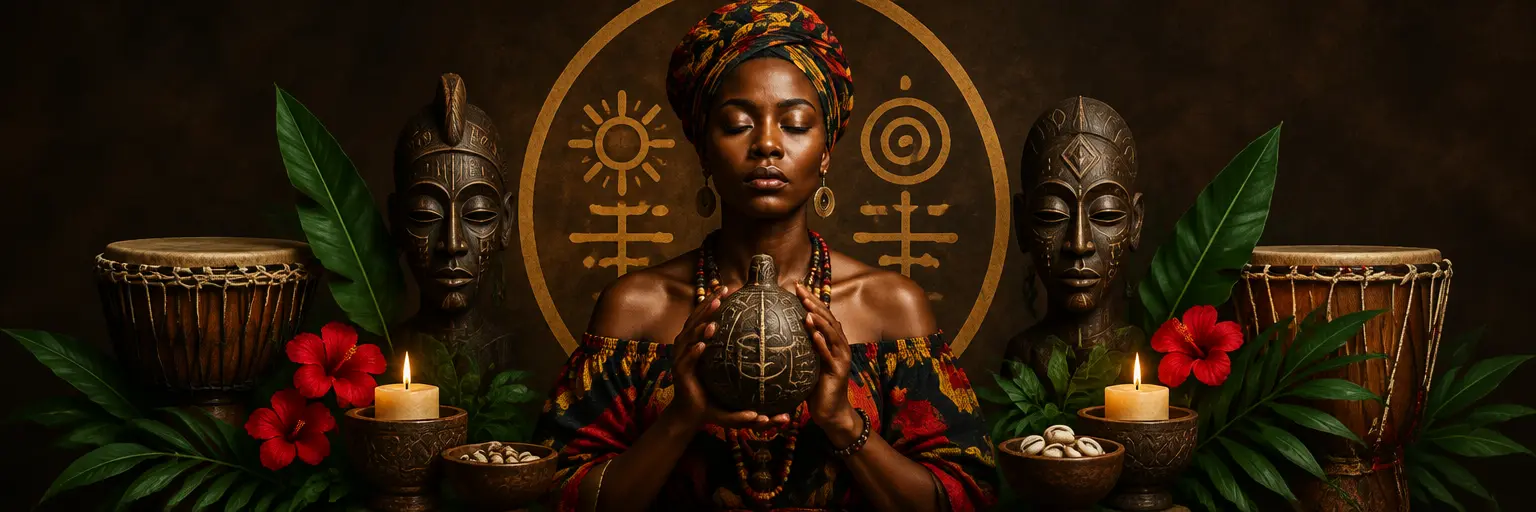
Dive into the vibrant world of African and Caribbean folklore, where folkloric symbols and rituals breathe life into ancestral stories and cultural identity. These powerful emblems—from the Adinkra symbols of the Akan people to the sacred veve of Vodou—carry deep spiritual meanings, while time-honored rituals weave together music, dance, and ceremony to honor the past and guide the present. Explore how these living traditions connect communities to their roots, celebrate resilience, and continue to shape art, literature, and modern spirituality across the diaspora. Uncover the secrets behind these mystical practices and their enduring legacy in today’s world. 🕊️🔥
✨ Discover the rich significance of Orisha symbols, their meanings, and how they serve as powerful tools for invoking divine energy. Explore…
Read article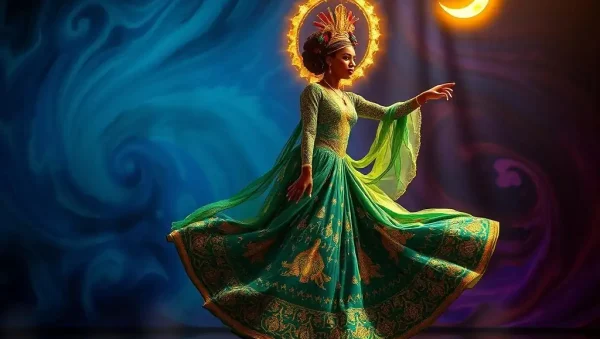
🌍 Discover the rich Caribbean dance rituals meaning behind sacred rituals honoring Orishas and Loa, revealing how these traditional dances preserve cultural…
Read article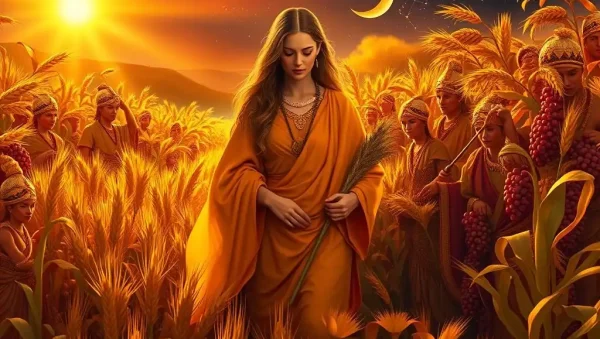
🌾 Discover how harvest festivals gratitude rituals abundance unite communities worldwide, celebrating nature’s bounty and fostering gratitude. These timeless traditions reveal the…
Read articleWelcome to our deep dive into Folkloric Symbols and Rituals, a captivating subcategory within African and Caribbean Folklore. Here, we unravel the visual and ceremonial languages that have shaped cultural identities, spiritual practices, and communal storytelling for centuries. From the sacred Adinkra symbols of West Africa to the rhythmic drumming and masked dances of the Caribbean, this page is your gateway to understanding how these traditions communicate values, protect communities, and bridge the human and spiritual worlds. Expect a rich blend of history, anthropology, and living practice, designed to enrich your knowledge and inspire further exploration of mythology’s tangible roots.
Adinkra symbols, originating from the Akan people of Ghana, are more than decorative motifs—they are a visual philosophy encoding proverbs, historical events, and moral codes. Each symbol, stamped onto cloth, pottery, and architecture, carries a specific meaning, such as Gye Nyame (exceptionality of God) or Sankofa (learning from the past). In rituals, they are used to bless ceremonies, mark rites of passage, and communicate ancestral wisdom. For enthusiasts, understanding these symbols offers a direct link to West African cosmological thought and its enduring influence on Caribbean diasporic art and spirituality.
When you explore this facet, expect to learn how Adinkra symbols function as non-verbal storytelling in festivals like the Odwira, where they transform textiles into living archives. We also highlight their modern resurgence in fashion and design, illustrating how ancient symbols remain vital in contemporary identity politics. By decoding these glyphs, you’ll grasp how folklore preserves collective memory beyond written language, making them essential for anyone studying ritualistic expression or Afrocentric symbolism.
In Caribbean folklore, especially within Santería, Candomblé, and Obeah traditions, Orisha worship centers on a pantheon of deities representing natural forces. Rituals involve intricate offerings—fruits, herbs, animal sacrifices, and crafted items—each symbolically matched to a specific Orisha (e.g., honey for Oshun, iron tools for Ogun). These acts are not mere appeasement but reciprocal exchanges that maintain cosmic balance and personal fortune. The visual language of altars, with colored cloths, beads, and candles, creates a symbolic map of the spiritual hierarchy, guiding devotees and curious learners alike through a complex system of belief.
Expect to discover the ritual calendar tied to agricultural cycles and celestial events, where drumming patterns and dance movements invoke divine presence. For practitioners, these rituals are daily liveness, but for scholars, they reveal layers of African retentions blended with Catholic iconography—a syncretic response to colonial oppression. Our content explains how these symbols and rituals have survived migration, adapted to urban settings, and now thrive in global diaspora communities, offering a profound case study on cultural resilience and spiritual ecology.
Veve are intricate geometric drawings used in Haitian Vodou to summon lwa (spirits) during ceremonies. Each lwa possesses a unique veve, traced on the ground with cornmeal, coffee, or ashes, acting as a spiritual beacon that attracts the deity’s energy. The ritual creation is itself a meditative act, often performed by a priest or priestess while chanting, embodying the intersection of art, math, and faith. In Caribbean folklore, veve symbolize the ordered cosmos within chaos, serving as both protective circles and launching points for spirit possession.
This section will guide you through the semiotics of veve—how curves, crosses, and stars mirror conceptual ties to nature, ancestors, and colonialism. We examine specific examples like Baron Samedi’s veve or Erzulie’s heart design, revealing their dual roles in healing and justice. For the uninitiated, we demystify common misconceptions, emphasizing that veve are sacred, not sinister. You’ll also learn how contemporary artists repurpose these symbols, ensuring their evolution while preserving ritual authenticity—a testament to folklore’s dynamic, adaptive spirit.
Music and movement are the heartbeat of African and Caribbean rituals, with drums like the djembe, batá, and steelpan serving as communicative tools for invoking spirits. Each rhythm carries a specific signature, timed to guide participants into altered states of consciousness, facilitating possession or healing. Rituals such as the Cuban Toque de Santo or the Trinidadian Orisha dance are choreographed dialogues between humans and deities, where drum patterns “speak” the language of the divine. This sonic symbolism is as potent as any visual glyph, making rhythm a core component of folkloric identity.
Expect an analysis of how polyrhythms and call-and-response structures create communal unity and transcendence, breaking social hierarchies. We also explore the role of dance in preserving historical narratives—each step often mimics agricultural labor, hunting, or defiance. For those studying folklore’s impact on contemporary society, we connect these rituals to global music genres like salsa, reggae, and jazz, proving that ancestral rhythms continue to pulse through modern life. This facet enriches your understanding of how sound, body, and belief form an inseparable triad.
In folkloric practice, herbal remedies and protective charms are steeped in symbolic meaning. Items like garlic, red string, cowrie shells, or the oju (evil eye) amulets are not superstitions but materialized beliefs that ward off harm, attract love, or ensure prosperity. Rituals include cleansing baths with specific leaves, anointing candles with oils, and creating “gris-gris” bags, each ingredient chosen for its color, texture, and associated spiritual property. These practices stem from African herbalist traditions, adapted to Caribbean botanicas and rootwork, serving as accessible links to the divine for everyday challenges.
This subcategory explains the cultural logic behind charms—why certain plants like rue or rosemary are sacred to specific Orishas, and how ritual preparation mirrors liturgical orders. We also address ethical considerations, distinguishing between cultural heritage and commercial exploitation. For practitioners and researchers, you’ll find practical guides on safe usage, historical origins, and regional variations across islands. This knowledge fosters respect for folk medicine’s sophistication, showing that what appears superstitious is often a coded system of ecological and psychological intelligence passed down generations.
A symbol is a static object, image, or gesture carrying a fixed meaning, while a ritual is a dynamic sequence of actions involving symbols for a purpose like worship or healing. For example, a cross is symbolic; a baptism is a ritual using it. Together, they form the grammar of folklore, where symbols are the vocabulary and rituals the sentences.
Yes, they remain vibrant across Africa, the Caribbean, and global diaspora. For instance, Adinkra symbols appear in modern fashion, Vodou ceremonies draw veve weekly, and Orisha rituals occur in urban centers like Miami and Paris. Their adaptability ensures continuity, though some are transformed or reinterpreted for contemporary needs.
Rituals often dramatize mythological events, making ancient stories tangible. For example, the Yoruba myth of Shango’s fire is reenacted in fire-walking rituals. Symbols used in rituals are typically derived from mythological narratives, serving as mnemonic devices that remind participants of their cultural cosmology and ancestral heroes.
Yes, through educational, non-invasive observation or with explicit permission from community elders. However, participating as a practitioner often requires initiation. Ethical learning involves respecting sacred secrecy, avoiding cultural appropriation, and supporting community-led preservation. Always prioritize context over curiosity, and acknowledge the tradition’s origins and authority.
They are potent markers of resilience and pride, linking contemporary individuals to ancestral heritage. Symbols like the veve or Adinkra are used in art, clothing, and activism to assert cultural distinctiveness. They also foster pan-African solidarity, bridging gaps between islands and continents, and offering a counter-narrative to colonial histories. Thus, they serve both spiritual and sociopolitical functions.