The Bori Spirits of the Hausa People
🌍 Discover the captivating world of the Hausa Bori spirit rituals, an integral part of Hausa culture. These sacred ceremonies embody ancestral…
Read article
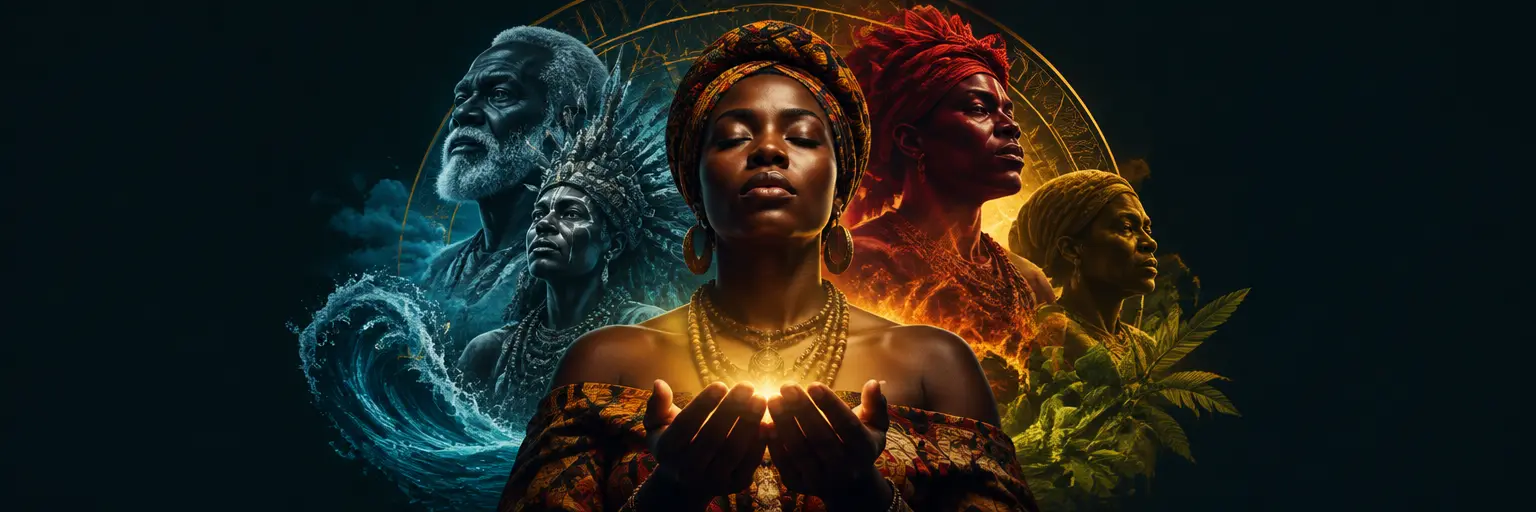
Ancestral Spirits and Deities hold a revered place in African and Caribbean folklore, where the veil between the living and the departed is thin and sacred. These powerful entities—ranging from guardian ancestors who guide family lineages to mighty orishas and loas who govern natural forces—shape moral codes, rituals, and everyday life. Discover how veneration of the dead intertwines with divine worship, as communities honor those who came before through drumming, dance, and offerings. From the egúngún masks of the Yoruba to the guede spirits of Haitian Vodou, these narratives reveal a profound cosmology where ancestral wisdom is a living bridge to the divine. Explore the myths that explain creation, justice, and resilience, and see how these enduring beliefs continue to influence modern music, art, and spirituality across the diaspora. Uncover the rich tapestry of African diaspora religion and its timeless stories, where every ancestor is a deity in waiting and every deity carries the memory of a people.
🌍 Discover the captivating world of the Hausa Bori spirit rituals, an integral part of Hausa culture. These sacred ceremonies embody ancestral…
Read article
✨ Discover how ancestral altars serve as sacred home altar spirit realm portals, connecting us to ancestral wisdom and spiritual energies. Embrace…
Read article
🛡️ Discover the fascinating world of spirit guardians folklore protection spells, exploring how cultures worldwide have historically invoked divine protectors and mystical…
Read article
🌍 Discover the transformative power of spirit healing practices worldwide, as diverse cultures harness divine energies and ancestral wisdom to promote health,…
Read articleDive into the rich, vibrant tapestry of African and Caribbean folklore, where ancestral spirits and deities are not distant myths but living presences that shape daily life, morality, and community. This subcategory explores the profound connection between the living and the departed, revealing how veneration, ritual, and storytelling keep ancient wisdom alive. From the Orishas of the Yoruba tradition to the Loa of Haitian Vodou, you’ll uncover how these powerful entities influence everything from healing practices to social justice, bridging continents and centuries with enduring spiritual energy.
In African and Caribbean belief systems, ancestral spirits are not passive memories but active guardians of family lineage and moral order. They are consulted for guidance, protection, and blessings, often through offerings of food, drink, or libations poured on the ground. These spirits are believed to intercede with higher deities, acting as mediators between the material and spiritual realms. For many communities, neglecting ancestral rites is seen as inviting misfortune, making these practices central to social cohesion and personal well-being.
Expect to learn how ancestral veneration varies across regions—from the Egúngún masquerades of Nigeria to the Gede spirits of Haiti—and how these traditions adapt in diaspora. The subcategory explains the symbolism of altars, the significance of remembering names, and the ethical responsibility of honoring those who came before. You’ll also discover how contemporary practitioners integrate these beliefs with modern life, ensuring that ancestral wisdom remains relevant in a changing world.
Central to this folklore are powerful deities with distinct personalities, domains, and myths. The Orishas of Yoruba origin—such as Shango (thunder and justice), Yemaya (motherhood and oceans), and Oshun (love and rivers)—have crossed the Atlantic to become pillars of Santería, Candomblé, and Lucumí. Similarly, Haitian Loa like Papa Legba (gatekeeper) and Erzulie (love) blend African roots with Catholic iconography. Meanwhile, Central African traditions revere Nzambi as a supreme creator, alongside a pantheon of nature spirits.
Expect to learn how these deities are celebrated through music, dance, and possession ceremonies. The content details their attributes, preferred offerings, and the myths that explain their origins. You’ll understand how syncretism with Catholic saints allowed enslaved Africans to preserve their faiths under oppression, creating layered, resilient spiritual systems. This section also highlights how these deities inspire art, literature, and social movements today.
Rituals are the heartbeat of ancestral and deity worship, transforming belief into action. Common practices include libation pouring, drumming, dancing, and trance possession, where devotees become vessels for spirits. Offerings range from simple fruits and herbs to elaborate animal sacrifices, always governed by strict rules to maintain purity and reciprocity. Ceremonies often follow lunar cycles, agricultural seasons, or life milestones, such as births, deaths, and initiations. In the Caribbean, these rituals fuse with indigenous and European elements, creating unique expressions like Rara processions and Feast of the Dead.
Expect to learn the step-by-step structure of key ceremonies, including the role of priests (like Babalawos or Houngans) and the preparation of sacred spaces. The subcategory explains the meaning behind altars, symbols like veves in Vodou, and the ethics of participation. It also addresses misconceptions about “black magic,” emphasizing that most rituals seek healing, harmony, and balance rather than harm.
The transatlantic slave trade forged a unique spiritual landscape where African deities merged with Catholicism, Indigenous beliefs, and European folk magic. This syncretism produced vibrant systems like Santería (Cuba), Candomblé (Brazil), and Obeah (Jamaica), each with distinct practices yet connected to shared roots. Deities were masked as Catholic saints—for example, Shango became Saint Barbara, and Yemaya was linked to the Virgin Mary—to survive persecution. This hidden worship preserved African cosmology while adapting to new environments.
Expect to learn how migration and globalization continue to reshape these traditions, with practitioners in New York, London, and Miami blending old rites with modern challenges. The content explores cultural appropriation debates, the role of tourism, and how younger generations reclaim ancestral heritage. You’ll also discover oral histories that trace specific deities back to West African kingdoms, revealing deep historical continuity.
Ancestral spirits and deities are not relics; they profoundly influence modern art, music, literature, and activism. From Bob Marley’s Rastafarian references to Toni Morrison’s novels, these figures symbolize resilience, identity, and resistance. They inspire movements for racial justice, environmental stewardship, and women’s empowerment, as seen in the Black Lives Matter era’s invocation of ancestral strength. Moreover, many people—including non-African descent—seek these traditions for spiritual fulfillment, community, and connection to nature.
Expect to learn how filmmakers, writers, and musicians reimagine Orishas and Loa for global audiences, from Black Panther to American Gods. The subcategory discusses ethical engagement, cultural pride, and the dangers of commodifying sacred practices. You’ll also find resources for further study, including festivals, museums, and online communities that keep these traditions vibrant.
Ancestral spirits are the souls of deceased family members who continue to guide and protect their descendants, often requiring veneration and offerings. Deities are higher-ranking supernatural beings with specific domains like thunder, love, or healing, who may be worshipped universally rather than tied to one lineage. Ancestors act as intermediaries to deities, who hold greater power but are less involved in daily affairs.
No, “voodoo” is a broad, often misused term. Haitian Vodou is one specific tradition, but it differs greatly from Santería, Candomblé, or Obeah. These systems share West African roots but have unique rituals, pantheons, and cultural contexts. Hollywood stereotypes misrepresent them as evil or primitive, whereas they are complex, ethical religions emphasizing community, healing, and balance with nature.
Yes, many traditions welcome sincere practitioners regardless of background, but they stress respect, humility, and proper initiation. Cultural appropriation occurs when outsiders cherry-pick symbols or rituals without understanding their sacred meaning or context. Authentic participation requires learning from elders, undergoing training, and contributing to the community. Always approach with openness and a willingness to be taught, not to exploit.
Spirit possession is a ceremonial state where a deity or ancestor temporarily inhabits a devotee’s body to communicate, heal, or deliver messages. It is voluntary, controlled by trained priests, and occurs within a ritual framework using specific drum rhythms, dances, and chants. It is not a loss of self but a sacred exchange, often seen as a blessing and a sign of spiritual favor.
Start by reading books by practitioners, such as “The Handbook of Yoruba Religious Concepts” by Baba Ifa Karade or “Mama Lola” by Karen McCarthy Brown. Attend public cultural events, lectures, or open ceremonies if invited. Avoid seeking initiation lightly; instead, build relationships with legitimate communities. Always prioritize learning about the historical and social contexts, and never reduce these traditions to exotic stereotypes.