Ancestral Callings: Honoring the Dead in Diaspora Traditions
🌍 Discover how diaspora ancestor veneration rituals serve as vital links to cultural heritage, honoring loved ones across borders. These traditions preserve…
Read article

Explore the powerful and evocative world of Diaspora Mythologies, where ancestral tales migrate, adapt, and thrive across oceans. This realm of African and Caribbean folklore captures how enslaved Africans and their descendants transformed their rich spiritual heritage, blending it with new landscapes and influences. Discover how Anansi the spider spun cunning webs of survival in Jamaica, how Yoruba orishas syncretized with Catholic saints in Cuba and Brazil, and how the haunting laments of the Mami Wata still echo in coastal communities. These are not just stories of the past but living narratives that forge identity, resilience, and resistance against colonial erasure. From the duppy spirits of the Caribbean to the trickster tales that outwit oppressors, this mythology offers a lens into cultural memory and the dynamic process of re-rooting in a new world. Dive into a tapestry where gods walk with the downtrodden, spirits guard the crossroads, and every whisper of the wind carries a fragment of a distant homeland—reimagined for today’s global soul.
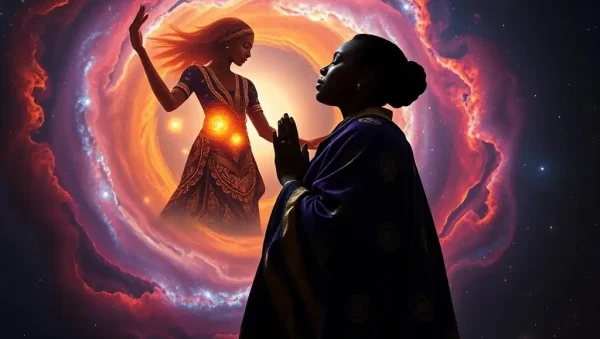
🌍 Discover how diaspora ancestor veneration rituals serve as vital links to cultural heritage, honoring loved ones across borders. These traditions preserve…
Read article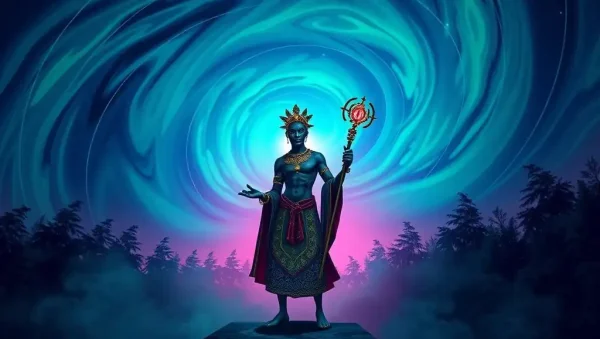
🌟 Dive into the captivating world of Èṣù in Yoruba mythology, where this enigmatic spirit serves as a trickster, messenger, and guardian…
Read article
🌙 Explore the haunting world of Caribbean ghost stories, traditions, and beliefs as we delve into duppies, soucouyants, and jumbies—revealing the island's…
Read article
🌟 Discover how myths fueled slavery freedom by empowering enslaved communities through spiritual resistance, turning legends into tools of resilience. This article…
Read articleWelcome to the Diaspora Mythologies subcategory, a vibrant corner of our African and Caribbean Folklore archive. Here, we explore how ancestral tales traveled across oceans through forced migration, resilience, and cultural fusion, evolving into unique mythologies that still pulse in modern life. From Anansi’s cunning tricks to the haunting melodies of the Mami Wata spirit, these narratives blend African roots with Caribbean realities, shaping identity, art, and spiritual practices worldwide. Dive into stories of resistance, transformation, and survival that connect continents and generations.
This section traces the historical journey of myths from West and Central Africa to the Caribbean islands and the Americas. You’ll learn how enslaved Africans preserved their cosmologies through oral traditions, masking them within Christian imagery and plantation life. Key figures like Eshu (the divine trickster) and Oshun (the river goddess) were reborn in new lands, their stories adapted to local landscapes and social struggles. Expect timelines, migration maps, and analyses of how survival became a central mythic theme.
Readers will also discover the role of maroon communities—escaped enslaved people who formed independent settlements—in preserving and reimagining these tales. Their legends of heroic ancestors, magical escapes, and protective spirits offer powerful counter-narratives to colonial history. We include comparative tables showing how the same deity transformed from Yoruba to Haitian Vodou or Cuban Santería, highlighting the adaptive genius of diaspora cultures.
Anansi, originally an Akan spider-god, became the most iconic trickster in Caribbean folklore, especially in Jamaica, Trinidad, and the Bahamas. This section explores his tales of cleverness defeating brute strength, from stealing stories from the Sky God to outwitting the fearsome Tiger. You’ll find retold narratives, audio snippets (textual descriptions), and essays on how Anansi symbolizes the wit and resilience of enslaved people navigating oppressive systems.
Beyond simple entertainment, Anansi stories function as moral lessons and social critiques, teaching cunning over violence and community survival. We examine his modern legacy in literature, from Nancy stories in the American South to adaptations in film and comics. Expect profiles of regional variations, including the Kwaku Ananse of Ghana versus the Brer Rabbit of the American South, showing how one archetype morphed across diasporic routes.
Mami Wata—the alluring, serpent-tailed water goddess—is one of the most widespread diaspora deities, venerated from Ghana to the Caribbean and Brazil. Here, we decode her dual nature as both giver of wealth and bringer of madness, embodying the ambiguous power of the ocean that separated Africans from home. The section traces her iconography from 19th-century Indian prints to contemporary African art, revealing a hybrid myth that absorbed global influences.
You’ll explore rituals, offerings, and possession ceremonies dedicated to her, often led by priestesses who channel her sexuality and autonomy. In Caribbean contexts, Mami Wata merges with La Sirene in Haitian Vodou or Yemanjá in Brazilian Candomblé. We also discuss her enduring appeal as a feminist symbol of independence, and how diaspora artists reclaim her image to address themes of migration, climate, and identity politics today.
Diaspora mythologies are rich with spectral beings that encode social fears and collective memory. This segment investigates the zombie—from Haitian folklore’s spirit-captive to Hollywood’s undead—clarifying its origins in Vodou’s complex metaphysics. You’ll learn how the zombie myth reflected the terror of enslavement and the loss of selfhood under plantation labor, making it a potent metaphor for exploitation and dehumanization.
Adjacent figures include the soucouyant (a blood-sucking hag in Trinidadian lore) and the duppy (Jamaican restless ghost), each with distinct punishments and protections. We present folk narratives alongside scholarly interpretations, showing how these creatures serve as moral regulators and warnings against breaking social taboos. Expect practical guides on protective charms, herbal remedies, and ritual cleanings from Afro-Caribbean traditions, preserving authentic practices while respecting their sacred nature.
This final body section examines how diaspora mythologies fuel contemporary storytelling across literature, film, music, and visual art. Authors like Nalo Hopkinson and Marina Warner rework Anansi and Mami Wata for speculative fiction, while reggae, calypso, and soca lyrics echo mythic themes of liberation and ancestral memory. We analyze films like The Water Rites or Black Panther (which borrows from Afro-futurist myth-making) to show how these ancient narratives remain adaptable.
For creators, we provide case studies on adapting traditional tales without cultural appropriation, emphasizing ethical collaboration with source communities. The section also highlights visual artists like Hew Locke and Ebony G. Patterson who incorporate diaspora ritual objects and symbols to critique colonialism and celebrate survival. Discover how mythologies now power video games, virtual reality, and social media activism, ensuring these ancestral voices continue shaping global culture.
A diaspora mythology arises when a culture’s myths are carried to new lands through forced or voluntary migration, then adapt to local environments while preserving core motifs. In the African Caribbean context, it blends West African deities and heroes with New World realities such as slavery, colonialism, and creolization, creating unique narratives that reflect displacement and resilience.
In West Africa (Akan peoples), Anansi is a creator god and sage, but in the Caribbean he becomes a smaller, trickster figure focused on survival and outwitting oppressors. Caribbean Anansi tales emphasize cunning over divine power, often pitting him against stronger foes like Tiger, symbolizing the enslaved person’s intellect versus the master’s brute strength.
Mami Wata is dual-natured: she can bring wealth, beauty, and success, but also madness, misfortune, or death if disrespected. She represents the sea’s unknowable power and the allure of the foreign. Proper rituals, offerings, and devotion are required to gain her favor, making her both revered and feared across diaspora communities.
In Haitian Vodou, a zombie is a person whose soul has been captured by a bokor (sorcerer), often through poisoning and ritual, leaving them a mindless slave. It is not an undead creature like in films but a spiritual and social metaphor for enslavement and loss of will. Belief persists in rural Haiti, though it is widely debated.
Approach them with humility, acknowledging their sacred origins and living practitioners. Avoid caricature or commercial exploitation. Seek out sources from within the culture, credit originators, and support contemporary diaspora artists and scholars. If adapting for creative work, collaborate with cultural consultants and consider community impact. Education and acknowledgment are key.