The Spiritual Hierarchy of Haitian Vodou: Loa and Beyond
🌟 Explore the intricate spiritual hierarchy of Haitian Vodou, focusing on Haitian Vodou Loa spirits that embody divine forces, guiding practitioners through…
Read article
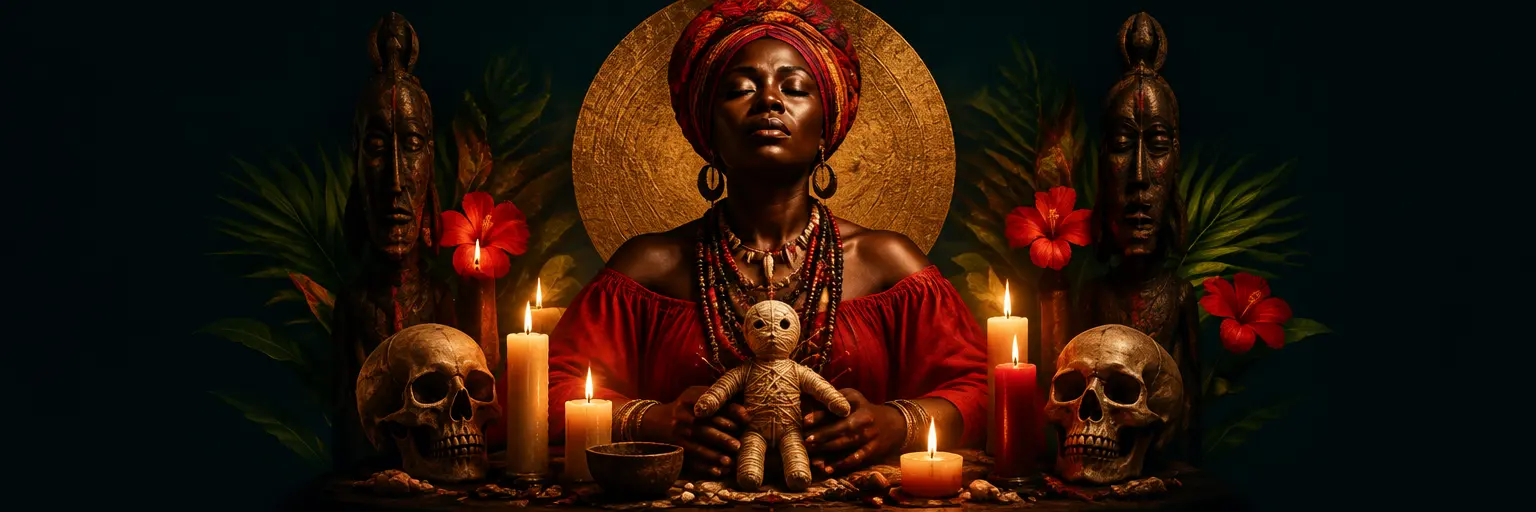
Voodoo and Spirituality is a profound and often misunderstood tradition that blends African ancestral worship, Catholic symbolism, and indigenous Caribbean beliefs into a rich, living spiritual system. Far beyond Hollywood’s stereotypes of dolls and curses, this path centers on community healing, ancestral connection, and the balance between the physical and spiritual worlds. Rooted in the resilience of enslaved peoples, it thrives today in Haiti, New Orleans, and across the diaspora, offering rituals, prayers, and ceremonies that honor spirits known as Lwa or Loas. Whether you seek to understand its sacred drums, symbolic veves, or the role of priests and priestesses, this exploration illuminates how Voodoo remains a vibrant, empowering force of cultural identity and spiritual depth—a testament to survival, faith, and the enduring power of the unseen.
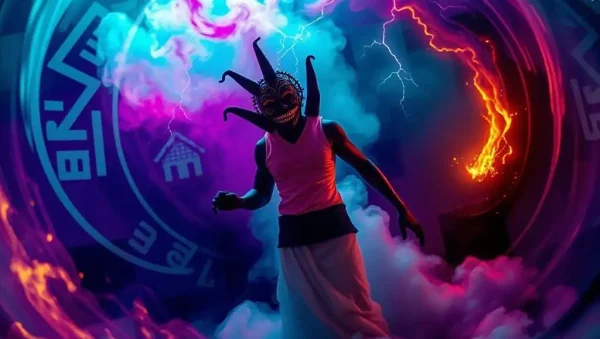
🌟 Explore the intricate spiritual hierarchy of Haitian Vodou, focusing on Haitian Vodou Loa spirits that embody divine forces, guiding practitioners through…
Read article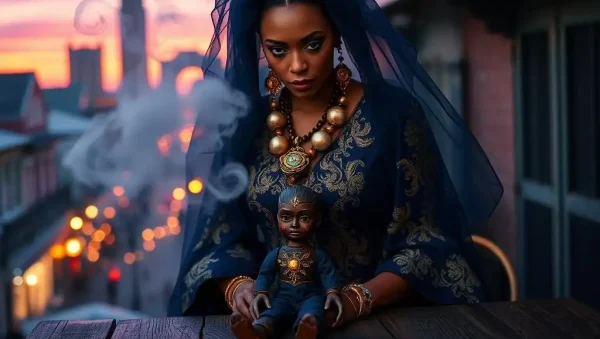
✨ Discover the legendary Marie Laveau Voodoo New Orleans, a powerful figure whose mystical practices and cultural influence continue to shape legends…
Read article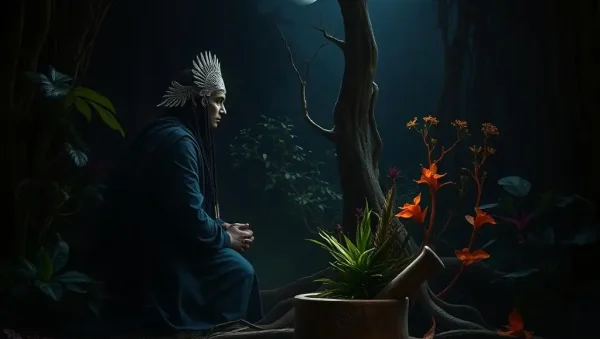
✨ Discover the ancient power of voodoo plant medicine rituals, where mystical herbs and roots are believed to harness spiritual energies, healing,…
Read articleWelcome to the heart of African and Caribbean folklore, where the subcategory of Voodoo and Spirituality unfolds as a rich, complex, and often misunderstood tradition. Here, we strip away the Hollywood tropes of pins and zombies to reveal a living, breathing spiritual system rooted in ancestry, nature, and community resilience. This page is your gateway to understanding the Vodun religion’s original West African foundations, its transformative journey through the transatlantic slave trade, and its vibrant, contemporary expressions in Haiti, New Orleans, Brazil, and beyond. Expect a deep, respectful exploration that connects ritual practice with historical trauma, cultural survival, and modern spiritual identity—all designed to inform, illuminate, and correct misconceptions.
Before Voodoo became a Caribbean phenomenon, it was Vodun—the “spirit” or “divine force” of the Fon and Ewe peoples of present-day Benin and Togo. In this subcategory, you’ll discover how the supreme creator, Mawu-Lisa, delegates power to a pantheon of lesser spirits, or Loa, each governing natural elements, human emotions, and societal functions like war, love, and agriculture. We explore specific spirits such as Legba, the gatekeeper, and Erzulie, the goddess of love, alongside the sacred role of the houngan (priest) and mambo (priestess). Crucially, you’ll learn how these practices were not “devil worship” but a structured cosmology, similar to Greek or Yoruba traditions, with a deep emphasis on balance, ethics, and honoring one’s ancestors.
By examining historical records and oral traditions, this section illuminates how Vodun’s rituals—drumming, dancing, possession, and animal sacrifice—served as social glue and a moral compass. The spiritual hierarchy and initiatory systems reflect a sophisticated theological framework that predates European contact. Readers will gain a renewed appreciation for how this ancient African religion valued community healing, divination, and ecological harmony, setting the stage for its later adaptations in the diaspora.
The forced migration of millions of Africans to the Caribbean islands transformed Vodun into a tool of survival. Under brutal plantation conditions, enslaved peoples syncretized their native spirits with Catholic saints to hide their practices—giving birth to Haitian Vodou, Cuban Santería, and Brazilian Candomblé. This section dives into the pivotal role of the Haitian Revolution (1791–1804), where the famous Bois Caïman ceremony is believed to have ignited the uprising. You’ll understand how Voodoo became a unifying force, a coded language of resistance, and a repository of African identity against cultural erasure. The Loa merged with icons like Saint Patrick or Saint James, but the underlying African meanings remained intact for initiates.
We also unpack the differences between regional variants, such as the more Catholic-influenced Louisiana Voodoo versus the intensely African-rooted Haitian Vodou. The narrative highlights how spiritual leaders—often women—became community pillars, preserving herbal medicine, childbirth knowledge, and conflict resolution. Rather than a marginal cult, Voodoo is presented as a sophisticated coping mechanism and a radical act of defiance, proving that spirituality was not just about the afterlife but about surviving the present oppression.
For the uninitiated, a Vodou service often appears chaotic, but it is a meticulously choreographed liturgical event. This subcategory breaks down the structure of a ceremony: from the veve (sacred geometric symbols drawn on the floor) to the rhythmic summoning of spirits through drums, songs, and dance. We explain the process of possession (or “mounting”), where a devotee temporarily becomes a vessel for a Loa, offering advice, healing, or rebuke to the community. You’ll learn about the ritual objects—the asson (sacred rattle), the poteau-mitan (center post), and the offerings of food, rum, and herbs—each with symbolic meaning. Practical insights include how initiations, called kanzo, involve a multi-year process of death and rebirth, akin to monastic training in other faiths.
Furthermore, we address the ethical dimension: how priests are trained to use power responsibly, how possession is induced and controlled, and how ceremonies integrate with the agricultural calendar and life milestones. By demystifying these practices, we show that Voodoo is not about curses but about maintaining cosmic order and interpersonal justice. Readers will see the parallel to shamanic traditions worldwide, noting the psychological and therapeutic benefits of cathartic release through dance and trance.
From 1930s horror films like White Zombie to modern TikTok trends, Voodoo has been sensationalized as malevolent “black magic.” This section deconstructs the biggest stereotypes: the voodoo doll (originally a folk practice of sending healing intentions, not harm), the “zombie” (a misunderstood pharmacological state, not the undead), and the notion that Voodoo is a cult of devil worship. We trace how colonial propaganda denigrated the religion to justify slavery and how media perpetuated these falsehoods for profit. By contrast, we present academic research, such as the works of anthropologists Karen McCarthy Brown and Wade Davis, to show the rational, communal, and spiritually profound core of Vodou.
Moreover, we examine how contemporary practitioners reclaim the narrative through social media, literature, and film—like the 2021 documentary Divine Horsemen or the novel The Serpent and the Rainbow (nuanced but respectful). Learn how the religion has evolved in the 21st century, incorporating feminist perspectives, LGBTQ+ inclusivity, and environmental activism. This section empowers readers to critically evaluate media portrayals and recognize Voodoo as a legitimate, dynamic faith practiced by millions, rather than a theme-park fright.
Today, Voodoo is a thriving, organized religion in Haiti (recognized as an official religion since 2003), with diaspora communities in the US, France, and Canada. This subcategory explores modern Vodou temples, their socioeconomic roles (like orphanages, healthcare clinics, and micro-loans), and the ongoing efforts to codify liturgy and train clergy. We highlight the rise of “Vodou tourism” in Benin, where visitors can attend authentic festivals, and the legal battles to use animal sacrifice under religious freedom laws in Texas and Louisiana. Additionally, we discuss globalization’s impact: how the internet has allowed virtual initiations, cross-cultural exchanges with West African priests, and a new generation of tech-savvy practitioners who blend tradition with innovation.
On a broader level, Voodoo’s aesthetics and concepts have influenced music (from jazz to rap), fashion, and literature, while its ecological ethos—respect for nature as sacred—resonates with the environmental movement. We also cover the growing academic study of Vodou in universities, with courses on Black spirituality and healing practices. This final section underscores that Voodoo is not a fossilized relic but a living, adaptive tradition that continues to shape diaspora identities and global culture, inviting readers to approach it with curiosity and respect rather than fear.
No, though they share West African roots. Voodoo (Vodou) comes from the Fon/Ewe tradition, while Santería and Candomblé are mostly Yoruba-based. Each has distinct pantheons, rituals, and languages, but all involve ancestor veneration, spirit possession, and syncretism with Catholicism due to shared enslavement history.
Yes, but initiation is a serious commitment. Typically, you must first be called by a Loa during a ceremony, then undergo years of training under a priest. Some houses accept outsiders, but the spiritual, physical, and financial demands are high. It’s not a casual hobby.
No. Voodoo is a religion focused on healing, justice, and community harmony. Magic (like love or protection spells) exists but is not the core. Practitioners view themselves as servants of spirits, not manipulators of evil. Harming others is prohibited and considered spiritually suicidal.
Voodoo dolls are largely a Western invention. In actual practice, small effigies may be used to focus intentions for healing a sick person, not to curse enemies. The idea of a doll bristling with pins causing pain comes from racist 19th-century caricatures, not authentic ritual.
Start with academic books like The Spirits and the Law by Kate Ramsey or Mama Lola by Karen McCarthy Brown. Attend public cultural events, like Haitian Flag Day, and if you visit Haiti or Benin, always ask permission before photographing rituals. Never assume you’re invited; observe from a respectful distance.