
Specific Dance Rituals: Honoring Orishas and Loa
Welcome to Mythology and Legends!
Delve into the vibrant tapestry of global myths and folklore. Ever wondered about the hidden meanings woven into ancient traditions? Today, we journey to the heart of the Caribbean to uncover the profound significance of its dance rituals. Discover how these captivating movements, often performed to honor Orishas and Loa, transcend mere entertainment and serve as powerful conduits to the spiritual realm. Prepare to be enthralled as we explore the deeper meaning behind these mesmerizing Caribbean dance rituals, and unlock the secrets they hold. What stories will you uncover?
- Introduction to Caribbean Dance Rituals and Their Significance
- Orisha Dance Rituals: A Deep Dive into Yoruba Traditions in the Caribbean
- Loa Dance Rituals: Exploring Vodou Traditions in the Caribbean
- Comparing and Contrasting Orisha and Loa Dance Traditions
- The Enduring Legacy of Caribbean Dance Rituals
- Conclusion: Celebrating the Vibrancy of Caribbean Dance Rituals
-
Frequently Asked Questions
- What are Orishas and Loa, and how are they related to Caribbean dance rituals?
- How do specific Caribbean dance rituals honor Orishas and Loa?
- What is the "meaning" behind Caribbean dance rituals honoring Orishas and Loa?
- What role does music play in Caribbean dance rituals honoring Orishas and Loa?
- How have Caribbean dance rituals honoring Orishas and Loa impacted contemporary society?
- Final Reflection: The Enduring Power of Movement and Devotion
- Unleash Your Inner Divinity: Connect with the Spirits
Introduction to Caribbean Dance Rituals and Their Significance
Understanding the Cultural Context of Caribbean Ritual Dance
Caribbean dance rituals are deeply rooted in the transatlantic slave trade, where enslaved Africans brought their spiritual beliefs, including complex pantheons of deities and elaborate ritual practices, to the Americas. Facing immense oppression and the forced suppression of their cultures, these traditions adapted and evolved, often incorporating elements of Catholicism through a process known as syncretism.
This blending allowed African spiritual practices to survive under the guise of Christian worship, creating unique religious systems like Santería in Cuba, Candomblé in Brazil (though outside the strict Caribbean definition, it shares roots), and Vodou in Haiti. The practice of Caribbean ritual dance became a vital means of preserving cultural identity, historical memory, and spiritual connection across generations.
These dance forms are not merely performances but sacred acts, central to communicating with the spirit world. They serve as a bridge between the human realm and the divine, facilitating healing, guidance, and communal cohesion. The context is one of communal worship, where the collective energy of participants is crucial.
Ceremonies often take place in specific sacred spaces, such as ilés (houses of worship) in Santería or hounfours in Vodou, and are meticulously organized according to ancient protocols. Understanding the Caribbean dance rituals meaning requires appreciating this historical context of survival, adaptation, and the profound spiritual purpose embedded within every movement and rhythm.
The Profound Meaning of Dance in Caribbean Spirituality
Dance in Caribbean spirituality carries layers of profound meaning, acting as a primary language for invocation, praise, and communication with deities or spirits. Each specific movement, step, and gesture is often symbolic, representing aspects of a deity's nature, history, or preferred actions. For example, movements might mimic the characteristic gait of an Orisha like Ogún (the warrior) or the serpentine flow of a Loa like Damballa (the serpent spirit).
The rhythm provided by drums is inextricably linked to the dance, believed to "speak" to the spirits and guide the energy of the ceremony. The intensity of the dance and the music builds, creating an atmosphere conducive to spiritual connection and, in many cases, possession.
Beyond direct communication, dance is a form of spiritual offering and devotion. It is a physical expression of faith, respect, and surrender to the divine will. The collective act of dancing strengthens the community's bond, reinforcing shared beliefs and mutual support. It allows participants to embody the energy of the spirits, experiencing a direct, visceral connection that transcends intellectual understanding. The meaning of Caribbean dance rituals is therefore multifaceted: it is a historical testament, a spiritual language, a communal offering, and a transformative personal and collective experience, embodying the vibrant spirit and enduring faith of the Caribbean people.
Orisha Dance Rituals: A Deep Dive into Yoruba Traditions in the Caribbean
Who are the Orishas? Exploring the Yoruba Pantheon
The Orishas are the deities of the Yoruba religion, which originated in West Africa (modern-day Nigeria, Benin, and Togo). When enslaved Yoruba people were brought to the Caribbean and other parts of the Americas, they carried their religious beliefs with them, leading to the development of syncretic religions like Santería (Lukumi) in Cuba, Trinidad Orisha, and Oyotunji in the United States, among others. The Orishas are seen as intermediaries between humanity and the supreme creator, Olodumare. Each Orisha governs specific aspects of nature, human life, and destiny, possessing unique personalities, preferences, colors, numbers, and rhythms.
This pantheon is vast, with hundreds of Orishas in the traditional Yoruba system, although a smaller number are commonly venerated in the Caribbean, perhaps around 15 to 20 major figures. Prominent examples include Elegguá (the opener of the roads, messenger), Ogún (iron, war, labor), Changó (thunder, fire, justice, dance), Oshún (love, beauty, rivers, gold), Yemayá (motherhood, oceans, silver), and Obatalá (purity, peace, creation). Understanding the specific attributes and relationships between these Orishas is crucial to grasping the purpose and symbolism behind the dances dedicated to them in Caribbean ritual practice.
Specific Orisha Dances and Their Meanings: Bata for Changó
One of the most iconic examples of Orisha dance rituals is the use of Bata drumming and associated dances, particularly those dedicated to Changó. Bata drums, typically a set of three-double headed hourglass drums ( Iyá, Itótele, and Okónkolo), are considered sacred instruments believed to "speak" the language of the Orishas. A ceremony centered around Changó often features rhythms specifically associated with him, such as the Yan or Chachalokafun. The dances performed are vigorous and fiery, mimicking Changó's powerful nature as the Orisha of thunder, lightning, fire, and dance itself.
The specific movements in a Changó dance might include high kicks, spinning, chest-thumping, and gestures that simulate wielding a double-headed axe ( oché), Changó's primary symbol. The akpuón (lead singer) chants praise songs ( oríkì) to Changó, while the dancers and congregation respond.
The meaning here is multifaceted: it is an invocation to draw Changó's energy into the space, a demonstration of devotion through energetic physical expression, and a retelling of his myths and attributes through movement. The intensity of the Bata rhythms and the dynamic dance are intended to please Changó and potentially facilitate his presence through possession, showcasing the direct connection between rhythm, movement, and the desired spiritual outcome in understanding Caribbean dance rituals meaning.
The Role of Music and Costumes in Orisha Dance Rituals
Music, especially drumming, is the lifeblood of Orisha dance rituals. The rhythms are not just background sound; they are the spiritual language that calls the Orishas and guides the energy of the ceremony. Bata drums are paramount in many traditions, but other percussion instruments like chékeres (gourd shakers) and bells are also vital.
Each Orisha has specific rhythms associated with them, which drummers must know intimately. The lead drummer ( Olu Batá or Omo Alaña) acts as a conductor, communicating with the dancers, singers, and even the spirits through the drums. The rhythmic patterns evoke the presence and characteristics of the invoked deity, creating a specific energetic field for the dance.
Costumes worn by dancers and initiated practitioners are equally significant. They are often elaborate, utilizing colors, symbols, and materials sacred to the specific Orisha being honored. For example, a dancer embodying Oshún might wear yellow or gold garments, perhaps adorned with bells or mirrors, symbolizing her association with beauty, rivers, and wealth.
A dancer for Ogún might wear green and black, carrying iron tools. These costumes are not just visual aids; they are considered sacred vestments that help the dancer connect with the Orisha's energy and make them recognizable and pleasing to the deity. The combination of specific rhythms, symbolic costumes, and meaningful movements is essential to the efficacy and understanding of Caribbean dance rituals meaning within the Orisha tradition.
The Importance of Trance and Possession in Orisha Worship Through Dance
Trance and possession are central, though not universally experienced by all participants, goals in many Orisha dance rituals. The intense drumming, chanting, and repetitive, energetic movements of the dance create a psychophysiological state that can facilitate the entry of an Orisha's spirit into the body of an initiated practitioner ( olorishas or santeros). This phenomenon is known as possession or mounting (as in the spirit "mounting" its "horse," the human body). When possessed, the individual's demeanor, voice, and movements change, taking on the characteristics of the specific Orisha who has arrived.
The arrival of an Orisha is considered a blessing and a vital part of the ritual. The possessing Orisha may interact with the congregation, give blessings, offer advice, perform healings, or participate further in the ceremony. This direct interaction with the divine is a powerful affirmation of faith and a source of communal strength.
While not every dance is intended to lead to possession, the possibility is always present and is understood as the highest form of spiritual connection achievable through the dance ritual. The intensity and focus of the dance are key elements in creating the conditions under which possession is believed to occur, highlighting a profound aspect of Caribbean dance rituals meaning.
Loa Dance Rituals: Exploring Vodou Traditions in the Caribbean
Who are the Loa? Understanding the Spirits of Vodou
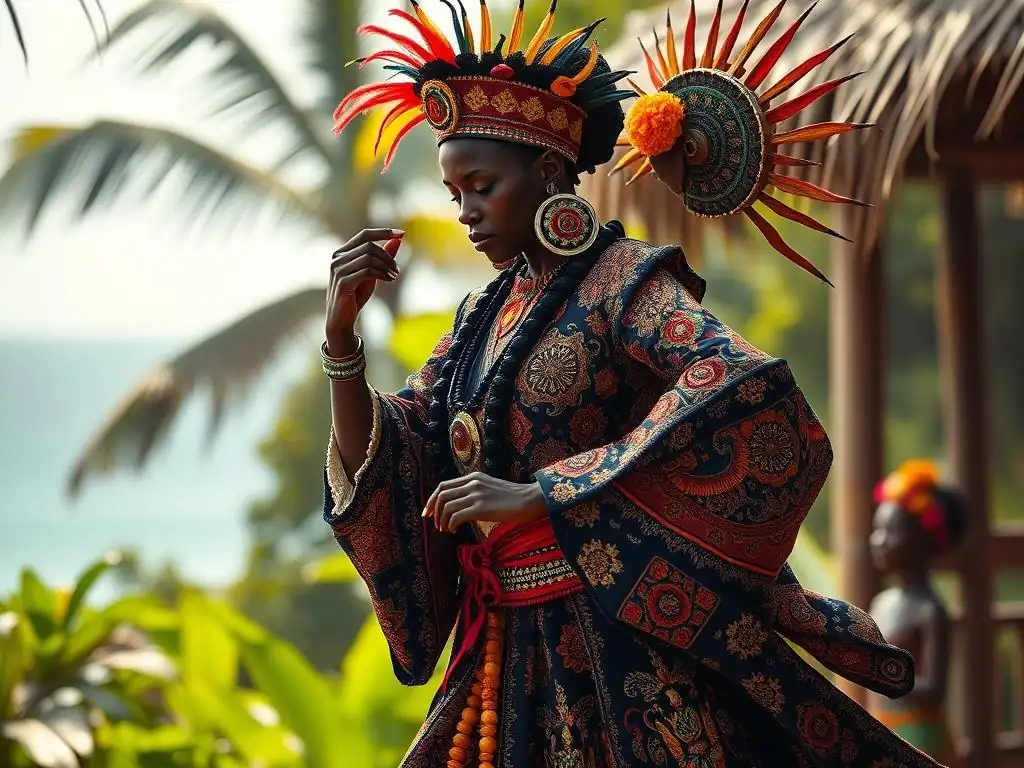
The Loa (also spelled Lwa) are the spirits of Haitian Vodou, a religion that developed among enslaved people in Haiti, primarily drawing from Fon, Ewe, and Yoruba traditions of West Africa, blended with indigenous Taíno beliefs and French Catholicism. The Loa serve as intermediaries between the distant, unknowable creator, Bondye (from French Bon Dieu, "Good God"), and humanity. Like the Orishas, the Loa are associated with specific aspects of life, nature, and human experience, each having distinct personalities, symbols ( vèvè), colors, days, and rhythms.
The Loa are typically grouped into families or nanchon (nations), such as the Rada (generally benevolent, cooler spirits, often linked to African origins) and the Petwo (often fiery, intense, and associated with the struggles of slavery and Haitian independence). Key Loa include Papa Legba (opener of the gates, crossroads), Damballa (serpent spirit, wisdom, fertility), Ogou (iron, war, politics), Ezili Dantor (fierce mother, protector), and Gede (spirits of death, life, and sexuality).
There are believed to be hundreds of Loa, though a core group of perhaps 50 to 100 are commonly invoked in ceremonies. Understanding the nature of the Loa is fundamental to interpreting the meaning and purpose of the specific dance rituals dedicated to them.
Specific Loa Dances and Their Meanings: Yanvalou for Damballa
One of the most fundamental and sacred dances in Haitian Vodou is the Yanvalou, traditionally associated with the Rada nation and particularly with Damballa, the serpent spirit. The Yanvalou is characterized by a fluid, undulating movement of the spine and torso, mimicking the movement of a serpent. Dancers bend their knees deeply, keeping their feet relatively still while the upper body sways and ripples. The hands often rest on the knees or hips, or are extended forward in a flowing motion.
The meaning of the Yanvalou is rich with symbolism. It represents the primal energy of creation, the connection between the earth and the sky, and the wisdom and peace associated with Damballa and his consort, Ayida Wedo (the rainbow serpent). It is a dance of respect, reverence, and humility before these ancient spirits.
Performing the Yanvalou is an act of invoking Damballa's presence, seeking his blessings, and aligning oneself with the foundational forces of the universe. The slow, controlled nature of the dance, contrasted with the potential intensity of possession, highlights how different movements serve distinct spiritual purposes in understanding Caribbean dance rituals meaning within Vodou.
The Role of the Houngan and Mambo in Loa Dance Ceremonies
In Haitian Vodou ceremonies, the spiritual leaders, known as Houngan (male priest) and Mambo (female priestess), play indispensable roles in guiding the dance rituals. They are the keepers of the sacred knowledge, the initiators, and the primary intermediaries between the community and the Loa. The Houngan or Mambo determines which Loa will be honored during a ceremony, dictates the appropriate rhythms to the drummers, and initiates the specific dances. They oversee the entire ritual process, from the preparation of the sacred space ( hounfor) and altars ( pè), to the libations, prayers, and songs that accompany the dance.
During the dance, the Houngan or Mambo monitors the energy of the ceremony, ensuring that the correct protocols are followed and that the environment is conducive to the Loa's arrival. They are responsible for managing possessions when they occur, ensuring the safety of the possessed individual and facilitating the Loa's interactions with the community.
Their authority and expertise are crucial for the efficacy and spiritual integrity of the dance ritual. The presence and guidance of the Houngan or Mambo are central to understanding the structure and purpose of Loa dance ceremonies and the broader Caribbean dance rituals meaning in this context.
Syncretism and the Evolution of Loa Dance Rituals in the Caribbean
Syncretism is a defining characteristic of Haitian Vodou and its dance rituals. Faced with the prohibition of African religious practices during slavery, enslaved people ingeniously blended their traditions with elements of the dominant French Catholicism. This often involved associating African deities (Loa) with Catholic saints who shared similar attributes or feast days. For example, Papa Legba is often associated with Saint Peter (keeper of the keys), and Ezili Dantor with the Black Madonna (specifically Our Lady of Czestochowa). This blending was not merely camouflage; it resulted in a unique religious system with its own theology and practices.
The dance rituals evolved alongside this syncretism. While core African rhythms and movements were preserved, new elements sometimes emerged or were adapted. The structure of ceremonies might incorporate Catholic prayers or hymns alongside traditional African chants and drumming.
The use of Catholic imagery on altars or in vèvè (sacred ground drawings) became common. This evolution demonstrates the resilience and adaptability of African spiritual traditions in the face of immense pressure. The meaning of Caribbean dance rituals in Vodou is thus a testament to this historical process, embodying both the ancestral heritage and the innovative spirit of the Haitian people as they forged a new cultural and spiritual identity.
Comparing and Contrasting Orisha and Loa Dance Traditions
Key Differences Between Orisha and Loa Deities
While both Orisha and Loa traditions originated from West African belief systems and share the concept of a supreme, distant creator and a pantheon of intermediary spirits, there are key differences. The Orisha pantheon primarily stems from the Yoruba people, while the Loa pantheon in Haitian Vodou is a synthesis of spirits from various West African groups (Fon, Ewe, Congo, Yoruba, etc.) mixed with local influences. This difference in origin leads to distinct names, attributes, and mythologies for the spirits, even when functional similarities exist (e.g., both systems have spirits associated with iron, crossroads, water, etc. ).
Furthermore, the structure of the pantheon and the relationship between the spirits and the supreme being differ. In Yoruba tradition and its Caribbean descendants like Santería, the Orishas are seen as emanations or aspects of the divine consciousness, serving Olodumare.
In Vodou, the Loa are more often viewed as distinct entities who serve Bondye, but who also represent the collective ancestors and forces of nature and human experience. These theological nuances influence how the spirits are approached and honored in dance rituals, subtly shaping the specific movements, rhythms, and overall energy of the ceremony, contributing to the distinct Caribbean dance rituals meaning in each tradition.
Similarities in the Structure and Purpose of Dance Rituals
Despite their distinct pantheons and specific ritual forms, Orisha and Loa dance traditions share significant structural and purposeful similarities. Both utilize drumming, chanting, and dance as the primary means of invoking and interacting with the spirits. In both traditions, specific rhythms and dances are associated with individual deities/spirits, believed to call them forth and honor their unique natures. The concept of spiritual possession, where a deity or spirit is believed to enter the body of a devotee, is a central, though not always achieved, goal in both types of rituals.
Moreover, the purpose of these dance ceremonies is fundamentally similar: to establish and maintain a connection between the human community and the spirit world. They are performed for healing, guidance, protection, celebration, and problem-solving. Both traditions emphasize communal participation, with the collective energy of dancers, drummers, singers, and onlookers contributing to the ritual's power. Sacred space, altars, offerings, and symbolic clothing are important elements in both. These shared characteristics highlight the common West African roots and the enduring function of ritual dance as a vital spiritual technology in the Caribbean.
The Influence of African Heritage on Both Traditions
The pervasive influence of African heritage is the most significant common thread running through both Orisha and Loa dance traditions. The very concept of using drumming, singing, and dance as primary forms of religious worship and communication with the divine is a direct continuation of practices from regions like the Yoruba, Fon, Ewe, and Kongo kingdoms. The call-and-response structure in singing, the polyrhythmic complexity of the drumming, and the emphasis on bodily movement as a spiritual act are all hallmarks of West and Central African religious expression.
Specific dance movements and rhythms can often be traced back to particular ethnic groups or regions in Africa. For instance, the circular dances found in some Orisha rituals echo dances from the Yoruba homeland, while the serpentine movements of the Yanvalou relate to serpent worship traditions found in Dahomey (modern-day Benin).
The use of sacred drums ( Bata for Orishas, Tanbou or Tambou for Loa) as instruments that embody spiritual force is also deeply African. This shared heritage underscores the resilience of cultural memory and the vital role that dance played in preserving identity and spirituality among enslaved Africans and their descendants, shaping the core Caribbean dance rituals meaning across different islands and practices.
The Enduring Legacy of Caribbean Dance Rituals
The Preservation of Cultural Identity Through Dance
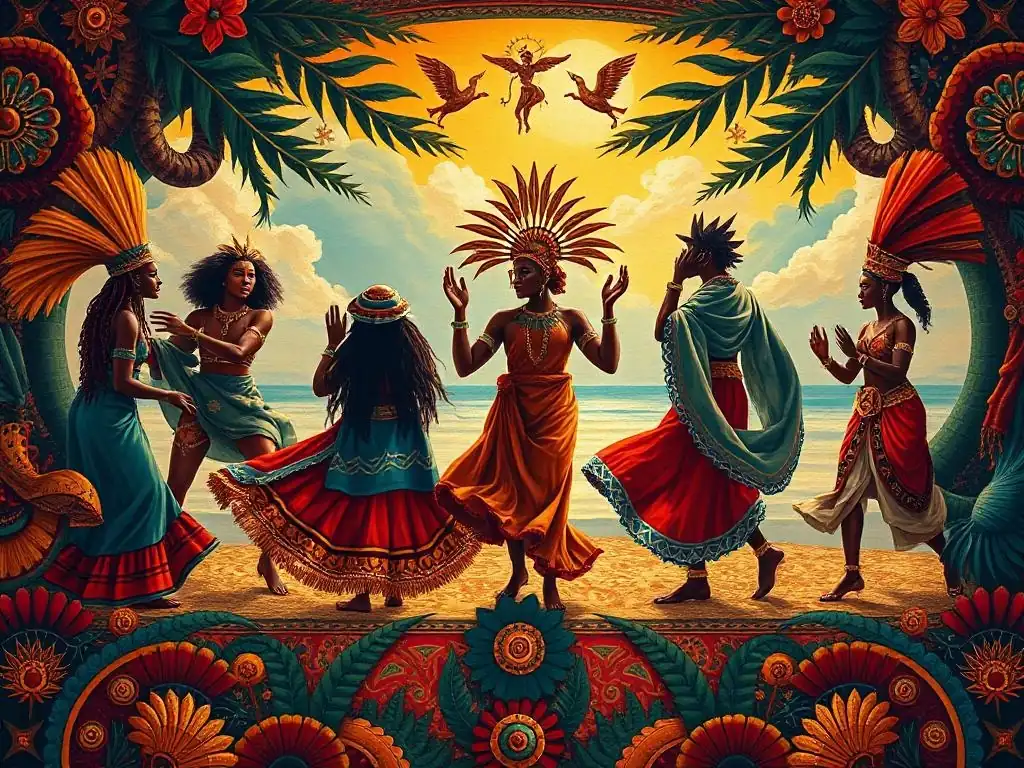
Caribbean dance rituals have served as powerful vehicles for the preservation of cultural identity in the face of historical trauma and oppression. During slavery and the subsequent periods of cultural marginalization, these practices provided a vital link to ancestral homelands, languages, and belief systems that were otherwise suppressed. The rhythms, songs, and movements encoded historical narratives, mythological knowledge, and ethical values. Participating in these rituals was an act of resistance and affirmation, a way to maintain a sense of self and community rooted in African heritage.
Even today, as Caribbean societies become more diverse and globalized, these dance traditions continue to play a crucial role in maintaining cultural continuity. They are taught and passed down through generations within families and religious communities. Ceremonies serve as communal gatherings that reinforce social bonds and collective memory.
The specific dances associated with Orishas and Loa are not just religious acts but also cultural performances that embody the unique history and spirit of communities in Cuba, Haiti, Trinidad, and elsewhere. The preservation of Caribbean dance rituals meaning is intrinsically linked to the ongoing effort to honor and maintain this rich cultural legacy.
The Impact of Dance Rituals on Contemporary Caribbean Society
The impact of Orisha and Loa dance rituals extends beyond religious worship into the broader fabric of contemporary Caribbean society and culture. Elements of these ritual dances have influenced secular dance forms, music genres, and theatrical performances across the region. For instance, rhythms originating from Bata drumming have found their way into popular Cuban music, and the dynamic movements of Vodou ceremonies have inspired choreographers and artists. Festivals and cultural events often feature performances that draw directly from or are inspired by traditional ritual dances, introducing aspects of these sacred practices to a wider audience.
Furthermore, the spiritual philosophies embedded within these traditions, often expressed through dance, continue to shape worldviews and social practices. Concepts of community, resilience, connection to nature, and the importance of ancestral wisdom resonate deeply within Caribbean cultures. While the explicit practice of these rituals may be confined to specific religious communities, their underlying values and aesthetic influences are palpable throughout the arts, music, and social dynamics of the region. Understanding Caribbean dance rituals meaning thus provides insight not only into religious life but also into the broader cultural landscape.
Understanding Caribbean Dance Rituals Meaning in a Modern Context
In the modern context, understanding Caribbean dance rituals meaning requires appreciating their complexity as living traditions that continue to evolve while maintaining core principles. For practitioners, the meaning remains deeply spiritual – a path to connect with the divine, seek guidance, and maintain spiritual balance. For scholars and observers, these rituals offer invaluable insights into the history of the transatlantic slave trade, the dynamics of cultural survival and syncretism, and the diverse expressions of human spirituality.
Globally, these traditions are gaining recognition as significant forms of cultural heritage. While some aspects remain intentionally private and sacred, others are shared through cultural performances and educational initiatives. The meaning of Caribbean dance rituals in the 21st century encompasses this duality: they are vital religious practices for devotees and important cultural touchstones for the wider society and the world. They stand as powerful testaments to the creativity, resilience, and spiritual depth of people of African descent in the Caribbean, continuing to inspire and inform contemporary life.
Conclusion: Celebrating the Vibrancy of Caribbean Dance Rituals
Caribbean dance rituals, specifically those honoring the Orishas and Loa, represent a vibrant and profound aspect of the region's cultural and spiritual landscape. Far more than mere performances, these dances are sacred acts that serve as a primary language for communication with the divine, a means of preserving ancestral heritage, and a cornerstone of community life. Whether invoking the fiery energy of Changó through the complex rhythms of Bata drums or embodying the serene flow of Damballa through the undulating movements of Yanvalou, each dance carries layers of historical, cultural, and spiritual meaning.
The resilience of these traditions, born from the crucible of slavery and shaped by the forces of syncretism, is a testament to the enduring strength of African beliefs in the Americas. The integral roles of music, costume, and spiritual leaders underscore the holistic nature of these rituals. As living traditions, they continue to evolve, influencing contemporary culture while maintaining their core purpose. Celebrating Caribbean dance rituals meaning is to honor a powerful legacy of faith, resistance, and the profound connection between movement, music, and the spirit world that defines so much of the Caribbean's unique identity.
Frequently Asked Questions
Orishas and Loa are spiritual entities honored in Afro-Caribbean religions like Santería and Vodou. Caribbean dance rituals are a primary way to connect with and invoke these deities, seeking blessings and guidance.
How do specific Caribbean dance rituals honor Orishas and Loa?
Specific dance movements, rhythms, and songs are associated with particular Orishas or Loa, mimicking their characteristics and preferences. These rituals serve as offerings and a form of spiritual communication.
What is the "meaning" behind Caribbean dance rituals honoring Orishas and Loa?
The "meaning" is multifaceted, encompassing spiritual devotion, community bonding, and preserving cultural heritage. These rituals are a way to maintain connection to ancestral traditions and seek divine intervention.
What role does music play in Caribbean dance rituals honoring Orishas and Loa?
Music is integral, with specific drums, rhythms, and songs evoking the presence of particular Orishas or Loa. The music acts as a conduit, facilitating communication and possession during the rituals.
How have Caribbean dance rituals honoring Orishas and Loa impacted contemporary society?
These rituals have influenced various aspects of Caribbean culture, including music, art, and social identity. They are also increasingly recognized as important expressions of cultural heritage and spiritual resistance.
Final Reflection: The Enduring Power of Movement and Devotion
The vibrant tapestry of Caribbean culture is inextricably woven with the threads of dance, a powerful form of communication that transcends language and speaks directly to the soul. These rituals, far from being mere performances, are living expressions of faith, history, and community, deeply relevant to understanding the cultural landscape of the Caribbean today. Their continued practice speaks volumes about the enduring power of tradition in a rapidly changing world.
The exploration of specific dance rituals honoring Orishas and Loa has revealed not only the diversity of expression within the Caribbean, but also the profound spiritual connection at their heart. These dances are not simply about movement; they are pathways to connection with the divine, a testament to the enduring strength of belief systems passed down through generations. Dance is the hidden language of the soul.
This quote, though not specifically about Caribbean rituals, perfectly encapsulates the unspoken power and emotional depth found within these sacred movements. The impact of these traditions extends beyond the religious sphere, shaping artistic expression, social cohesion, and even political identity across the islands.
Consider the ways in which movement and ritual shape your own life. What forms of expression do you use to connect with something larger than yourself? I invite you to reflect on the power of ritual, not just in the Caribbean context, but in your own personal journey. Perhaps you'll find a new appreciation for the ways in which movement, music, and devotion can intertwine to create a powerful and meaningful experience. Let the vibrant energy of these Caribbean dance rituals inspire you to find your own unique form of expression and connection.
Unleash Your Inner Divinity: Connect with the Spirits
Thank you for taking the time to explore the fascinating world of specific dance rituals honoring Orishas and Loa! We hope you gained a deeper appreciation for the power and beauty of these sacred movements. Now it's time to take that inspiration further.
- Learn a Basic Dance Step: Start your journey by researching a simple dance step associated with an Orisha or Loa that resonates with you. Even a few minutes of practice can open a new pathway to understanding.
- Share Your Discoveries: Have you encountered a particular dance that moved you deeply? Share your experience and insights with our community in the comments section below – let's build a vibrant space for discussion and mutual learning!
- Explore Related Practices: Delve deeper into the cultural contexts surrounding these dances – perhaps research the music, instruments, or costumes associated with a specific deity.
What unique connection will you forge with the spirits through movement today?