
The Orishas' Pantheon: Exploring Divinity and Humanity in Fiction

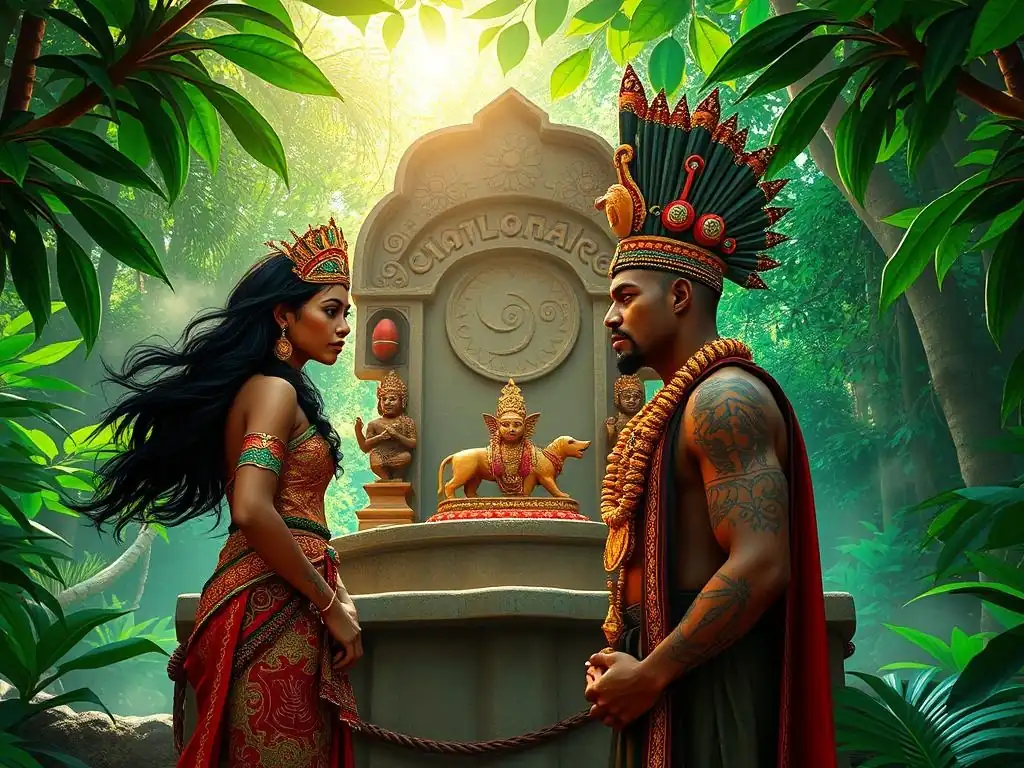
Welcome to Mythology and Legends, your gateway to captivating tales from across the globe. Ever wondered how ancient beliefs continue to shape modern stories? Dive into the vibrant world of Orisha mythology fiction themes and discover how these powerful deities inspire narratives exploring the very essence of divinity and humanity. What secrets will you uncover within their legendary struggles and triumphs? Let the journey begin...
Yemoja: Motherhood, Creation, and the Ocean's Depths
Representations of Yemoja, the mother of the Orishas and spirit of the Ogun River and the sea, often explore profound Orisha mythology fiction themes centered around creation, nurturing, and the inherent power of the feminine divine. In contemporary literature, she frequently embodies the vast, life-giving, and sometimes destructive force of water, paralleling her mythological role as the source from which much of existence flowed.
Authors delve into her connection to motherhood not just in a biological sense, but as a principle of sustenance and foundation for community, portraying her influence as both gentle currents that guide and powerful tides that reshape worlds. Her stories often touch upon the diaspora experience, with the ocean representing both the traumatic passage and a connection to ancestral lands, highlighting the complex relationship between identity and geography.
Fictional portrayals might show characters directly connected to Yemoja manifesting powers related to water manipulation or healing, reflecting her association with fertility and cleansing. Alternatively, her influence might be more symbolic, appearing as a guiding maternal presence or a force of nature that intervenes in key moments.
For instance, in works exploring Orisha mythology fiction themes in urban fantasy, Yemoja's presence might be felt in city waterfronts or underground springs, subtly influencing events or empowering characters who embody her protective and creative qualities. The duality of the ocean—calming yet capable of immense fury—provides a rich metaphor for exploring the complexities of love, loss, and resilience within her devotees or fictional descendants.
Ogun: Technology, Innovation, and the Price of Progress
Ogun, the Orisha of iron, technology, war, and labor, presents a compelling figure for exploring Orisha mythology fiction themes related to progress, innovation, and their ethical implications. As the master craftsman and warrior, his domain encompasses everything from the blacksmith's forge to modern machinery and infrastructure.
Fiction featuring Ogun often grapples with the double-edged nature of his power: the ability to build and create essential tools and technologies versus the capacity for violence and destruction inherent in weapons and industry. This duality makes him a potent symbol for narratives examining societal advancement, industrialization, and the moral responsibilities that accompany technological power.
Literary interpretations of Ogun frequently depict characters who are brilliant inventors, skilled engineers, or formidable warriors, embodying his relentless drive and mastery over materials. These characters might face dilemmas concerning the application of their skills—whether to build for the common good or to forge instruments of conflict.
Stories exploring these Orisha mythology fiction themes might feature Ogun-inspired figures navigating the complexities of modern warfare, industrial exploitation, or the societal impact of automation, reflecting on how human ingenuity, under Ogun's influence, shapes the world for better or worse. The narratives often highlight the sacrifices required for progress and the potential for the tools of creation to become instruments of harm if not wielded responsibly.
Oshun: Love, Beauty, and Revolution Through Art
Oshun, the Orisha of love, beauty, femininity, rivers, and sensuality, offers fertile ground for exploring Orisha mythology fiction themes centered on emotional power, artistic expression, and the strength found in traditionally feminine spheres. Her association with sweet waters and honey symbolizes abundance, healing, and the irresistible force of attraction and creativity.
Fiction draws on her multifaceted nature, portraying her not just as a figure of romance and aesthetics but also as a powerful force for justice and transformation, particularly when her domain is threatened. Her stories often emphasize the subtle but profound ways beauty and emotional intelligence can influence events and inspire change.
In literature, characters embodying Oshun's spirit might be artists, musicians, dancers, or healers whose creations and emotional depth hold significant power. Their narratives often explore the intersection of personal relationships, artistic passion, and societal impact.
These stories delve into Orisha mythology fiction themes by portraying how love can be a catalyst for healing or revolution, how beauty can be a tool for empowerment or subversion, and how creativity can challenge oppression. Oshun's playful yet fierce nature allows for characters who are both enchanting and formidable, capable of using charm and wit to achieve their goals, but also fiercely protective of those they love and the balance of the world, demonstrating that true strength can reside in grace and emotional resilience.
Shango: Justice, Power, and the Burden of Leadership
Shango, the Orisha of thunder, lightning, justice, fire, and drumming, is a dynamic figure in fiction, representing Orisha mythology fiction themes of power, leadership, and the pursuit of justice, often through forceful means. As a former king, his narratives frequently explore the complexities of authority, the responsibility that comes with great power, and the consequences of its misuse.
His association with fire and lightning symbolizes his explosive temperament and his role as a divine judge who strikes down injustice, but also highlights the potential for destructive rage if not controlled. Fiction featuring Shango often examines the fine line between righteous fury and tyrannical impulse.
Literary works drawing on Shango's mythology often depict characters who are charismatic leaders, powerful warriors, or figures of authority grappling with difficult decisions. Their stories delve into Orisha mythology fiction themes by exploring the nature of justice—is it swift and absolute like lightning, or does it require more measured deliberation?
These characters might face internal conflicts regarding the use of their power, the sacrifices required for leadership, and the burden of upholding order in a chaotic world. Shango's narratives in fiction frequently involve tests of character, challenges to authority, and the dramatic consequences of passion and conviction, portraying him as a complex figure whose pursuit of justice can be both awe-inspiring and terrifying, reflecting the inherent difficulties in wielding immense power responsibly.
- Yemoja: Motherhood, Creation, and the Ocean's Depths
- Ogun: Technology, Innovation, and the Price of Progress
- Oshun: Love, Beauty, and Revolution Through Art
- Shango: Justice, Power, and the Burden of Leadership
- How are Orishas commonly depicted in fiction?
- What are some recurring themes derived from Orisha mythology frequently found in fiction?
- How does fiction typically adapt the roles and responsibilities of individual Orishas?
- Why is Orisha mythology increasingly popular as a source of inspiration for fiction?
- What impact does fictional representation have on the understanding and preservation of Orisha mythology?
Frequently Asked Questions
How are Orishas commonly depicted in fiction?
Orishas are often portrayed as powerful, complex figures with both divine abilities and human-like flaws. Stories explore their relationships, rivalries, and interactions with mortals, blending elements of divinity and humanity.
What are some recurring themes derived from Orisha mythology frequently found in fiction?
Common themes include fate vs. free will, the importance of community, and the balance between power and responsibility. These narratives also frequently explore themes of identity, heritage, and cultural preservation.
How does fiction typically adapt the roles and responsibilities of individual Orishas?
Fiction often expands upon or reinterprets the traditional roles and responsibilities of each Orisha. While respecting core attributes, stories may explore alternative interpretations or present them in new contexts and scenarios.
Why is Orisha mythology increasingly popular as a source of inspiration for fiction?
The rich tapestry of Orisha mythology offers unique and compelling narratives. Its focus on diverse characters, complex relationships, and universal themes resonates with modern audiences and writers.
What impact does fictional representation have on the understanding and preservation of Orisha mythology?
Fictional portrayals can increase awareness and interest in Orisha mythology. However, it's crucial to balance creative license with respect for cultural authenticity to ensure accurate and meaningful representation.
Final Reflection: Weaving Humanity into Divinity in Fiction
The enduring power of Orishas in fiction lies not just in their fantastical abilities, but in their deeply human flaws and triumphs. Their stories, woven into the fabric of Afro-diasporic culture, continue to resonate powerfully today, offering rich narratives that explore complex themes of identity, resilience, and the search for meaning in a chaotic world. These aren't just tales of gods and goddesses; they are mirrors reflecting our own struggles and aspirations.
The Orishas' influence transcends the page; their presence in contemporary literature, film, and art demonstrates a persistent need to connect with these powerful archetypes. They offer a framework for understanding the complexities of human experience, reminding us that even divinity is not without its struggles. The gods are not remote and unapproachable; they are reflections of ourselves, magnified and intensified.
This quote, though not directly about the Orishas, encapsulates the essence of their enduring appeal: they are relatable, even in their otherworldly power. Their stories provide a potent lens through which to examine our own lives and the world around us.
Consider the narratives you've encountered, the stories that have shaped your understanding of the world. How have the Orishas, or similar figures in your own cultural heritage, influenced your own personal mythology? I urge you to explore these powerful narratives further, to delve into the rich tapestry of Orishas' stories, and to discover the profound connections between divinity and humanity that lie within. Let their tales inspire you to embrace your own strength, resilience, and the inherent divinity within each of us.
Unlock the Power of the Orishas: Craft Your Own Mythical Story!
Thanks for diving into the fascinating world of the Orishas! We hope you gained a deeper appreciation for their rich history and the powerful symbolism they embody. Now it's time to put your newfound knowledge to the test!
- Bring an Orisha to life: Create a character inspired by one of the Orishas you learned about – explore their personality, motivations, and how their divine powers might manifest in a modern setting. This is your chance to weave their essence into a compelling narrative!
- Share your Orisha-inspired creation: Discuss your character idea in the comments below! Let's build a vibrant community of myth-makers and share our interpretations of these captivating deities.
- Dive Deeper: Research other lesser-known Orishas and expand your understanding of their complex mythology. You might uncover surprising connections and untold stories.
What unique challenges or opportunities would your Orisha-inspired character face in today's world? Let's discuss!