Fate vs. Free Will: The Eternal Conflict in Ancient Texts
🌍 Dive into the ancient myths free will debate, exploring how timeless stories reveal humanity's struggle between destiny and choice. This ongoing…
Read article
Dive into the world of Ancient Texts and Epics, where timeless tales of gods, heroes, and cosmic battles are preserved in the written word. From the heroic journeys of the Epic of Gilgamesh to the poetic grandeur of Homer’s Iliad and Odyssey, these foundational works shape our understanding of mythology and its enduring influence on literature and media. Explore the sacred hymns, mythological poems, and legendary sagas that bridge ancient civilizations with modern storytelling. Uncover the roots of epic narrative, decipher symbolic language, and see how these ancient voices continue to inspire films, novels, and art today. Whether you’re a scholar or a curious seeker, this collection offers a gateway to the origins of myth, revealing how these ancient masterpieces remain relevant in our contemporary world.
🌍 Dive into the ancient myths free will debate, exploring how timeless stories reveal humanity's struggle between destiny and choice. This ongoing…
Read article
🌍 Dive into the fascinating world of the global flood myth origins, uncovering how ancient epics from diverse cultures depict a catastrophic…
Read article
🛡️ Discover the profound Achilles shield symbolism meaning in Homer’s Iliad, where the intricate art and vivid imagery on Achilles’ shield embody…
Read article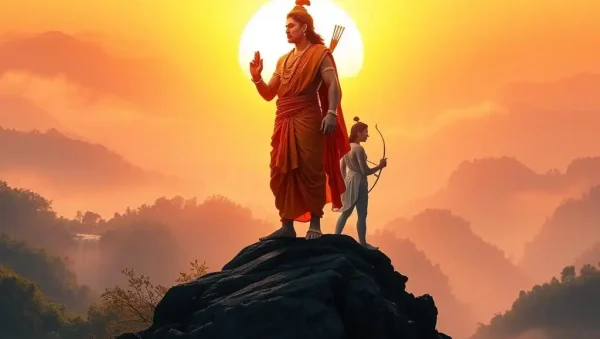
🌟 Explore the Ramayana hero’s journey meaning, revealing how Rama’s quest intertwines love and duty, shaping cultural values and inspiring timeless lessons…
Read articleDelve into the foundational stories that have shaped human civilization for millennia. In this subcategory of Mythology in Literature and Media, we dissect the original manuscripts, oral traditions, and monumental epics—from the Epic of Gilgamesh to the Mahabharata—that continue to influence modern storytelling, religion, and philosophy. Here, you’ll discover how these ancient narratives encode cultural values, historical events, and universal archetypes, making them indispensable for understanding both the past and our contemporary world. Our goal is to provide SEO-rich, scholarly yet accessible content that connects the dots between ancient myth and modern media adaptations.
Before the printing press, myths lived on the breath of storytellers. This section examines how oral traditions—such as Homeric Greek poetry or Norse sagas—were meticulously memorized and later transcribed onto clay tablets, papyrus, or vellum. You’ll learn how scribal errors, cultural censorship, and fragmentary finds like the Dead Sea Scrolls or Codex Sinaiticus shape our current interpretations. Expect insights into the Epic of Gilgamesh’s cuneiform tablets and the Vedic Rigveda’s hymn cycles, revealing how geographic and political forces preserved or altered these precious narratives.
Moreover, we explore the challenge of translating archaic languages and poetic meters without losing symbolic depth. By comparing multiple translations of the same epic—from the Iliad to Beowulf—you’ll grasp how linguistic choices affect mythological meaning. This content is perfect for literature students, myth enthusiasts, and writers seeking authentic source material for modern adaptations.
Greek mythology dominates the Western canon, and this section zeroes in on the foundational texts: Homer’s Iliad and Odyssey, Hesiod’s Theogony and Works and Days, and the now-lost Epic Cycle. We unpack the hero’s journey, the role of the gods as chaotic interveners, and the ancient Greek concept of kleos (glory) versus nostos (homecoming). You’ll also find comparative notes on how later Roman poets like Virgil imitated and subverted these Greek archetypes in the Aeneid, creating a bridge to imperial propaganda.
Expect detailed character studies, thematic breakdowns of fate versus free will, and analyses of epic similes. For educators, we provide ready-to-use discussion points on cultural values like hospitality (xenia) and honor. This section also highlights how contemporary films and novels—from Circe to Troy—reinterpret these ancient texts, ensuring your knowledge stays relevant for modern media discourse.
Move beyond the West to explore the colossal epics of ancient India. The Mahabharata, attributed to Vyasa, is the longest epic poem in existence, weaving the Kurukshetra War with philosophical dialogues like the Bhagavad Gita. Our coverage explains the intricate family trees, the concept of dharma (cosmic order), and the moral ambiguities of characters like Krishna and Arjuna. Similarly, the Ramayana by Valmiki offers a model of ideal kingship and devotion through Rama and Sita, influencing countless regional retellings across Asia.
We also trace how these epics evolved through dance, drama, and temple art, and their adaptation into modern TV series, graphic novels, and Bollywood films. By understanding these texts, you gain insight into South Asian cultural identity, caste dynamics, and gender roles. Our analysis includes comparative points with Greek and Mesopotamian epics, revealing both convergent human themes and distinct cultural innovations.
This section shifts to the colder climes of Northern Europe, examining the Poetic Edda and Prose Edda of Iceland, which preserve Norse creation myths, the tales of Odin, Thor, and Loki, and the world-ending Ragnarök. We demystify the complex genealogy of Æsir and Vanir gods, and explore how Christian scribes recorded pagan material. Alongside, we analyze the Icelandic sagas—like Njáls Saga—which blend historical fact with legendary embellishment, offering gritty family feuds and honor codes.
For the Anglo-Saxon tradition, we dissect Beowulf, the only surviving Old English epic, examining its pagan roots and Christian overlays. You’ll learn about kenning metaphors, the heroic code of boasting and gift-giving, and the monster’s symbolic role as societal otherness. This content is ideal for medieval studies, fantasy writers, and gamers drawing inspiration from Elder Scrolls or God of War. We also highlight how modern retellings like Neil Gaiman’s Norse Mythology popularize these ancient texts.
Journey to the cradle of civilization with the Epic of Gilgamesh—the oldest known epic—and Sumero-Akkadian myths of Inanna, Enuma Elish (creation), and Atrahasis (flood). We analyze Gilgamesh’s quest for immortality, his friendship with Enkidu, and his parallel to later Biblical narratives like Noah’s Ark. For Egypt, we explore the pyramid texts and the Book of the Dead, focusing on Osiris, Isis, and Horus’s cycle, and how these funerary spells were meant to secure resurrection. The section explains how these myths encode historical kingship rituals and cosmic renewal.
We also examine the influence of these texts on Greek mythology and the Hebrew Bible, providing a cross-cultural matrix that scholars often overlook. For mythology lovers, this offers a grand sweep of interconnections—from the deluge myth to the hero’s feline-contending with chaos. Modern media, including The Mummy franchise and video games like Assassin’s Creed Origins, are tied back to their ancient sources, showing continuity in human imagination.
The Epic of Gilgamesh is widely considered the oldest surviving epic, dating to around 2100 BCE in ancient Mesopotamia. It was inscribed on clay tablets in cuneiform script and recounts the adventures of a historical king of Uruk. Fragments from later Babylonian versions also exist, providing rich material for comparative mythology.
Modern fantasy, from Tolkien’s Lord of the Rings to George R.R. Martin’s A Song of Ice and Fire, borrows heavily from ancient epics in structure (hero’s journey), archetypes (wise mentor, trickster), and themes (fate, honor, apocalypse). Authors often adapt the oral-epic style of episodic trials and lineage lists, blending historical texture with mythological depth.
Oral traditions are not literal historical records, but they encode cultural memories, genealogies, and event markers—like floods or migrations—that can be cross-checked with archaeology. Scholars treat them as vital but filtered sources, noting that their purpose is didactic and symbolic rather than objective. Thus, they reveal worldview more than factual chronology.
Flood myths, like those in Gilgamesh, the Bible, Hindu, and Norse texts, likely arise from shared ancestral memories of catastrophic river floods during the last ice age. Alternatively, they serve as powerful literary metaphors for divine punishment, purification, and rebirth, making them adaptable to various moral and theological messages.
Begin with shorter, modern translations—for example, Emily Wilson’s Odyssey or Stephen Mitchell’s Gilgamesh. Use audiobooks for oral-flow immersion and read a summary or annotated guide alongside. Focus on one epic at a time, and don’t fear skipping genealogies—return to them later for deeper understanding. Start with Greek or Norse epics for more accessible cultural references.