The Allure of the Unknown: Mythic Mysteries in Art
🌍 Discover the captivating world of mythic mysteries in art, where symbolism and legends intertwine, revealing humanity’s timeless fascination with the unknown.…
Read article
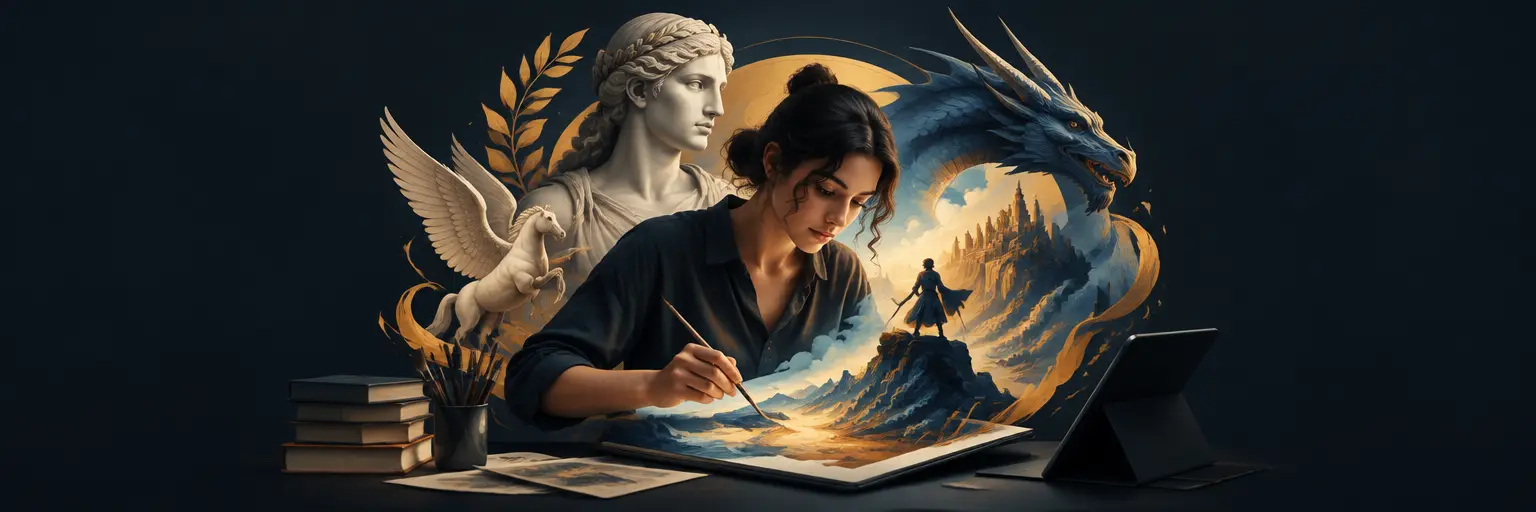
Visual art and illustration brings ancient myths to life, transforming timeless legends into vivid, emotional imagery that resonates across generations. From the dramatic brushstrokes of Renaissance painters depicting Greek gods to modern digital illustrations reimagining Norse sagas, this creative medium bridges the gap between oral tradition and visual storytelling. Artists harness symbolic colors, mythical creatures, and heroic compositions to capture the essence of folklore, making complex narratives accessible and memorable. Whether it’s a haunting depiction of Medusa’s gaze or a whimsical rendering of a Celtic fairy, each piece invites viewers to explore cultural values, moral lessons, and supernatural wonders through a fresh lens. In literature and media, illustration doesn’t merely decorate—it amplifies narrative depth, offering visual cues that enhance emotional connection and interpretive richness. From ancient pottery and illuminated manuscripts to graphic novels and concept art, this fusion of mythology and artistry fuels imagination, preserves heritage, and sparks new interpretations for contemporary audiences.
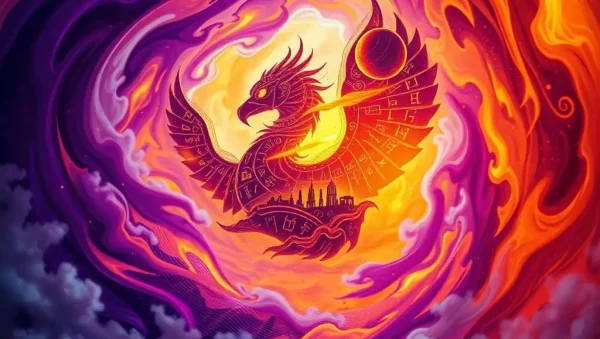
🌍 Discover the captivating world of mythic mysteries in art, where symbolism and legends intertwine, revealing humanity’s timeless fascination with the unknown.…
Read article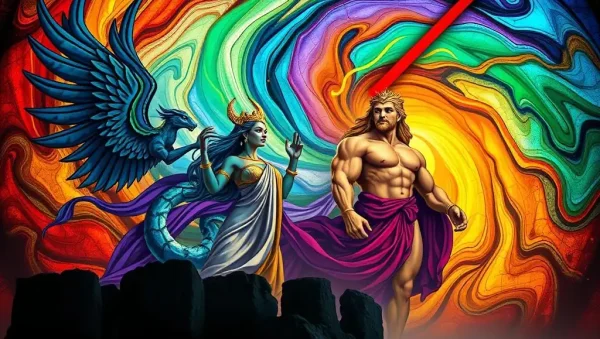
🌟 Discover how contemporary artists are reimagining ancient pantheons through modern art, blending mythological traditions with innovative creativity. Explore this fascinating fusion…
Read article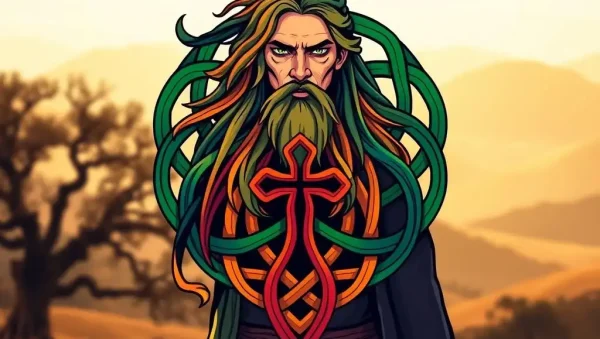
🌟 Discover the vibrant world of Celtic mythology illustration techniques, where intricate patterns and mythic symbolism bring ancient legends to life. Explore…
Read articleMythology has always been a visual language—from ancient Greek vase paintings to the intricate carvings of Norse runestones. In this subcategory, we explore how artists and illustrators transform timeless legends into striking imagery, shaping our collective imagination of gods, heroes, and monsters. You’ll discover both classic masterpieces and modern reinterpretations, alongside the techniques and symbolism that make mythological art so powerful. Whether you’re an art lover, a writer seeking inspiration, or a student of folklore, this space bridges the written word and the painted canvas, revealing how visual storytelling keeps ancient myths alive in our contemporary world.
From Botticelli’s *The Birth of Venus* to Caravaggio’s *Medusa*, Western art is saturated with mythological scenes that often carry layered meanings. Here, we decode the visual codes—such as the laurel wreath for victory, the peacock for Hera, or the owl for Athena—that artists used to communicate complex narratives without words. You’ll learn how Renaissance painters revived Classical myths to comment on politics and religion, and how Romantic artists like William Blake used mythological imagery to express personal visions. Expect detailed analyses of brushwork, composition, and chiaroscuro, all aimed at helping you “read” a painting as fluently as a text.
Beyond simple storytelling, these artworks often betray the cultural anxieties of their time. For example, the recurring image of Prometheus bound reflects Enlightenment-era debates about knowledge and punishment. By examining these layers, you’ll gain a deeper appreciation for how mythology serves as a flexible mirror for human concerns. This section also highlights lesser-known but equally powerful works from non-Western traditions, such as Japanese ukiyo-e prints depicting Shinto deities or Persian miniatures illustrating the *Shahnameh*, ensuring a globally inclusive perspective on mythological art.
Contemporary illustrators are reimagining ancient legends with bold new aesthetics—from minimalist line art to hyper-realistic digital painting. In this section, we profile artists who specialize in mythological subjects, analyzing their use of color palettes, character design, and anatomical exaggeration to evoke awe or terror. You’ll see how dragons in modern fantasy art differ from their historical European counterparts, and how hybrid creatures like the sphinx or centaur are redesigned to fit current tastes for gritty realism or whimsical charm. Each profile includes practical tips for aspiring artists, such as how to exaggerate scale or use negative space to suggest divine presence.
This focus on technique is not just for professionals; hobbyists and writers will find value in understanding how visual choices influence narrative tone. For instance, a soft watercolor approach can make a myth feel intimate and dreamlike, while a high-contrast noir style suggests danger and moral ambiguity. We also explore the rise of crowdfunded art books and social media platforms like Instagram, where independent illustrators build audiences by serializing visual retellings of epic cycles. By connecting traditional mythology with modern digital tools, you’ll see that the old stories remain fertile ground for creative experimentation, with each generation adding its own visual vocabulary.
Sequential art has proven to be a perfect medium for mythological epics, allowing for slow-burn world-building and dynamic action sequences. From Marvel’s Thor to indie graphic novels like *Age of Bronze* by Eric Shanower, we trace how comics adapt, subvert, and expand upon original myths. This section compares narrative pacing—how a graphic novel can dwell on the psychological torment of Odysseus when comics allow for silent panels—versus the more compressed storytelling of a single illustrated page. You’ll also discover how Japanese manga often blends Shinto and Buddhist mythology with cyberpunk elements, creating hybrid genres that resonate globally.
Moreover, we analyze the collaborative process between writers and artists, showing how panel layouts, speech bubbles, and color grading affect the emotional weight of a scene. For readers unfamiliar with the medium, we provide a beginner’s guide to the best mythological graphic novels, from *The Sandman* to *Persepolis* (where myth intertwines with history). We also cover the role of lettering and sound effects in evoking the cacophony of battle or the silence of a god’s judgment. By the end of this section, you’ll appreciate why comics are not merely “illustrated stories” but a sophisticated art form that can make the most ancient legends feel urgent and personal.
Every hue and shape carries meaning in mythological art—whether it’s the gold of immortality, the red of sacrifice, or the spiral representing eternity. Here, we break down the science and psychology of color as applied to legendary figures, helping you understand why Athena is always shown in cool blues or why Hades often appears in shadowy purples. We also examine recurring symbols, such as the labyrinth, the yin-yang, or the Ouroboros, explaining their origins and their evolution across cultures. This knowledge is essential for artists seeking to infuse their work with authentic mythological depth, as well as for historians decoding the visual vocabulary of ancient artifacts.
Beyond the obvious palette, this section explores the use of texture and line weight to convey divine or monstrous qualities. For example, jagged edges typically signal chaos or malice, while smooth curves suggest harmony and divine grace. We also discuss the impact of monochromatic palettes in minimalist posters that reduce a myth to a single iconic image—like a lone wolf under a moon for Fenrir or a shattered vase for Pandora. By understanding these visual rules, you’ll be able to create or appreciate mythological illustrations that speak a universal language, transcending written texts and appealing directly to the viewer’s primal emotions.
Mythological imagery has escaped galleries and books to flourish on city walls and human skin. This section celebrates street artists who paint massive murals of Quetzalcoatl in Mexico City or Anansi the spider in Ghana, using public space to reclaim indigenous heritage. We also explore the rich tradition of mythological tattoos—from Polynesian tribal marks that encode genealogies to modern Norse-inspired sleeve tattoos. Each piece tells a personal story, often blending multiple myths to represent the wearer’s identity, resilience, or spiritual path. You’ll find interviews with tattoo artists about their research process and the ethical responsibility of respecting sacred symbols.
We also analyze the phenomenon of “mythological mashups” in urban art, where a single mural might combine Greek, Hindu, and Japanese deities, commenting on globalization and cultural hybridity. This trend reflects how mythological motifs have become a shared visual currency in our interconnected world. Additionally, we investigate the political uses of such art—for instance, how the image of the phoenix has been employed in protest movements from Cairo to Hong Kong. By documenting these ephemeral works, we hope to show that mythology is not static but a living, adaptable language that responds to the pulse of contemporary society, whether in a crowded subway station or on a traveler’s arm.
Arguably, Sandro Botticelli’s *The Birth of Venus* (1486) holds that title, depicting the goddess emerging from the sea on a giant scallop shell. Its revival of Classical beauty, combined with Renaissance humanism, has made it an iconic symbol of mythological art. However, others might cite Leonardo’s *Leda and the Swan* (though lost) or Picasso’s reinterpretations of Minotaur myths. Ultimately, “famous” often depends on cultural region, as Asian classics like *The Tale of Genji* scrolls also rival in significance.
Start by reading the original texts—Ovid, Homer, or the Norse Eddas—but also study artifacts and pottery from the exact era you wish to depict, as visual culture changes over time. Pay attention to clothing, armor, and architecture to avoid anachronisms. Next, sketch repeatedly from life and existing art to build a visual vocabulary. Finally, use color and composition to express the myth’s emotional core, not just its literal events. Researching cultural context prevents stereotyping or accidental offense, ensuring your illustration honors the tradition.
Classical styles—like the idealized proportions of Greek sculpture or the dramatic chiaroscuro of Baroque painting—have become shorthand for “epic” and “timeless” in our visual lexicon. Filmmakers and game designers borrow these aesthetics to instantly communicate that a story is larger-than-life. Moreover, these styles have proven psychologically resonant, as symmetrical faces and heroic poses trigger positive associations. However, modern creators often blend classical elements with contemporary CGI or comic-book dynamics to appeal to modern audiences, creating a hybrid that feels both familiar and fresh.
Absolutely, though they receive less historical recognition. For example, Artemisia Gentileschi painted powerful mythological heroines like Judith and Cleopatra in the Baroque period, infusing them with fierce realism. More recently, artists like Yuko Shimizu and Audrey Kawasaki have gained fame for mythological-inspired works that merge Japanese and Western aesthetics. Contemporary platforms like Behance and ArtStation showcase countless female illustrators specializing in goddesses, heroines, and monsters. The field is increasingly diverse, correcting centuries of male-dominated canon and offering new perspectives on ancient tales.
Yes, but with caution. While ancient artworks offer invaluable evidence of how myths were perceived, they are not neutral—they reflect the artist’s patron, social norms, and contemporaneous politics. For instance, a Roman fresco of Venus might emphasize fertility due to imperial propaganda. Therefore, researchers treat mythological art as a primary source for *reception*, not for the “original” myth, which likely existed in oral form first. Cross-referencing artifacts with written texts from the same period helps scholars reconstruct cultural meaning and trace how myths evolved visually over centuries.