
The Wild Palette of Celtic Mythology in Illustration

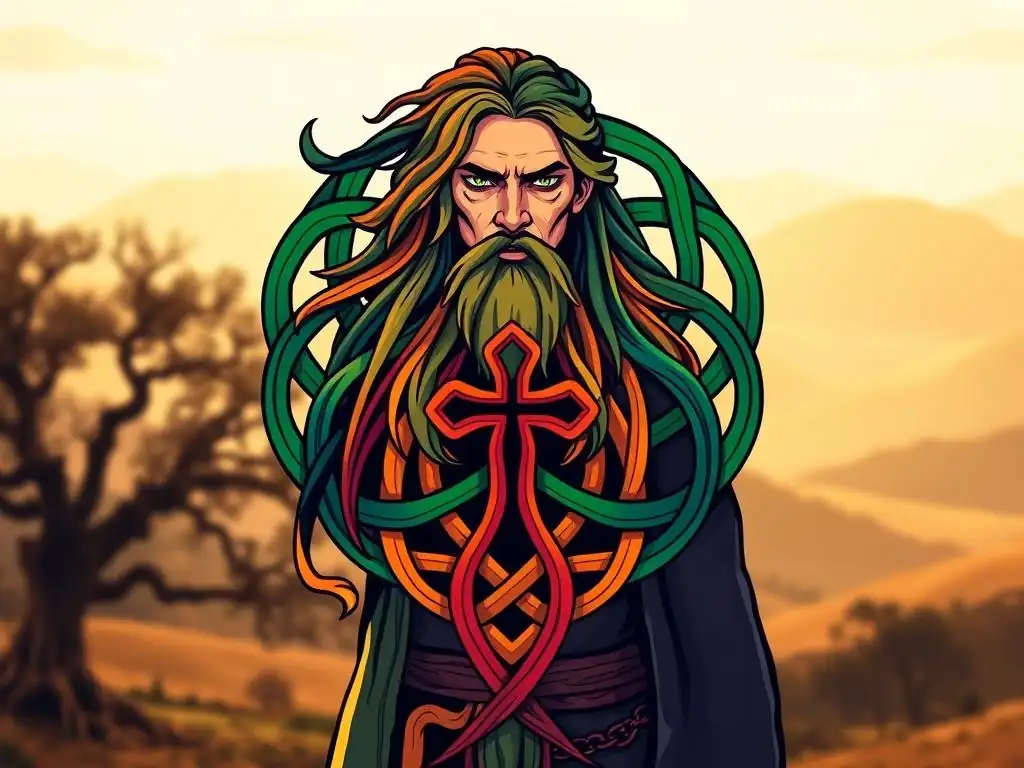
Welcome to Mythology and Legends, where ancient whispers echo through the ages! Ever wondered how artists capture the raw, untamed spirit of Celtic lore? This month, we delve into the wild palette of Celtic mythology illustration techniques. Uncover the secrets behind bringing these powerful stories to life, and see how artists are reimagining ancient gods and mythical creatures for a modern audience. What are the key elements that make a Celtic illustration truly Celtic? Let's explore...
- The Wild Palette of Celtic Mythology in Illustration: A Visual Journey
- Celtic Mythology Illustration Techniques: A Deep Dive
- Key Elements and Motifs in Celtic Illustrations
- The Influence of Celtic Art on Contemporary Illustration
- Mastering the Color Palette of Celtic Illustration
- Digital Tools and Traditional Methods in Celtic Illustration
- Tips for Creating Authentic Celtic Mythology Illustrations
-
Frequently Asked Questions
- What are some common motifs featured in Celtic mythology illustrations?
- What illustration techniques are best suited for capturing the essence of Celtic mythology?
- How can artists effectively portray the deities and heroes of Celtic mythology through illustration?
- Where can aspiring illustrators find inspiration for depicting Celtic mythological scenes?
- How can illustrations help to preserve and promote Celtic mythology in modern society?
- Final Reflection: Unveiling the Enduring Power of Celtic Myth in Art
- Unleash Your Inner Artist: Bring Celtic Mythology to Life!
The Wild Palette of Celtic Mythology in Illustration: A Visual Journey
Exploring the Rich Tapestry of Celtic Myths and Legends
Celtic mythology is a vast and intricate collection of stories, beliefs, and characters originating from the ancient Celtic peoples of Western Europe. These narratives, passed down through oral tradition for centuries before being recorded, primarily in medieval manuscripts from Ireland and Wales, are rich with tales of heroic deeds, powerful deities, mythical creatures, and the mystical interactions between the human world and the supernatural realm. Key cycles like the Ulster Cycle, the Fenian Cycle, the Mythological Cycle, and the Historical Cycle in Irish lore, or the Mabinogion in Welsh tradition, provide a wealth of source material.
These stories often feature complex characters like Cú Chulainn, Fionn mac Cumhaill, the Tuatha Dé Danann, and figures like King Arthur, whose legends have Celtic roots. The depth and complexity of these narratives offer an almost inexhaustible source of inspiration for artists seeking to visualize the ancient Celtic world.
The enduring fascination with Celtic myths stems from their vibrant imagery, exploration of universal themes like love, loss, heroism, and fate, and their connection to the natural world and the cycles of life and death. Unlike classical mythologies with more defined pantheons and hierarchies, Celtic myths often feature fluid boundaries between gods and mortals, and a strong emphasis on magic, shape-shifting, and the liminal spaces between worlds.
This ambiguity and mystical quality lend themselves particularly well to artistic interpretation, allowing illustrators significant creative freedom while still drawing from established lore. The visual language derived from archaeological finds, such as La Tène art dating back to the 5th century BC, and later manuscript illumination, provides a historical aesthetic foundation that continues to influence contemporary Celtic mythology illustration techniques.
The Enduring Appeal of Celtic Folklore in Modern Art
The allure of Celtic folklore persists strongly in contemporary art forms, from painting and sculpture to digital illustration and concept art. This continued interest is fueled by a desire to connect with ancient roots, explore themes of nature and magic, and appreciate the unique aesthetic developed over millennia.
Modern artists are drawn to the dramatic potential of tales featuring brave warriors battling monstrous foes, wise druids communing with nature spirits, and the haunting beauty of the Otherworld. The distinct visual motifs—spiral patterns, interlace knots, stylized animals—provide a recognizable artistic vocabulary that can be reinterpreted for modern audiences while maintaining a sense of historical continuity.
Illustrators today utilize a wide array of Celtic mythology illustration techniques to bring these ancient stories to life. This includes adopting traditional approaches like intricate line work and illuminated manuscript styles, as well as employing modern digital tools to create dynamic, vibrant depictions of Celtic heroes, gods, and landscapes.
The global reach of media like fantasy literature, video games, and film often incorporates elements of Celtic mythology, further boosting its visibility and inspiring artists. For instance, elements inspired by Celtic lore are frequently seen in popular fantasy series, influencing character designs, architectural styles, and creature concepts, demonstrating the ongoing relevance and adaptability of these ancient narratives in the visual arts.
Celtic Mythology Illustration Techniques: A Deep Dive
Essential Techniques for Capturing the Essence of Celtic Lore
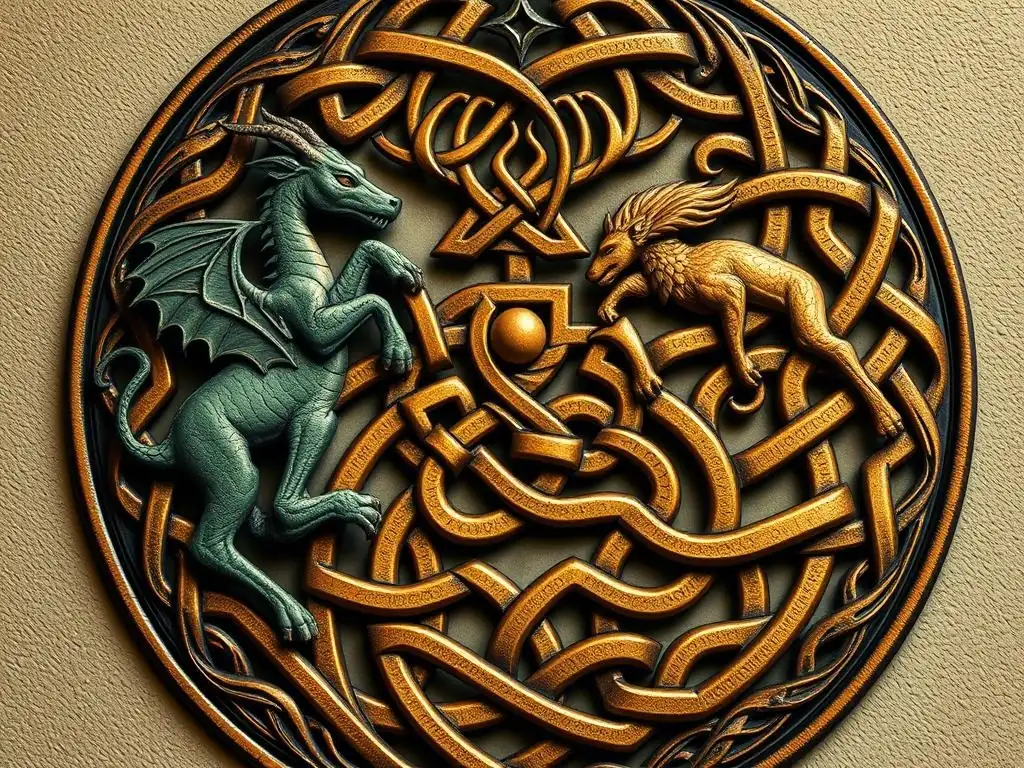
Capturing the essence of Celtic lore through illustration requires a blend of historical understanding and artistic skill. One fundamental technique involves mastering the intricate line work characteristic of historical Celtic art. This often means employing fine pens or brushes to create detailed outlines and internal patterns. Artists frequently use hatching and cross-hatching to add texture and shadow, mimicking the techniques seen in medieval manuscripts or early metalwork.
Another crucial technique is the use of stylized forms, particularly for figures and animals. Instead of strict realism, Celtic art often favors symbolic or decorative representations, emphasizing flow and pattern over anatomical precision. This can be seen in the elongated, intertwined limbs of creatures or the stylized depictions of human faces in historical artifacts.
Furthermore, a key aspect of Celtic mythology illustration techniques is the deliberate use of composition to create a sense of dynamism and interconnectedness. Elements within a piece are often woven together, literally and figuratively, through interlace patterns or by having figures and objects flow into one another. This technique reflects the Celtic worldview where the physical and spiritual realms, as well as different aspects of nature, are deeply interconnected.
Artists often plan compositions to guide the viewer's eye along complex lines and curves, creating a visually engaging experience that mirrors the winding narratives of the myths themselves. Incorporating elements like spirals (representing growth and spiritual journeys) and triskeles (often symbolizing motion, cycles, or the realms of land, sea, and sky) is vital for infusing the artwork with authentic Celtic symbolism.
The Role of Symbolism in Celtic Mythology Illustrations
Symbolism is not merely decorative in Celtic art; it is a fundamental language that conveys meaning, belief, and narrative. In Celtic mythology illustrations, the deliberate inclusion and arrangement of symbols are paramount to communicating the deeper layers of the stories. For example, the oak tree is often depicted not just as a tree, but as a symbol of strength, endurance, and a connection to the divine or the Otherworld.
Birds like ravens or swans carry specific meanings related to prophecy, transformation, or journeys between realms. The salmon is a potent symbol of knowledge and wisdom, famously associated with Fionn mac Cumhaill.
The effectiveness of Celtic mythology illustration techniques relies heavily on an artist's understanding of these symbolic meanings. A well-placed spiral can suggest a journey inward or outward, growth, or the cyclical nature of life. A specific type of knot might represent eternity or the interconnectedness of all things.
Even the choice of animal can signify a particular god, hero, or magical quality associated with the scene being depicted. For instance, illustrating the Morrigan, a goddess of war and fate, often involves depicting her alongside ravens or crows, her associated animals, which immediately communicates her ominous and powerful nature to those familiar with the symbolism. Artists must therefore research the specific meanings of various symbols within Celtic lore to ensure their illustrations are not only beautiful but also culturally resonant and accurate to the narratives they portray.
Key Elements and Motifs in Celtic Illustrations
Celtic Knots and Interlace Patterns: A Visual Language
Celtic knots and interlace patterns are perhaps the most recognizable elements of Celtic art, forming a complex visual language. These intricate designs consist of continuous lines that weave over and under one another, creating complex braids and knots that seem to have no beginning or end.
While they became particularly prominent in the Insular art period (circa 6th to 10th centuries AD) found in manuscripts like the Book of Kells, their origins can be traced back to earlier periods and influences. There are numerous types of knots, including basic knotwork, panel knots, zoomorphic interlace (where animal forms are woven into the pattern), and geometric interlace.
The function of these patterns in Celtic mythology illustrations is multifaceted. They serve as decorative borders, fill empty spaces within larger designs, and can even form the bodies or limbs of creatures and figures. Beyond their aesthetic appeal, the continuous nature of the lines is often interpreted symbolically, representing eternity, the interconnectedness of life, faith, or loyalty.
Mastering the technique of drawing these knots accurately requires patience and precision, often starting with a grid or framework before weaving the lines. Artists employing Celtic mythology illustration techniques frequently use these patterns to add a layer of historical authenticity and symbolic depth to their work, weaving them into clothing, armor, borders, or even the fabric of the landscape.
The Significance of Animals in Celtic Art and Storytelling
Animals hold profound significance in Celtic mythology and art, often serving as companions to deities and heroes, symbols of specific traits or powers, or even shape-shifted forms of mythical beings. The stag, for example, is frequently associated with the god Cernunnos and represents nature, masculinity, and fertility. Boars symbolize fierceness and warfare, while salmon are linked to wisdom and knowledge. Birds, as mentioned, often act as messengers or represent spiritual journeys, with ravens and crows tied to prophecy and the Morrigan, and swans associated with love and transformation (as in the tale of the Children of Lir).
Illustrators depicting Celtic myths must understand these associations to effectively portray the narrative. Including a specific animal alongside a character or in a scene adds layers of meaning derived directly from the folklore. Techniques for rendering these animals in Celtic art vary, from highly stylized and integrated within interlace patterns (zoomorphic interlace) to more naturalistic, yet still often symbolic, depictions.
Early Celtic art, like the Battersea Shield (circa 350-50 BC), features highly stylized animal forms. Later manuscript art often shows animals, both real and fantastical, integrated into decorative initials and borders. When applying Celtic mythology illustration techniques, artists carefully choose and depict animals not just as background elements, but as active participants in conveying the story's symbolism and themes.
Depicting Celtic Deities and Mythical Creatures
The pantheon of Celtic deities and the menagerie of mythical creatures offer a rich visual vocabulary for illustrators. Deities like Lugh (skilled in many arts), the Dagda (a father figure god), Brigid (associated with poetry, smithcraft, and healing), and figures from the Mabinogion like Rhiannon or Bran the Blessed, are central to many myths. Mythical creatures range from the fearsome Fomorian giants and monstrous serpents to benevolent nature spirits, fae folk (like the Aos Sí), and shape-shifters. Each character and creature often has specific attributes, symbols, or associated animals that inform their visual representation.
Depicting these figures requires careful consideration of their descriptions within the myths, archaeological evidence (such as depictions of Cernunnos), and the artistic conventions developed over time. For example, Lugh is often shown with his spear or associated with the sun, while Brigid might be depicted with fire or symbols of craftsmanship. Mythical beasts, like the Púca (a shape-shifting spirit) or the fearsome Drac (a water dragon), require imaginative yet lore-informed designs.
Celtic mythology illustration techniques for these subjects often involve combining human or animal forms with abstract or symbolic elements, using dynamic poses to convey power or grace, and integrating them within symbolic landscapes or alongside relevant artifacts. The goal is to create compelling visuals that are instantly recognizable to those familiar with the lore, while also being visually striking and evocative for a wider audience.
The Influence of Celtic Art on Contemporary Illustration
Modern Interpretations of Celtic Mythology in Visual Media
The visual legacy of Celtic art and mythology continues to profoundly influence contemporary illustration across various media. This influence is visible not only in direct depictions of myths but also in the adoption of Celtic aesthetic principles in fantasy art, book illustration, concept design for games and film, and even tattoo art and graphic design. Modern artists interpret classic Celtic mythology illustration techniques through a contemporary lens, using digital tools, new materials, and incorporating influences from other art styles while retaining the core essence.
For example, while traditional Celtic art often used a limited color palette derived from natural pigments, modern illustrators utilize a full spectrum of digital colors to create vibrant, atmospheric scenes. They might take the intricate interlace patterns and apply them to futuristic armor, incorporate stylized animal motifs into character designs for video games, or use the flowing lines characteristic of Celtic art to depict magical energies or dynamic movement in comic books.
This adaptation demonstrates the versatility of Celtic visual language, proving it can evolve and remain relevant in diverse creative fields. The resurgence of interest in fantasy literature and folklore has provided a fertile ground for artists to explore modern interpretations of Celtic myths, bringing ancient stories to new audiences through compelling visuals.
Aidan Harron: A Contemporary Celtic Mythology Illustrator
A notable example of a contemporary artist working within this tradition is Aidan Harron, an illustrator known for his detailed and evocative depictions of Celtic mythology. Harron's work often focuses on key figures and stories from Irish mythology, such as the Tuatha Dé Danann, the Children of Lir, and the heroes of the Ulster Cycle. His style typically combines strong, dynamic compositions with intricate detail, drawing heavily on the visual language of historical Celtic art while employing modern illustration techniques, often working digitally.
Harron's approach exemplifies how traditional Celtic mythology illustration techniques can be adapted for a modern context. He utilizes detailed line work reminiscent of manuscript illumination but employs digital painting techniques to create rich textures, atmospheric lighting, and a broader color palette than would have been available historically.
His illustrations often feature dramatic portrayals of mythical battles, mystical encounters, and the beauty of the Irish landscape, infused with symbolic elements like knots, spirals, and significant animals. By focusing on historical accuracy in terms of lore and symbolism while using contemporary tools and aesthetics, artists like Harron play a crucial role in keeping Celtic mythology visually relevant and inspiring a new generation of enthusiasts and artists.
Mastering the Color Palette of Celtic Illustration
The Significance of Colors in Celtic Symbolism
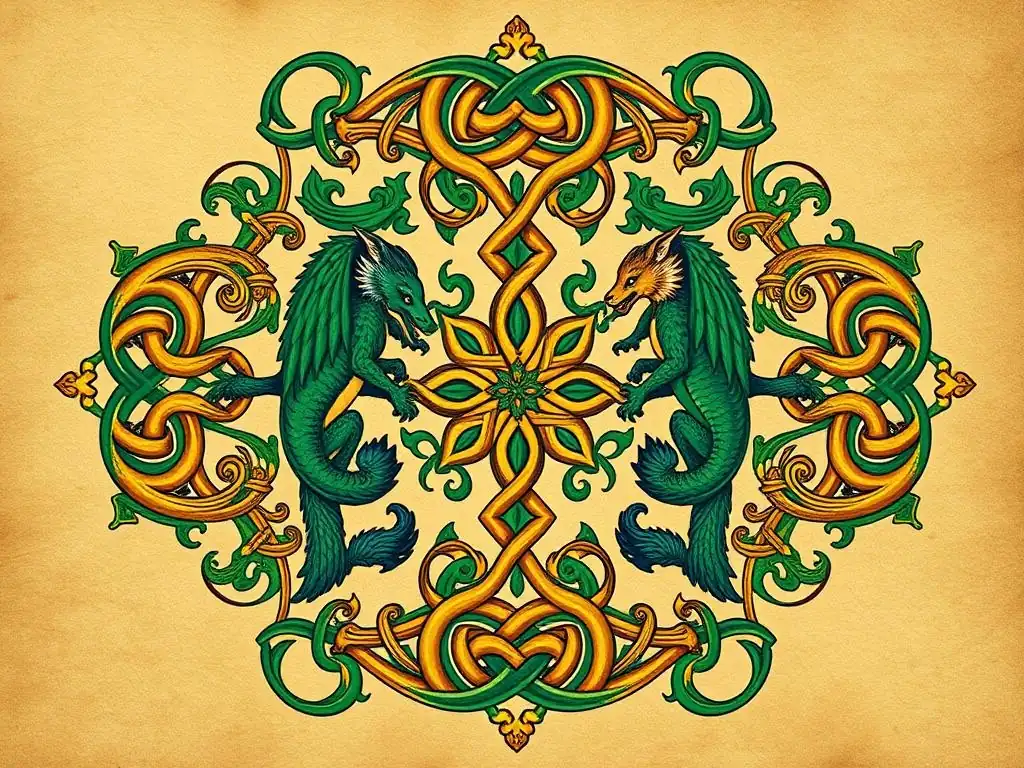
While historical evidence regarding the precise use and symbolic meaning of colors in ancient Celtic art is somewhat limited compared to other cultures, we can infer significance from surviving artifacts, later manuscript illumination, and related cultural contexts. Colors derived from natural pigments would have been used, likely including reds from madder or ochre, blues from woad, yellows, greens, and blacks. In later illuminated manuscripts like the Book of Kells, a more vibrant palette emerged, featuring rich blues (from lapis lazuli, imported), reds, greens, yellows, and purples, often used in bold, flat areas or intricate patterns.
In terms of symbolism, while not as rigidly defined as in some other traditions, certain colors likely held meaning. Red might have been associated with blood, warfare, or vitality. Green is strongly tied to the natural world, the land, and potentially the Otherworld. Blue, especially the deep blue seen in manuscripts, could represent the sky, water, or perhaps divinity.
White and black often appear together, representing contrasts like life and death, light and dark, or the sacred and the mundane. When applying Celtic mythology illustration techniques, artists consider these potential historical uses and symbolic associations to create palettes that feel authentic and enhance the narrative or emotional tone of the illustration. A scene set in the mystical Otherworld might favor greens and blues, while a battle scene could feature strong reds and blacks.
Color Palettes Inspired by the Book of Kells and Nature
Two primary sources of inspiration for color palettes in Celtic mythology illustration are the vibrant colors found in illuminated manuscripts like the Book of Kells and the rich, varied hues of the Celtic landscape. The Book of Kells, created around 800 AD, is renowned for its incredibly rich and saturated colors, including bright blues, reds, greens, yellows, and purples, often juxtaposed in striking combinations. Studying these manuscripts provides a historical basis for developing authentic color schemes, focusing on jewel-like tones and strong contrasts.
Alternatively, many artists draw inspiration directly from the natural environment of Celtic lands—the deep greens of the rolling hills, the misty blues and greys of the skies and seas, the earthy browns and oranges of peat bogs and autumn foliage, and the vibrant purples of heather. A palette based on nature might include:
- Deep forest greens
- Peat brown
- Sky blue (misty or clear)
- Heather purple
- Stone grey
- Golden yellow (like gorse or sunlight)
- Ocean blues and greens
Using a palette inspired by nature can ground fantastical elements in reality and evoke the strong connection between Celtic mythology and the land. Combining elements from both sources—the historical vibrancy of manuscripts and the atmospheric quality of the landscape—allows for a flexible approach to Celtic mythology illustration techniques, enabling artists to create visuals that are both historically resonant and emotionally evocative.
Digital Tools and Traditional Methods in Celtic Illustration
Combining Digital Art with Traditional Celtic Motifs
Modern Celtic mythology illustration techniques frequently involve a fusion of digital tools with traditional artistic principles and motifs. While the intricate line work and knot patterns originated with pens, brushes, and metalworking tools, digital software now allows for greater precision, speed, and flexibility. Artists can sketch out complex knot designs digitally, refine line weights with ease, and manipulate patterns in ways that would be labor-intensive or impossible with traditional methods.
The combination might involve creating initial sketches or line art traditionally on paper, scanning it, and then coloring or adding textures digitally. Alternatively, artists might create the entire piece digitally, using brushes that mimic the look of ink or paint, and employing layers to build up complex compositions and details. This hybrid approach allows artists to leverage the strengths of both worlds: the tactile feel and unique qualities of traditional media for certain elements, and the efficiency, editing capabilities, and wide range of tools offered by digital platforms for others.
For example, a digital artist might meticulously hand-draw a central figure traditionally, then scan it and build up intricate digital knotwork borders and atmospheric backgrounds around it, applying digital textures that resemble parchment or aged metal. This blend is key to many contemporary Celtic mythology illustration techniques.
Procreate and Adobe Illustrator for Celtic-Inspired Illustration
Two popular digital tools widely used for creating Celtic-inspired illustrations are Procreate (on iPad) and Adobe Illustrator. Procreate is favored for its intuitive interface and powerful brush engine, which allows artists to mimic various traditional media, including inks and paints, making it excellent for sketching, line art, and digital painting. Artists can create detailed line work for knots and figures, build up rich textures, and work with a broad color palette. Its portability also makes it convenient for sketching inspiration found in museums or nature.
Adobe Illustrator, a vector-based program, is particularly well-suited for creating clean, scalable line art and complex, precise patterns like Celtic knots. Because vector graphics are based on mathematical equations rather than pixels, lines and shapes can be resized infinitely without losing quality, which is ideal for intricate designs that might be used in various applications, from print to web. Artists can use Illustrator's pen tool to draw precise knotwork, create repeating patterns, and build complex compositions with clean lines and solid color fills.
Many artists use a combination of both programs: perhaps sketching and painting in Procreate for a looser, more textured feel, and then using Illustrator for creating sharp, scalable knotwork or geometric elements to integrate into the final piece. Mastering these tools offers significant possibilities for exploring and developing unique Celtic mythology illustration techniques in the digital realm.
Tips for Creating Authentic Celtic Mythology Illustrations
Researching and Understanding Celtic Culture and Beliefs
Creating authentic Celtic mythology illustrations goes far beyond simply drawing knots and spirals; it requires a genuine effort to research and understand the underlying culture, beliefs, and historical context. This involves reading the primary source myths (like the translations of Irish sagas or the Welsh Mabinogion), studying the history of the Celtic peoples, and learning about their worldview, societal structure (e.g., the role of druids, warriors), and relationship with the natural and supernatural worlds. Understanding the nuances of different cycles within Irish mythology, or the specific characteristics of Welsh legends, is crucial for accurate portrayal.
Furthermore, studying historical Celtic art from various periods—from the La Tène period through the Insular art of the early medieval manuscripts—provides essential visual context. Pay attention to how figures, animals, and abstract motifs were depicted, the common compositions, and the evolution of styles. This research informs not just the visual elements but also helps the artist grasp the spirit and significance of the stories they are illustrating.
For instance, understanding the concept of geasa (vows or taboos) in Irish mythology can add depth to how a hero like Cú Chulainn is depicted, highlighting the constraints and fate they faced. This foundational knowledge is perhaps the most critical of all Celtic mythology illustration techniques.
[ ] Read key Celtic myths (Ulster Cycle, Fenian Cycle, Mabinogion)
[ ] Study examples of historical Celtic art (Book of Kells, artifacts)
[ ] Research the meaning of key Celtic symbols (knots, animals, plants)
[ ] Understand the historical context of the myths
Avoiding Cultural Appropriation in Your Artwork
When creating artwork inspired by any culture, including Celtic culture, it is vital to be mindful of cultural appropriation. This means engaging with the culture respectfully, acknowledging the source of inspiration, and avoiding the use of sacred or culturally significant elements without understanding their meaning or context, or using them in a way that is trivializing or disrespectful. Celtic culture has a living heritage, and many symbols and traditions hold contemporary significance for people of Celtic descent.
To avoid appropriation, prioritize deep research and understanding, as mentioned above. Instead of merely lifting symbols or motifs because they "look cool," learn their meaning and use them appropriately within the context of the myths or historical art styles. Consider collaborating with or seeking feedback from individuals knowledgeable in Celtic studies or those from Celtic cultural backgrounds.
Clearly attributing inspiration and showing respect for the source material is key. Focus on illustrating specific stories or characters from the myths, rather than just using disconnected symbols. By approaching Celtic mythology illustration techniques with respect and a commitment to understanding, artists can create work that is both beautiful and culturally sensitive.
Resources for Learning More About Celtic Mythology and Art
For those looking to delve deeper into the world of Celtic mythology and art to enhance their illustration skills, numerous resources are available. Academic texts and translations of primary source materials are invaluable for understanding the myths themselves. Authors like Jeffrey Gantz, Thomas Kinsella (for the Táin Bó Cúailnge), and Lady Charlotte Guest (for the Mabinogion) offer key translations. Books on Celtic history and archaeology provide context for the art and culture.
Visual resources are also crucial. High-quality reproductions of illuminated manuscripts like the Book of Kells, Book of Durrow, and the Lindisfarne Gospels (closely related in style) are essential for studying historical art techniques and motifs. Museums with collections of Celtic artifacts, though you cannot link to them, offer opportunities to see examples of metalwork, stone carvings, and other art forms firsthand.
Online databases from museums or libraries, when accessible, can also provide images for study. Additionally, there are many contemporary artists, scholars, and organizations dedicated to preserving and promoting Celtic culture and arts, whose work and resources can provide further insight into authentic Celtic mythology illustration techniques and approaches.
Frequently Asked Questions
What are some common motifs featured in Celtic mythology illustrations?
Common motifs include the Tree of Life, intricate knotwork patterns, and depictions of mythical creatures like dragons and Celtic gods. These motifs often carry symbolic meanings within the narratives.
What illustration techniques are best suited for capturing the essence of Celtic mythology?
Techniques like pen and ink, watercolor washes, and digital painting with a focus on line work are popular. The aim is to evoke a sense of ancient artistry and detail.
How can artists effectively portray the deities and heroes of Celtic mythology through illustration?
Focus on researching the specific attributes and stories associated with each character. Use symbolism and visual cues to represent their powers, personalities, and roles.
Where can aspiring illustrators find inspiration for depicting Celtic mythological scenes?
Inspiration can be found in ancient Celtic art, illuminated manuscripts like the Book of Kells, and contemporary interpretations of Celtic folklore. Museum visits and online research are also helpful.
How can illustrations help to preserve and promote Celtic mythology in modern society?
Illustrations can visualize stories and concepts, making them accessible to a wider audience, especially younger generations. They help to keep the mythology alive and inspire further exploration.
Final Reflection: Unveiling the Enduring Power of Celtic Myth in Art
The vibrant tapestry of Celtic mythology continues to inspire artists today, proving that ancient stories possess a timeless power to resonate with modern sensibilities. Its intricate knotwork, swirling patterns, and evocative imagery offer a rich wellspring for creative expression, constantly pushing the boundaries of illustration techniques and challenging our understanding of visual storytelling.
The enduring influence of Celtic mythology on the art world is undeniable; its symbolic language speaks to a deep-seated human need for connection with nature, spirituality, and the mysteries of the past. Myth is a powerful thing. It shapes our understanding of the world and our place in it.
This quote highlights the profound impact these ancient narratives have, not only on artistic creation but also on our collective cultural consciousness. The article's exploration of various illustration techniques, from digital painting to traditional inks, only serves to underscore the versatility and enduring appeal of this rich source material.
Consider the intricate details, the symbolic power of each creature and motif. Let the swirling lines and vibrant colors ignite your own imagination. You too can tap into this ancient wellspring of creativity. Explore the techniques discussed, experiment with your own style, and let the wild palette of Celtic mythology inspire your next artistic endeavor. Embrace the challenge, delve into the stories, and discover the boundless possibilities waiting to be unveiled.
Unleash Your Inner Artist: Bring Celtic Mythology to Life!
Thanks for exploring the vibrant world of Celtic mythology through illustration! You've gained valuable insights into the rich symbolism and artistic potential of this ancient tradition. Now it's time to put that inspiration into action.
- Create your own Celtic-inspired artwork: Let your imagination run wild! Sketch a mythical creature, design a fantastical landscape, or reinterpret a classic Celtic knot. This is your chance to express your newfound knowledge creatively.
- Share your creation with our community: Post your artwork on social media using #CelticMythologyArt and tag @MythologyAndLegends (if applicable). Let's inspire each other!
- Explore further: Dive deeper into specific Celtic myths and legends that particularly captured your interest. There's a whole universe of stories waiting to be discovered!
What Celtic myth or creature will inspire your next masterpiece?