
Unearthing Lost Legends: Obscure Myths Found in Graphic Novels

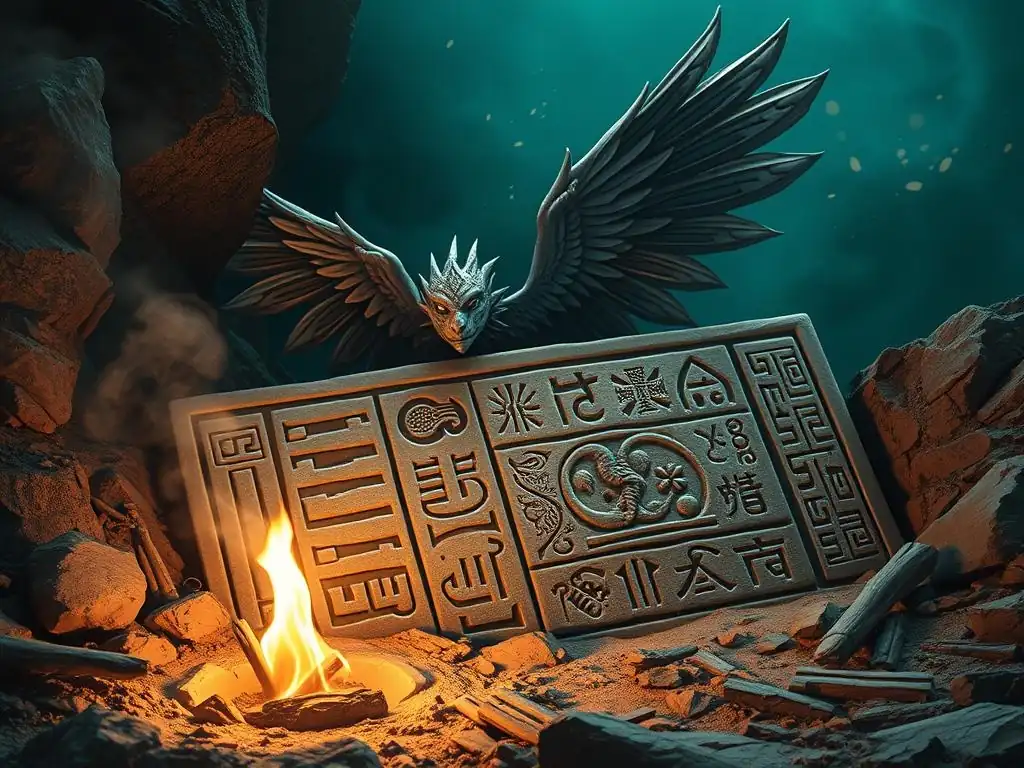
Welcome to Mythology and Legends, your gateway to a world brimming with ancient tales and timeless narratives! Dive into the fascinating realm where gods and monsters collide, heroes rise and fall, and the whispers of forgotten cultures still echo. Ever wondered if the epic stories of old are fading away? Prepare to be surprised as we unearth lost legends hidden within the vibrant panels of graphic novels, revealing how these modern mediums breathe new life into ancient myths. Could your favorite comic book hold the key to unlocking a forgotten god? Let's explore!
- Introduction: Discovering Hidden Myths in the World of Graphic Novels
- Obscure Myths Reimagined: Graphic Novel Case Studies
- Why These Stories Were Less Known and How Graphic Novels Help
- The Future of Obscure Stories in Graphic Novels
- Conclusion: The Enduring Power of Obscure Stories Through Graphic Novels
-
Frequently Asked Questions
- How do graphic novels help unearth obscure myths?
- What types of obscure myths are typically found in graphic novels?
- Why are graphic novels a good medium for exploring obscure myths?
- Do graphic novels that feature obscure myths stay true to the original stories?
- What is the impact of graphic novels popularizing obscure myths on contemporary society?
- Final Reflection: The Enduring Power of Myth in Graphic Novel Form
- Unlock the Secrets: Dive Deeper into Graphic Novel Mythology!
Graphic Novels as a Portal to Forgotten Mythology
Graphic novels stand as a dynamic and increasingly respected medium for storytelling, blending the narrative depth of literature with the immediate impact of visual art. This unique combination makes them particularly adept at exploring complex and often overlooked subjects, including the rich tapestry of world mythology. Unlike traditional prose, graphic novels can use sequential art to convey atmosphere, character emotion, and intricate cultural details in ways that written text alone might struggle to achieve, offering a fresh perspective on ancient narratives.
This visual and narrative synergy provides a powerful gateway for readers to encounter myths that are not part of the common cultural lexicon. While mainstream mythology (Greek, Roman, Norse) is widely known, countless other traditions from Africa, Asia, the Americas, and Oceania possess equally compelling stories and pantheons. Graphic novels focusing on graphic novels obscure myths can introduce these lesser-known narratives to a broad audience, transforming ancient tales into accessible and engaging visual experiences that resonate with contemporary sensibilities.
The Allure of Obscure and Lost Myths in Contemporary Media
There's a growing fascination in modern media with stepping beyond the well-trodden paths of popular mythology. Creators and audiences alike are seeking novelty, depth, and alternative perspectives that can be found in stories that haven't been retold countless times. Obscure myths offer a vast, untapped reservoir of characters, plots, and worldviews that feel fresh and exciting, providing fertile ground for imaginative adaptations and interpretations.
This appeal extends beyond mere novelty; it reflects a desire to connect with diverse cultural heritages and understand the myriad ways humanity has sought to explain the world. Exploring graphic novels obscure myths allows readers to delve into belief systems and narratives that developed in vastly different historical, geographical, and social contexts, offering insights into the human condition from unfamiliar angles. This exploration enriches our understanding of global folklore and highlights the universal themes that underpin seemingly disparate mythologies.
Why Graphic Novels Are Perfect for Retelling Lesser-Known Legends
The inherent structure and capabilities of graphic novels make them an ideal medium for adapting obscure myths. The interplay between panels, layouts, and artwork allows for intricate world-building and character design, essential for bringing unfamiliar pantheons and creatures to life. Complex genealogical relationships, geographical settings, and ritualistic practices – elements often crucial to mythological narratives – can be visually depicted, aiding reader comprehension and immersion.
Furthermore, graphic novels can effectively balance exposition with action and character development. They can present dense mythological concepts or historical contexts through integrated text and imagery, making potentially challenging material more digestible and engaging. The medium's flexibility permits creators to take creative liberties, interpreting ancient tales for modern audiences while respecting their core elements, thereby ensuring that these graphic novels obscure myths adaptations are both informative and entertaining.
Obscure Myths Reimagined: Graphic Novel Case Studies
Case Study 1: The Wicked + The Divine - Unveiling Sumerian Mythology
The Original Myth: Brief Description of Sumerian Deities and Beliefs
Sumerian mythology, one of the oldest known mythologies, originated in Mesopotamia (modern-day Iraq) around the 4th millennium BCE. It features a complex pantheon of deities, including An (sky god), Enlil (air god), Enki (water god), and Inanna (goddess of love, war, and fertility). These gods were often anthropomorphic, with human-like emotions and conflicts, and were believed to directly influence the natural world and human affairs. Key myths include the creation of the world, the great flood (a precursor to the biblical story), and the descent of Inanna into the underworld.
Life in Sumerian society was deeply intertwined with religious beliefs, with ziggurats serving as central places of worship. The relationship between humans and gods was often depicted as one of servitude, with humanity created to serve the deities and provide for their needs. While some texts like the Epic of Gilgamesh (which incorporates Sumerian flood myths and characters) are relatively well-known, the broader details of the Sumerian pantheon and their specific myths remain less familiar to the general public compared to, say, Greek gods.
How The Wicked + The Divine Interprets and Adapts Sumerian Mythology
Kieron Gillen and Jamie McKelvie's The Wicked + The Divine reimagines various world mythologies, including Sumerian, within a modern context. The series posits that every 90 years, twelve deities reincarnate as young adults, living lives of fame and adoration akin to pop stars before dying within two years. The Sumerian goddess Inanna is one of the prominent figures in the Pantheon, depicted as a charismatic and complex character dealing with the pressures of divine celebrity.
The comic doesn't offer a literal retelling but uses the core identities and attributes of the deities as a foundation for exploring themes of fame, mortality, power, and worship in the 21st century. Inanna's mythological associations with love, war, and fertility are woven into her modern persona and narrative arc, reflecting her ancient power through contemporary lens. The series selectively draws upon specific myths or characteristics, using them as symbolic weight for the characters' actions and relationships within the narrative.
Visual Storytelling and the Power of Graphic Novels in Preserving Sumerian Mythology
The visual style of The Wicked + The Divine, characterized by vibrant colors, dynamic layouts, and striking character designs by Jamie McKelvie and colorist Matt Wilson, is crucial to its success. The deities, including the Sumerian-inspired characters, are presented with distinct, often glamorous, modern aesthetics that hint at their ancient origins while firmly placing them in a contemporary setting. This visual juxtaposition makes the concept immediately intriguing and helps readers connect with the characters despite their mythological roots.
The artwork plays a significant role in conveying the power and mystique of the deities, even when they are behaving like flawed humans. Through panel composition and visual motifs, the series evokes a sense of the divine intersecting with the mundane.
By embedding Sumerian mythological concepts and characters within a popular, visually driven medium, The Wicked + The Divine serves as an unexpected, albeit highly interpretive, introduction to this ancient pantheon for a new generation of readers who might then be inspired to seek out the original myths. This demonstrates the potential of graphic novels obscure myths to spark interest in overlooked traditions.
Case Study 2: American Gods (Graphic Novel Adaptation) - Exploring the Enigmatic Tale of Slavic Mythology
The Roots of Slavic Mythology: Cultural Context and Significance
Slavic mythology encompasses the polytheistic beliefs and practices of the Slavic peoples before their conversion to Christianity. Spread across a vast geographical area in Eastern Europe, it is characterized by a complex pantheon of deities associated with nature, seasons, agriculture, and various aspects of human life. Key figures include Perun, the god of thunder and lightning; Veles, associated with earth, waters, and the underworld; and Mokosh, a goddess linked to fertility and weaving.
Unlike Greek or Roman mythology, Slavic mythology lacks a single, unified canon of sacred texts. Much of what is known comes from later Christian chroniclers, folklore, and linguistic analysis, often resulting in fragmented or contradictory accounts. This lack of centralized documentation contributes to its relative obscurity compared to Western European mythologies. Despite this, these myths deeply influenced the cultural identity and folklore of Slavic nations, with echoes still present in traditions and superstitions today.
Artistic License: Changes and Interpretations in the American Gods Adaptation
The graphic novel adaptation of Neil Gaiman's novel American Gods directly features Slavic deities, notably the Czernobog (or Chernobog), the "Black God," often associated with darkness and misfortune in some interpretations of Slavic belief, and his brothers, the Zorya, guardian goddesses. In Gaiman's narrative, these old gods have emigrated to America alongside their believers, struggling to survive in a modern world where their power wanes as people worship new gods like media and technology.
The adaptation takes significant artistic license, as Gaiman's original novel did, by bringing these disparate mythological figures together in a single narrative. Czernobog is portrayed as a weary, old man living in Chicago, still possessing his ancient power but feeling increasingly irrelevant. This depiction is a modern interpretation, not a strict adherence to historical accounts, which themselves are often debated regarding figures like Czernobog. The graphic novel visually represents these characters, giving form to figures previously confined mostly to academic texts or folklore collections.
The Impact of American Gods on the Popularity of Slavic Mythology
American Gods, both the novel and its subsequent graphic novel and television adaptations, has played a significant role in bringing figures from Slavic mythology, among others, to a wider international audience. While not a scholarly text, the series introduced millions to names like Czernobog, sparking curiosity about the original myths and the cultures they came from. Before American Gods, knowledge of Slavic deities was largely limited to academic circles or people with direct cultural ties.
The graphic novel, with its striking artwork by P. Craig Russell and Scott Hampton, provides a visual representation of these characters and the world they inhabit, making the mythology more tangible and accessible. This increased visibility has contributed to a broader interest in Slavic folklore and history, demonstrating how popular media, including graphic novels obscure myths, can act as cultural ambassadors, encouraging further exploration of less-known traditions.
Case Study 3: Laika - Bringing to Life the Lost World of Soviet Space Exploration
The Cultural Significance of Early Soviet Space Program and Laika's Story
The early years of the Soviet space program represented a period of intense scientific ambition, technological innovation, and Cold War rivalry. The launch of Sputnik in 1957 and Yuri Gagarin's first human spaceflight in 1961 were monumental achievements that captured global attention and solidified the Soviet Union's image as a technological superpower. Within this ambitious program, the story of Laika, the stray dog launched aboard Sputnik 2 in November 1957, holds a particularly poignant and often overlooked significance.
Laika was the first animal to orbit the Earth, a crucial step in proving that a living organism could survive in microgravity. However, her mission was deliberately one-way, as the technology for a safe return had not yet been developed. Her sacrifice became a symbol of the costs of scientific progress and the ethical dilemmas inherent in the space race. While the fact of Laika is known, the detailed human stories behind her mission – the scientists involved, the ethical conflicts, the specific fate of the dog – were often obscured by propaganda and the passage of time.
Laika: A Modern Retelling of a Tragic Space Exploration Story
Nick Abadzis's graphic novel Laika (2007) is not mythology, but it is a powerful example of how graphic novels obscure myths or lost historical narratives can be unearthed and emotionally resonant. The book meticulously reconstructs the events leading up to Laika's flight, drawing on historical research and interviews. It tells the story from multiple perspectives: Laika herself (imaginatively portraying her experiences and feelings), the scientists involved (focusing on their motivations, hopes, and moral struggles), and other characters connected to the project.
The narrative delves into the human cost of the space race, highlighting the dedication and sacrifice of those involved, as well as the political pressures that influenced decisions. Abadzis humanizes Laika, portraying her not just as an experimental subject but as a creature with her own simple life and personality before she was thrust into history. The graphic novel explores the ethical weight of sending a living being on a mission from which it could not return, a topic often glossed over in official histories.
How Graphic Novels Can Help Preserve and Promote Obscure Historical Events
Laika demonstrates the profound ability of graphic novels to engage readers with complex or tragic historical events that might otherwise remain niche subjects. The visual medium allows Abadzis to depict the stark realities of Soviet-era life, the technical details of the space program, and the emotional states of the characters with striking clarity. The artwork makes the history feel immediate and personal, fostering empathy for both Laika and the people involved in her fate.
By focusing on a specific, emotionally charged incident within a larger historical context, the graphic novel makes the entire era more accessible. It transforms historical data into a compelling human (and animal) story, encouraging readers to learn more about the early space race, Soviet history, and the ethical considerations of scientific advancement. This showcases how graphic novels are not just for fantasy and superheroes but can be vital tools for preserving and promoting interest in overlooked historical narratives, functioning similarly to how graphic novels obscure myths revive forgotten folklore.
Why These Stories Were Less Known and How Graphic Novels Help
Factors Contributing to the Relative Obscurity of Certain Stories
Geographical Isolation and Limited Documentation
Many myths and historical narratives remained relatively unknown to the wider world due to the geographical isolation of the cultures that created them. Before modern global communication, stories primarily spread through oral tradition or limited written records within a specific region. Cultures in remote areas, or those that did not develop extensive writing systems or widespread literacy, often saw their rich storytelling traditions confined to their local communities.
Furthermore, when documentation did exist, it might be in languages not widely studied or on fragile materials that deteriorated over time. The difficulty in accessing, translating, and disseminating these limited records meant that myths from regions like parts of Siberia, indigenous American cultures, or certain African societies did not achieve the global reach of myths from more interconnected or colonizing civilizations. This limited documentation is a key reason why graphic novels obscure myths often draw from traditions that are hard to research.
Suppression of Certain Narratives
Historically, many indigenous or minority cultural narratives were actively suppressed by dominant or colonizing powers. As empires expanded or new religions spread, the myths and histories of conquered or assimilated peoples were often discouraged, forbidden, or deliberately erased. This suppression could involve destroying artifacts, punishing practitioners of traditional beliefs, or simply overwhelming local narratives with the dominant culture's own stories.
This deliberate or unintentional suppression led to the decline or disappearance of many unique storytelling traditions. Generations lost connection to their ancestral myths, and external knowledge of these stories became scarce. Reclaiming and sharing these narratives, such as through graphic novels obscure myths, becomes an act of cultural preservation and resistance against historical erasure.
Evolution of Stories and the Rise of Dominant Narratives
Even within interconnected cultures, some stories naturally faded as others evolved or became more prominent. Myths are living things, changing as they are told and retold, adapting to new social contexts. Sometimes, elements of older myths are absorbed into newer, more dominant ones, causing the original versions to become less distinct or forgotten.
The rise of major literary works, religious canons, or eventually mass media favored certain narratives over others, leading to a form of cultural selection. Myths that were codified in widely distributed texts (like Homer's epics or the Norse Eddas) or that became central to major religions gained broader recognition, while others, perhaps equally complex or compelling, receded into obscurity. This process highlights the challenge in finding graphic novels obscure myths that haven't been influenced by dominant narratives.
Graphic Novels: A Powerful Tool for Revival
Visual Appeal and Accessibility for a Wider Audience
Graphic novels possess an inherent visual appeal that can attract readers who might not typically pick up a dense mythology text or historical account. The combination of engaging artwork and concise text makes complex narratives more accessible and less intimidating. Readers are drawn in by the dynamic visuals, which can depict fantastical elements or historical settings in vivid detail, making the stories feel alive and immediate.
This accessibility extends across different age groups and literacy levels, broadening the potential audience for obscure stories. A visually striking panel depicting a lesser-known deity or a historical event can pique a reader's curiosity in a way that a purely textual description might not. This power to capture attention makes graphic novels an effective medium for reintroducing forgotten narratives and fostering interest in graphic novels obscure myths.
Creative Freedom in Interpretation and Adaptation
The graphic novel medium offers creators significant creative freedom to interpret and adapt source material. Unlike academic studies, graphic novels can blend historical facts or mythological accounts with imaginative storytelling, character development, and modern themes. Creators can fill in gaps in fragmented records, offer new perspectives on known events, or weave multiple obscure myths into a single narrative tapestry.
This freedom allows for adaptations that resonate with contemporary readers while honoring the spirit of the original stories. For instance, deities can be reimagined in modern settings, or historical figures can be portrayed with complex emotional depth. This flexibility is crucial for taking graphic novels obscure myths and making them relevant and engaging for a 21st-century audience, ensuring the stories are not just preserved but also revitalized.
The Role of Graphic Novels in Promoting Cultural Diversity and Understanding
By actively seeking out and adapting obscure myths and historical narratives from diverse cultures, graphic novels play a vital role in promoting cultural diversity and understanding. They provide a platform for voices and traditions that have been historically marginalized or overlooked. Each adapted story offers readers a window into a different worldview, set of values, and historical experience.
Reading about graphic novels obscure myths from unfamiliar traditions encourages empathy and broadens perspectives, helping readers appreciate the vast and varied landscape of human creativity and belief. These works can challenge ethnocentric views and highlight the common threads that connect humanity across different cultures and time periods, fostering a greater appreciation for the richness of global heritage.
The Future of Obscure Stories in Graphic Novels
The Growing Trend of Adaptations in Graphic Novels
The graphic novel market has seen a significant increase in adaptations from various sources beyond just superhero comics. Literary classics, historical events, non-fiction topics, and yes, mythology and folklore, are increasingly being translated into sequential art. This trend is driven by both creator interest in diverse subjects and reader demand for rich, engaging narratives that offer something new.
As the medium gains further recognition and its capabilities are explored, more creators are looking to untapped sources for inspiration. This includes digging into academic texts, folklore archives, and historical records to find stories that haven't been widely adapted before. This growing trend provides fertile ground for the continued emergence of graphic novels obscure myths, bringing more forgotten tales into the mainstream.
The Potential for Discovering and Popularizing More Unknown Legends
Given the sheer volume of unrecorded or lesser-known myths and historical narratives across the globe, the potential for future graphic novel adaptations is immense. Countless stories from indigenous cultures, regional folklore, and marginalized histories are waiting to be discovered and shared with a wider audience. Each of these stories represents a unique piece of the human experience.
Graphic novels are uniquely positioned to take on this task. Their ability to handle complex cultural contexts and present them visually makes them ideal for exploring narratives that might be challenging to convey in other popular media. As creators and publishers continue to seek out diverse content, we can anticipate seeing more graphic novels obscure myths emerge, shedding light on traditions previously known only to a few specialists or cultural insiders.
The Importance of Authenticity and Respect in Adapting Obscure Stories
As the trend of adapting obscure stories grows, the importance of authenticity and respect becomes paramount. When adapting myths and histories from specific cultural traditions, particularly those that have been marginalized, it is crucial for creators to conduct thorough research and engage with cultural consultants where possible. This ensures that the adaptations are not only engaging but also respectful of the source material and its cultural context.
Approaching these stories with sensitivity helps avoid misrepresentation, cultural appropriation, or the perpetuation of harmful stereotypes. The goal of graphic novels obscure myths should be to honor and share these traditions, not to exploit them. By prioritizing authenticity and collaboration with source communities, creators can produce works that are both artistically successful and culturally valuable, contributing positively to the preservation and understanding of global heritage.
Conclusion: The Enduring Power of Obscure Stories Through Graphic Novels
Graphic Novels: Guardians of Lost Stories
Graphic novels have emerged as unlikely guardians of lost and obscure stories. Through their unique blend of visual art and narrative text, they provide a powerful means to unearth, interpret, and share myths, legends, and historical events that have faded from collective memory or remained confined to academic study. These works demonstrate that the power of storytelling lies not only in the tale itself but also in the medium used to convey it.
By transforming ancient or forgotten narratives into accessible and engaging visual experiences, graphic novels ensure that these stories are not lost to time. They connect contemporary readers with diverse cultural heritages, offering fresh perspectives on the human condition and the world around us. The examples of Sumerian and Slavic mythology adaptations, and even historical narratives like Laika's story, highlight this vital role.
Celebrating the Rich Tapestry of World Cultures and History
The exploration of graphic novels obscure myths is more than just an academic exercise; it is a celebration of the rich and varied tapestry of human cultures and history. Each unearthed story adds another thread to our understanding of how different societies have interpreted the world, grappled with fundamental questions of existence, and passed down knowledge and values through generations.
These graphic novels remind us that while some narratives have achieved global dominance, countless others hold immense value and offer unique insights. They encourage readers to look beyond the familiar and appreciate the depth and diversity of human creativity found in every corner of the world.
The Ongoing Journey of Discovering and Reimagining Obscure Stories
The journey of discovering and reimagining obscure stories through graphic novels is far from over. With a world full of unadapted myths, forgotten histories, and marginalized folklore, the potential for future works is limitless. As creators continue to explore these untapped reservoirs, we can look forward to a future filled with graphic novels obscure myths that challenge, educate, and inspire us.
This ongoing process benefits not only readers but also the cultural traditions themselves, offering new life and visibility to narratives that might otherwise be forgotten. It underscores the enduring power of stories and the vital role that dynamic media like graphic novels play in keeping them alive and relevant for generations to come.
Frequently Asked Questions
How do graphic novels help unearth obscure myths?
Graphic novels often reimagine lesser-known stories and present them in an accessible visual format, making them more appealing and discoverable to a wider audience. This raises awareness of these myths.
What types of obscure myths are typically found in graphic novels?
They frequently feature myths from lesser-known cultures, regional folklore, and variations on familiar stories that have been largely forgotten or marginalized. This helps to preserve cultural heritage.
Why are graphic novels a good medium for exploring obscure myths?
The visual storytelling aspect of graphic novels allows for a more immersive and engaging experience, helping readers to understand the cultural context and symbolism of these myths more easily than text alone.
Do graphic novels that feature obscure myths stay true to the original stories?
While some graphic novels strive for historical accuracy, others take creative liberties, adapting and reinterpreting the myths for a modern audience. It's important to check sources.
What is the impact of graphic novels popularizing obscure myths on contemporary society?
By bringing these stories to a wider audience, graphic novels can foster greater cultural understanding and appreciation for diverse narratives, enriching our collective cultural landscape.
Final Reflection: The Enduring Power of Myth in Graphic Novel Form
The resurgence of interest in mythology, coupled with the explosive popularity of graphic novels, has created a fertile ground for rediscovering and reinterpreting obscure legends. These forgotten narratives, once confined to dusty tomes and whispered tales, are finding vibrant new life through the visual storytelling power of comics, reaching a wider audience than ever before. This accessibility is not just a trend; it's a vital cultural shift.
The impact of these graphic novel adaptations extends beyond simple entertainment. They offer fresh perspectives on ancient stories, challenging traditional interpretations and prompting us to reconsider the enduring relevance of these myths in our modern world. These retellings often grapple with complex themes of identity, power, and morality, mirroring our own contemporary struggles. Myth is a powerful tool for understanding the human condition, and graphic novels provide a unique lens through which to examine its complexities.
This quote encapsulates the profound effect of this creative fusion, allowing readers to engage with these timeless narratives on a deeply personal level.
Consider the stories you've encountered throughout this article. Think about how these obscure myths, once hidden from view, resonated with you. Now, I challenge you to seek out more of these hidden gems, to explore the rich tapestry of forgotten legends waiting to be rediscovered in the pages of graphic novels. Let these visual narratives inspire you, challenge your perspectives, and ultimately, enrich your understanding of the human experience. The world of obscure myths is vast and waiting; your journey of discovery begins now.
Unlock the Secrets: Dive Deeper into Graphic Novel Mythology!
Thanks for exploring the fascinating world of hidden myths within graphic novels! You've now unlocked a treasure trove of intriguing stories – let's keep the adventure going.
- Delve into our recommended reading list: We've compiled a selection of lesser-known graphic novels brimming with mythological inspiration, ready for your next literary journey. Find it on our website!
- Share your own discoveries: Do you know of any graphic novels featuring incredible, less-known myths? Let's build a community of mythological explorers! Share your recommendations in the comments below.
- Create your own myth: Inspired by these hidden narratives? Let your creativity flow and craft your own unique mythological tale – even a short one! Share your ideas with us.
Ready to unearth more legendary stories? What hidden mythological gems are you eager to discover next?