Botticelli's Enigmas: Unpacking the Myths in His Masterpieces
🌟 Dive into Botticelli's Primavera myth interpretation as we unravel the enchanting myths and legends hidden within his masterpieces, revealing their cultural…
Read article
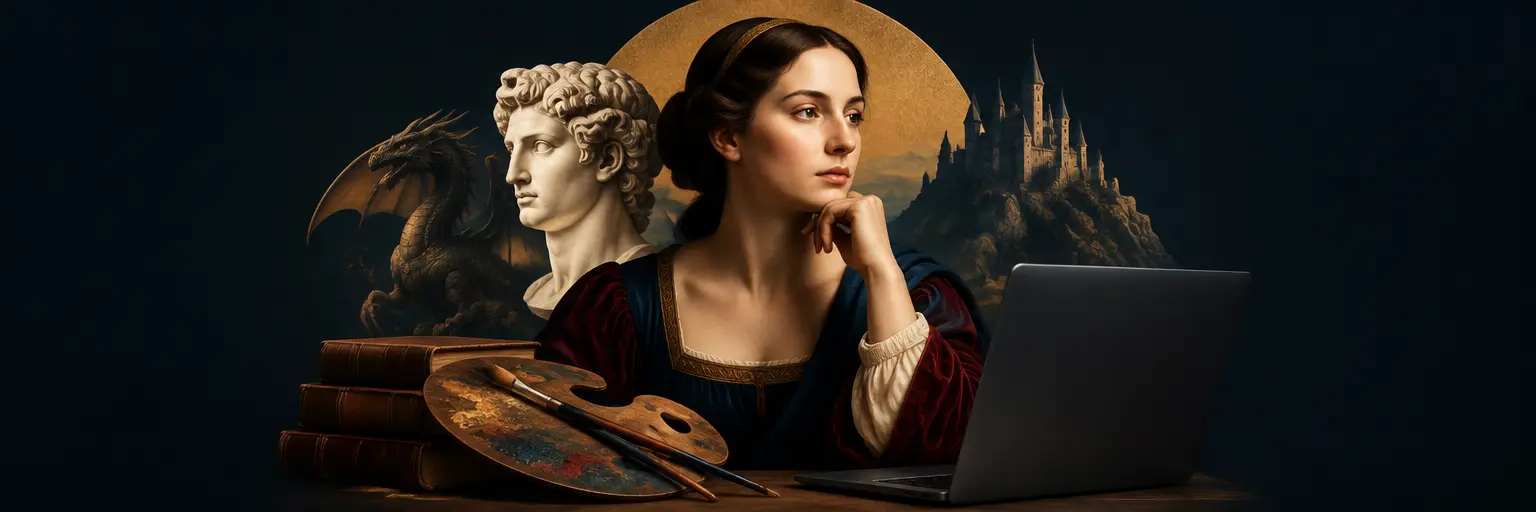
Dive into the Renaissance Interpretations of ancient myths, where classical tales were reborn with humanist passion and artistic brilliance. This fascinating realm reveals how mythology in literature and media was transformed during the 14th–17th centuries, blending pagan symbolism with Christian morality, allegory, and a newfound celebration of human potential. From Botticelli’s ethereal *Birth of Venus* to Shakespeare’s reimagining of Ovidian fables, these works redefined legendary figures as vessels for political commentary, philosophical inquiry, and emotional depth. Explore how Renaissance thinkers revived and reshaped Greek and Roman deities, heroes, and monsters, infusing them with contemporary relevance that still echoes in modern films, novels, and art. Whether you’re a mythology enthusiast, literature student, or creative seeker, uncover the timeless power of these reinterpretations—where myth meets innovation, and ancient wisdom speaks to timeless human truths.
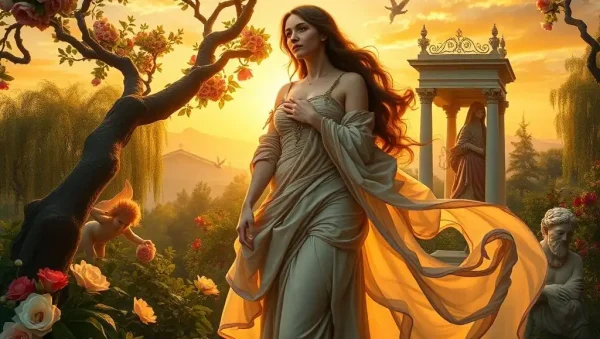
🌟 Dive into Botticelli's Primavera myth interpretation as we unravel the enchanting myths and legends hidden within his masterpieces, revealing their cultural…
Read article
✨ Discover how Renaissance prince mythology education shaped noble ideals, blending classical myths with contemporary lessons. This article explores the profound influence…
Read article
✨ Discover how Renaissance art mythologizes Diana’s power, blending themes of chastity and the hunt. This exploration reveals how her image shaped…
Read articleStep into the vibrant crossroads where ancient gods met modern humanism. The Renaissance Interpretations subcategory explores how writers, painters, and philosophers from the 14th to 17th centuries reimagined classical mythology—not as distant fables, but as living allegories for politics, love, science, and the self. Here, you’ll uncover how Ovid’s tales became Botticelli’s canvases, how Plato’s myths fueled Neoplatonic academies, and how Shakespeare wove pagan deities into Christian-era drama. Perfect for students, creators, and myth enthusiasts, this collection bridges antiquity and modernity, revealing why Renaissance minds saw mythology as a mirror for human potential.
In Renaissance art, mythology wasn’t mere decoration—it was a coded language for patrons and clergy alike. Works like Botticelli’s Primavera or Titian’s Diana and Actaeon blended pagan sensuality with Christian morality, often hiding political commentary beneath lush landscapes. You’ll learn how artists used mythological scenes to celebrate Medici wealth, critique courtly love, or explore the tension between divine fate and human agency. Expect detailed analysis of iconography, from Venus’s shell to Apollo’s laurel, and how these symbols shifted meaning across Italian and Northern Renaissance schools.
This section also examines the technical revolution—linear perspective, anatomical realism, and oil paint—that made myths feel startlingly tangible. By comparing sketches, finished works, and restoration notes, you’ll see how artists like Michelangelo transformed classical heroes into muscular symbols of civic virtue. For content creators, these visual interpretations offer endless metaphors: the labyrinth as creative struggle, the phoenix as resilience, or the centaur as the duality of reason and instinct. Dive in to decode the visual rhetoric that still shapes modern fantasy art and cinematic storytelling.
Renaissance humanists didn’t read myths literally—they mined them for hidden truths. The Neoplatonic tradition, championed by Marsilio Ficino and Pico della Mirandola, argued that pagan stories veiled cosmic secrets about the soul’s ascent to God. Here, you’ll explore how the myth of Eros and Psyche became a roadmap for spiritual growth, how Orpheus symbolized the power of harmony over chaos, and how the Twelve Olympians mirrored planetary influences on human temperament. This philosophical lens transformed mythology into a tool for self-knowledge and mystical communion.
For modern readers, this approach is revolutionary: it shows that myths aren’t fixed texts but flexible keys to psychological and ethical insights. We’ll break down primary sources, including Ficino’s commentaries on Plato’s Symposium, and show how these ideas penetrated courtly literature, alchemical treatises, and even early science. Expect practical takeaways: how to interpret a myth as an allegory for creativity, leadership, or healing. This is where ancient gods become inner guides, and where you’ll discover why Renaissance thinkers believed that “all myths are philosophy in disguise.”
William Shakespeare didn’t just reference mythology—he deconstructed and repurposed it for a Protestant England wary of papist idolatry. Plays like A Midsummer Night’s Dream, The Tempest, and Antony and Cleopatra weave classical deities with folklore, creating hybrid worlds where Titania rubs shoulders with ancient gods. This section unpacks how Shakespeare used myth to explore political legitimacy (as in Henry V’s Trojan references), sexual desire (Venus and Adonis), and the limits of human knowledge (Prospero’s magic). You’ll analyze stage directions, soliloquies, and contemporary audience expectations.
Beyond Shakespeare, we delve into contemporaries like Christopher Marlowe’s Hero and Leander and Ben Jonson’s court masques, where mythology became propaganda for the monarchy. You’ll see how the English Renaissance transformed Ovid’s Metamorphoses into a sourcebook for psychological drama—characters like Hamlet or Lear echo mythological archetypes but with tragic, modern flaws. For writers, this offers a masterclass in adapting ancient tropes without losing originality. Learn to spot echoes of Athena in Portia or Mars in Hotspur, and discover how mythological allusions created layered meanings that rewarded both groundlings and nobles.
Renaissance poets didn’t just translate Virgil or Homer—they reinvented them. Ludovico Ariosto’s Orlando Furioso and Torquato Tasso’s Jerusalem Delivered blend Christian crusades with classical machinery (gods, nymphs, enchanted armies), creating epics that question heroism itself. This section examines how humanist poets used mythological figures like Hercules, Ulysses, and Aeneas to explore contemporary issues: chivalry’s decline, the discovery of the New World, and the tension between martial valor and intellectual virtue. You’ll find close readings of key cantos, plus analysis of how female figures like Bradamante or Armida subvert traditional female stereotypes.
We also cover the rise of mythological poetry in England, from Edmund Spenser’s The Faerie Queene (a Protestant mythopoeia) to John Milton’s early works. These poets crafted new “myths” that merged biblical narratives with pagan forms, arguing that true poetry could rival scripture as a vehicle for truth. For today’s storytellers, this is gold: learn how to construct epic arcs that honor tradition while pushing boundaries. Whether you’re writing a fantasy novel or a screenplay, these Renaissance reinterpretations teach you how to balance spectacle with moral complexity, and how to make heroes who are both larger-than-life and painfully human.
During the Renaissance, mythology was deeply entangled with proto-science. Astrologers mapped gods onto planets, alchemists read the myth of the Golden Fleece as a recipe for transmutation, and magicians like Heinrich Agrippa invoked deities as cosmic forces. This section explores how figures like Giordano Bruno and John Dee used mythological language to describe natural phenomena—from Hermes Trismegistus’s Emerald Tablet to the goddess Natura. You’ll understand why the Renaissance saw no contradiction between myth and empirical observation; instead, myths provided a symbolic vocabulary for explaining gravity, magnetism, and even the circulation of blood.
For modern readers, this reveals the deep roots of science fiction and fantasy world-building. We’ll trace how mythic symbols (the Ouroboros, the Phoenix, the Celestial Chariot) migrated into alchemical emblems and then into Newton’s private papers. Practical analysis includes how to decode alchemical woodcuts, read astrological charts in Renaissance art, and distinguish esoteric from exoteric interpretation. This is a treasure trove for world-builders seeking authentic magical systems, or for historians of science who want to see how imagination fuels discovery. Expect surprising connections: did you know that Jupiter’s moons were first named after mythological lovers?
It’s a reimagining from roughly 1350–1650 that blends classical sources with Christian, humanist, or political contexts. Unlike medieval moralized myths, Renaissance versions emphasize individual emotion, empirical observation, and allegorical ambiguity, often serving as commentary on contemporary life rather than pure doctrine.
As patrons and clergy sought to reconcile faith with revived classical learning, mythological figures were framed as foreshadowings or metaphors for Christian virtues. Venus could symbolize divine love, Hercules could mirror Christ’s labor, and Ovid’s transformations were read as allegories for baptism or spiritual renewal.
Steal their technique: take a known myth, place it in a new setting, and add a contemporary dilemma. For example, recast Apollo as a data-driven tech founder or Persephone as a seasonal activist. The Renaissance gave myths human flaws and modern stakes—do the same with your themes.
Start with Ovid’s Metamorphoses in Arthur Golding’s 1567 English translation, which Shakespeare read. Pair that with Boccaccio’s Genealogy of the Pagan Gods for allegorical context. These two works give you both raw stories and interpretive frameworks that shaped the era.
Yes, but creatively. They often omitted darker aspects (like rape or cannibalism) and injected Christian morality or Neoplatonism. While not faithful to Greek sources, these reinterpretations added psychological depth and visual grandeur, making myths relevant for centuries—and that’s why they’re worth studying today.