
The Myth of Diana: Chastity, the Hunt, and Power in Renaissance Art

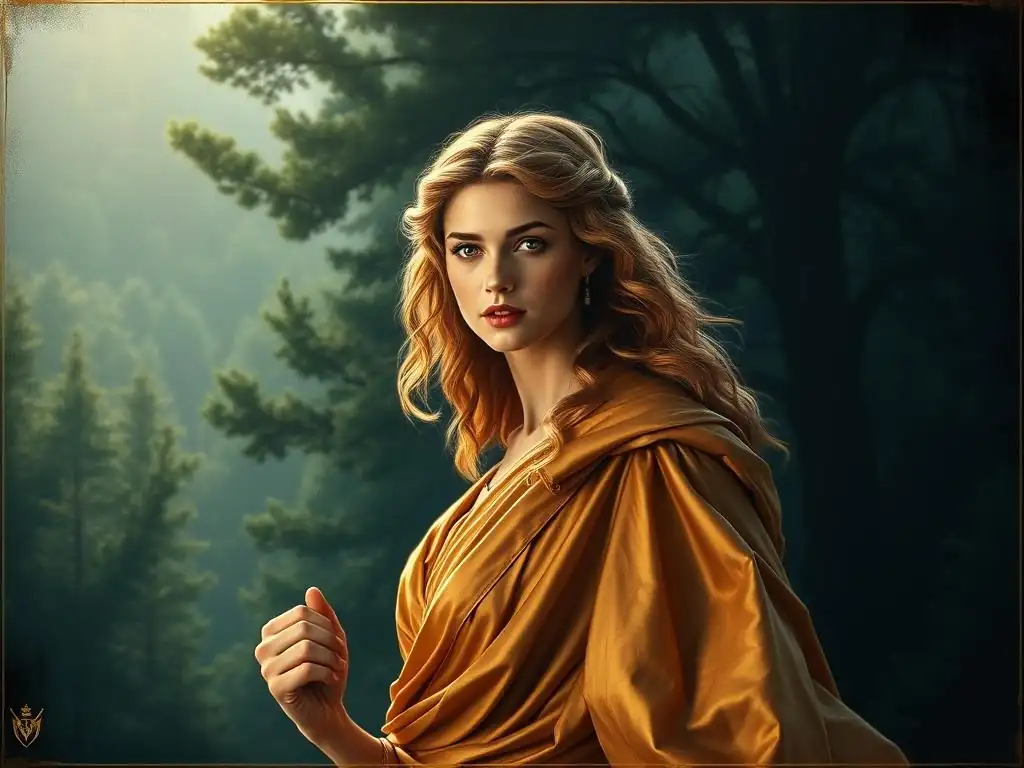
Welcome, curious seeker of ancient tales!
Prepare to be captivated by the enduring power of myth and legend. Delve into worlds woven with gods, heroes, and creatures beyond imagination. Ever wondered how ancient deities continue to influence our modern world? Then, let's embark on a journey to uncover Diana’s power in art, exploring her multifaceted role as huntress, moon goddess, and symbol of chastity through the ages. But what exactly made her such a powerful and enduring figure for Renaissance artists? Read on to discover the secrets hidden within these captivating masterpieces...
- Introduction: Diana, Goddess of the Hunt, and Renaissance Interpretations
- Diana's Power in Art: Key Themes and Representations
- Chastity and Power: Exploring the Complexities of Diana's Virtue
- The Hunt as Metaphor: Diana's Pursuit and Renaissance Ideals
- Visualizing Diana's Power: Artists and Their Interpretations
- Beyond the Canvas: Diana's Influence on Renaissance Culture
- Conclusion: Diana’s Enduring Power and Influence on Renaissance Art
-
Frequently Asked Questions
- How is Diana, the Roman goddess, typically depicted in Renaissance art?
- What aspects of Diana's character did Renaissance artists emphasize in their work?
- In what ways did Renaissance art use Diana to explore themes of female power?
- How did the Renaissance understanding of Diana differ from the classical Roman perception?
- What impact did depictions of Diana in Renaissance art have on subsequent artistic movements?
- Final Reflection: Diana's Enduring Power: A Legacy of Hunt and Chastity
- Unleash Your Inner Artemis: Explore the Power of Diana
Introduction: Diana, Goddess of the Hunt, and Renaissance Interpretations
Diana's Enduring Appeal: Why the Renaissance Rediscovered the Goddess
The Renaissance period, spanning roughly from the 14th to the 17th century, saw a fervent revival of interest in classical antiquity. This fascination extended beyond philosophy and literature to encompass the rich pantheon of Roman and Greek gods and goddesses. Among these figures, Diana (or her Greek counterpart, Artemis) held particular allure, resonating deeply with the cultural values and artistic sensibilities of the era.
Her image offered artists and patrons a powerful vehicle for exploring themes central to Renaissance thought, including virtue, nature, independence, and the complex relationship between the divine and the human. The rediscovery of classical texts and sculptures provided a wealth of inspiration, prompting artists to depict Diana not merely as a mythological character but as an archetype embodying potent ideals.
This renewed interest was fueled by several factors, including the rise of humanism, which emphasized individual potential and classical learning. Diana, with her fierce autonomy and mastery of the wilderness, offered a compelling counterpoint to traditional depictions of passive femininity. She represented a form of strength and authority that was both classical and adaptable to Renaissance concerns.
Furthermore, the growing interest in natural philosophy and the burgeoning scientific study of the natural world found a symbolic echo in Diana, goddess of the hunt and wild places. Her connection to the moon also linked her to celestial cycles and the mysteries of the cosmos, appealing to a period fascinated by astrology and the harmonious order of the universe. The rich symbolism associated with Diana ensured her prominent place in the flourishing art and literature of the Renaissance, showcasing Diana’s power in art through diverse and compelling representations.
Diana’s Symbolism: Chastity, Nature, and Civic Humanism
Diana was primarily known as the goddess of the hunt, the wilderness, wild animals, and the moon. Central to her identity was her vow of perpetual chastity, a defining characteristic that set her apart from many other deities. This chastity was not depicted as a lack or a restriction but rather as a source of immense power and independence.
By rejecting traditional marital roles and domesticity, Diana asserted her autonomy, choosing a life dedicated to the wild and her own pursuits. This aspect resonated with certain Renaissance ideals, particularly those related to individual virtue and self-governance, even if often applied within specific societal constraints for women. Her connection to nature was profound; she was the protector of forests and mountains, often depicted surrounded by her nymphs and animals, embodying the raw, untamed beauty of the natural world.
Beyond her association with nature and chastity, Diana also carried symbolic weight relevant to Renaissance civic humanism. While not a goddess of the city in the same vein as Minerva, her attributes of discipline, skill, and leadership within her band of huntresses could be interpreted through a civic lens. The hunt itself was a popular aristocratic pursuit, symbolizing order imposed upon chaos, skill, and the pursuit of a goal – metaphors that could be applied to governance, diplomacy, or the pursuit of knowledge.
Some interpretations linked her chastity to civic virtue, representing incorruptibility and dedication to a higher purpose. Thus, Diana’s symbolism provided a versatile framework for Renaissance artists and thinkers to explore themes of personal integrity, the power of nature, and the ideals of a virtuous life, contributing significantly to the multifaceted expressions of Diana’s power in art.
Diana's Power in Art: Key Themes and Representations
The Virgin Huntress: Visualizing Diana's Independence and Skill
The image of Diana as the virgin huntress is perhaps the most iconic representation of Diana’s power in art during the Renaissance. Artists frequently depicted her in active poses, often drawing a bow, accompanied by her hounds and nymphs. These portrayals emphasized her physical prowess, agility, and mastery of the hunt, skills traditionally associated with male heroes.
Unlike passive female figures often seen in classical art, Diana was shown as dynamic and self-possessed. Her short tunic, allowing for freedom of movement, and her focus on her quarry or her bow underscored her dedication to her chosen path and her rejection of conventional female roles.
This visual emphasis on her independence and skill served to highlight her unique form of power. It was a power derived not from a relationship with a male deity or from motherhood, but from her own abilities, discipline, and self-determination. Artists like Titian, in his various depictions of Diana, often captured her in moments of action or command, illustrating her authority over her companions and the natural world.
The precision required for archery and the strategic knowledge needed for hunting became visual metaphors for intellectual sharpness and effective leadership, qualities admired in both men and women during the Renaissance, albeit often expressed differently according to gender norms. The portrayal of the virgin huntress thus became a potent symbol of female agency and competence within the classical framework revived by the Renaissance.
Diana and the Moon: Lunar Symbolism and Feminine Mystique in Art
Diana's association with the moon added another layer of complexity and power to her artistic representations. As Luna or Selene, she was the goddess of the night sky, controlling the tides and illuminating the darkness. This lunar connection imbued her with a sense of mystery, cyclical power, and a link to the cosmic order.
Renaissance artists often depicted Diana with lunar symbols, such as a crescent moon diadem in her hair or a crescent moon at her feet. These symbols were not mere decorative elements but potent indicators of her celestial domain and her influence over the natural world's rhythms.
The moon's cyclical nature – its waxing and waning – was often associated with femininity, fertility, and the passage of time. While Diana herself was chaste, her lunar aspect connected her to broader themes of natural cycles and the generative power of the universe, albeit expressed through the moon's distant, cool light rather than direct procreation.
This duality allowed artists to explore different facets of Diana’s power in art: her fierce independence as the huntress and her mystical, pervasive influence as the moon goddess. Paintings featuring Diana bathed in moonlight or set against nocturnal landscapes evoked a sense of her ethereal presence and her command over the hidden, nocturnal realm, reinforcing her image as a powerful and multifaceted deity.
Diana's Power Over Nature: Control, Fertility, and the Wilderness
Diana's domain extended primarily over the wilderness, forests, and wild animals. Artistic depictions frequently showed her surrounded by her sacred animals, such as deer and hounds, signifying her protection of and authority over the natural world. This control was not depicted as dominion through force alone, but often as a harmonious relationship, albeit one where Diana held ultimate authority as the huntress. She was the protector of the wild, ensuring its balance and vitality, while also engaging in the act of hunting, which represented a controlled interaction with nature's bounty.
This power over nature also carried connotations of fertility, not necessarily in a human sense, but in the broader sense of the earth's productivity and the vitality of the wild. As goddess of the moon, linked to cycles, she was implicitly connected to the rhythms that governed growth and life in the natural world. Renaissance art captured this aspect by depicting lush landscapes accompanying Diana, teeming with life.
Her presence in these scenes symbolized the power that governs the untamed aspects of existence, the raw force of nature that is both beautiful and potentially dangerous. This nuanced portrayal contributed significantly to the perception of Diana’s power in art, showcasing her as a vital force maintaining equilibrium in the wild domain.
Chastity and Power: Exploring the Complexities of Diana's Virtue
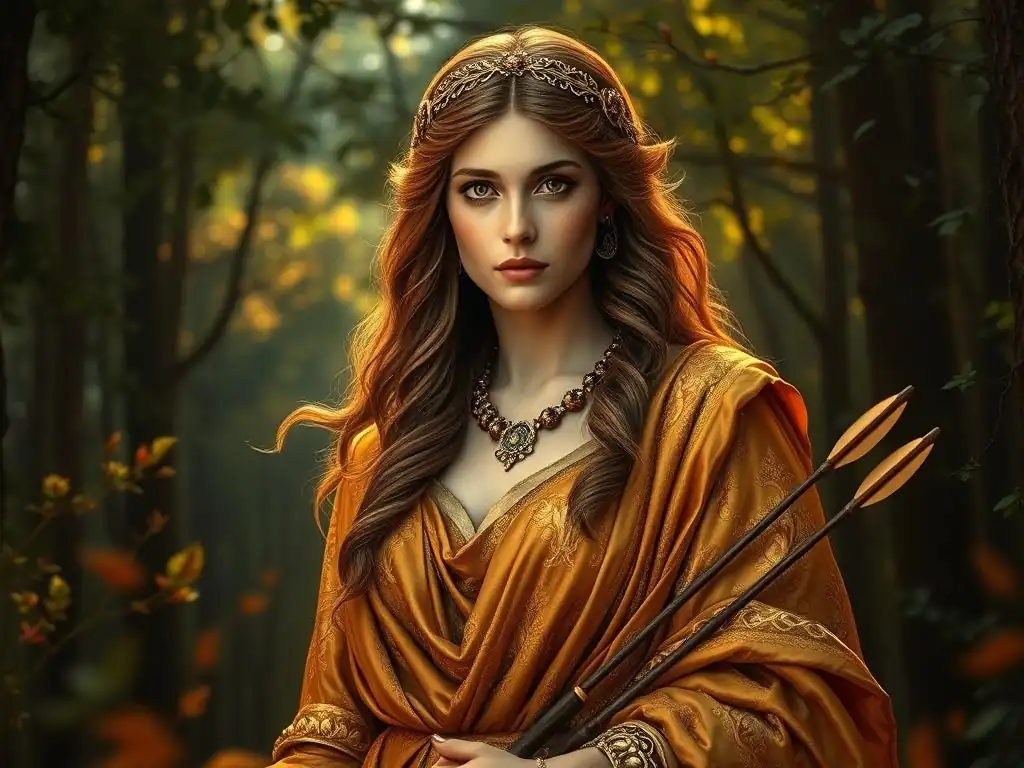
Diana's Vow: Purity as a Source of Strength
Diana's vow of perpetual chastity is central to her mythology and its interpretation in Renaissance art. Unlike goddesses whose power was often intertwined with their relationships with male deities (like Juno's power through marriage to Jupiter) or their roles as mothers (like Ceres), Diana's strength was derived from her independence and self-sufficiency. Her purity was not presented as vulnerability but as an active choice and a source of inviolable strength. By remaining untouched, she maintained her autonomy, free from the societal expectations and vulnerabilities often associated with marriage and procreation in both ancient and Renaissance societies.
This concept of purity as power resonated in different ways during the Renaissance. For some, it aligned with Christian ideals of virginity as a state of grace and spiritual strength. For others, it represented a classical ideal of self-control and discipline, essential virtues in humanist thought.
Artists depicted Diana's chastity through symbols like the crescent moon (often associated with virginity), her avoidance of male company (especially in the Actaeon myth), and her focus solely on the hunt and her band of nymphs. This focus on internal strength and dedication to a chosen path presented a powerful image of female agency, contributing to the multifaceted understanding of Diana’s power in art.
Challenging Interpretations: Was Diana's Chastity Oppressive or Empowering?
While Diana's chastity can be interpreted as empowering – a rejection of patriarchal norms and an assertion of independence – it also presents complexities and potential for more challenging interpretations. In some readings, particularly within a society that heavily valued marriage and procreation for women, Diana's refusal could be seen as unnatural or even defiant in a negative sense. The myth of Actaeon, where she brutally punishes a man for merely seeing her naked, highlights the extreme and potentially violent nature of her defense of her purity, raising questions about the cost of maintaining this state.
Renaissance society held complex views on female chastity. While virginity was lauded, especially before marriage or within a religious context, a woman's primary societal role was often seen as wife and mother. This tension could lead to varied interpretations of Diana.
Was she a model of virtuous self-control, or an anomaly whose power came at the cost of conventional femininity? Artists and writers grappled with this, sometimes portraying her severity alongside her strength. This ambiguity allowed for rich artistic exploration, reflecting the ongoing societal debates about women's roles, virtue, and the nature of power itself, adding layers to the perception of Diana’s power in art.
Renaissance Debates: Castiglione's The Courtier and Boccaccio's Famous Women
Renaissance texts provided a backdrop against which artistic interpretations of Diana were understood. Baldassare Castiglione's The Book of the Courtier (published 1528), a seminal work on ideal behavior for courtiers, includes discussions on the virtues of women. While Castiglione ultimately frames female virtues within the context of courtly life and often in relation to men, the very debate about what constituted an "ideal woman" opened space for considering figures like Diana. Her classical prominence and association with virtue could be referenced, even if her independent lifestyle didn't perfectly fit the mold of the ideal court lady.
Giovanni Boccaccio's Concerning Famous Women ( De Mulieribus Claris, c. 1362), an earlier but still influential work, dedicated a chapter to Diana. Boccaccio presents her as a figure of historical, rather than purely mythological, significance, emphasizing her leadership and martial prowess. He describes her as a strong ruler who enforced strict laws regarding female purity.
While he acknowledges her fame, his tone can be ambivalent, reflecting the societal difficulty in fully embracing a powerful, independent female figure who defied conventional expectations. These literary precedents demonstrate that the discussions around female virtue, power, and independence were active in the Renaissance, providing a fertile ground for artists to explore these themes through the figure of Diana, contributing to the discourse surrounding Diana’s power in art.
The Hunt as Metaphor: Diana's Pursuit and Renaissance Ideals
The Chase: Depicting Diana's Athleticism and Determination
The act of the hunt was central to Diana's identity and provided Renaissance artists with dynamic subject matter. Paintings and sculptures frequently depicted Diana in mid-chase, running, drawing her bow, or interacting with her hounds. These scenes highlighted her athleticism, speed, and unwavering determination. Unlike static mythological figures, Diana was often shown in motion, embodying energy and purpose. This visual emphasis on her physical capabilities was a key aspect of portraying Diana’s power in art.
The chase itself served as a powerful metaphor. It represented the focused pursuit of a goal, the application of skill and strategy, and the overcoming of obstacles. In a Renaissance context that valued action, achievement, and the development of individual talents, Diana's relentless pursuit of her quarry resonated deeply. It symbolized not only mastery over the natural world but also the internal drive and discipline required to succeed in any endeavor, whether it be hunting, scholarship, or governance. The depiction of the chase thus translated Diana's mythological role into a visual representation of active virtue and purposeful action.
The Hunt as a Symbol of Knowledge: Seeking Truth and Understanding
Beyond its literal meaning, the hunt could also be interpreted metaphorically in the Renaissance as the pursuit of knowledge or truth. The act of tracking, observing, and ultimately capturing the quarry mirrored the intellectual process of seeking understanding, gathering information, and arriving at conclusions. Diana's keen senses, her knowledge of the wilderness, and her strategic approach to the hunt could be seen as symbolic of the qualities required for scholarly inquiry and philosophical exploration.
Humanist scholars, dedicated to rediscovering and understanding classical wisdom, might see Diana's hunt as an allegory for their own intellectual pursuits. The "wild" could represent the unknown or the complexities of the world, while Diana's successful hunt symbolized the triumph of reason and diligent effort in uncovering truth. This allegorical layer added intellectual depth to depictions of Diana, allowing patrons and viewers to see her not just as a mythological figure but as an embodiment of the Renaissance spirit of inquiry and the quest for knowledge, further enhancing the symbolic scope of Diana’s power in art.
Diana and Actaeon Paintings by Titian and Veronese
The myth of Diana and Actaeon, where Actaeon accidentally stumbles upon Diana bathing and is transformed into a stag and killed by his own hounds as punishment, was a popular subject in Renaissance art, offering a dramatic illustration of Diana's power and the consequences of violating her sacred privacy. Titian painted this scene multiple times, notably his versions now in the National Gallery, London (circa 1556-1559), and the Scottish National Gallery, Edinburgh (part of the Poesie series for King Philip II of Spain).
These works powerfully depict Diana's wrath and vulnerability – her shock at being seen, quickly replaced by fierce retribution. Titian captures the tension of the moment, showing Diana recoiling yet immediately asserting her divine authority.
Paolo Veronese also tackled this myth, for example, a version housed in the National Gallery, London (circa 1555-1560). Veronese's approach often emphasized the lushness of the setting and the drama of the narrative. In his depictions, Diana's power is evident in the swiftness and severity of her punishment.
The transformation of Actaeon is sometimes shown in progress, a visual testament to her divine ability to alter form and fate. These paintings, commissioned by powerful patrons, served not only as mythological narratives but also as cautionary tales about respecting divine boundaries and vividly demonstrated the destructive potential inherent in Diana’s power in art. They remain some of the most famous visual interpretations of this myth.
Visualizing Diana's Power: Artists and Their Interpretations
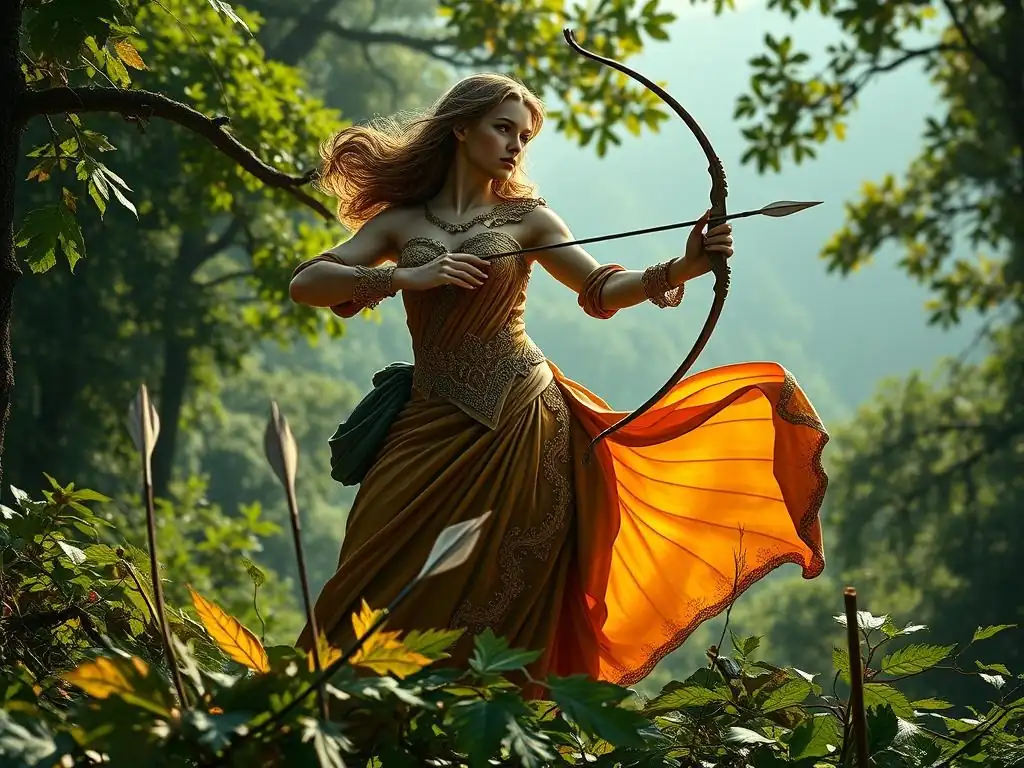
Lucas Cranach the Elder: Cranach's Protestant Interpretation of Diana’s Strength
Lucas Cranach the Elder, a prominent German Renaissance painter known for his portraits and mythological scenes, offered interpretations of classical myths that sometimes carried subtle or overt connections to the burgeoning Protestant Reformation. While he painted various mythological subjects, his approach often imbued figures like Diana with a Northern European sensibility and a focus on moral or allegorical meaning. Cranach's depictions of female figures, including mythological ones, often emphasize a certain robust naturalism and sometimes explore themes related to virtue and temptation.
Though Cranach did not produce a single, defining "Diana" masterpiece as central as Titian's, his engagement with classical themes often touched upon elements associated with Diana, such as the wilderness, the hunt, or allegories of virtue. For instance, his depictions of Venus and Cupid, or allegorical hunt scenes, draw on a visual language related to classical goddesses and their domains.
While his work might not always directly focus on Diana's power in art in the same way as Italian masters, his interpretations contributed to the broader European Renaissance engagement with classical mythology, filtering it through a distinct Northern perspective that sometimes highlighted themes of moral choice and natural order, resonating with aspects of Diana's character.
Parmigianino: Exploring Parmigianino’s Depiction of Diana’s Femininity
Parmigianino, a leading figure of the Mannerist style that followed the High Renaissance, offered a different perspective on Diana, often emphasizing her elegance, grace, and a refined, almost ethereal femininity. His work is characterized by elongated forms, sophisticated poses, and a sense of dynamic movement. While depicting Diana as the huntress, Parmigianino often softened her ferocity, presenting her as a figure of delicate beauty and fluid motion, yet without diminishing her inherent power.
One notable example is Parmigianino's drawing of Diana and Actaeon, which, though a study rather than a finished painting, reveals his approach. He focuses on the graceful lines of Diana's body and the dramatic reaction to Actaeon's intrusion, capturing a sense of shock and divine displeasure through posture and expression rather than overt aggression.
His Diana possesses an aristocratic poise and a cool, distant beauty that underscores her divine nature and untouchable status. This style highlights Diana’s power in art not just through strength or wrath, but through an idealized, almost otherworldly grace and inviolability, reflecting the Mannerist aesthetic's emphasis on sophistication and artificial beauty.
Comparing and Contrasting: Different Renaissance Approaches to Diana
Comparing the approaches of artists like Titian, Veronese, Cranach, and Parmigianino reveals the diverse ways Diana’s power in art was interpreted across different regions and artistic styles of the Renaissance. Titian and Veronese, rooted in the Venetian tradition, emphasized drama, color, and the narrative intensity of myths like Diana and Actaeon, showcasing Diana's power through emotional force and dynamic action. Their Dianas are often robust and commanding figures, situated within rich, vibrant landscapes.
Cranach, working in Germany, brought a Northern sensibility, potentially integrating moral allegory and a more grounded, sometimes less idealized depiction of figures, filtering classical themes through a different cultural and religious lens. His interest lay perhaps more in the symbolic or ethical dimensions that could be drawn from mythological figures. Parmigianino, representing Italian Mannerism, prioritized elegance, elongated forms, and a sophisticated, almost abstract beauty.
His Diana is powerful through her refined grace and ethereal presence, a figure of idealized perfection rather than raw power. These varied interpretations demonstrate the richness of Diana's symbolism and her adaptability as a figure through which Renaissance artists could explore themes of power, virtue, and femininity according to their individual styles and cultural contexts.
Beyond the Canvas: Diana's Influence on Renaissance Culture
Diana in Literature: Shakespeare's A Midsummer Night's Dream and Spenser's The Faerie Queen
Diana's presence extended beyond the visual arts into the vibrant literary landscape of the Renaissance. Playwrights and poets drew upon her myths and symbolism to enrich their narratives and characters. William Shakespeare's A Midsummer Night's Dream (c. 1595-1596) features Hippolyta, Queen of the Amazons, who is associated with Diana's attributes of strength and independence, having been conquered by Theseus (who is betrothed to her).
The play also touches upon themes of chastity versus love, relevant to Diana's story. Furthermore, Oberon refers to a vision of a mermaid on a dolphin's back charming the sea, and elsewhere mentions the power of Cupid's arrow hitting a "fair vestal throned by the west," who is untouched by love, widely interpreted as Queen Elizabeth I, often symbolically linked to Diana due to her unmarried status and powerful rule.
Edmund Spenser's epic poem The Faerie Queene (published 1590 and 1596) features the character Belphoebe, a virgin huntress clearly modeled on Diana/Artemis. Belphoebe embodies ideals of chastity, strength, and natural beauty, living in the wilderness and dedicated to the hunt. She represents a powerful, virtuous female figure, whose purity is a source of her moral and physical strength.
Spenser uses Belphoebe to explore themes of virtue, temptation, and the ideal female character, drawing heavily on Diana's classical attributes to create a complex allegorical figure. These literary examples underscore Diana's enduring appeal as a symbol of independent female power and virtue in Renaissance thought.
Diana in Patronage: The Medici Family and their Commissions of Diana Sculptures
Powerful families like the Medici in Florence were significant patrons of Renaissance art, often commissioning works based on classical mythology to decorate their palaces and gardens, signaling their wealth, taste, and connection to classical culture. While specific records detailing every single Medici commission of a Diana sculpture are vast and complex, the general trend saw classical subjects, including deities like Diana, being highly sought after. Sculptures of Diana, often depicted with her bow, hounds, or crescent moon, were popular choices for gardens and courtyards, spaces designed to evoke classical antiquity and ideals.
The presence of Diana sculptures in prominent locations like the Medici villas served multiple purposes. They were beautiful works of art that demonstrated the patron's appreciation for classical aesthetics.
They also carried symbolic meaning, possibly alluding to the patron's own virtues (like skill or discipline), their connection to nature (if located in a garden), or even a subtle nod to female members of the family and their expected virtues of purity or strength. While a single, definitive "Medici Diana" sculpture might be hard to pinpoint without specific collection details, the Medici's extensive patronage of classical themes ensured that representations of Diana, both in sculpture and painting, were prominent features in the artistic landscape they shaped, contributing to the visibility and impact of Diana’s power in art during their era.
The Legacy of Diana: Her Continued Relevance in Art and Culture
Diana's prominence in the Renaissance ensured her lasting legacy in Western art and culture. The artistic conventions established during this period for depicting the virgin huntress – her active pose, her attributes of bow, arrow, hounds, and crescent moon – became canonical and influenced subsequent generations of artists. Beyond direct mythological scenes, Diana's symbolism continued to resonate, influencing allegorical figures representing Chastity, the Moon, or the Wilderness.
Her archetype as a powerful, independent female figure dedicated to her own path continued to be reinterpreted in later periods, from the Baroque era to Neoclassicism and beyond. While specific interpretations evolved, the core elements of her identity – strength, purity, connection to nature – remained potent. The Renaissance's deep engagement with Diana solidified her image in the Western consciousness as a complex deity embodying both fierce independence and natural power, ensuring that Diana’s power in art remained a subject of fascination and creative expression for centuries to come.
Conclusion: Diana’s Enduring Power and Influence on Renaissance Art
Diana's Complex Legacy: A Goddess for All Eras
Diana's enduring presence in Renaissance art and culture speaks volumes about her complex and adaptable nature as a mythological figure. She was not a simple deity but one who embodied multifaceted ideals – chastity as strength, independence as power, mastery over nature, and connection to the celestial realm.
The Renaissance, with its revival of classical learning and its focus on human potential and virtue, found in Diana a compelling figure through which to explore these very themes. Artists and patrons alike were drawn to her image, using it to represent everything from personal integrity and aristocratic pursuits to cosmic order and the wild beauty of the natural world.
Her legacy is complex precisely because her attributes could be interpreted in various ways, sometimes even contradictory ones, reflecting the societal tensions and evolving ideas of the Renaissance itself. Was her chastity a model of virtue or a defiance of nature? Was her power over the wild benevolent or fearsome? These questions fueled creative interpretations and ensured that Diana remained a dynamic and relevant figure, a goddess whose symbolism could resonate across different artistic styles and cultural contexts, firmly establishing Diana’s power in art as a significant and lasting theme.
The Enduring Appeal of Diana's Strength and Independence
Ultimately, the enduring appeal of Diana in Renaissance art lies in her powerful image of strength and independence. In a period that saw significant shifts in societal structures and philosophical thought, Diana offered a representation of female agency that was both rooted in classical tradition and adaptable to contemporary concerns. Her ability to thrive autonomously, command respect, and embody virtue without reliance on male figures or conventional domestic roles presented a potent alternative narrative.
This vision of a self-possessed, powerful female deity resonated with certain ideals of the Renaissance, contributing to a rich body of art that celebrated her unique form of strength. The visual and literary interpretations of Diana from this era continue to shape our understanding of her myth and her significance as a symbol of independence, skill, and the untamed power of nature. The legacy of Diana’s power in art from the Renaissance remains a testament to the era's fascination with classical mythology and its ability to find contemporary relevance in ancient stories.
Frequently Asked Questions
How is Diana, the Roman goddess, typically depicted in Renaissance art?
Diana is frequently portrayed as a virginal huntress, often accompanied by a bow and arrow and her hunting dogs. Her image emphasizes her connection to nature and the moon.
What aspects of Diana's character did Renaissance artists emphasize in their work?
Renaissance artists highlighted Diana's chastity and independence, portraying her as a symbol of female empowerment and freedom from societal constraints. They also focused on her mastery of the hunt.
In what ways did Renaissance art use Diana to explore themes of female power?
Diana's association with the moon and the wilderness allowed artists to explore themes of unconventional female strength. She represented a powerful alternative to the traditional roles of women, embodying autonomy and self-sufficiency.
How did the Renaissance understanding of Diana differ from the classical Roman perception?
While retaining her association with the hunt and moon, the Renaissance interpretation of Diana often infused her with Neoplatonic ideals of purity. This shifted the focus towards her virtue and spiritual power rather than solely her physical prowess.
What impact did depictions of Diana in Renaissance art have on subsequent artistic movements?
The Renaissance portrayal of Diana as a powerful and independent female figure influenced later artists and movements. Her image continued to be used to explore themes of femininity, freedom, and the relationship between humans and nature.
Final Reflection: Diana's Enduring Power: A Legacy of Hunt and Chastity
The enduring image of Diana, goddess of the hunt and embodiment of chastity, continues to resonate powerfully in contemporary discussions of female power and agency. Her representation in Renaissance art, far from being a relic of the past, offers a crucial lens through which to examine ongoing debates about female sexuality, independence, and the complex interplay between virtue and strength. The ways in which artists negotiated and ultimately shaped her image reveal much about the anxieties and aspirations of their own time, and, surprisingly, ours.
Diana's multifaceted portrayal – simultaneously virginal and fiercely independent, powerful hunter and elusive deity – continues to inspire and challenge our understanding of femininity. Her image, carefully constructed and manipulated across centuries, speaks volumes about the evolving definitions of female power. The huntress, with her bow and arrow, is a potent symbol of female agency, a reminder that women, too, can wield power and control their own destinies.
This quote, though modern, perfectly encapsulates the enduring relevance of Diana's iconography, highlighting the timeless struggle for female autonomy that her image represents.
Consider, then, the ways in which Diana's legacy manifests in your own life. How do you perceive the tension between chastity and power, between independence and societal expectations? Do you see echoes of Diana's struggle in the contemporary world? I urge you to reflect on the complexities of female representation, both historically and in the present day, and to consider how we can continue to challenge limiting narratives and celebrate the multifaceted strength of women, just as Diana's enduring image continues to do.
Unleash Your Inner Artemis: Explore the Power of Diana
Thank you for joining us on this journey through the fascinating world of Diana, goddess of the hunt! We hope you gained a new appreciation for the complexities of her portrayal in Renaissance art and the enduring power of her myth. Ready to delve deeper?
- Craft your own interpretation of Diana: Consider how you would depict her today – what symbols would you use, and what aspects of her story would you emphasize? Share your ideas in the comments below!
- Explore other powerful female figures in mythology: Dive into our archives and discover more compelling stories of women who defied expectations and shaped their own destinies. You might be surprised by what you find!
- Share this exploration of Diana's myth: Spread the word and spark conversations with friends and family about the enduring relevance of these powerful female figures.
What powerful female figure from mythology resonates most with you, and why? Let's discuss!