
The Shield of Achilles: Art and Symbolism in the Iliad

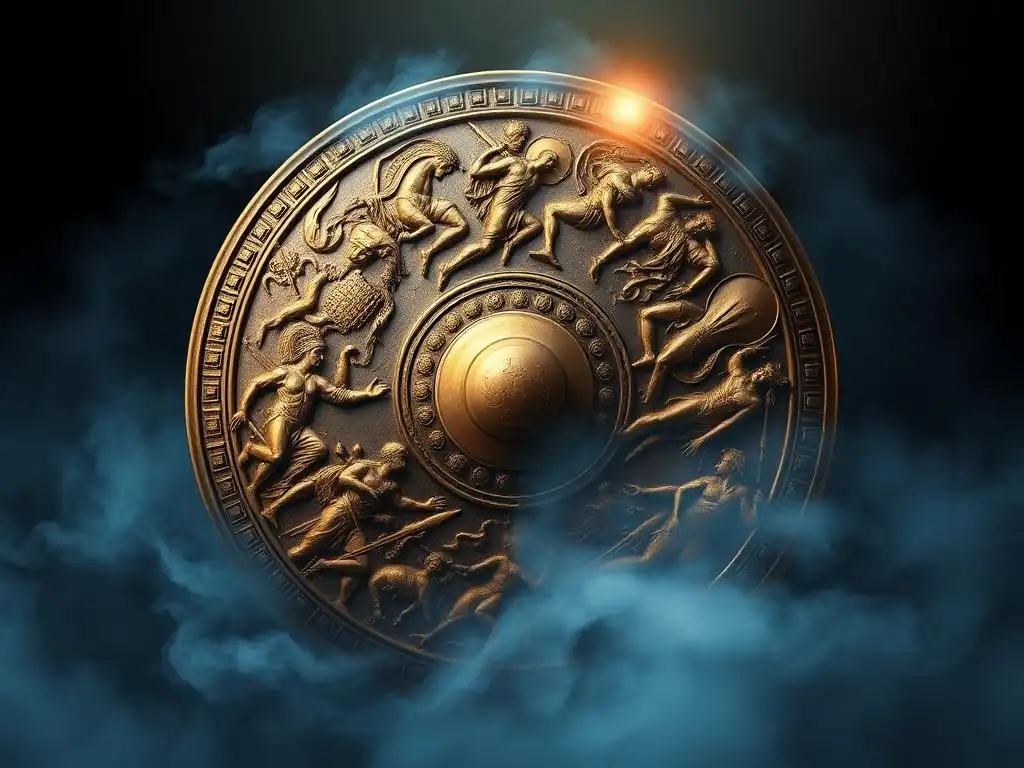
Welcome to Mythology and Legends, where the echoes of ancient tales resonate through the ages. Ever wondered about the intricate artistry and hidden power woven into the legendary artifacts of mythology? Delve into the epic world of Homer's Iliad and prepare to uncover the profound secrets embedded within a masterpiece of divine craftsmanship. What does the Achilles shield symbolism meaning really reveal about the hero, the gods, and the very fabric of ancient Greek society? Let's begin this journey together...
- Introduction to Achilles' Shield: A Divine Masterpiece
- Hephaestus' Creation: Crafting the Shield of Achilles
- Decoding the Imagery: Symbolism Embodied on Achilles' Shield
- Interpretations of the Shield's Symbolic Layers
- Achilles' Shield and Its Impact on Literature and Art
- The Enduring Legacy of Achilles' Shield
- Conclusion: The Shield as a Timeless Symbol of Heroism and Mortality
-
Frequently Asked Questions
- What is the Shield of Achilles, and where is it described?
- What are some of the key scenes depicted on the Shield of Achilles?
- What is the symbolism behind the inclusion of celestial bodies on the Shield of Achilles?
- What might the contrasting scenes of peace and war on the Shield of Achilles represent?
- How does the Shield of Achilles contribute to our understanding of ancient Greek values and worldview?
- Final Reflection: The Enduring Legacy of Achilles' Shield
- Unlock the Secrets of the Iliad: Dive Deeper into Achilles' Shield!
Introduction to Achilles' Shield: A Divine Masterpiece
Contextualizing the Iliad: War, Gods, and the Heroic Code
Homer's Iliad is an epic poem set during the final year of the Trojan War, a conflict pitting the Achaeans (Greeks) against the city of Troy. At its core, the Iliad explores themes of war, fate, honor, and the complex relationship between mortals and the gods. The narrative is driven by the rage of Achilles, the greatest Achaean warrior, whose withdrawal from battle after a dispute with Agamemnon leads to devastating losses for his side.
The poem vividly portrays the brutal realities of combat, the intervention of powerful deities like Zeus, Hera, and Athena, and the strict heroic code that governs the actions and reputations of its characters. Understanding this context of divine influence, human frailty, and the pursuit of glory is crucial for appreciating the deeper Achilles shield symbolism meaning.
The world of the Iliad is one where individual prowess and kleos (undying glory) are paramount, yet human destiny is often subject to the whims of the gods. Heroes like Achilles live by a code demanding courage, skill in battle, and the accumulation of honor, often at the cost of a long life.
The war itself is depicted not just as a clash of armies but as a reflection of cosmic order and disorder, influenced by divine rivalries and prophecies. It is within this turbulent, fate-laden environment that the shield of Achilles is forged, a miraculous object that stands in stark contrast to the bloodshed it is meant to protect its bearer from, offering a profound commentary on the nature of existence within this heroic age.
The Significance of Achilles' Shield in Homer's Epic
The shield of Achilles is not merely a piece of defensive armor; it is one of the most detailed and significant objects described in ancient literature. Forged by the divine smith Hephaestus at the request of Thetis, Achilles' mother, it arrives at a pivotal moment in the narrative. Achilles has lost his original armor (and his beloved companion Patroclus) to Hector.
The new shield is not just a replacement; it is a divine gift that signifies Achilles' impending return to battle and his ultimate, fated confrontation with Hector. Its description occupies over 130 lines in Book 18, a lengthy digression that highlights its extraordinary importance. This detailed account is far more extensive than descriptions of any other object in the epic, signaling to the reader that this artifact carries immense symbolic weight and contributes significantly to the overall Achilles shield symbolism meaning.
Beyond its narrative function as a plot device enabling Achilles' return, the shield serves as a microcosm of the world as Homer's audience understood it. Unlike typical armor focused solely on war, this shield depicts a universe encompassing earth, sea, and sky, and scenes of both peace and conflict, daily life and grand ceremonies. It presents a panoramic view of human society, its activities, and its relationship with the cosmos.
This contrast between the shield's depiction of life and the death-dealing purpose it serves for Achilles is a central paradox that invites deep interpretation into the various layers of Achilles shield symbolism meaning. It forces the reader to contemplate the full spectrum of human experience that exists outside the battlefield, which Achilles, bound by the heroic code, will ultimately sacrifice his chance to fully experience.
Hephaestus' Creation: Crafting the Shield of Achilles
The Divine Blacksmith: Hephaestus and his Divine Skill
Hephaestus, the Greek god of blacksmiths, metalworking, carpenters, craftsmen, artisans, sculptors, metallurgy, fire, and volcanoes, is renowned for his extraordinary skill and artistry. Despite being depicted as lame and often an object of amusement among the other gods, his craftsmanship is unparalleled. He is the architect of Olympus, constructing the gods' palaces, and the creator of many mythical objects, including Hermes' winged sandals, the aegis of Zeus, Pandora's box, and the armor of other heroes like Heracles.
When Thetis approaches him to request new armor for her son Achilles, Hephaestus readily agrees, not only out of respect for Thetis (who helped him when he was cast from Olympus) but also eager to demonstrate his divine mastery. His workshop, often located beneath volcanoes like Mount Etna, is a place of immense power and creativity, where mythical metals are forged with divine fire.
The creation of Achilles' shield is presented as one of Hephaestus' most magnificent achievements. Homer describes the god working with celestial metals: bronze, tin, silver, and gold. Hephaestus uses his bellows, which work at his command, and his twenty tripods which move on their own, showcasing his advanced, almost magical, technology.
The detailed description of the crafting process emphasizes the divine effort and artistry involved. It is not simply a shield; it is a mobile work of art, a cosmos hammered into metal, reflecting Hephaestus' unique position as the divine craftsman who brings order and beauty out of raw materials, even in service of the chaotic and destructive nature of war. This divine origin and the method of its creation imbue the shield with inherent power and contribute significantly to the layers of Achilles shield symbolism meaning.
The Divine Materials and Techniques Used to Forge the Shield
Hephaestus employs a combination of precious metals and divine techniques to create Achilles' shield. Homer specifies the use of five layers: two of bronze, two of tin, and one of gold. This layering suggests immense strength and durability, fitting for the armor of the greatest warrior.
The use of multiple metals, particularly the inclusion of silver and gold, elevates the shield beyond mere protective gear, hinting at its ceremonial or symbolic importance. These metals are not just materials; they are conduits for divine power and beauty, transformed by Hephaestus' fiery forge and skilled hands into breathtaking scenes. The description details how Hephaestus first forges the shield's basic structure, making it "huge and strong," before beginning the intricate work of engraving the myriad images upon its surface.
The technique described is essentially metal engraving or relief work on a colossal scale, executed with divine precision. Hephaestus applies his skill to depict incredibly detailed and lifelike scenes, moving from the cosmic to the human. He uses his tools – hammer, anvil, tongs – with divine speed and accuracy.
The vividness with which Homer describes the scenes suggests a level of artistry that transcends human capability, where the figures seem almost alive. For example, the ploughed field is described with earth turning black behind the oxen, and the grapes on the vineyard hang heavy and dark. This divine craftsmanship ensures the shield is not only impenetrable but also a visual spectacle, a testament to the power of creation even in the shadow of destruction, reinforcing the complex Achilles shield symbolism meaning.
Decoding the Imagery: Symbolism Embodied on Achilles' Shield
The Cosmological Representation: Earth, Sea, and Sky
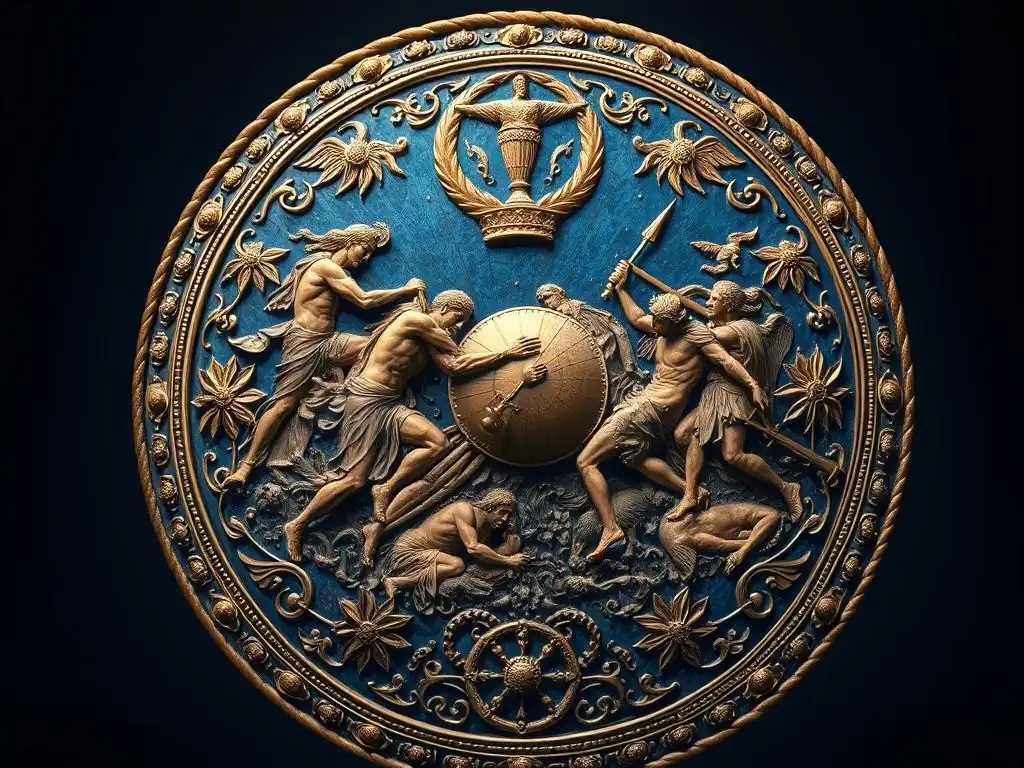
The outermost rim of Achilles' shield immediately establishes a cosmological context, depicting the fundamental elements of the Homeric universe. Hephaestus first encircles the shield with the river Oceanus, the mythical body of water believed to flow around the disc of the world. Within this boundary, he portrays the Earth, the Sky, and the Sea.
Above, the celestial bodies are depicted: the sun, the moon, and all the constellations with which the sky is crowned, including the Pleiades, the Hyades, Orion, and the Great Bear (Ursa Major), also known as the Wagon, which alone never dips into the waters of Oceanus. This initial imagery places the human world, depicted in the subsequent inner bands, within a larger cosmic order.
This representation serves several symbolic purposes. Firstly, it grounds the shield's imagery in the totality of existence, suggesting that the scenes of human life depicted are part of a grander, divinely ordered cosmos. It emphasizes the vastness of the world compared to the limited scope of the battlefield.
Secondly, the inclusion of constellations, used for navigation and marking time, connects human activity to the cycles of the heavens and the passage of time. It highlights the predictable, eternal nature of the cosmos in contrast to the chaotic and fleeting nature of human life and war. This overarching cosmic frame is the first layer of the profound Achilles shield symbolism meaning, setting the stage for the human dramas that unfold within its boundaries.
Depictions of Peace and War: Contrasting Scenes of Human Existence
Following the cosmic band, Hephaestus engraves two cities, representing the duality of human society. One city is depicted in a state of peace. Here, a wedding procession moves through the streets with music and dance, while in the marketplace, a legal dispute is being settled.
Elders sit on polished stones, judging a case concerning blood money, with the people gathered around to witness. This city embodies civic life, justice, celebration, and communal harmony. The detailed portrayal of the legal process, including the pleas and the potential payment, highlights the mechanisms by which peace is maintained and conflicts are resolved within a structured society.
In stark contrast, the second city is shown under siege. Two armies are depicted outside its walls, debating whether to sack the city or divide its wealth. Inside, the defenders prepare for battle, women and children watch from the ramparts, and an ambush is laid by warriors along a river bank, leading to a fierce fight.
This city represents the ever-present threat of war, the violence, loss, and disruption it brings, and the courage required to defend one's home. Juxtaposing these two cities on the same shield is a powerful statement about the human condition – that peace and war are intertwined possibilities, two sides of the same coin of human experience. This contrast is central to understanding the multifaceted Achilles shield symbolism meaning, showing the full range of life that is put at risk by the conflict Achilles is about to re-enter.
The Circle of Life: Symbolism of Agriculture, Justice, and Festivities
Moving inwards, the shield depicts scenes of rural life and communal activities, completing a picture of the full spectrum of human endeavors. There is a ploughed field where farmers work with oxen, the earth turning dark behind the ploughshares, followed by a king's estate where harvesters reap grain, overseen by the lord who watches with satisfaction. Further scenes include a vineyard heavy with ripe grapes, guarded against birds and thieves, and a herd of cattle being attacked by lions, defended by herdsmen and dogs.
These images portray the fundamental activities of sustenance, labor, and the challenges posed by nature. They represent the reliance on the earth and the efforts required to cultivate and protect its bounty, highlighting the cyclical nature of agricultural life.
The shield also features scenes of communal joy and justice. There is a dancing circle of young men and women, described with intricate detail about their movements and attire, accompanied by musicians. This represents festivity, art, and the social bonds of community.
Interspersed or adjacent to these scenes are elements suggesting governance and order, such as the assembly in the peaceful city. These depictions collectively symbolize the full circle of human life: from the labor of the fields providing sustenance, through the establishment of justice and order in society, to moments of shared joy and celebration. This comprehensive portrayal of civilian life, so different from the world of the warrior, adds profound depth to the Achilles shield symbolism meaning, suggesting that true human fulfillment lies not solely in battle but in the rich tapestry of communal existence.
Interpretations of the Shield's Symbolic Layers
The Shield as a Microcosm: Reflecting the Human Condition
One of the most widely accepted interpretations of Achilles' shield is that it serves as a microcosm of the entire human world, excluding only the realm of the dead. Hephaestus' creation presents a panoramic view of existence, encompassing the cosmos, the natural world, and human society in its various forms. By depicting both peace and war, city and country, labor and leisure, justice and conflict, the shield encapsulates the totality of human experience.
It shows life in its multifaceted reality, with its joys, sorrows, struggles, and triumphs. This detailed panorama contrasts sharply with the narrow, death-focused perspective of the battlefield that Achilles is about to dominate.
The shield acts as a mirror held up to the world of the Iliad, and by extension, to the world of Homer's audience. It reminds the listener or reader of everything that exists outside the immediate context of warfare – the routines of daily life, the bonds of community, the systems of law, the beauty of nature, and the cycles of time. For Achilles, who is fated to die young in pursuit of glory, the shield is particularly poignant.
It displays the very life he is sacrificing, the potential for a long existence filled with these varied experiences that his chosen path denies him. This interpretation of the shield as a summary of the human condition is fundamental to understanding its profound Achilles shield symbolism meaning.
Divine Order vs. Human Fate: The Shield's Underlying Tension
Another significant layer of symbolism on Achilles' shield lies in the tension between divine order and human fate. The shield is a divine creation, forged by Hephaestus, and it begins with a depiction of the ordered cosmos – the sun, moon, stars, and Oceanus. This represents a sense of cosmic order, a stable universe governed by divine forces and celestial cycles. Within this divine frame, however, are depicted the unpredictable and often chaotic realities of human life: war, legal disputes, attacks by wild animals, and the ever-present possibility of death.
This juxtaposition highlights the Homeric worldview where human actions and fates unfold within a larger, divinely influenced, but not entirely controlled, universe. While the gods intervene in the Trojan War, the shield shows that human society has its own internal dynamics, its own ways of establishing order (like the legal system in the peaceful city) and facing disorder (like the siege).
The shield, therefore, embodies the paradox of the Iliad: the gods are powerful and the cosmos is ordered, yet human life is marked by struggle, conflict, and the inevitability of death. The shield's existence as a divine artifact meant for a mortal hero facing his fate underscores this tension, adding complexity to the Achilles shield symbolism meaning.
Achilles' Identity and the Shield: A Reflection of Heroic Glory and Mortality
The shield is specifically made for Achilles, the most formidable but also the most tragically fated hero. Its elaborate depictions stand in stark contrast to Achilles' singular focus on achieving kleos (undying glory) through battle, which he knows will result in his premature death. The shield displays the vibrant, multifaceted life that Achilles is choosing to forgo for the sake of eternal fame on the battlefield. It shows feasts, dances, weddings, and the quiet routines of agriculture – scenes of life that are the antithesis of the death and destruction Achilles is about to unleash.
In this way, the shield becomes a poignant commentary on Achilles' heroic identity and his mortality. It is a divine object of immense beauty and scope, yet it is made for a mortal who will use it in the pursuit of death. The shield's grandeur reflects Achilles' own extraordinary status and potential for glory, but its content serves as a constant, silent reminder of the life he is sacrificing.
The Achilles shield symbolism meaning for the hero himself is deeply ironic: he carries a representation of the entire living world into battle, a world he will soon leave forever. It highlights the tragic nature of his choice and the ultimate cost of achieving heroic glory.
Achilles' Shield and Its Impact on Literature and Art
Influence on Subsequent Literary Works: The Aeneid and Beyond
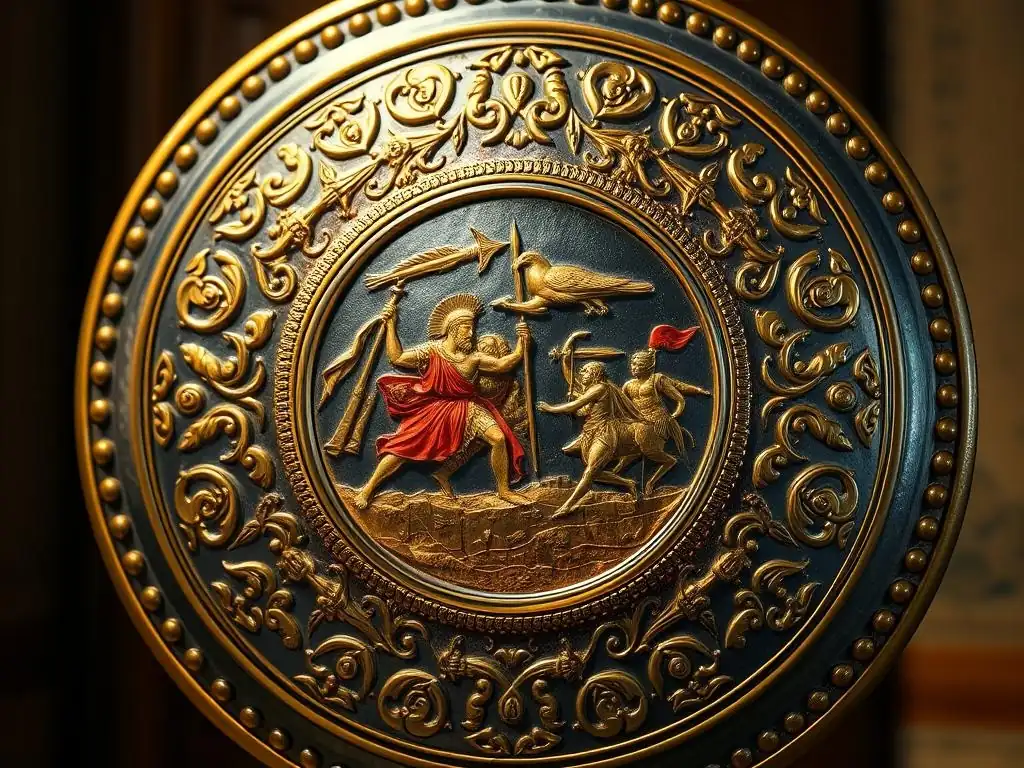
The detailed description of Achilles' shield in Homer's Iliad had a profound and lasting impact on subsequent epic poetry, most notably Virgil's Aeneid. In Book 8 of the Aeneid, Virgil describes the shield forged by Vulcan (the Roman equivalent of Hephaestus) for the hero Aeneas. Like Achilles' shield, Aeneas' shield is a divine artifact covered with elaborate scenes.
However, instead of depicting a microcosm of the world and general human life, Aeneas' shield portrays the future history of Rome, culminating in the Battle of Actium. This shift reflects the different purpose of Virgil's epic – to glorify Rome and its destiny – but the structural and conceptual debt to Homer is undeniable.
This technique of describing elaborate artwork on a hero's armor as a way to introduce symbolic themes, historical context, or cosmic perspectives became a convention in epic poetry. Later works, though perhaps not replicating the detailed ekphrasis (a literary description of a work of art) to the same extent, often feature significant objects that carry symbolic weight, influenced by the precedent set by Homer's shield. The Achilles shield symbolism meaning, as a representation of the world and a commentary on the hero's fate, established a powerful literary device for adding depth and thematic resonance to a narrative.
Artistic Renditions of Achilles' Shield Throughout History: From Ancient Pottery to Modern Interpretations
The visual power of Homer's description of Achilles' shield has inspired artists across millennia. While no physical shield matching Homer's description has ever been found (it is understood to be a literary creation), artists have attempted to depict it or the scenes upon it based on the text. Ancient Greek pottery, particularly in the Geometric and Archaic periods, sometimes features warriors with elaborate shield decorations, though none match the complexity of Homer's description. The concept of a hero's shield bearing significant imagery was certainly present in the artistic consciousness.
In later periods, particularly during the Renaissance and subsequent eras, artists and illustrators created visualizations of the shield's scenes based on Homer's text. These range from detailed engravings attempting to map out the different bands and their contents to individual paintings depicting specific scenes like the dancing floor or the besieged city.
Modern artists continue to be fascinated by the challenge of visualizing this complex object, sometimes creating abstract interpretations or focusing on the symbolic contrast between the beautiful imagery and the shield's function. The enduring artistic interest in the shield underscores the potency of its description and the richness of the Achilles shield symbolism meaning as a source of creative inspiration.
The Enduring Legacy of Achilles' Shield
Lessons from the Iliad: The Power of Art and Symbolism
The episode of Achilles' shield in the Iliad offers profound lessons about the power of art and symbolism within a narrative. Homer dedicates significant time and detail to describing a single object, demonstrating that material items within a story can carry immense thematic weight. The shield is not just a prop; it is a carefully constructed symbol that speaks to the core concerns of the epic. It shows that even in a story centered on war and death, there is value in portraying the full scope of human life and the world.
The shield's imagery provides a commentary on the action, offering a broader perspective that transcends the immediate conflict. It highlights the contrast between the destructive path of war and the creative, communal aspects of human existence. This use of a symbolic object to enrich the narrative and provide thematic depth is a key takeaway from the Iliad. It illustrates how art, even within the context of a war epic, can serve as a vehicle for exploring complex philosophical ideas about life, death, order, and chaos, reinforcing the multifaceted Achilles shield symbolism meaning.
Relevance in Modern Interpretations: The Shield's Continued Resonance
The symbolism of Achilles' shield remains relevant in modern interpretations of the Iliad and in broader discussions of art, war, and the human condition. Scholars and readers continue to analyze the shield's structure and imagery, finding new layers of meaning. The contrast between the shield's depiction of life and its use in death resonates in any era marked by conflict. It forces us to consider what is truly valuable about human existence and what is lost in the pursuit of violence or glory.
The idea of an object that encapsulates the entire world also speaks to contemporary themes of interconnectedness and the complexity of global society. The shield serves as a reminder that even in moments of intense conflict, the vast tapestry of life continues elsewhere. Its enduring fascination lies in its ability to provoke contemplation on fundamental questions about human nature, society, and our place in the cosmos, ensuring that the rich Achilles shield symbolism meaning continues to be explored and appreciated.
Conclusion: The Shield as a Timeless Symbol of Heroism and Mortality
Achilles' shield, forged by the divine hands of Hephaestus, is far more than a piece of epic armor; it is a complex and profound symbol. Its intricate depictions of the cosmos, peace, war, agriculture, justice, and festivity create a microcosm of the human world, presenting a vibrant panorama of life that contrasts sharply with the death-dealing purpose it serves. The shield embodies the tension between divine order and human chaos, the beauty of creation alongside the reality of destruction.
For Achilles, the shield is a poignant reflection of his heroic choice – the pursuit of immortal glory through a life cut short, juxtaposed against the rich, full life depicted on the very object protecting him. Its influence on subsequent literature and art attests to its power as a literary device and a source of inspiration.
Ultimately, the Achilles shield symbolism meaning lies in its multifaceted representation of the human condition, serving as a timeless reminder of the value of life, the tragic cost of war, and the enduring power of art to reflect and comment upon the complexities of existence.
Frequently Asked Questions
What is the Shield of Achilles, and where is it described?
The Shield of Achilles is a magnificent shield crafted by Hephaestus for the hero Achilles. Its description appears in Homer's Iliad, specifically in Book 18, detailing its elaborate imagery.
What are some of the key scenes depicted on the Shield of Achilles?
The shield depicts scenes of everyday life, including cities at peace and at war, agricultural activities, celebrations, and celestial bodies, providing a comprehensive view of the world. These scenes highlight the duality of human existence.
What is the symbolism behind the inclusion of celestial bodies on the Shield of Achilles?
The presence of the sun, moon, and stars on the shield symbolizes the cosmic order and the divine power overseeing the world. It represents the universe in its entirety, reflecting a complete worldview.
What might the contrasting scenes of peace and war on the Shield of Achilles represent?
The juxtaposition of peaceful and war-torn cities symbolizes the inherent conflict within human society and the fragility of peace. It also highlights the choices available to individuals and communities.
How does the Shield of Achilles contribute to our understanding of ancient Greek values and worldview?
The shield offers a glimpse into the ancient Greek worldview by showcasing their values related to community, agriculture, and divine influence. It emphasizes the importance of order and balance within the cosmos and human affairs.
Final Reflection: The Enduring Legacy of Achilles' Shield
The intricate artistry of Achilles' shield, as described by Homer, remains a potent symbol, not just of ancient Greek craftsmanship, but of the enduring human struggle between glory and mortality. Its detailed depiction of war, peace, and the cycle of life continues to resonate deeply with modern audiences, reminding us of the timeless nature of human conflict and the ephemeral nature of even the greatest achievements.
The shield's symbolic power transcends its historical context; it speaks to our innate desire to leave a lasting mark on the world, to create something beautiful and meaningful in the face of inevitable decay. The glory that was Greece and the grandeur that was Rome
– this famous phrase encapsulates the very essence of the striving for immortality that Achilles, and by extension, the shield itself, represents. The shield's imagery, from the bustling city scenes to the terrifying depictions of war, forces us to confront the complexities of human existence and the often-contradictory nature of heroism.
Consider the scenes depicted on the shield: the vibrant tapestry of life and the brutal realities of war. What aspects resonate most with you? How can we, in our own lives, strive to create our own "shields"—symbols of our values, our achievements, and our enduring legacies? Let the enduring power of Achilles' shield inspire you to craft your own narrative, to leave your own unique mark on the world, however small, and to find beauty and meaning even amidst the challenges and complexities of life.
Unlock the Secrets of the Iliad: Dive Deeper into Achilles' Shield!
Thanks for exploring the rich symbolism of Achilles' shield in Homer's Iliad! We hope you gained a new appreciation for the artistry and deeper meanings woven into this iconic scene. Ready to take your understanding further?
- Craft your own interpretation: Consider what aspects of Achilles' shield resonate most with you and why. What does it reveal about his character, his destiny, and the larger themes of the epic? Write it down!
- Share your thoughts: Engage with fellow mythology enthusiasts! Discuss your interpretation of the shield’s symbolism in the comments section below – let’s spark a conversation!
- Explore related artifacts: Research other examples of ancient Greek art that depict scenes of battle or heroic narratives. How do they compare to the description of Achilles’ shield?
What hidden meanings do you believe are embedded within the artistry of Achilles' shield?