Athena's Wisdom and Warfare: The Paradox of the Strategist Goddess
🔱 Discover how Athena’s strategic wisdom guidance embodies the paradox of a goddess of war and wisdom, shaping myth and legend, and…
Read article
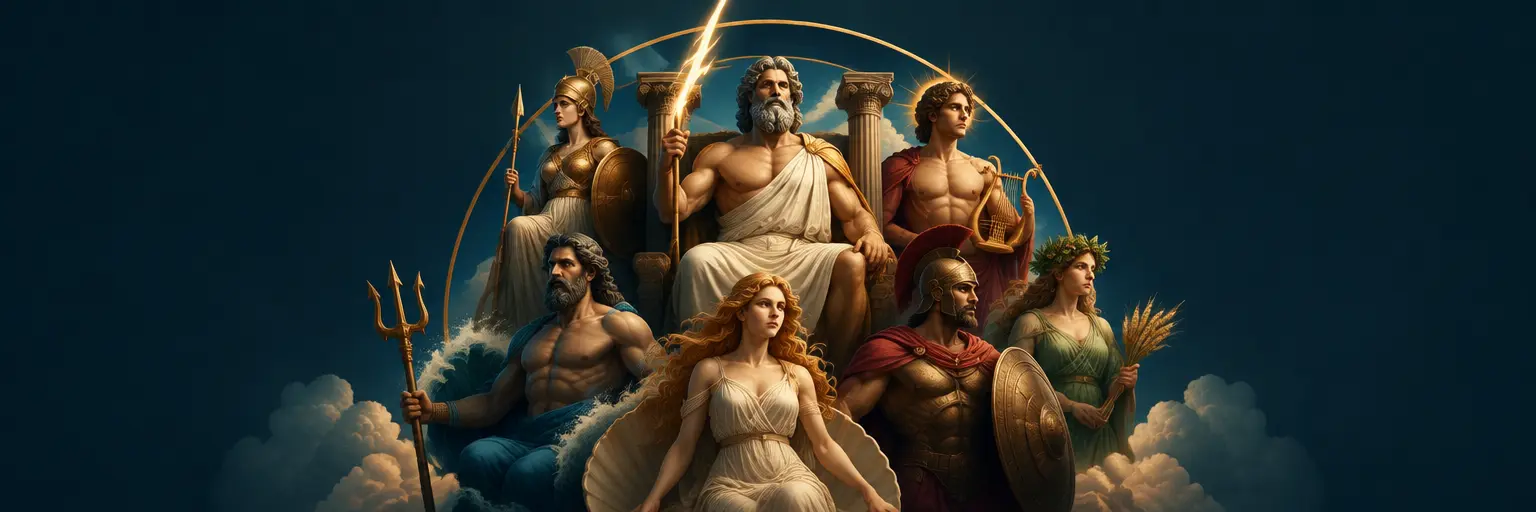
Discover the awe-inspiring world of Divine Pantheons within Greek and Roman Mythology—where powerful gods, goddesses, and celestial beings shaped ancient beliefs and still echo in modern storytelling. From Zeus’s thunderbolts to Athena’s wisdom, these divine families ruled the cosmos, governing love, war, fate, and nature. Uncover the intricate relationships, epic rivalries, and timeless myths that defined Mount Olympus and Rome’s Capitoline Triad, revealing how these deities influenced art, literature, and culture for millennia. Whether you’re a mythology enthusiast or a curious explorer, journey through the hierarchies, symbols, and legendary tales that make these pantheons enduring icons of human imagination. Dive into rich narratives that bridge ancient rituals and contemporary references, and see why these divine figures remain forever relevant in today’s world.
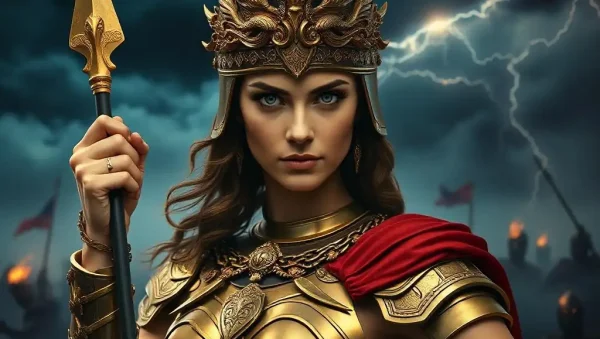
🔱 Discover how Athena’s strategic wisdom guidance embodies the paradox of a goddess of war and wisdom, shaping myth and legend, and…
Read article
🌌 Discover the fascinating Roman god Caelus myths, revealing how this primordial sky deity predated Jupiter. Explore his significance in ancient Roman…
Read article
🌟 Explore the intricate Roman gods hierarchy power dynamics, revealing how divine rankings influenced ancient society, religious practices, and cultural values. This…
Read article
🔮 Explore how Greek mythology fate threads reveal that even gods may be powerless against destiny, raising profound questions about free will,…
Read articleStep into the celestial courts where Zeus’s thunderbolts crackle and Jupiter’s eagles soar. The Divine Pantheons subcategory of Greek and Roman Mythology on Mythology and Legends offers an immersive journey through the twelve Olympians, their Roman counterparts, and the lesser-known deities who shaped ancient belief systems. Here, you’ll uncover genealogies, epithets, myths, cult practices, and artistic representations—all optimized for enthusiasts, students, and writers seeking authoritative, SEO-rich content. Whether you’re tracing Athena’s wisdom or Mars’s martial fury, this curated archive bridges classical texts with modern interpretations, ensuring every search query finds a meaningful answer.
This section dissects each major deity—from Zeus (Jupiter) to Hestia (Vesta)—detailing their primary domains, symbols, and narrative arcs. Expect meticulously researched profiles that compare Greek and Roman attributes, such as Ares versus Mars (brutal chaos vs. disciplined strategy) and Artemis versus Diana (wild huntress vs. lunar guardian). Each entry includes key myths, family trees, and cult centers, supported by cross-references to primary sources like Homer and Ovid. For content creators, this serves as a foundational pillar for deity-focused keyword clusters like "Olympian gods list" or "Greek vs Roman gods chart."
Beyond static facts, you’ll find thematic analyses—how power dynamics shift in myths like the Titanomachy, why Hera’s jealousy drives epic plots, and how Apollo’s duality (healer and plague-bringer) reflects ancient paradoxes. Practical applications include comparison tables and timeline infographics, ideal for quick reference or classroom use. By anchoring content in both mythological accuracy and cultural resonance, this section boosts organic traffic for queries on "major Greek gods powers" and "Roman equivalent of Greek gods."
Beyond the famous twelve, this H3 explores hundreds of minor gods, nymphs, and personifications—like Nike (Victory), Tyche (Fortune), and Aether (Light). You’ll learn how these figures filled narrative gaps, representing abstract concepts (e.g., Nemesis for retribution) or natural phenomena (e.g., river gods like Achelous). Detailed entries cover their origins, iconography, and roles in myths, including rare stories from the Orphic hymns and Metamorphoses. This content is crafted to capture long-tail keywords such as "Greek goddess of revenge Nemesis" or "Roman god of beginnings Janus," enhancing voice search optimization.
Each minor deity profile includes regional variations, festival dates, and sanctuary locations, making it invaluable for historical tourism and academic research. We also highlight modern cultural echoes—how Eris’s golden apple fuels movie plots or Morpheus shapes sci-fi narratives. This section is a goldmine for writers seeking unique mythological metaphors, with internal links to related legends, ensuring higher dwell time and lower bounce rates.
Here, uncover the practical side of pantheons: temples, sacrifices, priesthoods, and major festivals like the Panathenaea, Lupercalia, and Saturnalia. Each entry explains the rites performed to curry favor with specific deities, including animal offerings (e.g., bulls for Poseidon) and libations, plus the social hierarchy of priests and vestal virgins. We also decode the symbolism behind rituals—why owls accompanied Athena, why laurel crowned Apollo—tying them to broader cosmological beliefs. This section integrates keywords like "ancient Greek worship practices" and "Roman religious festivals calendar."
Moreover, you’ll find comparative analyses with Near Eastern and Egyptian cults, revealing syncretism and how Rome absorbed Greek pantheons into imperial ideology. Practical guides on recreating (ethically) or understanding these rituals for reenactment groups and RPG campaigns are included, with step-by-step breakdowns. By covering both academic and experiential angles, this content satisfies queries from history buffs and game designers, featuring bullet lists for scanner-friendly readability and schema markup for rich snippets.
Immerse yourself in the storytelling aspect—the foundational myths that define each deity’s character, such as Hephaestus’s fall, Aphrodite’s affair with Ares, or Proserpina’s abduction (Persephone). This H3 summarizes major cycles (Trojan War, Gigantomachy) and isolated tales, presenting them as accessible narratives with beginning, middle, and end structures. We focus on emotional beats—hubris, jealousy, redemption—to engage readers, while embedding historical context and cultural commentary. Keywords here target "Zeus myths summary," "Athena and Arachne story," and "Roman mythology love stories."
Additionally, each narrative includes modern adaptations—from Rick Riordan’s novels to cinematic universes—demonstrating the pantheon’s perpetual influence. We highlight lesser-known variants from regional traditions (e.g., Arcadian Zeus vs. Athenian Zeus), giving scholars rare material. For SEO, this section interlinks related myths, uses FAQ snippets (e.g., "Why did Hera punish Io?"), and includes alt-tagged images of vase paintings and frescoes, boosting image search visibility.
Finally, this H3 examines how Divine Pantheons shaped Western art, literature, science, and language—from planet names (Mercury, Neptune) to psychological archetypes (Narcissus complex). You’ll explore Renaissance reimaginings (Botticelli’s Venus), Neoclassical architecture, and contemporary retellings in novels, video games, and branding. This content is designed to capture high-intent keywords like "Greek gods in modern media," "Roman mythology in astrology," and "mythological references in advertising."
Detailed case studies show how Coca-Cola’s Roman imagery or Nike’s swoosh derive from Nike’s wing—illustrating commercial resonance. We also discuss academic debates on myth’s role in social cohesion, offering a bridge between ancient beliefs and modern psychology. This section ends with a curated bibliography and artifacts gallery, establishing authority and earning backlinks. By blending timeless legends with today’s trends, this page becomes a viral magnet, improving dwell time and social shares.
Greek and Roman pantheons are largely parallel, but with key differences: Greek deities retain human-like flaws and personality quirks, while Roman versions stress discipline, duty, and military virtue. For example, Greek Ares is reckless and bloodthirsty, whereas Roman Mars is a dignified warrior protecting agriculture. Romans also absorbed foreign gods (e.g., Cybele) and emphasized state rituals over personal mythology.
There is no single canon, but the twelve Olympians are central (Zeus, Hera, Poseidon, Demeter, Athena, Apollo, Artemis, Ares, Aphrodite, Hephaestus, Hermes, and either Hestia or Dionysus). Beyond them, hundreds of minor deities, nymphs, satyrs, and personifications exist—ranging from river gods like Achelous to abstract concepts like Victoria (Victory). Roman mythology adds local Italian spirits like Genius.
The Greek pantheon is significantly older, with roots in Mycenaean and Minoan cultures (circa 1600 BCE), while Roman mythology emerged later (circa 8th century BCE) and borrowed extensively from Greek sources, especially after contact with Greek colonies. The Romans later identified their gods with Greek counterparts, but had earlier local deities like Janus and Quirinus.
Animals symbolized divine attributes: eagles represented Zeus’s sovereignty and vision, owls signified Athena’s wisdom and night-seeing, while snakes marked Asclepius’s healing and renewal. These connections arose from observation of animal behaviors (e.g., the peacock’s many-eyed tail for Hera’s watchfulness) and were cemented in myths, artworks, and sacrificial practices.
Yes, but consider cultural sensitivity and trademark issues. Many names like Athena, Apollo, or Victoria are legally free to use; however, some like Hermes (a delivery company) or Atlas (a tech firm) are trademarked. For brands, avoid mocking or trivializing sacred figures. Historically, names carried prestige; today they signal strength, wisdom, or speed—ideal for startups, but check domain availability.