How Did the Gods Get Their Powers? Tracing the Development of Divine Attributes
✨ Discover the intriguing divine power origin stories that explain how gods acquired their extraordinary attributes, revealing the rich tapestry of myths…
Read article
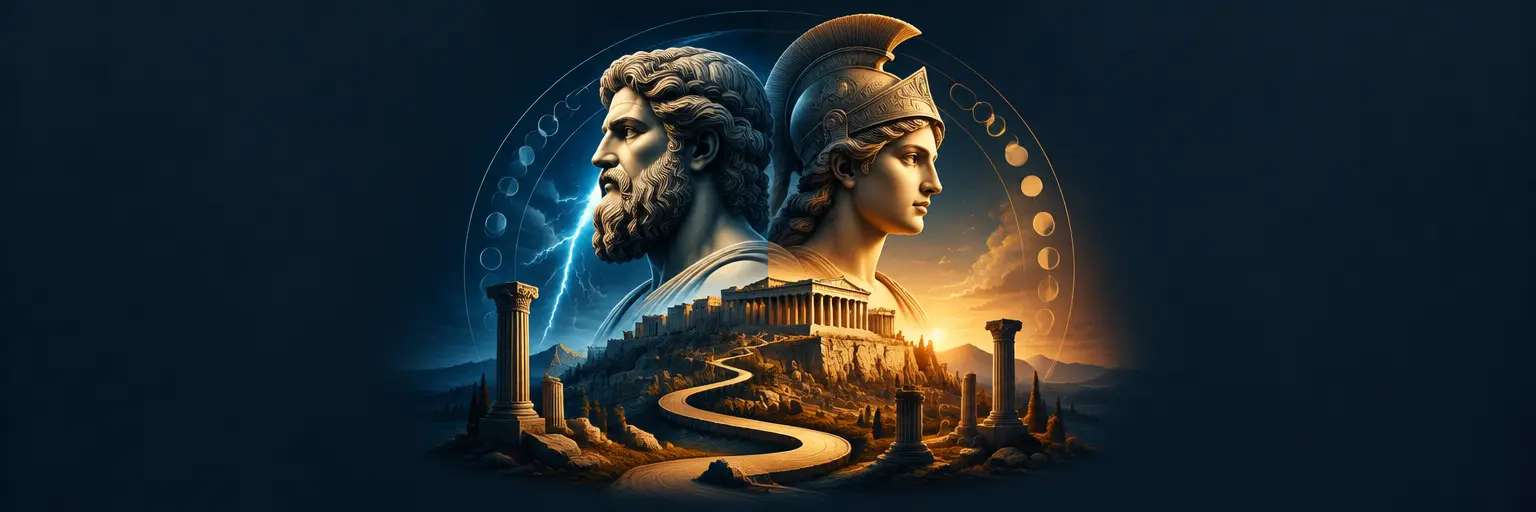
Discover the timeless tales that shaped the Western imagination with our deep dive into Greek and Roman Mythology’s Origins and Evolution. From the shadowy, primordial forces of Chaos and Gaia to the majestic reign of Zeus on Mount Olympus, this journey unravels how ancient Greek myths—rooted in Minoan, Mycenaean, and Near Eastern traditions—evolved through oral poetry, Homer’s epics, and Hesiod’s cosmogony. Later, the Romans brilliantly adapted these stories, infusing them with their own civic virtues, deities like Jupiter and Mars, and imperial symbolism, creating a rich tapestry that still fuels modern art, literature, and psychology. Explore how myths morphed from sacred rituals to philosophical allegories, reflecting societal shifts, and trace their enduring legacy in film, branding, and everyday language. Whether you’re a student, a storyteller, or a curious mind, this section reveals the dynamic, living nature of mythology—not as static relics, but as ever-changing narratives that mirror human experience. Uncover the fascinating layers of cultural exchange, reinterpretation, and resilience that make these ancient stories eternally relevant.
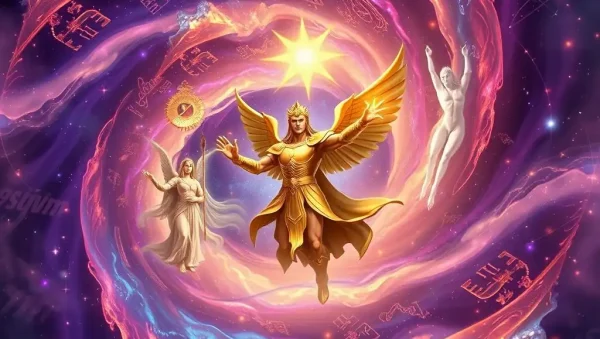
✨ Discover the intriguing divine power origin stories that explain how gods acquired their extraordinary attributes, revealing the rich tapestry of myths…
Read article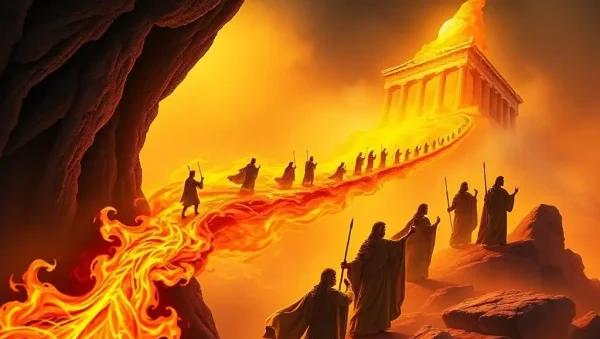
🔥 Explore the captivating Prometheus myth evolution timeline, tracing how this ancient tale of rebellion and ingenuity has transformed across cultures and…
Read article
🌟 Discover how ancient oracles predicted future events, shaping divine narratives across cultures. This exploration reveals their profound influence on myths, legends,…
Read article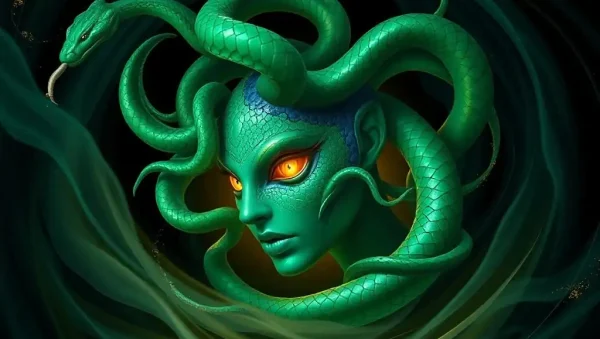
🧙♀️ Explore the captivating Medusa Gorgon myth evolution, revealing how this legendary creature's story has transformed across cultures and eras, shaping modern…
Read articleWelcome to our deep dive into the Origins and Evolution of Greek and Roman mythology, a cornerstone of Western cultural heritage. This subcategory explores how these ancient narratives were born from prehistoric oral traditions, transformed through epic poetry, and adapted by Roman civilization to shape politics, art, and religion. Here, you’ll uncover the historical layers beneath Zeus’s thunderbolt and Mars’s spear, tracing how gods, heroes, and monsters evolved alongside human society. Perfect for students, enthusiasts, and writers, this section connects ancient belief systems to modern storytelling, revealing why these myths still resonate in books, films, and psychology today. Expect a rich blend of archaeology, literary analysis, and cultural commentary.
The earliest traces of Greek mythology emerge from Mycenaean tablets (c. 1450–1100 BCE) written in Linear B, naming deities like Zeus, Hera, and Poseidon. These fragments reveal a polytheistic world influenced by Minoan Crete and Near Eastern traditions. Over centuries, oral bards wove these local cults into shared sagas, culminating in Homer’s Iliad and Odyssey (c. 8th century BCE). Homer standardized character traits, divine hierarchies, and heroic codes, while Hesiod’s Theogony systematized creation myths and genealogies. This period anchored myths as both entertainment and moral instruction, setting the stage for later philosophical reinterpretation.
Readers exploring this facet will learn how archaeological discoveries and linguistic analysis help date mythological layers. For instance, the name “Athena” appears in Mycenaean texts, while her birth from Zeus’s head is a later poetic invention. The evolution from localized spirits to panhellenic gods reflects political unification among Greek city-states. By comparing Homer’s aristocratic heroes with older chthonic fertility deities, you’ll see how myths adapted to shifting social values—from tribal warfare to civic law. Expect timelines, primary source excerpts, and maps to visualize this formative era.
After Alexander the Great’s conquests (4th century BCE), Greek myths merged with Egyptian, Persian, and Indian motifs, creating syncretic cults like Serapis. Concurrently, Rome encountered Greek culture via Magna Graecia and adopted its pantheon wholesale, equating Jupiter with Zeus, Venus with Aphrodite, and so on. Roman writers like Ovid (Metamorphoses) and Virgil (Aeneid) reimagined Greek stories to elevate Roman origins and imperial ideology. This process, called interpretatio romana, added Roman virtues—piety, duty, martial discipline—to Greek narratives, making myths tools for political propaganda and moral education.
This section illustrates how mythological evolution is never passive. Roman adaptations sometimes altered endings, like turning Arachne’s tale into a warning against hubris in a specifically Roman context. You’ll discover how coins, frescoes, and public monuments used myths to legitimize emperors, from Augustus claiming descent from Aeneas to Nero posing as Apollo. The Hellenistic period also saw philosophical allegorization, where Stoics and Neoplatonists interpreted myths as cosmic truths. This cross-cultural fusion explains why many “Greek” myths survive only in Latin texts, a crucial nuance for researchers and writers.
From tragedy to comedy, Greek and Roman myths provided endless creative material. Aeschylus, Sophocles, and Euripides turned heroic legends into psychological dramas, reshaping characters like Medea and Oedipus for Athenian audiences. Roman poets such as Catullus and Propertius reframed myths as metaphors for personal love and loss. Meanwhile, visual arts—from Parthenon friezes to Pompeian wall paintings—depicted myths in changing styles, reflecting contemporary aesthetics and religious sentiments. These works didn’t merely copy older tales; they actively redefined moral and existential questions for their times.
Here, readers can trace how a single myth, like the Trojan War, morphed across centuries—from Homer’s epic to Euripides’ anti-war Trojan Women to Virgil’s pro-Roman Aeneid. The subcategory also covers iconography evolution, such as how Medusa changed from a grotesque monster to a beautiful victim in later Roman art. You’ll analyze vase paintings, sculptures, and theatrical scripts to see how each generation used myths to debate gender, power, fate, and justice. This artistic lens reveals mythology as a living dialogue, not a static canon, invaluable for creatives seeking fresh angles.
The 19th and 20th centuries saw myth reinterpreted through psychology and anthropology. Carl Jung coined “archetypes,” seeing figures like the Hero (Heracles) and the Shadow (Hades) as universal unconscious patterns. Freud used Oedipus and Electra complexes to explain human development, while Joseph Campbell’s Hero with a Thousand Faces distilled myth into a monomyth structure. These frameworks transformed ancient stories into tools for personal growth and literary analysis, explaining why Greek heroes still appear in therapy, leadership training, and Hollywood blockbusters like Percy Jackson.
This facet explores how evolution of meaning shifts with scientific paradigms. For example, the labyrinth and Minotaur now symbolize mental health struggles in popular discourse, while Prometheus’s fire is equated with technological hubris. You’ll read case studies on modern adaptations in films, video games, and therapy, plus critiques of universalist claims. The goal is to help you distinguish historical context from modern projection, enriching your understanding of both the old myths and your own culture. Expect comparative charts of archetypes across Greek, Roman, and global myths.
Greek and Roman myths did not vanish with antiquity; they journeyed through medieval monasteries, Byzantine manuscripts, and Arab translations, re-entering Europe during the Renaissance. Artists like Botticelli and Michelangelo revived pagan themes, while Enlightenment thinkers used myths as allegories for reason and tyranny. In the 19th century, Romantic nationalists reclaimed myths for identity building, and colonial powers spread them worldwide. Today, these stories appear in Japanese anime, African diasporic literature, and Latin American magical realism, showing a global evolution far beyond the Mediterranean.
This section considers how myths are adapted for local contexts—for instance, Caribbean retellings of Circe or Indian adaptations of Helen. You’ll examine how colonial and postcolonial dynamics shape reinterpretation, such as using Prometheus to critique industrial exploitation. Additionally, you’ll learn about translation challenges, like rendering Greek honor codes in modern English, and their ideological choices. The subcategory emphasizes that evolution is ongoing: each retelling adds new layers, ensuring myths remain relevant for problem-solving and identity formation across cultures. This global perspective is essential for writers aiming to use mythology with sensitivity and depth.
The oldest directly attested myths come from Mycenaean tablets (c. 1450 BCE), naming deities like Zeus and Poseidon, but no full story survives. Homer’s Iliad (8th century BCE) is the earliest complete mythological narrative we have. However, oral traditions likely extend back to Bronze Age or even Neolithic times, such as the mother goddess archetype.
Romans adopted Greek gods but gave them a distinct social function: more focused on state, law, and agriculture, with less emphasis on personal storytelling. Roman myths often had historical roots, like the founding of Rome by Romulus, and prioritized piety (pietas) over Greek heroic glory. Ovid’s Metamorphoses blended both, but Roman versions frequently added moralizing lessons.
Myths evolved due to political shifts, migration, cultural contacts, and artistic reinterpretation. Local god cults merged into panhellenic figures, and poets like Homer or dramatists like Euripides adapted tales to address contemporary issues, such as war, justice, or gender roles. Religion was not dogmatic, so storytellers had creative freedom, leading to multiple variants.
Absolutely—they pervade modern psychology (Jungian archetypes), literature, movies, product names (Nike), and even space exploration (Atlas rockets). They offer frameworks for understanding heroism, hubris, and transformation, acting as universal metaphors. Their adaptability lets each generation converse with ancient questions, making them timeless tools for reflection and creativity.
Start with Homer’s Iliad and Odyssey, Hesiod’s Theogony and Works and Days, and the Homeric Hymns. For Roman adaptations, read Ovid’s Metamorphoses and Virgil’s Aeneid. For later compilations, consult Apollodorus’s Library and Hyginus’s Fabulae. These primary sources offer the fullest view of how myths evolved across centuries.