Why We Still Paint Myths: The Enduring Appeal of Ancient Stories in Art Today
🎨 Discover why ancient myths continue to captivate us, highlighting the enduring appeal of ancient myths art. These timeless stories inspire modern…
Read article
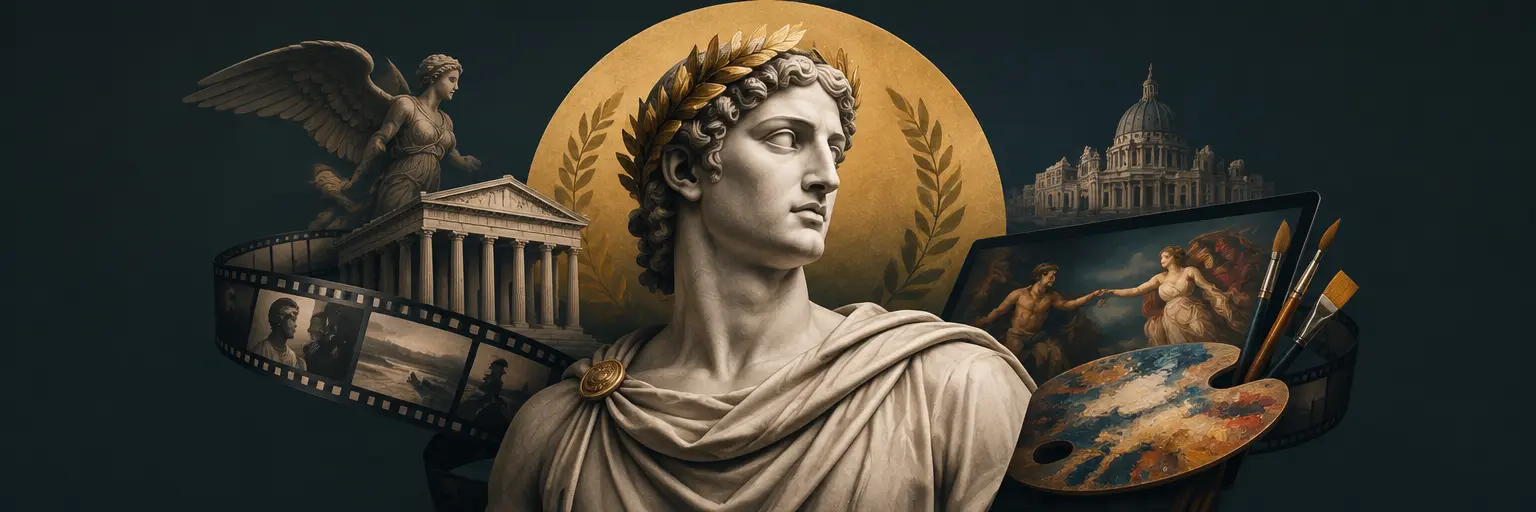
Artistic representations have long been the vital bridge between ancient Greek and Roman myths and modern imagination. From the marble sculptures of gods locked in eternal struggle to Renaissance frescoes and contemporary digital art, these visual and literary interpretations shape how we perceive legendary narratives today. Explore how mythology’s influence permeates painting, poetry, film, and pop culture, revealing timeless symbols of love, power, and tragedy that continue to inspire creators across centuries. Dive into the enduring legacy of classical tales and uncover the artistic echoes that keep these ancient stories vibrantly alive.
🎨 Discover why ancient myths continue to captivate us, highlighting the enduring appeal of ancient myths art. These timeless stories inspire modern…
Read article
🌟 Explore the captivating journey of mythological storytelling art forms, tracing their transformation from ancient frescoes to modern films, and discover how…
Read article
🎨 Discover how Ovid’s Metamorphoses art inspiration has transcended centuries, inspiring countless works of visual art. This enduring muse continues to influence…
Read articleWelcome to our deep dive into Artistic Representations & Influence, a subcategory within Greek and Roman Mythology that explores how these ancient tales have been visualized, reinterpreted, and immortalized across centuries. From classical marble sculptures to Renaissance frescoes, modern films, and digital art, this space examines the enduring power of mythological imagery. Here, you’ll uncover how gods, heroes, and monsters have shaped artistic movements, political propaganda, and popular culture—and how each retelling reflects the values of its own era.
Begin with the earliest surviving representations: Greek and Roman sculptures, reliefs, and painted pottery. These artifacts are not just decorative; they served religious, funerary, and political purposes. For example, the Laocoön Group captures a tragic Trojan priest, while red-figure vases depict scenes from the Iliad with striking detail. These works established visual conventions—like Zeus’s thunderbolt or Athena’s owl—that persist today. By studying them, you’ll learn how ancient artists balanced idealized beauty with narrative clarity, and how they used visual cues to make myths instantly recognizable to their audiences.
Moreover, these artworks reveal regional variations. Athenian vases emphasize heroic action, whereas Roman copies often add realistic portraiture to mythological figures, reflecting Imperial ideology. Understanding this subcategory helps you trace the evolution of iconography, from geometric abstraction to Hellenistic emotion. It also highlights how mythology functioned as a shared visual language, connecting illiterate citizens, priests, and elites. For SEO, keywords include “Greek vase painting,” “Roman marble copies,” “mythological iconography,” and “Classical art history.”
The Renaissance saw a dramatic revival of Greco-Roman myths, driven by humanism and the rediscovery of classical texts. Artists like Botticelli (Birth of Venus), Michelangelo, and Raphael infused Christian-era Europe with pagan deities, blending allegory with sensuality. The Baroque period, led by Bernini and Rubens, exaggerated motion and emotion—think of Bernini’s Daphne and Apollo, where marble literally transforms into laurel leaves. These works were commissioned by popes, Medici, and monarchs to project power, learning, and divine favor. This H3 explores how mythological subjects became a canvas for exploring human passion, divine beauty, and political ambition.
For modern viewers, these artworks are gateways to understanding how mythology was domesticated and Christianized while retaining its pagan spirit. Renaissance artists often used myths to discuss contemporary issues, like love, war, or mortality. By examining specific paintings and sculptures, you’ll see how they added Christian moral undertones or philosophical allegories. SEO-rich terms here include “Renaissance mythology paintings,” “Baroque mythological sculpture,” “Botticelli Venus,” and “Bernini Apollo.”
Artistic influence extends beyond visual media into written word. Greek and Roman myths inspired Ovid’s Metamorphoses, Dante’s Inferno, Shakespeare’s plays, and modern novels like Madeline Miller’s Circe. This subcategory examines how poets and authors retold myths, altering details to serve new moral or psychological themes. For instance, Ovid’s treatment of Medusa differs from Hesiod’s, transforming her from a monster into a tragic victim. Literary adaptations often serve as “templates” for visual artists, blurring the line between text and image. Here, you’ll trace how mythological motifs—like the labyrinth or the Judgment of Paris—became recurring archetypes in Western storytelling.
Moreover, literature’s influence shaped national identities; Roman myths of Aeneas legitimized Augustus, while Renaissance epics connected royal courts to Trojan heroes. In the modern era, retellings often challenge classical patriarchy, giving voice to Hera, Medusa, or the Minotaur. This section provides a critical lens on appropriation and reinterpretation, helping you appreciate mythology’s flexibility. Keywords include “Ovid Metamorphoses,” “mythological retellings,” “literary classics,” “modern mythology novels,” and “poetic adaptations.”
Twentieth- and twenty-first-century media have reinvented Greek and Roman mythology for mass audiences. From Clash of the Titans (1981/2010) to Percy Jackson, Wonder Woman, and Immortals, these films use CGI to herald epic battles but often simplify moral complexity. TV series like Kaos and Blood of Zeus blend ancient narratives with contemporary social issues, such as gender fluidity, trauma, and political corruption. This H3 analyzes how visual effects, costume design, and soundtracks shape mythological perception, making gods relatable or terrifying. Additionally, video games like Hades and God of War allow players to interact with myths, creating immersive, personalized narratives that boost engagement.
Digital art, memes, and graphic novels also contribute, turning myths into viral content. This influence extends to branding—Nike’s swoosh, Medusa’s head on Versace logos—showing how mythology has commercialized into lifelong icons. For SEO, focus on “Greek mythology movies,” “Roman mythology games,” “mythological TV shows,” “Hades game mythology,” and “myth in advertising.”
Today, mythological symbols are omnipresent—from astrology signs to corporate logos, fashion, and tattoos. This section explores how specific symbols like Pegasus (mobility), Aphrodite’s shell (beauty), or Apollo’s lyre (music) are repurposed in contemporary contexts. Fine artists like Damien Hirst and Banksy use classical motifs to critique consumerism or politics. Meanwhile, street art and surrealist paintings of mythic figures challenge societal norms. By analyzing these modern interpretations, you’ll see how artists leverage the familiarity of myth to convey new meanings, creating a bridge between ancient wisdom and current anxieties.
This subcategory also covers how museums and digital archives preserve and reinterpret these works, using virtual reality to let you “step into” mythological scenes. Understanding this helps you identify cultural continuity and change, and how mythology remains a dynamic, living tradition. You’ll discover why certain images persist while others fade, and how online platforms democratize artistic access. Keywords include “mythology in fine art,” “symbolism in logos,” “contemporary mythological art,” “pop culture iconography,” and “virtual museum myths.”
Artistic representations provide visual context that texts alone cannot. They reveal how myths were performed, worshipped, and politically used. For example, temple reliefs or coins depict specific cult practices, while vases illustrate narrative moments not fully described in literature. This visual evidence helps scholars date myths, understand regional variations, and see how ancient audiences emotionally connected with gods.
There is no single answer, but Botticelli’s Birth of Venus and the Laocoön Group are among the most studied. Botticelli redefined female beauty and Neoplatonic love, while the Laocoön sculpture captures intense physical suffering, influencing Renaissance and Baroque artists. Both have been referenced in films, books, and modern ads, solidifying their lasting impact.
Modern films often simplify complex morality, add romance or action, and change character motivations for dramatic effect. For instance, Clash of the Titans presents Perseus as a heroic savior, while ancient versions sometimes depict him as cunning and violent. These distortions make myths more accessible but can misrepresent the original cultural meanings, focusing on spectacle over ritual or ethics.
Yes, if done respectfully and contextually. Using a symbol like Mercury’s winged sandals for courier services is generally seen as homage, not appropriation. However, trivializing sacred figures or stripping them of original meaning may offend modern practitioners. Researching the source, acknowledging the heritage, and avoiding disrespectful stereotypes ensures ethical usage.
Digital technology offers immersive 3D scans, interactive tours of ancient sites, and augmented reality apps that overlay mythological figures on real-world settings. Video games allow users to control heroes, and AI-generated art creates new versions of classical scenes. This democratizes access, enabling global audiences to explore and reinterpret myths without traveling to museums.