
From Fresco to Film: The Evolution of Mythological Storytelling in Art Forms

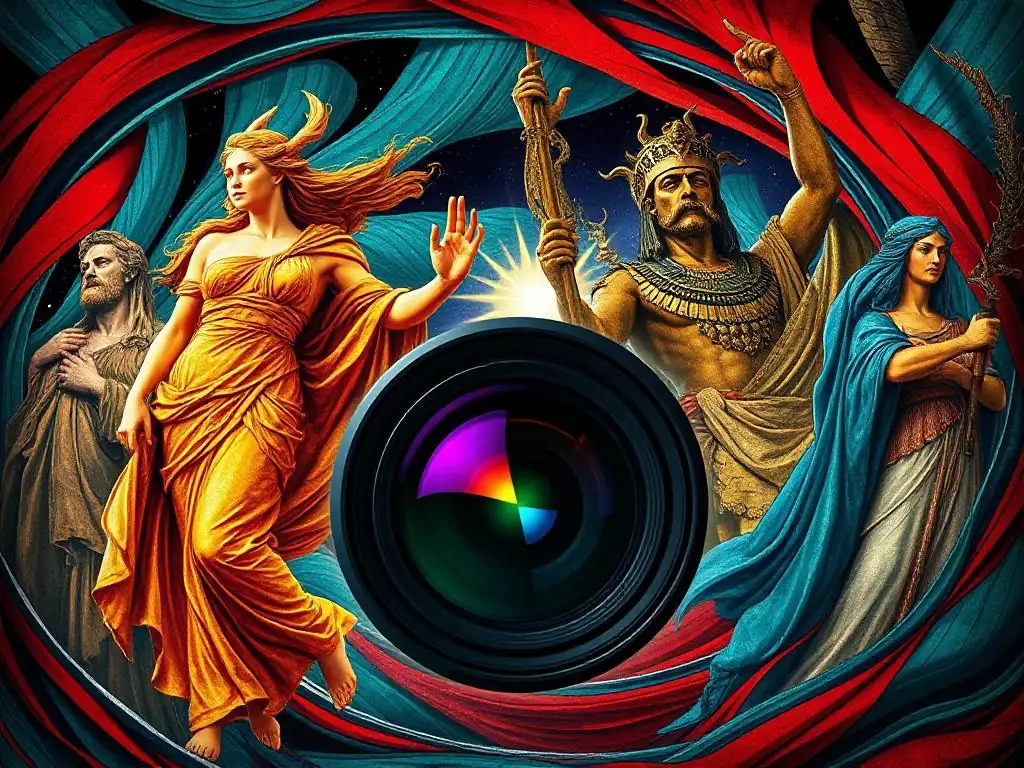
Welcome to Mythology and Legends, where the whispers of ancient tales echo through the ages! Ever wondered how mythological storytelling art forms have transformed from the murals of antiquity to the blockbuster movies of today? Dive into our exploration of these captivating narratives, starting with the rich tapestry of Greek and Roman mythology, and prepare to be amazed by the enduring power of these stories to shape our world. The journey begins now...
The Significance of Frescoes in Ancient Greek and Roman Culture
In the ancient world, particularly within the vibrant cultures of Greece and Rome, frescoes served as a primary medium for visual communication and artistic expression. These wall paintings, often found adorning the interiors of temples, public buildings, and private homes, were far more than mere decoration; they were powerful tools for disseminating knowledge, celebrating religious beliefs, and, significantly, preserving and sharing mythological narratives.
The technique, involving applying pigments to wet plaster, allowed for durable and vibrant imagery that could withstand the passage of time, making these artworks enduring testaments to the visual aspect of mythological storytelling art forms. Frescoes provided a large, public canvas upon which the rich tapestry of Greek and Roman myths could unfold, illustrating the exploits of gods, heroes, and mythical creatures for a wide audience.
The widespread use of frescoes meant that mythological scenes were integrated into the daily lives of the populace, serving an educational and cultural function. For a largely non-literate population, these visual narratives were crucial in transmitting complex myths, moral lessons, and historical (or quasi-historical) accounts tied to their cultural identity.
The scale and placement of frescoes often dictated their impact; grand mythological epics might adorn the walls of a temple to honor a specific deity, while domestic settings could feature more intimate or symbolic mythological vignettes. This pervasive presence cemented frescoes as a cornerstone of ancient mythological storytelling art forms, shaping collective understanding and appreciation of their shared heritage through vivid visual language.
Key Examples of Mythological Scenes Depicted in Frescoes
Ancient frescoes offer invaluable glimpses into how specific myths were perceived and represented visually centuries ago. While time and destruction have claimed many examples, surviving fragments and well-preserved sites provide compelling evidence of their significance. These artworks demonstrate the artistic conventions of the time while faithfully (or sometimes interpretively) illustrating key moments from popular myths, showcasing the power of early mythological storytelling art forms.
-
The Knossos Bull-Leaping Fresco
Discovered in the Minoan Palace of Knossos on Crete, this iconic fresco, dating back to approximately 1600-1450 BCE, depicts the athletic ritual of bull-leaping. While pre-dating classical Greek mythology as we know it, it is deeply embedded in the broader Aegean mythological context and has strong connections to later Greek myths, particularly those surrounding King Minos and the Minotaur. The fresco shows acrobatic figures, often interpreted as two females and one male, interacting with a charging bull.
The dynamic movement and stylized representation highlight a crucial cultural or religious practice, interpreted by many scholars as a ritualistic performance with mythological or symbolic undertones related to fertility, power, or initiation. Though its precise mythological narrative is debated, its vivid portrayal underscores the ancient tradition of using wall painting for conveying significant cultural practices linked to the divine or mythical.
-
Villa of the Mysteries Frescoes
Located in Pompeii, the frescoes within the Villa of the Mysteries provide one of the most complete and enigmatic examples of Roman mythological storytelling in art. Dating to the mid-1st century BCE, these large-scale paintings in a single room depict a series of scenes that are widely interpreted as illustrating the initiation rites of a Dionysian mystery cult. The sequence of images features mythological figures like Dionysus and Ariadne alongside mortal participants engaged in rituals, including reading sacred texts, purification, music, and symbolic actions.
The rich colors, life-sized figures, and dramatic composition create an immersive environment, drawing the viewer into the sacred space and the depicted narrative. These frescoes are a prime example of how mythological themes were intertwined with religious practices and depicted through elaborate visual storytelling art forms, offering a unique window into the spiritual and cultural life of ancient Romans.
- The Significance of Frescoes in Ancient Greek and Roman Culture
- Key Examples of Mythological Scenes Depicted in Frescoes
- How has the portrayal of mythological figures changed across different art forms?
- What are some examples of how mythological themes are used in contemporary art?
- What role does visual storytelling play in preserving and transmitting mythological narratives?
- What are some of the challenges in adapting mythological stories for modern audiences?
- How has technology impacted the way mythological stories are told in art forms?
Frequently Asked Questions
How has the portrayal of mythological figures changed across different art forms?
The portrayal has evolved from static, symbolic representations in ancient frescoes and sculptures to dynamic, narrative-driven depictions in modern film and animation, reflecting changing cultural values and technologies.
What are some examples of how mythological themes are used in contemporary art?
Contemporary artists use mythology to explore modern social issues, such as identity, power, and environmentalism, often reinterpreting classic myths through a postmodern lens.
What role does visual storytelling play in preserving and transmitting mythological narratives?
Visual storytelling, through art forms like painting, sculpture, and film, makes myths accessible and engaging to wider audiences, ensuring their continued relevance and preservation across generations.
What are some of the challenges in adapting mythological stories for modern audiences?
Challenges include balancing fidelity to the original myth with the need to make the story relatable and engaging for contemporary audiences, while avoiding cultural appropriation or misrepresentation.
How has technology impacted the way mythological stories are told in art forms?
Technology has enabled the creation of immersive and interactive experiences, such as virtual reality and video games, allowing audiences to engage with mythological narratives in new and innovative ways, enhancing the storytelling experience.
Final Reflection: Echoes of Myth, Whispers of the Future
The enduring power of mythological storytelling transcends time and medium; its narratives, once painted on fresco walls, now flicker on our screens, continuing to shape our understanding of the world and ourselves. These ancient stories, imbued with archetypes and universal themes, remain profoundly relevant in our modern age, offering potent metaphors for navigating the complexities of human existence. Their continued resonance speaks volumes about our innate need for meaning and connection.
The evolution of mythological storytelling, from the vibrant frescoes of ancient civilizations to the immersive worlds of modern cinema, reflects our society's ongoing fascination with these timeless tales. They provide a framework for understanding our own struggles and triumphs, offering solace and inspiration. As Joseph Campbell eloquently stated, The cave paintings of Lascaux are as valid as the latest Picasso. The myths of the ancient world are as valid as the latest news.
This enduring validity underscores the timeless power of myth to connect us across cultures and generations, shaping our collective consciousness.
Consider the myths you've encountered – the heroes, the villains, the journeys undertaken. How have these stories shaped your own worldview? I invite you to reflect on the power of these narratives, not just as passive consumers, but as active participants in their ongoing evolution. Engage with these ancient stories, explore their modern interpretations, and consider how you might weave their timeless wisdom into the tapestry of your own life. Let the echoes of myth guide you, and perhaps, inspire you to create your own modern myth.
Unleash Your Inner Mythmaker: Craft Your Own Legend!
Thanks for exploring the fascinating journey of mythological storytelling from fresco to film! You've now gained a deeper appreciation for the enduring power of myths across different art forms. Ready to take this journey further?
- Begin crafting your own myth: Let your imagination run wild! Start with a character, a setting, and a central conflict. Even a simple sketch or a few sentences can be the seed of a powerful story.
- Share your inspiration: What mythological tale resonates most strongly with you, and why? Tell us in the comments below – let's spark a discussion!
- Explore different artistic mediums: Try expressing your myth through a drawing, a short poem, or even a short film script. Let your creativity flow!
What unique element would you add to the rich tapestry of mythological narratives?