Medusa's Gaze: Why This Ancient Monster Still Haunts Pop Culture
🧙♀️ Discover how Medusa’s cultural impact analysis reveals her enduring influence on modern pop culture, transforming her from ancient myth to a…
Read article
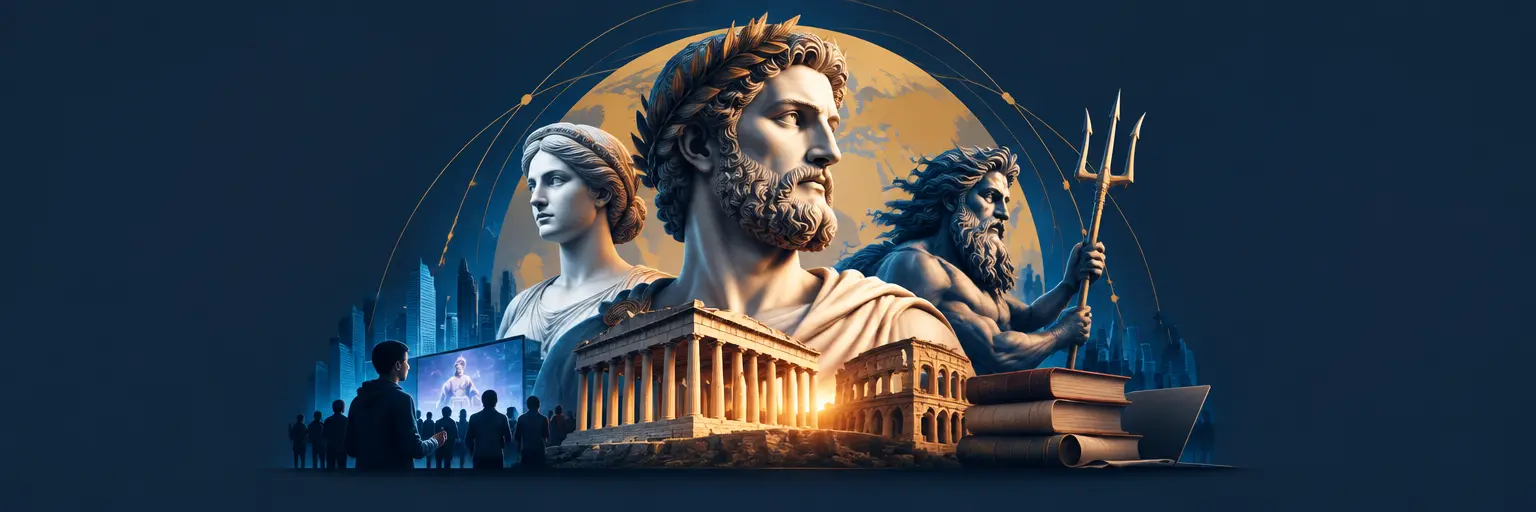
Discover how the echoes of ancient gods and heroes still shape our world today. From blockbuster films and bestselling novels to everyday language, political rhetoric, and even brand names, the cultural impact of Greek and Roman mythology is both profound and pervasive. These timeless tales of love, betrayal, ambition, and transformation have evolved into modern archetypes, influencing art, psychology, and global storytelling. Whether you’re curious about the psychology behind the “Oedipus complex,” the symbolism in corporate logos, or the moral lessons embedded in modern pop culture, exploring this legacy reveals the enduring power of these ancient narratives. Unlock the hidden connections between classical myths and contemporary life, and understand why these stories remain a vital lens for interpreting human nature and society. Join us in tracing the mythic threads that weave through our modern consciousness—evidence that the ancients are not just history, but a living, breathing part of who we are today.
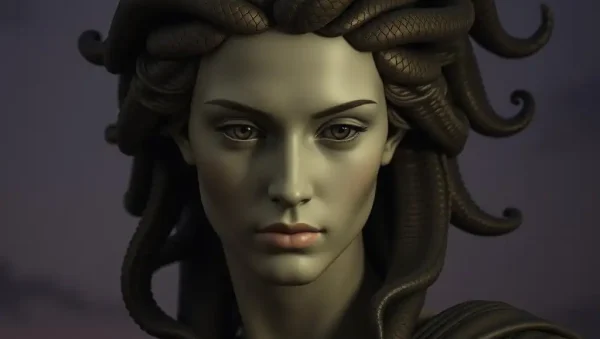
🧙♀️ Discover how Medusa’s cultural impact analysis reveals her enduring influence on modern pop culture, transforming her from ancient myth to a…
Read article
🌍 Discover how Greek Roman mythology origins shape modern stories and beliefs, revealing timeless narratives hidden in plain sight. This article explores…
Read article
🎭 Explore how Greek tragedy's timeless themes and storytelling techniques continue to shape modern drama, highlighting the enduring influence of Greek tragedy…
Read articleWelcome to the Cultural Impact subcategory of our Greek and Roman Mythology section. Here, we explore how the ancient tales of gods, heroes, and monsters have shaped Western civilization and continue to influence modern art, literature, psychology, and daily language. From Renaissance paintings to blockbuster films, the DNA of these myths is everywhere. This page is your guide to understanding the profound footprint of classical mythology, making it essential reading for students, creators, and curious minds alike. Dive in to see how ancient stories remain vibrantly alive today.
Greek and Roman myths serve as the backbone for countless contemporary narratives. Expect to see how blockbuster franchises like Percy Jackson, Wonder Woman, and Clash of the Titans directly borrow plot structures, character archetypes, and moral dilemmas from classical sources. We analyze the hero’s journey as pioneered by Odysseus and adapt it to modern screenwriting. You’ll also find deep dives into literary retellings, such as Madeline Miller’s Circe and The Song of Achilles, which humanize ancient figures. This content helps you spot mythological references in your favorite books and movies, enriching your viewing and reading experience.
Beyond direct adaptations, mythology influences subtle world-building, from the naming of spaceships in Star Trek to the political intrigue in Game of Thrones. We provide case studies comparing ancient prophecies with modern plot twists. By understanding these connections, you gain a critical lens for analyzing storytelling techniques. Whether you’re a casual fan or a budding writer, this section bridges the gap between ancient tablets and your modern streaming queue, showing that these stories are anything but outdated.
From the Parthenon to the U.S. Capitol, Greek and Roman mythology has dictated the visual language of power and beauty for millennia. In this section, we decode the iconography of laurel wreaths, winged victories, and medusa heads that adorn public buildings and corporate logos. Expect to learn how Renaissance masters like Botticelli and Michelangelo resurrected mythological themes, and how neoclassical architecture used columns and friezes to evoke democratic ideals. This is more than art history—it’s a toolkit for reading the unspoken messages embedded in our environment, from bank facades to fashion advertisements.
We also explore modern street art and graphic design, where the gorgon, the phoenix, and the trident are recycled as brand identities (think Versace or Maserati). Each visual reference carries inherited connotations of power, danger, or rebirth. Our posts break down the historical context of each symbol, explaining why a laurel still signifies victory in the Olympics or why a caduceus graces medical emblems. By the end of this section, you’ll walk through any city and immediately recognize the mythological layer beneath the skin of modern architecture.
Swiss psychiatrist Carl Jung famously argued that mythological figures are archetypes of the collective unconscious. This subcategory explains how characters like the Wise Old Man (Chiron), the Trickster (Hermes), and the Shadow (Hades) appear in dreams and therapy sessions. You’ll discover how psychoanalysts like Sigmund Freud used the Oedipus complex and the Narcissus myth to explain human behavior. This isn’t esoteric theory—it’s a practical map for understanding your own psyche and the recurring patterns in your life. We provide relatable examples from everyday decision-making to interpersonal conflicts, showing how ancient wisdom frames modern mental health.
Moreover, the section covers Joseph Campbell’s monomyth, or the Hero’s Journey, which has become a standard tool in therapeutic coaching and personal development. You’ll learn to identify your own “call to adventure” and “refusal of the call” in career changes or creative projects. By personifying inner conflicts as mythological battles—the hero versus the minotaur—you gain a powerful metaphorical framework for self-improvement. Expect practical exercises to help you journal or meditate using these archetypes, making ancient myth an interactive tool for psychological resilience.
Think you don’t speak Greek? Think again. This section reveals how everyday English is saturated with mythological references. We trace the origins of phrases like “Achilles’ heel”, “Pandora’s box”, “Herculean task”, and “Midas touch”. You’ll learn why a “Mentor” is a wise guide, why a “narcissist” admires themselves, and what it means to have a “Muse” for creative inspiration. Beyond idioms, we explore scientific nomenclature—from Atlas (the first cervical vertebra) to titanium (named after the Titans). This content enhances your vocabulary and gives you fascinating conversation starters for dinner parties or classroom discussions.
Furthermore, we examine how brand names and product lines—like Nike, Oedipus complex, and Ajax cleanser—use mythology for marketing appeal. This subcategory goes beyond trivia by explaining the semantic evolution of these terms, showing how meanings shift from literal gods to abstract concepts. You’ll also find interactive quizzes to test your “mythological IQ” and a glossary of nearly 200 terms derived from classical stories. Perfect for educators, writers, or word nerds, this section proves that these ancient tales are a living lexicon shaping how we think and communicate daily.
Historically, Greek and Roman myths have been weaponized to justify national identities and political systems. This section critically examines how imperial Rome linked its emperors to divine ancestry, and how later European nations used mythological founding narratives to bolster nationalism. Expect nuanced discussions on the “Third Rome” concept, the use of the she-wolf and Romulus in Italian fascism, and how classical references appear in modern state seals or military ranks. We also explore how democracy and republicanism borrowed institutional metaphors from Athens and Sparta, influencing contemporary governance debates. This is essential context for understanding political rhetoric in a globalized world.
We also look at how marginalized groups reclaim and subvert classical myths—from feminist reinterpretations of Medusa to Black classical movements that highlight African connections to Greco-Roman culture. This subcategory offers a balanced, critical perspective on cultural appropriation versus appreciation. You’ll learn how modern writers like Derek Walcott or Toni Morrison use mythological frameworks to address postcolonial trauma. By the end, you’ll see that mythology is not a static ancient artifact but a dynamic political battleground where values of power, freedom, and identity are continually renegotiated.
Start with common idioms and brand names—like “Achilles’ heel” or the shoe brand Nike. Then look at architecture for columns and statues of winged figures. Check your favorite films or books for stories of orphaned heroes, prophecies, or quests for a golden object. Once you learn the core archetypes, you’ll see them everywhere, from sports mascots to comic book villains.
No, but they functioned religion-like for the ancients. Unlike monotheistic religions, these myths involved multiple gods who acted human and demanded ritual honors rather than moral codes. Today, they are understood as literary and cultural artifacts, not literal truth. However, their psychological and narrative power remains comparable to modern religious stories in shaping worldview.
Its use in colonial and nationalist ideologies. European powers used myths to claim superiority (e.g., “civilized Rome versus barbarian”). Modern accusations of whitewashing arise when Hollywood casts only white actors in mythological tales, ignoring that ancient myths were also adapted across North Africa and the Middle East. The controversy centers on who controls the narrative.
Absolutely. Myths provide proven plot structures (hero’s journey), rich character templates (trickster, mentor), and universal themes (pride, fate, love). Using these tropes gives your writing immediate depth and resonance. Study retellings like Circe to see how to humanize archetypes while keeping their epic weight. Then blend with your own cultural mythology for originality.
Yes. Direct retellings focus on the story itself (e.g., Odysseus’ voyage). Cultural impact focuses on how that story is used, twisted, or referenced in later centuries—like how “Odyssey” became a word for any long journey. We analyze adaptations, political symbols, and language, not just the original myth text. This meta-layer is what this subcategory uniquely covers.