
Medusa's Gaze: Why This Ancient Monster Still Haunts Pop Culture


Welcome to Mythology and Legends!
Dive into the captivating world where ancient whispers echo through modern times. Ever wondered why some stories endure, shaping our art, literature, and even our fears? Prepare to be mesmerized as we unravel the threads of timeless tales. This time, we're turning our gaze towards a figure both terrifying and tragically misunderstood: Medusa. What is Medusa’s cultural impact analysis? Join us as we delve into her enduring power and explore why this serpentine-haired Gorgon continues to haunt pop culture. What secrets does her gaze still hold?
Introduction: Medusa's Enduring Legacy in Mythology and Modern Media
Medusa, the serpentine-haired Gorgon of Greek myth, remains one of the most instantly recognizable figures from antiquity. Her image, capable of turning onlookers to stone, has transcended its ancient origins to permeate countless facets of modern culture, from high fashion runways to blockbuster films. This enduring presence speaks volumes about the potent symbolism embedded in her story and appearance, prompting a deep dive into her journey across millennia.
Performing a Medusa’s cultural impact analysis reveals a complex evolution. She is not merely a static monster from a bygone era; her narrative has been reinterpreted, challenged, and embraced by artists, writers, and activists seeking to explore themes of power, victimhood, beauty, and monstrosity. Understanding this persistent influence requires examining her roots in ancient mythology and tracing her transformation through art, literature, and popular media to the present day.
- What is Medusa's enduring appeal in modern society?
- How has Medusa's image evolved from ancient Greece to today?
- What aspects of Medusa's myth are most frequently reinterpreted in modern media?
- How does Medusa's story reflect contemporary societal concerns?
- What is the significance of "Medusa's Gaze" in popular culture?
Medusa in Ancient Greek Mythology: Origins and Transformations
The Mythical Origins of Medusa: From Gorgon to Monster
In the earliest Greek texts, like Hesiod's Theogony (circa 700 BCE), Medusa is introduced as one of the three Gorgon sisters—Stheno, Euryale, and Medusa—daughters of the primordial sea deities Phorcys and Ceto. Unlike her immortal sisters, Medusa is explicitly stated to be mortal, destined to be slain. These early accounts often depict the Gorgons collectively as terrifying creatures, sometimes winged, with serpentine features, but focus less on Medusa's individual story or appearance beyond her petrifying gaze.
Later accounts, particularly Ovid's Metamorphoses (1st century CE), elaborate significantly on Medusa's backstory, adding layers of complexity and pathos. Ovid describes Medusa as once being a maiden of extraordinary beauty, renowned particularly for her lovely hair. This later tradition contrasts sharply with the purely monstrous depictions, introducing the element of transformation and setting the stage for later reinterpretations of her character and Medusa’s cultural impact analysis.
Medusa's Transformation: A Victim of Divine Wrath?
Ovid's version of the myth details a pivotal event: Medusa's violation by Poseidon within the sacred precincts of Athena's temple. Enraged by this sacrilege committed in her sanctuary, the goddess Athena punishes Medusa, transforming her beautiful hair into venomous snakes and giving her the deadly gaze. This narrative reframes Medusa from an inherently monstrous being into a victim, albeit one who becomes a monster as a result of divine retribution for an act committed against her.
This interpretation, while popular, is not universally accepted across all ancient sources, but it profoundly impacted subsequent understandings of her character. It highlights the often-harsh justice of the Olympian gods and introduces themes of purity, violation, and punishment that resonate through her later cultural appearances. This tragic backstory adds depth to Medusa’s cultural impact analysis, allowing for more nuanced portrayals beyond simple villainy.
The Significance of Medusa's Snake Hair: Symbolism and Interpretation
Medusa's most iconic feature is undoubtedly her hair of living snakes. This visual motif is rich with symbolic meaning. Snakes in ancient Greek culture were ambiguous symbols, associated with both healing (as seen with Asclepius' staff) and danger, death, and the chthonic (underworld) realm. Medusa's serpentine hair embodies this duality, representing a monstrous transformation while also hinting at primal, untamed power.
Furthermore, the snakes can be interpreted as a literal manifestation of the horror and violation she endured, a crown of suffering imposed upon her. In some interpretations, they represent a monstrous inversion of feminine beauty, replacing alluring locks with terrifying coils. The snake hair is central to her visual identity and contributes significantly to the enduring power and fear associated with her image, informing much of the subsequent Medusa’s cultural impact analysis.
The Cultural Impact of Medusa: Ancient Interpretations
Medusa's Image in Ancient Art and Literature
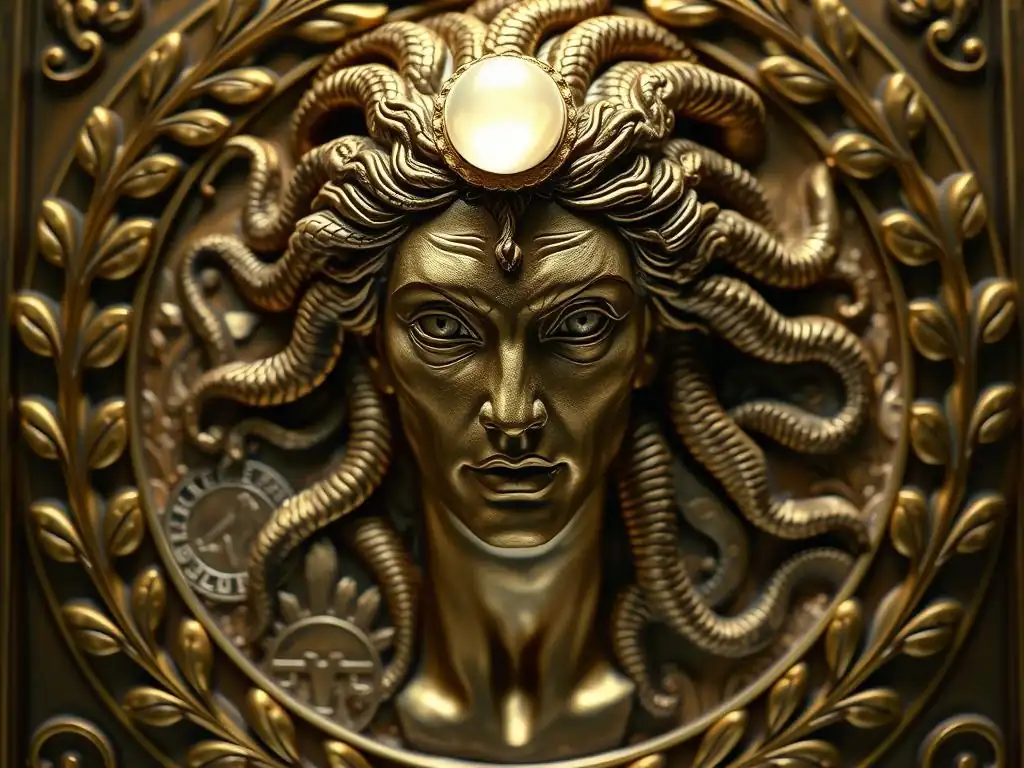
Medusa's image was pervasive in ancient Greek and Roman art. One of the earliest and most striking examples is the imposing Gorgon face adorning the western pediment of the Temple of Artemis at Corfu (circa 580 BCE). This early depiction is monstrous and frontal, clearly intended to ward off evil. Archaic and Classical pottery, sculptures, and architectural elements frequently featured the Gorgoneion, the severed head of Medusa.
In literature, beyond Hesiod and Ovid, Medusa appears in myths surrounding Perseus's quest, notably in Apollodorus's Bibliotheca. Her role is primarily that of the formidable obstacle to be overcome by the hero. The focus in these narratives is on Perseus's bravery and the divine aid he receives (from Athena and Hermes) to defeat her without meeting her deadly gaze, solidifying her image as a powerful, albeit vanquishable, monster.
Medusa as a Symbol of Protection and Aversion
Ironically, the terrifying image of Medusa's head, the Gorgoneion, was widely used as an apotropaic symbol—a charm to ward off evil. It was commonly depicted on shields (famously on Athena's aegis), breastplates, coins, and architectural elements like temple friezes and grave stelai. The belief was that the very image that caused fear and petrification could be turned outward to repel malevolent forces.
This duality—Medusa as a source of terror and her image as a protector—speaks to the complex ways the ancients perceived and utilized powerful symbols. The Gorgoneion's power lay in its ability to "freeze" or repel, making it a potent emblem against chaos and danger. This protective function is a crucial aspect of Medusa’s cultural impact analysis in the ancient world.
The Gorgon's Head: Power, Fear, and Representation of the Other
The severed head of Medusa, carried by Perseus, became a symbol of power and victory over the monstrous. It was used by Perseus to turn enemies and obstacles to stone, such as Atlas and the suitor Phineus and his followers. This reinforces the idea that Medusa's power, even decapitated, remained formidable and transferable.
Furthermore, Medusa, as a monstrous female figure residing at the edge of the known world, represents "the Other" in Greek mythology—a terrifying force outside the bounds of civilized society, often associated with primal chaos and the untamed feminine. Her petrifying gaze can be interpreted as a metaphor for the overwhelming or paralyzing fear induced by encountering the unknown or the fundamentally different. Analyzing Medusa’s cultural impact requires acknowledging this ancient role as a formidable, alien entity.
Medusa's Cultural Impact Analysis: From Mythology to Modernity
Medusa's Resurgence in Literature: [Rick Riordan's Percy Jackson Series, Carol Ann Duffy's Medusa]
Medusa has experienced a significant resurgence in modern literature, often being re-examined or placed within new contexts. Rick Riordan's popular Percy Jackson & The Olympians series features Medusa as a recurring character, depicted as "Aunty Em" at a roadside statuary garden, a seemingly benign figure who maintains her ancient power and desire for vengeance against Athena and Perseus. This portrayal introduces her to a young generation, blending myth with contemporary American settings.
Another notable literary engagement is Carol Ann Duffy's poem Medusa from her collection The World's Wife (1999). Duffy adopts Medusa's voice, presenting her as a woman driven to monstrousness by jealousy and betrayal, her transformation mirroring her emotional state. The poem explores themes of love, paranoia, and the destructive nature of perceived infidelity, offering a deeply personal and tragic reinterpretation that significantly influences Medusa’s cultural impact analysis from a feminist perspective.
Medusa in Film and Television: Portrayals and Interpretations
Medusa has been a staple in cinematic adaptations of Greek myth. Ray Harryhausen's stop-motion Medusa in the 1981 Clash of the Titans is arguably one of the most iconic film portrayals, depicting her as a truly terrifying, snake-bodied creature dwelling in a desolate temple. This version emphasizes her monstrousness and the danger she poses, sticking closer to the "monster" archetype.
Later adaptations, such as the 2010 remake of Clash of the Titans or appearances in television series, have varied in their approach, sometimes attempting to incorporate elements of her tragic backstory or focusing more on her visual spectacle. These portrayals highlight the enduring fascination with her terrifying power and visual distinctiveness, making her a compelling figure for visual media and contributing to Medusa’s cultural impact analysis in popular entertainment.
Medusa as a Feminist Icon: Reclaiming the Narrative
In recent decades, Medusa has been increasingly adopted and reinterpreted as a feminist icon. This reading often centers on the Ovidian version of her myth, focusing on her transformation as a punishment for being a victim of sexual assault. Activists and scholars see her as a powerful symbol of female rage, resilience, and survival in the face of patriarchal violence and divine injustice.
This re-contextualization challenges the traditional narrative that casts her solely as a monster. Instead, she becomes a figure who embodies the justified anger of the wronged woman, her terrifying power seen not as inherent evil but as a defensive mechanism or a manifestation of trauma. This significant shift in perspective is a crucial part of modern Medusa’s cultural impact analysis, offering a counter-narrative to her ancient portrayal.
Medusa's Cultural Impact: Symbolism in Contemporary Art and Fashion
Medusa in Contemporary Art: Challenging Traditional Representations
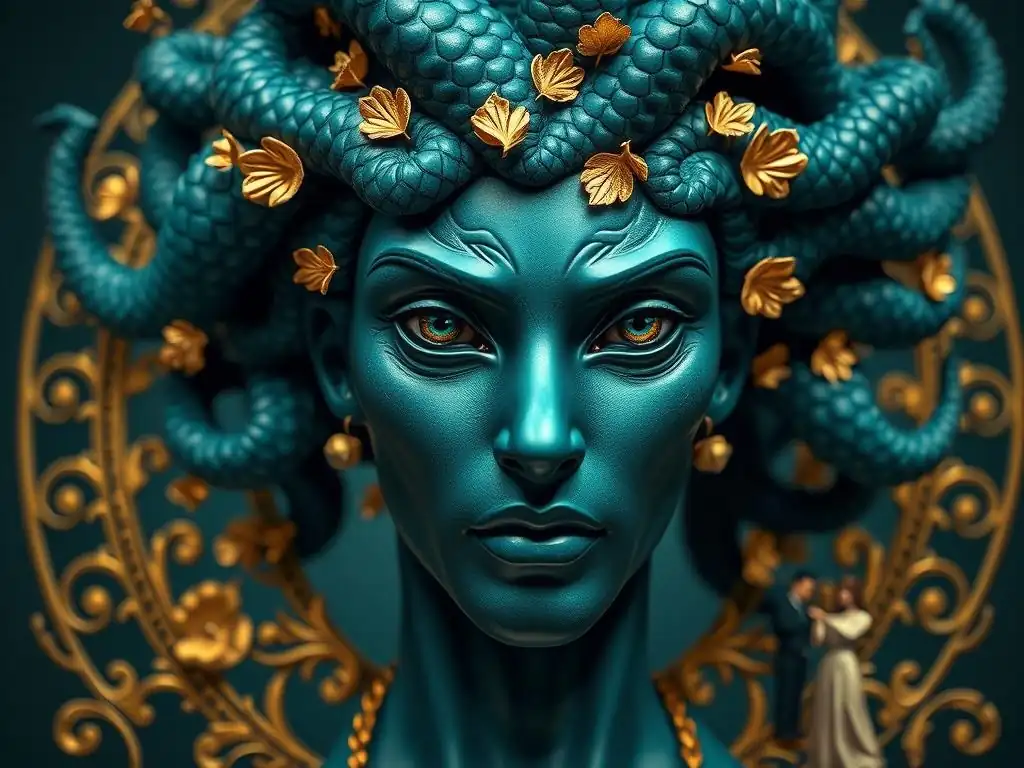
Contemporary artists continue to engage with the figure of Medusa, often subverting traditional interpretations. Artists may depict her not as a terrifying monster but as a figure of strength, vulnerability, or even beauty. Sculptures, paintings, and digital art explore her gaze, her serpentine hair, and her origin story through modern lenses, questioning the power dynamics inherent in the myth.
For instance, Luciano Garbati's sculpture Medusa with the Head of Perseus (2008) offers a striking reversal of the traditional narrative, depicting a nude Medusa holding Perseus's severed head. This work directly challenges the hero/monster binary and prompts viewers to consider the story from Medusa's perspective, highlighting themes of self-defense and justified vengeance. Such artistic interventions are vital to a comprehensive Medusa’s cultural impact analysis today.
Medusa's Influence on Fashion: Empowerment and Rebellion
Medusa's striking image has also found a prominent place in the world of fashion. The most famous example is the Italian luxury brand Versace, which adopted the head of Medusa as its logo in 1978. Gianni Versace chose Medusa because he believed she symbolized beauty, fatality, and power—qualities he associated with his brand and the women who wore his designs. He was also drawn to the idea that people who fell in love with Medusa couldn't turn back, reflecting the captivating nature he desired for his fashion.
Beyond high fashion, Medusa imagery appears in various clothing, jewelry, and accessories, often used to evoke a sense of power, rebellion, or dangerous allure. Wearing Medusa imagery can be seen as an embrace of her strength and defiance, transforming the ancient symbol of fear into a statement of empowerment. This aesthetic appropriation is a visible aspect of Medusa’s cultural impact analysis in consumer culture.
Medusa as a Symbol of Female Rage and Resilience
In contemporary discourse, Medusa frequently serves as a potent symbol for female rage, particularly in response to systemic oppression, violence, or injustice. Her petrifying gaze can be interpreted as the overwhelming power of a woman's anger when unleashed. This symbolism resonates deeply in movements addressing issues like sexual assault and gender inequality.
Her resilience is highlighted in the fact that despite being slain and her head used as a weapon, her story and image persist and adapt. The snakes in her hair can be seen not just as a curse but as a source of unique power, a monstrous strength born from suffering. This modern interpretation emphasizes survival and the transformation of trauma into power, adding a significant layer to Medusa’s cultural impact analysis.
Medusa's Enduring Appeal: Exploring the Psychological and Societal Factors
The Fascination with Monsters: Why Medusa Captivates Us
Humanity has a long-standing fascination with monsters, creatures that embody our deepest fears and anxieties while also existing outside the constraints of normal human existence. Medusa fits this archetype perfectly. Her ability to turn flesh into stone taps into primal fears of paralysis, vulnerability, and the loss of agency.
Furthermore, monsters often serve as projections of societal anxieties. Medusa, with her terrifying power and ambiguous origins (depending on the version), embodies fears related to the untamed, the foreign, and the potentially destructive aspects of the feminine. Our continued engagement with her reflects a persistent need to confront and understand these ancient fears through narrative and symbol, which is central to Medusa’s cultural impact analysis.
Medusa and the Male Gaze: Deconstructing Power Dynamics
The myth of Medusa is often analyzed through the lens of the "male gaze," a term popularized by feminist film critic Laura Mulvey. Medusa's power lies in her gaze, which is lethal to those who look upon her directly. Perseus can only defeat her by avoiding direct eye contact, using a reflective shield. This dynamic is interpreted as a representation of patriarchal fear of female power, particularly female sexuality and agency, which must be controlled or destroyed.
By averting his gaze and using a mirror, Perseus effectively neutralizes her power, reducing her to an object to be conquered rather than a subject with agency and a deadly perspective. Analyzing Medusa’s cultural impact through this lens reveals how her story can be read as a cautionary tale about the perceived dangers of powerful women and the strategies employed to disarm them.
Medusa's Cultural Impact: A Reflection of Societal Anxieties and Fears
Medusa's enduring relevance speaks to her ability to embody a range of complex and often conflicting ideas: beauty and monstrosity, victimhood and power, fear and protection, punishment and resilience. Her story provides a canvas onto which different eras can project their own anxieties and preoccupations.
In ancient times, she represented the chaotic and dangerous 'Other'. In later periods, she became a tragic figure. Today, she is often a symbol of justified rage and empowerment. This adaptability is key to Medusa’s cultural impact analysis; her myth evolves because it touches upon fundamental human experiences of fear, power, and transformation that remain relevant across cultures and time.
Medusa’s Cultural Impact Analysis: A Timeless Myth for a Modern World
The Ongoing Evolution of Medusa's Image
Medusa's image is not static; it continues to evolve and adapt in response to contemporary social and cultural shifts. Each new generation and cultural context finds new meanings and relevance in her story and appearance. This constant reinterpretation ensures her continued presence in the collective consciousness.
From academic reinterpretations challenging traditional narratives to popular culture depictions that blend horror with sympathy, Medusa remains a fertile ground for exploring complex themes. Her story's flexibility allows it to resonate with diverse audiences and serve various purposes, demonstrating the dynamic nature of myth and its power to remain relevant. Analyzing Medusa’s cultural impact is an ongoing process, reflecting societal change.
[Medusa's Reinterpretation Through Different Cultural Lenses]
While primarily rooted in Greek mythology, Medusa's archetype resonates with similar figures or themes in other cultures, and her image has been adopted and adapted globally. Her story touches upon universal human experiences of fear of the monstrous, the power of the gaze, and the consequences of divine or societal judgment.
Modern reinterpretations, particularly outside of Western contexts, may focus on different aspects of her myth or integrate it with local folklore and artistic traditions. This cross-cultural engagement further broadens Medusa’s cultural impact analysis, showing how a single mythical figure can travel and acquire new layers of meaning far from her origins, becoming a global symbol of complex ideas.
Conclusion: Medusa's Enduring Legacy and Cultural Significance
Medusa's journey from an ancient Greek monster to a complex modern icon highlights the enduring power of myth. Her petrifying gaze and serpentine hair have captivated imaginations for millennia, evolving in meaning from an apotropaic symbol of fear to a contemporary emblem of female rage and empowerment.
A thorough Medusa’s cultural impact analysis reveals a figure who is anything but one-dimensional. She embodies contradictions and complexities that continue to resonate with contemporary concerns about power, victimhood, identity, and the nature of monstrosity. Her persistent presence in art, literature, fashion, and activism ensures that the Gorgon's gaze, in all its multifaceted interpretations, will continue to haunt and inspire for generations to come.
Frequently Asked Questions
What is Medusa's enduring appeal in modern society?
Medusa's enduring appeal stems from her complex narrative as both a victim and a monster. Her story resonates with themes of power, injustice, and female rage, making her a powerful symbol in contemporary discussions.
How has Medusa's image evolved from ancient Greece to today?
Initially portrayed as a monstrous Gorgon, Medusa's image has evolved to become more sympathetic and nuanced. She is often reimagined as a tragic figure, a victim of male aggression and divine punishment.
What aspects of Medusa's myth are most frequently reinterpreted in modern media?
Modern media frequently reinterprets the themes of victimization, transformation, and female empowerment within Medusa's myth. Her snakes are often seen as a symbol of strength and independence.
How does Medusa's story reflect contemporary societal concerns?
Medusa's story reflects contemporary societal concerns about sexual assault, female autonomy, and the consequences of unchecked power. Her narrative provides a framework for exploring these complex issues through a mythological lens.
What is the significance of "Medusa's Gaze" in popular culture?
"Medusa's Gaze" symbolizes the power to silence or paralyze. It's often used as a metaphor for female anger and the oppressive forces that seek to control women's voices and actions.
Final Reflection: The Enduring Power of Medusa's Gaze
Medusa's story, far from being a relic of ancient mythology, remains a potent symbol in our modern world, reflecting our anxieties about female power and the complexities of victimhood and agency. Her image, constantly reinterpreted and reimagined, continues to resonate because it forces us to confront uncomfortable truths about societal expectations and the enduring power of narratives that both demonize and empower women.
The enduring fascination with Medusa speaks volumes about our own cultural anxieties. She is a mirror reflecting our own fears and prejudices, a canvas upon which we project our own interpretations of power, beauty, and monstrosity. The monster is always a reflection of ourselves.
This quote, though not directly about Medusa, perfectly encapsulates the enduring power of her myth. Her story is not simply a tale of a Gorgon, but a reflection of our own struggles with defining and understanding female strength, fear, and the consequences of societal control.
Consider Medusa's gaze. It is not simply a curse, but a reaction, a defense mechanism against a world that has wronged her. What does her story tell you?
What aspects of her myth resonate most deeply? Take a moment to reflect on how Medusa's enduring presence in art, literature, and film speaks to our own societal biases and the ongoing need to re-evaluate our narratives surrounding female power and the complexities of victimhood. Let her story inspire you to challenge your own assumptions and to seek a more nuanced understanding of the stories we tell and the symbols we create.
Unlock Medusa's Legacy: Take the Next Step
Thanks for diving into the fascinating world of Medusa! You've now uncovered some compelling truths about this iconic figure, and we hope you've gained a new appreciation for her complex story. Ready to delve even deeper?
- Craft your own Medusa-inspired artwork or story: Let your creativity flow and bring your interpretation of this mythical figure to life. This is your chance to explore Medusa beyond the traditional narrative.
- Share your thoughts and interpretations in the comments below: Did anything surprise you? What resonated most with you in Medusa’s tale? Let's discuss!
- Explore other fascinating figures from Greek mythology on our site – discover hidden stories and unexpected connections.
What aspect of Medusa's story will you explore further, and how will you share your discoveries?