Marduk's House: Exploring the Great Ziggurat of Babylon
🌟 Discover the awe-inspiring Marduk ziggurat architecture and symbolism, a testament to Babylonian ingenuity. Explore how this legendary structure embodies divine power…
Read article
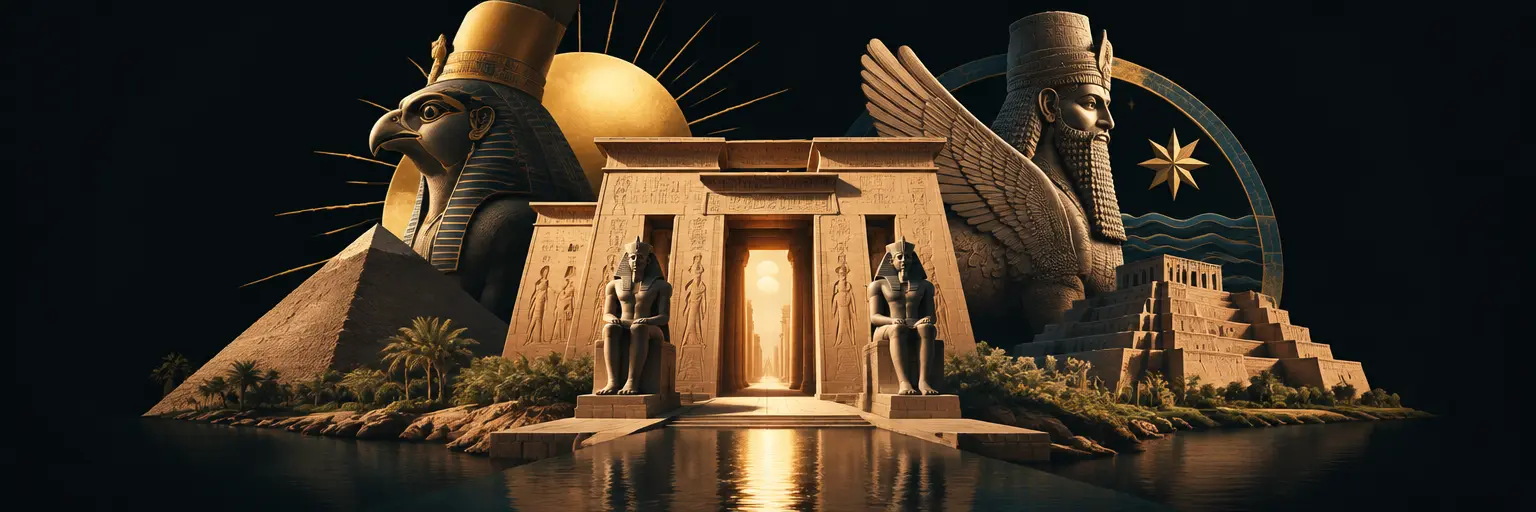
Temple Myths and Architecture — where divine narratives are carved into stone and sacred spaces come alive with stories of the gods. From the colossal pillars of Karnak to the ziggurats of Babylon, these structures were not just places of worship but living embodiments of cosmic order, designed to mirror the heavens on earth. Explore how ancient builders infused every column, gateway, and sanctuary with mythological symbolism, turning temples into stage sets for creation epics, divine battles, and rituals of rebirth. Discover the hidden meanings behind hieroglyphic inscriptions, sacred geometry, and the shifting alignments meant to honor solar and lunar deities. Whether you’re fascinated by the mystical aura of Egyptian pylons or the towering stairways of Mesopotamian towers, these architectural marvels reveal how belief shaped the skylines of antiquity—and continue to inspire awe, mystery, and modern curiosity today. Join us as we decode the legendary foundations of these hallowed halls and the myths that made them eternal.
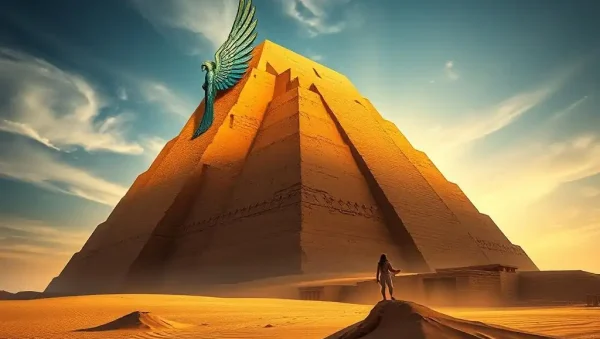
🌟 Discover the awe-inspiring Marduk ziggurat architecture and symbolism, a testament to Babylonian ingenuity. Explore how this legendary structure embodies divine power…
Read article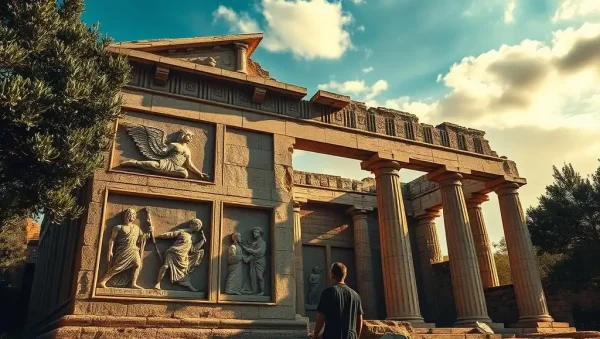
🔮 Discover the mystique of Ancient Greek oracle temple visits, where pilgrims sought divine guidance and prophetic insights. Explore how these sacred…
Read article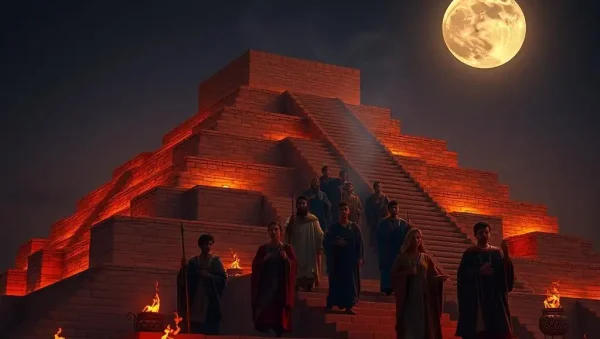
🌟 Discover how Mesopotamian temple rituals offerings played a vital role in feeding the gods and preserving cosmic order, revealing the profound…
Read articleWelcome to the rich intersection of sacred structures and the stories they inspired. In Egyptian and Mesopotamian mythology, temples were not merely buildings—they were cosmic maps, divine residences, and the stage for creation myths. This subcategory delves into how architectural choices—from towering pylons to ziggurat steps—mirrored mythological beliefs about gods, chaos, and order. Expect to uncover symbolic layouts, ritual spaces, and the legends that made these monuments eternal. Whether you’re a student, traveler, or myth enthusiast, you’ll find fresh perspectives on how stone and story shaped each other in the ancient Near East.
In both cultures, temple design was believed to replicate the universe’s structure at the moment of creation. Egyptian temples, with their axis from pylon to sanctuary, symbolized the journey from daylight (chaos) to the dark holy of holies (primordial mound). Mesopotamian ziggurats, tiered like mountains, connected earth to the heavens, where gods descended to their earthly thrones. Key point: every corridor, gate, and courtyard had mythological meaning—often tied to the Enuma Elish or the Pyramid Texts.
For readers, expect to learn how specific elements—like the Egyptian hypostyle hall (representing the papyrus swamp of creation) or the Mesopotamian temenos (sacred enclosure) – functioned as living myth. This section will help you decode temple ruins as narrative texts, revealing why the axis mundi concept was central to both civilizations’ religious identity.
Mesopotamian ziggurats, such as the famous Etemenanki in Babylon, were stepped towers meant to bridge the earthly and divine realms. Their seven tiers often corresponded to planetary deities, while the top shrine housed the god’s cult statue. In contrast, Egyptian pylons acted as massive gateways flanked by obelisks, symbolizing the horizon where the sun god Ra was reborn daily. Contrast: ziggurats emphasized vertical ascent, while Egyptian temples stressed horizontal progression toward inner sanctity.
This section will guide you through how each structure’s height, orientation, and material (mudbrick vs. sandstone) reinforced mythological narratives about divine kingship and cosmic maintenance. You’ll also see how temple rituals, like the Heb Sed festival, were physically staged within these architectural frames, making myth a tangible experience.
No ancient temple was complete without protective creatures guarding its thresholds. In Egypt, sphinxes (often with ram or lion bodies) lined processional ways, echoing the myth of the god Atum who emerged from chaos as a serpent. Mesopotamian lamassu—winged bulls with human heads—stood at palace and temple gates, warding off malevolent spirits. These figures were not decorative but were believed to animate the apotropaic power of the gods themselves.
Expect to explore how myths like the fight between Marduk and Tiamat (Mesopotamia) or the eye of Horus (Egypt) influenced the choice of guardian animals. You’ll discover how inscriptions and iconography on these statues warned intruders of divine retribution, while also serving as cosmic boundary markers between the sacred and profane world.
Inside temples, specific rooms hosted daily rituals that reenacted mythic events—from the daily rebirth of the sun god to the annual New Year’s festival where the king’s power was renewed. Egyptian sanctuaries often contained a naos (shrine) holding the god’s statue, while Mesopotamian temples had a cella with a raised podium for the deity. The false doors in tombs and temples allowed spirits to pass, echoing the Duat (underworld) myths.
This section will highlight how secret chambers, like the Osireion at Abydos, were designed to replicate the tomb of Osiris, enabling mythical resurrection ceremonies. For Mesopotamians, the akitu festival involved moving the god’s statue from temple to a special house outside the city, symbolizing Marduk’s victory over Tiamat. You’ll gain insight into how priests used architecture to create a visceral, sensory experience of myth.
Walls of Egyptian temples were covered with reliefs and hieroglyphs that narrated myths, royal victories, and divine genealogies. For example, the Temple of Karnak’s walls depict the Battle of Kadesh as a divine intervention by Amun-Ra. Mesopotamian temples often bore foundation deposits and clay cylinders, like the Cyrus Cylinder, recounting how gods chose rulers to rebuild sacred sites. These texts served both religious and political purposes, legitimizing kingship.
Expect to learn how to “read” these visual narratives—like the weighing of the heart scene in mortuary temples. You’ll also see how architectural features, including column capitals shaped like papyrus or palm, were imbued with mythological metaphors of growth and renewal, turning every surface into a teaching tool for initiates and the public alike.
After the fall of these civilizations, temples were often repurposed or looted, yet their myths persisted through texts, travelers’ tales, and later religious symbolism. The Rosetta Stone and cuneiform tablets preserved temple rituals for modern scholars. Today, some sites like the Hanging Gardens (assumed linked to ziggurat gardens) inspire architectural fantasy. Meanwhile, Egyptian revival architecture in the West uses obelisks and pylons as mythological nods.
This section shows how the imagined architecture of these temples—often distorted by Greek histories—became part of Western esoteric traditions. You’ll see why the myth of the labyrinth (from Egyptian labyrinthine temples) resurfaced in modern fiction, and how heritage tourism now reinterprets these ruins as sacred spaces for spiritual seekers, blending ancient myths with contemporary meaning.
The Etemenanki in Babylon, linked to the god Marduk, was believed to be the earthly counterpart to the cosmic mountain where he defeated Tiamat. Its seven tiers symbolized planetary spheres, and the myth of the Tower of Babel may be based on it.
Orientation was symbolic—most temples faced east or west toward the Nile, aligning with the solar cycle. This allowed morning sunlight to illuminate the sanctuary, reenacting the sun god’s rebirth. The river itself symbolized the primordial Nun, linking water and creation.
In Egypt, serpents like Uraeus adorned crowns and gateways to protect against evil, representing the goddess Wadjet. In Mesopotamia, serpent motifs on temple walls symbolized chaos and renewal, echoing myths where gods slew serpents to establish order.
Yes—Egypt’s Karnak and Luxor temples, and the ziggurat of Chogha Zanbil in Iran, preserve partial structures. The White Temple at Uruk has a reconstructed façade. These sites let visitors experience original layouts, though restoration alters authenticity.
Neoclassical and Art Deco buildings use obelisks, stepped towers, and closed courtyards to evoke mystery and grandeur. Examples include the Washington Monument (obelisk) and some university libraries, demonstrating how ancient cosmological ideas persist in design.