Atef Crown: Osiris's Symbol and the Afterlife's Majesty
🌟 Discover the profound significance of the Atef Crown as a symbol of Osiris in the afterlife, embodying divine authority and eternal…
Read article
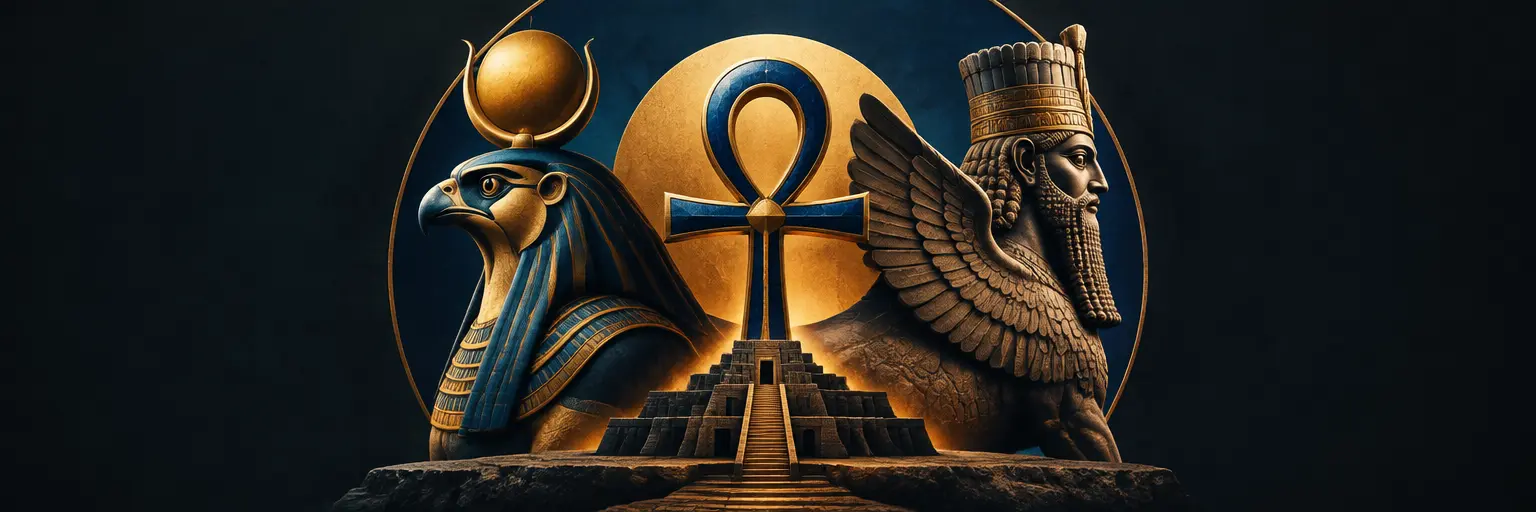
Dive into the mysterious world of ancient power with our curated exploration of mythological symbols from Egypt and Mesopotamia—where every hieroglyph and cuneiform mark hides a story of gods, kings, and cosmic order. From the ankh’s eternal life and the Eye of Horus’ protective gaze to the winged sun disk and the Tree of Life bridging heaven and earth, these emblems are more than art—they are keys to understanding how civilizations shaped fear, faith, and authority. Whether you’re a mythology enthusiast, a writer seeking authentic symbolism, or a curious traveler of ancient lore, our resource decodes the sacred meanings, ritual uses, and surprising echoes of these icons in modern culture—from jewelry and architecture to movies and logos. Unlock the secrets behind the scarab’s rebirth, the lamassu’s guardianship, and the ziggurat’s stairway to the divine. Perfect for research, creative inspiration, or deepening your appreciation of humanity’s earliest storytelling, this guide turns ancient carvings into living narratives that still shape our world today.
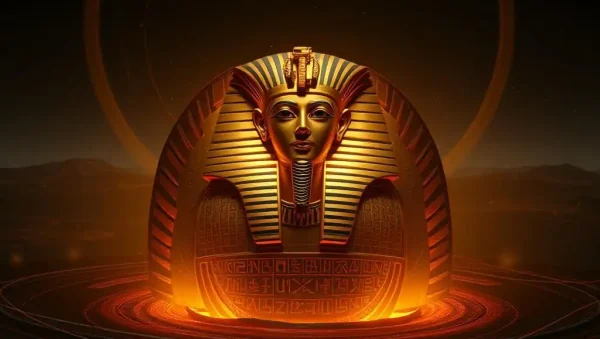
🌟 Discover the profound significance of the Atef Crown as a symbol of Osiris in the afterlife, embodying divine authority and eternal…
Read article
🦁 Discover how the Egyptian lion symbolizes strength and royalty, embodying Sekhmet's fierce power and divine authority. This iconic creature reflects Egypt’s…
Read article
🗿 Discover the profound significance of the ancient Egyptian bull symbolism meaning, embodying fertility, strength, and divine power, illustrating how the mighty…
Read articleWelcome to our deep dive into Mythological Symbols within the rich tapestry of Egyptian and Mesopotamian Mythology. Here, we unravel the visual language of ancient civilizations—from the enigmatic Eye of Horus to the sacred Tree of Life—and reveal how these icons shaped religion, kingship, and daily life. This subcategory is your gateway to understanding the deeper meanings behind amulets, temple carvings, and royal regalia. Whether you are a student, writer, or mythology enthusiast, our curated content connects these ancient emblems to their lasting echoes in modern culture, art, and spirituality. Prepare to decode the symbols that bridged the mortal and divine worlds.
Egyptian hieroglyphs are far more than a writing system; they are a repository of mythological symbols where each sign carried inherent magical power. The ankh (life), the djed (stability), and the was scepter (dominion) formed a sacred triad frequently appearing together in temple reliefs. For ancient Egyptians, these symbols were believed to activate divine energy when inscribed on amulets or tomb walls, ensuring the deceased’s safe passage through the Duat. Here, you will explore how the priests encoded creation myths into sign clusters, such as the benben stone, representing the primordial mound from which life emerged. Expect detailed breakdowns of each glyph’s origin, mythological narrative, and its practical use in funerary and ritual contexts.
Beyond royal tombs, these symbols infiltrated everyday items like scarabs and jewelry, offering protection to all classes. Our articles explain the grammar of sacred signs, showing how the placement—left or right, facing forward or back—altered a symbol's meaning. For instance, the Eye of Horus, when split into six parts, was used as a fraction system for measuring grain, blending practicality with myth. Each piece here is crafted to help you identify these symbols in museums and films, giving you a new appreciation for the complexity of Egyptian spiritual thought. We also debunk common misconceptions, such as the mistaken association of the ankh with Christianity, reinforcing its purely pagan roots in fertility and eternal life.
In Mesopotamian mythology, symbols were often embodied as composite creatures, the most iconic being the Lamassu—a winged bull or lion with a human head. These colossal stone guardians stood at city gates and palace entrances, representing the king’s power and the gods’ protective presence. Each element held symbolic weight: the bull’s body symbolized strength and fertility, the eagle’s wings denoted celestial dominion, and the human head signified intelligence. Our section examines how the Lamassu functioned as an apotropaic symbol, warding off evil demons and chaotic forces. You’ll learn about its counterpart, the Shedu, and how these figures evolved from Sumerian to Assyrian art, reflecting shifts in imperial ideology.
Beyond stone colossi, we explore lesser-known protective symbols like the mushussu dragon, associated with the god Marduk, and the Lilitu demon who was both feared and invoked in incantations. Each article here explains the ritual of “mouth washing” and “mouth opening” ceremonies that animated these statues, turning cold stone into living divine presences. For modern readers, we illustrate how these symbols reappear in literature and games, such as the Lamassu in Dungeons & Dragons, proving the enduring fascination with hybrid guardians. By understanding these symbols, you gain insight into how Mesopotamians coped with existential fears through tangible, visual theology.
The Tree of Life is a universal mythological symbol, but its Egyptian and Mesopotamian expressions carry unique nuances. In Mesopotamia, the sacred date palm stood at the center of temple gardens, representing abundance and divine order. The tree of life often appeared flanked by winged genies or the king, performing a pollination ritual that symbolized cosmic renewal. In Egypt, the sycamore fig tree was associated with the goddesses Hathor and Nut, providing shade and nourishment to the dead in the afterlife. Our coverage traces these botanical symbols across reliefs, cylinder seals, and coffin texts, revealing how they encoded agricultural cycles and royal legitimacy.
We also discuss the Sacred Garden as a microcosm of the universe, where watered channels mimicked the Nile or the Tigris, and every plant had a mythical referent. The Persea tree, for example, was believed to be the dwelling of the sun god Ra at Heliopolis, with its fruit granting eternal life. In our articles, you will find connections between these gardens and the biblical Garden of Eden, showing how Mesopotamian symbols migrated into later religious texts. By the end of this section, you’ll appreciate how these symbols were not just decorative but functioned as mnemonic maps for priests conducting seasonal festivals.
Kings in both Egypt and Mesopotamia were living symbols, and their regalia was saturated with mythological meaning. The Egyptian pschent (double crown) unified Upper and Lower Egypt, while the Uraeus cobra on the forehead represented the goddess Wadjet’s fiery protection. In Mesopotamia, the royal tiara and ceremonial mace were believed to be gifts from the gods, legitimizing the king as the earthly steward of divine authority. Our articles decode each piece—scepters, crooks, flails, and headdresses—linking them to specific deities and creation myths. For example, the shemu scepter was associated with the god Osiris, symbolizing resurrection and agricultural renewal.
We also analyze how these symbols were used in coronation rituals, where the king reenacted the god-king’s original victory over chaos. Unlike modern political symbols, these regalia were thought to channel actual divine essence, making the king a liminal being between worlds. Our content includes comparative tables showing similar elements, such as the Egyptian was scepter versus the Mesopotamian mace of Marduk, highlighting regional variations in power messaging. For scholars, we cite primary texts like the Pyramid Texts and Enuma Elish, ensuring accuracy. By mastering these symbols, you’ll better understand how ancient societies justified hierarchy and warfare through sacred iconography.
Mythological symbols were not confined to temples; they were worn, carried, and hung in homes as amulets and talismans. In Egypt, the heart scarab ensured the deceased’s heart did not testify against them in the afterlife, while the tyet (Isis knot) offered protection and rejuvenation. Mesopotamians used cylinder seals engraved with mythological scenes as personal amulets, pressing them into clay for legal documents and magical incantations alike. Our subcategory reveals how these objects functioned on both practical and spiritual levels, from warding off disease to ensuring fertility. You’ll find step-by-step guides on how these amulets were consecrated through “water of life” rituals and daily offerings.
We also explore the apotropaic magic of household symbols, such as the Egyptian Bes god (a dwarf deity) placed on beds and pillows to protect sleeping individuals from nightmares. In Mesopotamia, clay figurines of demons were buried under thresholds to trap evil spirits—a practice we trace to historical archaeological finds. Each article includes images and descriptions of materials (gold, faience, lapis lazuli) and their symbolic colors, such as blue for fertility (Nile water) and green for rebirth (Osiris skin). This section is perfect for collectors and history buffs, linking ancient traditions to modern jewelry trends like the “evil eye” charm, which has direct Mesopotamian ancestry.
The Eye of Horus (Wadjet) is often considered the most powerful because it represents healing, protection, and royal power. It was believed to restore Osiris and was used in funerary rites. Its fractions were even used for measurements in medicine and grain, blending myth with practical life.
Mesopotamian symbols were often composite creatures (Lamassu, mushussu) emphasizing protective guardianship, while Egyptian symbols were more abstract and hierarchical (ankh, djed) focusing on cyclical life and resurrection. Mesopotamians favored cylinder seals for personal magic, whereas Egyptians used scarabs and amulets.
Yes, many are preserved in museums like the British Museum or the Louvre. They also appear in modern media—from movies like The Mummy to video games like Assassin’s Creed Origins. Contemporary jewelry often replays the ankh or the evil eye, proving their timeless appeal.
No, they were also political and social tools. Kings used symbols like the double crown to assert unity, while merchants used cylinder seals as signatures. Amulets were worn by all classes for health and fortune, showing a blend of spiritual belief and daily practicality.
Start with our dedicated guides that list each symbol’s visual traits, associated deities, and common contexts. Look for repeating patterns—hieroglyphs near figures, composite animal bodies, and specific colors like gold or lapis lazuli. Practice with high-resolution museum images and compare them across artifacts.