The Mesopotamian King List: Shaping Historical Narratives
🌟 Explore how the Mesopotamian king list history shapes our understanding of ancient civilizations, revealing the legends and narratives that influence modern…
Read article
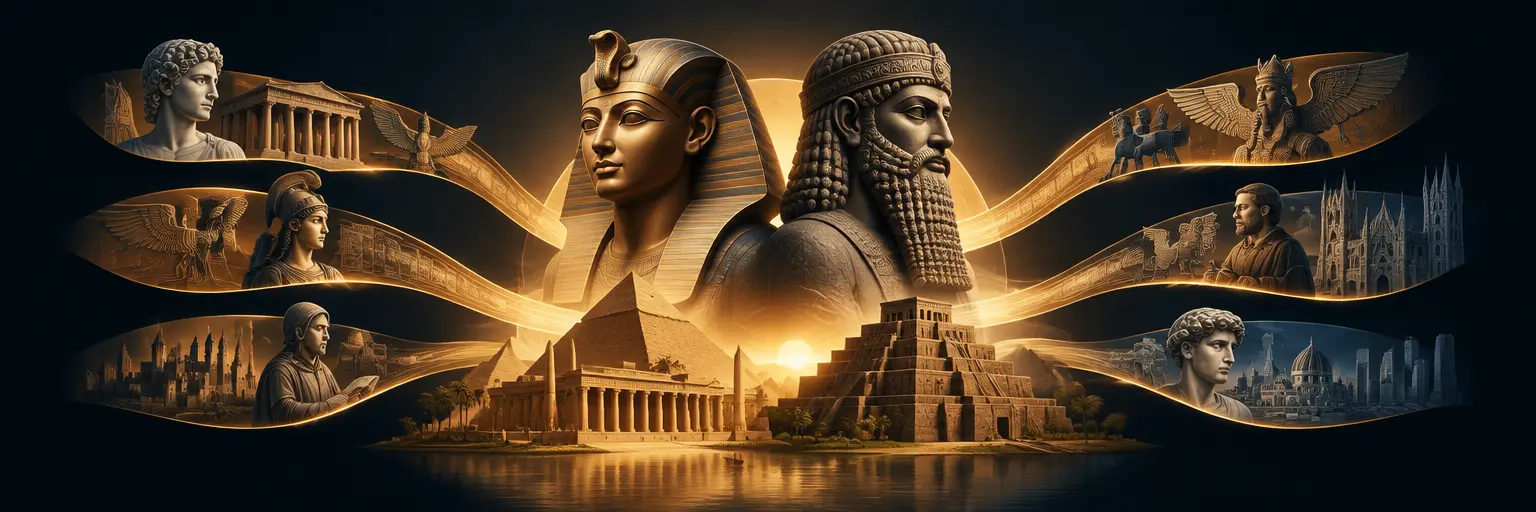
Discover how the myths of ancient Egypt and Mesopotamia echo through history, shaping art, religion, literature, and modern storytelling across civilizations. From the Osiris resurrection cycle in Greek mystery cults to the Epic of Gilgamesh’s flood narrative in biblical texts, these foundational legends have permeated Western and global culture for millennia. Their influence appears in Renaissance iconography, Romantic poetry, and even contemporary cinema—think of the symbology of the ankh, the hero’s journey mirrored in modern franchises, or the enduring archetype of the dying and reborn god. This exploration highlights how mythological motifs travel across time and borders, adapting to new religions, political ideologies, and artistic movements. Whether you’re tracing astrological symbolism, zodiac cycles, or the allegorical power of creation myths, you’ll uncover the living legacy of these ancient narratives in everything from tarot decks to blockbuster movies. Unlock the hidden threads that connect a pharaoh’s tomb to a modern fantasy novel—a journey that proves myths never die; they simply transform.
🌟 Explore how the Mesopotamian king list history shapes our understanding of ancient civilizations, revealing the legends and narratives that influence modern…
Read article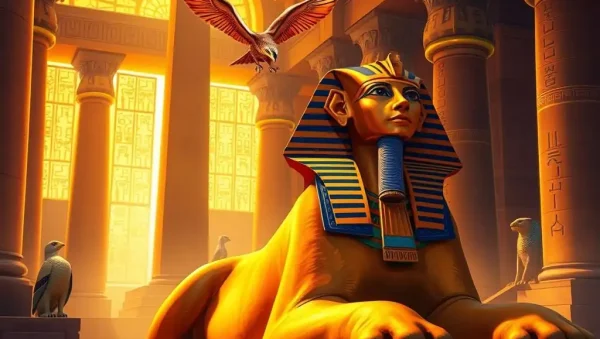
🌍 Discover the profound influence of Egyptian sacred animal symbolism, where revered creatures like cats, crocodiles, and falcons embodied divine power and…
Read article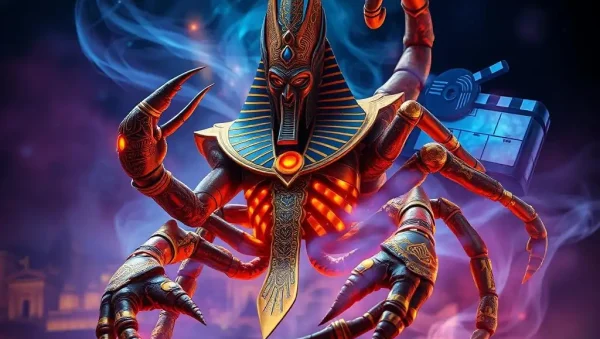
🌍 Discover how the Scorpion King mythology Hollywood legacy intertwines myth, history, and modern storytelling, shaping cultural narratives worldwide. Explore the fascinating…
Read articleWelcome to the Influence on Later Cultures subcategory, where we trace the profound and often surprising ways that the myths of Ancient Egypt and Mesopotamia have shaped the religions, arts, sciences, and storytelling of the modern world. From the architectural echoes of pyramids in modern skyscrapers to the biblical flood narrative and ancient astrological systems, this page explores the invisible threads connecting our contemporary society to the cradle of civilization. Dive in to uncover how these ancient narratives continue to influence psychology, literature, pop culture, and even political symbolism, offering a rich SEO-optimized resource for enthusiasts, students, and creators alike.
Explore how Egyptian and Mesopotamian mythological motifs, such as the dying-and-rising god, the underworld judgment, and the cosmic battle between order and chaos, infiltrated later religious traditions. These core themes appear in Zoroastrianism, Judaism, Christianity, and Islam, often as symbolic reinterpretations of older myths. We analyze specific parallels, like the Egyptian Book of the Dead‘s weighing of the heart and the Christian Last Judgment, or the Mesopotamian Enuma Elish and the Genesis creation account.
By examining historical texts, temple records, and priestly exchanges, you’ll see how cultural diffusion occurred through trade, conquest, and diplomatic correspondence. This section helps readers understand that religious evolution is a dynamic, syncretic process, not a series of isolated revelations. Expect clear comparisons, scholarly citations, and practical takeaways for writers and theologians seeking deeper context for foundational symbols and narratives.
From the obelisks of Rome and the sphinxes of Victorian gardens to the Art Deco revival of Egyptian motifs in the 1920s, the visual language of these mythologies has never faded. This section highlights how Mesopotamian ziggurats influenced early modern architecture, and how the iconic eye of Horus became a universal protective symbol in jewelry, tattoos, and corporate logos. We also explore the use of mythology in sculpture, painting, and film set design, showing how ancient color palettes and spatial arrangements inspire contemporary artists.
Readers will find case studies on famous buildings like the Lincoln Memorial (echoing Egyptian temple pylons) and the Louvre’s Islamic wing (inspired by Mesopotamian vaulting). We unpack the semiotics of these visual borrowings, explaining why certain symbols retain their mystical appeal. Whether you’re an art historian, a designer, or a curious traveler, this section reveals how ancient aesthetics actively shape our public spaces and personal expression.
The hero’s journey, the wise mentor, the apocalyptic flood, and the resurrection motif—these narrative skeletons originate largely from the myths of the Nile and the Tigris-Euphrates. Here, we map how the epic of Gilgamesh directly influenced Homer’s Odyssey, then later works like Tolkien’s Lord of the Rings and modern fantasy series. We also discuss the Egyptian myth of Isis and Osiris as the prototype for countless betrayal-and-redemption plots in novels, graphic novels, and video games.
This section provides a structural breakdown of these ancient plots, comparing them with modern blockbuster films, TV series, and bestselling novels. You’ll discover how the monomyth (Joseph Campbell’s term) is not just a literary device but a cultural memory. For aspiring authors, screenwriters, and game designers, we offer a practical toolkit for reimagining these archetypes without cliché, ensuring your stories resonate with timeless human truths.
Believe it or not, ancient mythology intertwined with early science. The Mesopotamian sexagesimal system (base-60) is still the foundation of our clocks and circles, while Egyptian geometry and astronomy shaped Greek philosophy and Ptolemaic cosmology. This section explores how mythological calendars, star charts, and numerology influenced later scientific thinking—from the 360-degree circle to the 24-hour day. We also examine the symbolic role of myth in alchemy, astrology, and early medicine, which later morphed into modern chemistry and psychology.
By tracing the lineage of symbols like the caduceus (medical emblem) and the planetary glyphs, you’ll understand the hidden baggage carried by everyday modern icons. This is not just trivia; it’s a deep dive into the epistemological transitions from mythos to logos. Perfect for STEM professionals, philosophers, and puzzle enthusiasts, this section illuminates how ancient beliefs quietly persist in our laboratories, observatories, and digital interfaces.
From Assassin’s Creed Origins to the God of War franchise, Egyptian and Mesopotamian deities and monsters are everywhere in modern entertainment. This section covers their adaptation in comic books (Marvel’s Moon Knight), anime, tabletop RPGs, and social media mythologies. We also analyze how these myths are re-appropriated in memes, conspiracy theories, and even marketing campaigns, often stripped of their original context but retaining their emotional punch.
We provide a survey of the most impactful digital and pop-culture artifacts, comparing their fidelity to source texts and their creative deviations. You’ll learn how game developers and writers balance authenticity with playability, and why certain figures like Anubis or Marduk become viral archetypes. For content creators, marketers, and fans, this section offers actionable insights into leveraging mythological tropes ethically and effectively in today’s saturated media landscape.
Through trade, colonization, and later Roman conquest, Egyptian cults of Isis, Osiris, and Serapis spread across the Mediterranean. Greeks identified their deities with Egyptian ones (e.g., Thoth with Hermes), leading to syncretic mystery religions. These influenced Greek philosophical ideas about the afterlife, ethical judgment, and resurrection, particularly in traditions like Orphism and Pythagoreanism.
The Epic of Gilgamesh, with its flood story, hero’s quest for immortality, and friendship themes, remains iconic. Its flood narrative is almost identical to later biblical and Quranic accounts, and its structural elements (e.g., a wild companion, a deadly monster, a wise sage) appear in countless modern stories from Batman to Game of Thrones.
Yes, the stepped-pyramid form directly inspired many 20th-century buildings, such as Chicago’s Civic Opera Building and the original Minneapolis City Hall. The ziggurat’s symbolism of ascending toward the heavens was reinterpreted in Art Deco and Brutalist design, reflecting power and civic ambition. Today, corporate headquarters often use similar stepped silhouettes as visual anchors.
Carl Jung explicitly credited the Book of the Dead and Babylonian epics for his concept of the collective unconscious. The structures—life-death-rebirth, shadow vs. light, the divine child—are deeply encoded in human cognition. Because these myths codify universal life stages and emotional struggles, they naturally reappear in psychological frameworks and personality typologies like the enneagram.
Start with accessible comparative works like Joseph Campbell’s The Hero with a Thousand Faces or podcasts like Mythology: Egyptian and Mesopotamian. Then, watch modern films or play story-driven games while keeping a running list of motifs. Finally, visit museums online (British Museum, Met) and trace how ancient artifacts inspire contemporary designs. For deeper dives, academic journals on reception studies offer readable essays on specific case studies.