
The Legacy of the Scorpion King: Myth, History, and Hollywood

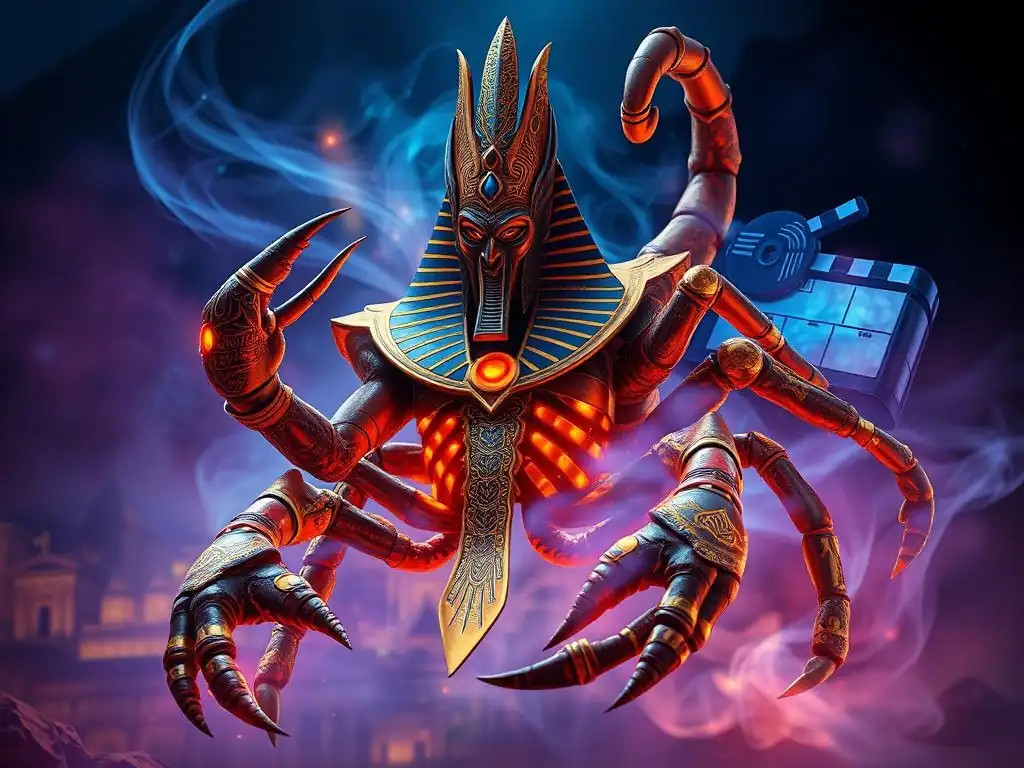
Welcome to Mythology and Legends, where ancient tales come alive! Ever wondered how a shadowy figure from early Egyptian history morphed into a Hollywood action hero? Dive into the fascinating world of the Scorpion King, exploring his roots in Egyptian and Mesopotamian mythology and uncovering the truth behind his enduring Hollywood legacy. Prepare to be amazed by the captivating blend of history, myth, and cinematic spectacle – the secrets are waiting to be unearthed...
Narmer's Role in Establishing the First Dynasty: Foundations of Egyptian Civilization
Narmer is widely credited with establishing the First Dynasty, marking a pivotal moment in ancient Egyptian history. This period, often referred to as the Early Dynastic Period (circa 3100–2686 BC), saw the consolidation of power under a single ruling house and the development of key institutions that would define Egyptian civilization for millennia. Narmer's reign, likely around 3100 BC, initiated a lineage of pharaohs who ruled from Memphis, a newly founded capital strategically located at the juncture of Upper and Lower Egypt.
This centralized administration allowed for greater control over resources, labor, and trade, laying the groundwork for large-scale projects like irrigation systems and monumental architecture that would characterize the Old Kingdom. The unification under Narmer also fostered a sense of national identity and cultural homogeneity across the vast Nile Valley, a crucial step in the evolution of one of history's most enduring civilizations.
The establishment of the First Dynasty under Narmer involved more than just political unification; it was also the genesis of a sophisticated state apparatus. Royal decrees, taxation systems, and a nascent bureaucracy began to emerge, facilitating the management of a unified kingdom.
The development of hieroglyphic writing, while predating Narmer, saw significant standardization and increased use during this period, particularly for administrative and religious purposes, as evidenced by inscriptions on tombs and artifacts from sites like Abydos and Saqqara. Furthermore, the First Dynasty rulers initiated the construction of elaborate mastaba tombs, such as those at Abydos believed to belong to Narmer and his successors, signaling a growing emphasis on royal power, afterlife beliefs, and monumental construction.
These foundational elements, consolidated during Narmer's time and expanded upon by his successors, established the core principles of kingship, administration, and religious practice that formed the bedrock of the Egyptian state and its subsequent cultural achievements, influencing everything from art to the very idea of the divine pharaoh, concepts that would later intertwine with figures sometimes associated with the Scorpion King mythology Hollywood legacy.
- What is the historical and mythological basis for the Scorpion King character?
- How does the Hollywood portrayal of the Scorpion King differ from historical or mythological accounts?
- What are some of the key mythological themes associated with the Scorpion King figure?
- What impact has the Hollywood "Scorpion King" franchise had on popular understanding of ancient Egyptian mythology?
- How does the "Scorpion King" mythology connect to contemporary society and storytelling?
Frequently Asked Questions
What is the historical and mythological basis for the Scorpion King character?
The Scorpion King is loosely based on a possible predynastic Egyptian ruler, sometimes identified with King Scorpion I or II. Mythologically, he is often depicted as a powerful warrior associated with desert regions and fierce combat.
How does the Hollywood portrayal of the Scorpion King differ from historical or mythological accounts?
Hollywood's version often romanticizes the character, presenting him as a hero or anti-hero, diverging from more nuanced or ambiguous historical interpretations. The films focus on action and adventure, rather than historical accuracy or detailed mythological portrayals.
What are some of the key mythological themes associated with the Scorpion King figure?
Key themes include kingship, power, and the struggle against chaos. He's frequently linked to desert survival and leadership through strength. Some myths also tie him to early forms of governance and territorial disputes.
What impact has the Hollywood "Scorpion King" franchise had on popular understanding of ancient Egyptian mythology?
The films have introduced a wider audience to elements of ancient Egyptian culture, albeit often in a highly fictionalized manner. This can lead to misconceptions or superficial understanding of deeper mythological themes.
How does the "Scorpion King" mythology connect to contemporary society and storytelling?
The Scorpion King archetype continues to resonate as a symbol of resilience, leadership, and the fight for survival. He represents a figure who can overcome adversity in harsh environments, a theme prevalent in many modern narratives.
Final Reflection: The Sting of Legacy – Myth, History, and the Enduring Power of the Scorpion King
The enduring image of the Scorpion King, born from ancient myth and resurrected by Hollywood, continues to resonate in our collective consciousness, proving that powerful narratives transcend time and medium. His story, a potent blend of terrifying power and tragic fate, speaks to our deepest fears and aspirations, reminding us of the enduring human fascination with both the divine and the destructive. This fascination, explored through the lens of history and popular culture, reveals a deeper truth about our own storytelling instincts.
The Scorpion King's journey, from obscure Mesopotamian legend to blockbuster franchise, highlights the malleability and enduring power of myth. His transformation reflects our own need to reinterpret and reimagine the past, shaping it to fit our present concerns. The character's evolution underscores the symbiotic relationship between ancient narratives and modern interpretations, a constant process of reimagining and recontextualizing. Myth is a powerful thing. It shapes our understanding of the world, our place in it, and our destiny.
This quote perfectly encapsulates the Scorpion King's ongoing influence, demonstrating how a seemingly simple myth can become a complex and multifaceted cultural phenomenon.
Consider the Scorpion King's legacy. How has the blending of ancient myth and modern entertainment shaped your own understanding of power, mortality, and the narratives we tell ourselves? You, too, are a storyteller, weaving your own personal myth through your actions and choices. Embrace the power of narrative, learn from the Scorpion King's journey, and craft a legacy that reflects your own unique strength and vision. Let the sting of his legend inspire you to create your own enduring tale.
Unleash Your Inner Scorpion King: Explore Ancient Mysteries!
Thanks for diving into the fascinating world of the Scorpion King! We hope you gained a new appreciation for the blend of myth, history, and cinematic storytelling surrounding this iconic figure. Ready to delve even deeper?
- Research your own Scorpion King legend: Explore different cultural interpretations of scorpion deities and kings. What unique stories or traditions resonate most with you? This is your chance to become a mythology detective!
- Share your discoveries: Discuss your findings on our social media channels – let's build a community of Scorpion King enthusiasts!
- Create your own Scorpion King inspired artwork: Whether it's a drawing, a poem, or even a short story, let your imagination run wild and bring the Scorpion King to life in your own unique way.
What hidden aspects of the Scorpion King myth would you most like to uncover next? Let's discuss!