The Myth of the Golden Age: Comparing Visions of Paradise Lost
🌍 Explore how Lost paradise golden age myths shape our understanding of perfection and decline across cultures, revealing universal longing for a…
Read article
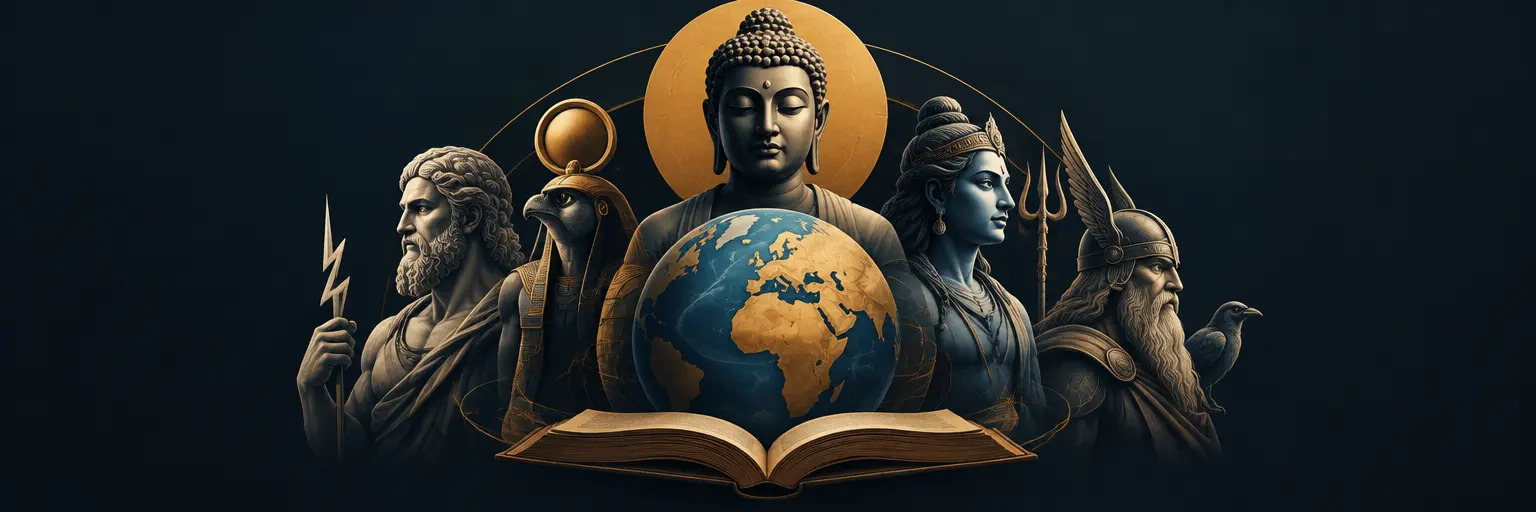
Delve into the intricate tapestry of Myth and Religion, where ancient narratives converge with sacred belief systems to shape human understanding across civilizations. This subcategory explores the profound intersection of mythological storytelling and religious practice, revealing how divine figures, creation epics, and ritual traditions have influenced moral codes, cultural identity, and spiritual worldviews. From the polytheistic pantheons of Greece and Egypt to the monotheistic allegories of Abrahamic faiths, and the cyclical cosmologies of Hindu and indigenous traditions, discover how mythic archetypes underpin religious doctrines and vice versa. Uncover the shared motifs—flood myths, hero journeys, and afterlife visions—that transcend geographical boundaries, while appreciating the unique cultural expressions that define each tradition. Ideal for enthusiasts of comparative religion, anthropology, or timeless storytelling, this section illuminates how myths serve as the living language of faith, adapting through centuries to address existential questions, societal norms, and humanity’s quest for meaning.

🌍 Explore how Lost paradise golden age myths shape our understanding of perfection and decline across cultures, revealing universal longing for a…
Read article
🌟 Explore how mythic transformations into divine beings shape cultures worldwide, revealing the enduring power of mythical transformations divine beings hold in…
Read article
🌍 Explore how "Loss of innocence mythology stories" across cultures reveal universal themes of temptation, fall, and redemption, shedding light on humanity’s…
Read article
🌍 Sacred stories define morality by shaping cultural values and ethical principles across societies. This article explores how mythic narratives from diverse…
Read articleWelcome to the Myth and Religion subcategory of Comparative Mythology, where we delve into the intricate relationship between sacred narratives and cultural belief systems. Here, you’ll uncover how myths shape religious practices, rituals, and worldviews across civilizations, from ancient Mesopotamia to modern faiths. This section is your gateway to understanding the divine, the heroic, and the symbolic—tailored for enthusiasts, students, and researchers seeking deep mythological insights. Expect rich content blending historical context, symbolic analysis, and cross-cultural comparisons, all optimized for both discovery and enlightenment.
This facet examines how myths underpin the world’s major religions, from Hinduism’s cosmic cycles to Judaism’s covenant narratives. You’ll explore creation stories, flood epics, and divine genealogies that define sacred laws and communal identity. By analyzing primary texts like the Enuma Elish or the Popol Vuh, we reveal how these tales provided moral frameworks and explanations for natural phenomena. Expect detailed breakdowns of mythological motifs—such as the hero’s journey—within religious frameworks, highlighting their enduring influence on liturgy and theology.
Here, we dissect pantheons and their narratives, contrasting polytheistic systems like Greek and Norse with monotheistic reinterpretations. You’ll learn how gods like Zeus, Shiva, or Odin embody cultural values, while demons and tricksters—such as Loki or Ereshkigal—challenge order. This section offers comparative tables, symbolic interpretations, and historical analyses of divine attributes, worship practices, and mythological adaptations. Ideal for grasping how power, morality, and chaos are personified across traditions, enriching your understanding of comparative theology.
Myths are not just stories—they’re blueprints for ritual action. This subcategory explores how religious ceremonies, from Aztec human sacrifice to Eleusinian Mysteries, mirror mythological events. You’ll uncover the role of priests, shamans, and communal participation in reenacting creation or renewal myths. We also examine seasonal festivals like Diwali or Yule, connecting them to lunar calendars and agrarian cycles. Expect vivid descriptions of rites, their symbolic objects, and how they reinforce social cohesion and divine favor.
Symbols—serpents, trees, water, fire—transcend cultures but gain unique meanings in religion. This section decodes these archetypes, tracing their evolution from ancient myth to contemporary spiritual movements. For instance, the serpent’s duality in Eden versus Aztec Quetzalcoatl reveals shifting moral landscapes. We analyze sacred geometry, iconography, and pilgrimage sites as living mythologies. By connecting the past to present-day faith, you’ll see how mythic symbols persist in rituals, art, and even secular narratives, offering a rich vein for comparative study.
This comparative lens highlights striking similarities—such as flood myths, virgin births, or resurrection themes—across unrelated cultures. Using frameworks like structuralism and depth psychology, we’ll show how human psychology and shared existential questions birth recurring motifs. You’ll explore case studies, from Egyptian Osiris to Christian Jesus, and Buddhist Mara versus Satan, examining diffusion versus independent invention. This section is perfect for those curious about universal patterns and the psychological roots of religious storytelling.
Myth refers to narrative stories explaining origins, deities, or natural phenomena, while religion is the organized system of beliefs, practices, and institutions built around those narratives. Myths often provide the symbolic backbone for religious rituals and ethics, but religion includes doctrine, community, and worship beyond the stories themselves.
They analyze texts, archaeology, and ethnography to identify shared motifs, structures, and functions across cultures. Methods include structural analysis, folklore comparison, and psychological interpretation. By examining rituals, symbols, and oral traditions, they map how myths evolve and interact with religious practice, revealing both universal archetypes and cultural specifics.
Most scholars view myths as culturally significant truths rather than literal history. They encode social values, psychological insights, and cosmological beliefs. Some myths may contain historical kernels, but their power lies in metaphorical and symbolic meaning, which shapes identity and worldview. Truth in myth is often narrative truth, not empirical fact.
Similarities arise from human universals like fear of death, longing for order, or moral reasoning, plus cultural diffusion through trade and conquest. Psychologists like Jung suggest archetypes emerge from the collective unconscious. Also, environmental factors—floods, droughts—inspire parallel stories. Both independent invention and borrowing explain these recurring patterns.
Modern media, literature, and film frequently reimagine myths—such as in Percy Jackson or American Gods. Religions reinterpret myths allegorically, while secular culture uses them for storytelling frameworks. New religious movements blend ancient motifs with contemporary concerns, ensuring myths remain dynamic, relevant tools for exploring identity, morality, and transcendence.