The Final Battle: Comparing Epic Climax Points.
🔥 Dive into "The Final Battle," where epic climax comparisons in mythology reveal how legendary stories' climactic moments shape cultural identities and…
Read article
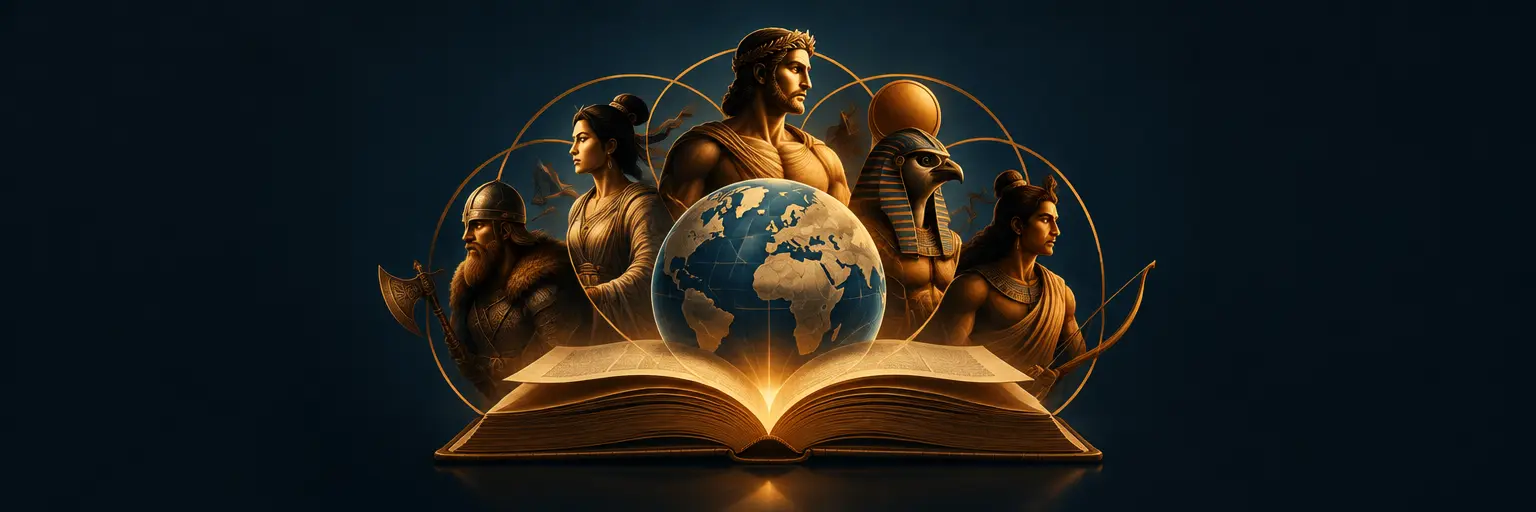
Dive into the fascinating world of Comparative Epics, where the timeless heroics of Gilgamesh meet the valor of Achilles, and the cosmic battles of the Mahabharata echo the Norse sagas of Odin. Here, we dissect how different cultures craft their grand narratives, revealing universal themes of love, fate, and honor with profound twists. 🏛️ By placing these monumental stories side-by-side, you’ll uncover striking parallels—like the flood myths that span continents or the trickster figures that outwit gods—proving that despite our diverse traditions, humanity shares a common storytelling soul. 🌍 Whether you’re a mythology enthusiast, a student of world literature, or a seeker of cultural connections, our expert analyses illuminate how these ancient epics still shape modern cinema, novels, and moral dilemmas. Unlock the hidden links between civilizations and discover how each hero’s journey mirrors your own struggles and triumphs. 🔥 Perfect for SEO-rich exploration of mythic archetypes, cross-cultural narratives, and legendary showdowns.
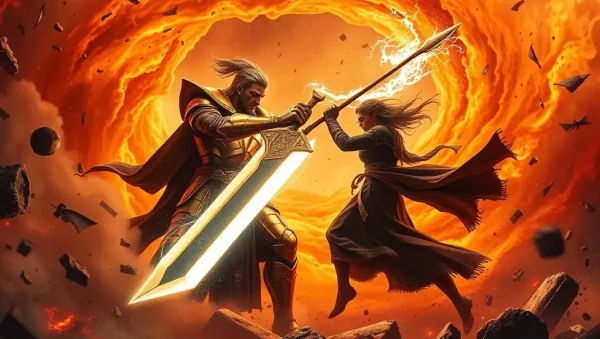
🔥 Dive into "The Final Battle," where epic climax comparisons in mythology reveal how legendary stories' climactic moments shape cultural identities and…
Read article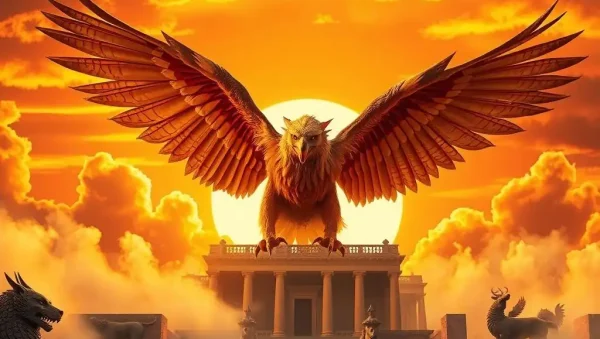
🌟 Discover how animals, from mythical beasts to loyal companions, shape epic stories across cultures. Explore the vital role of animal myths…
Read article
🌍 Dive into the complex world of war ethics in ancient mythology, where epic battles pose moral dilemmas that challenge our understanding…
Read articleWelcome to the Comparative Epics subcategory within our Comparative Mythology hub. Here, we dive deep into the structural parallels, thematic echoes, and cultural divergences of the world’s greatest heroic narratives—from Gilgamesh and the Ramayana to the Iliad and the Kalevala. Whether you’re a student, writer, or myth enthusiast, this section maps how civilizations used epic storytelling to encode shared human anxieties, virtues, and cosmic order. Expect side-by-side analyses, motif breakdowns, and cultural context that illuminate why similar plots emerge across continents.
Discover how Joseph Campbell’s monomyth—the call to adventure, trials, atonement, and return—appears in epics as diverse as the Epic of Gilgamesh, Homer’s Odyssey, and the Japanese Heike Monogatari. This section breaks down each stage with concrete examples, showing how Mesopotamia, Greece, and Japan each colored the “departure-initiation-return” structure with local values. You’ll also see where the pattern breaks, exposing cultural differences in heroism, fate, and divine intervention.
Expect comparative tables that pit Achilles’ rage against Arjuna’s doubt or Odysseus’ cunning against Sun Wukong’s mischief. We emphasize narrative function over literary canon, making this ideal for writers seeking authentic archetypes or educators building cross-cultural lesson plans. The focus is on actionable insight—why do certain trials appear in both Norse and Indian sagas?—rather than mere plot summary.
Epic poets did not just chronicle heroes; they also framed the birth and end of worlds. Compare the Babylonian Enuma Elish with Hesiod’s Theogony and the Norse Völuspá. Our analysis highlights how each culture conceived of cosmic order from primordial chaos, the role of divine warfare, and the cyclical versus linear view of time. You’ll learn how these creation myths influence modern fantasy worldbuilding, from Tolkien to contemporary sci-fi.
Furthermore, we examine apocalyptic epics like the Mahabharata’s final battle and the Kalevala’s sampo destruction. These sections reveal how destruction is often a regenerative force, resetting cosmic balance or human moral debt. The discussions tie directly to environmental and existential themes in today’s media, making this a bridge between ancient text and modern relevance.
Epics often serve as foundational myths for nations and ethnic groups. Here, we contrast the Kalevala (Finnish), Nibelungenlied (German), and Shahnameh (Persian) to show how each epic was consciously shaped to unite a people. You’ll understand why the Finnish national epic was compiled by Elias Lönnrot in the 19th century and how the Shahnameh preserved Persian identity under Arab rule. This section emphasizes political and historical context, not just literary artistry.
We also dissect lesser-known but equally vital epics like the Popol Vuh (Maya) and Sundiata (Mali), demonstrating how indigenous storytelling resists colonial narratives. For content creators, this opens doors to authentic representation of non-Western heroes in literature, film, and gaming—ensuring that “universal” archetypes do not become Western-centric clichés.
Comparative epics were rarely written down in one sitting. This section explores the oral-formulaic theory of Milman Parry and Albert Lord, showing how improvisation and formulaic phrases shaped Homeric and South Slavic epics alike. We compare scribal culture (e.g., Mesopotamian clay tablets, medieval manuscripts) with performative contexts (e.g., West African griots, Indian pandits). Discover how memory aids, audience interaction, and political censorship influenced what version of an epic survived.
Key case studies include the Sumerian Gilgamesh fragments versus the Standard Babylonian version, and the multiple recensions of the Ramayana from Valmiki to Tulsidas. We also address how digital humanities—like the Multitext project for Homer—are reshaping our understanding of textual instability. This section is perfect for researchers wanting methodological tools to trace story variants across time and geography.
Beneath every epic’s quest lies a web of recurring motifs. This section zooms into fated tragedy (e.g., Oedipus-like prophecies in the Volsunga Saga), romantic loyalty (Sita in the Ramayana vs. Penelope in the Odyssey), and absolute war ethics (the dharmic war in the Mahabharata vs. the kleos-driven combat of the Iliad). We provide thematic comparisons that help readers see how each culture defines honor, revenge, and sacrifice.
Additionally, we explore the trickster in epic—from Loki in Norse to Eshu in Yoruba lore—and how these figures challenge heroic norms. For screenwriters, this is a goldmine of conflict drives and character arcs that transcend genre tropes. The paragraphs include close reading examples and cross-references to other subcategories, such as “Mythic Motifs,” to create a rich learning path across the site.
Comparative mythology examines all mythic stories, including creation myths, folktales, and legends. Comparative epics focus specifically on long-form narrative poems or sagas that centralize a hero or cosmic event, such as the Iliad or the Ramayana. While both share methods of cross-cultural analysis, epics emphasize narrative structure, performance history, and textual transmission more deeply.
Yes, absolutely. The Epic of Gilgamesh is often cited as the oldest surviving epic poem, composed around 2100 BCE. It contains all classic epic elements: a heroic protagonist, divine interaction, a journey, and a profound meditation on mortality. Homer’s Iliad and Odyssey came roughly seven centuries later, so Gilgamesh sets the foundational template for the genre.
The katabasis (underworld descent) serves multiple functions across cultures: it tests the hero’s courage, provides access to forbidden knowledge, and symbolizes psychological transformation. From Gilgamesh seeking Utnapishtim to Aeneas meeting Anchises, the underworld represents a liminal space where identity is renewed. Comparatively, it also encodes each culture’s views on death, judgment, and the afterlife.
Start with the Epic of Gilgamesh (short, thematically rich), Homer’s Odyssey (accessible and action-driven), and the Ramayana (for non-Western perspective). Then, add the Mahabharata (excerpts are fine) and the Kalevala for cultural breadth. Use our thematic guides above to spot parallels, but read without pressure—the joy of discovery is key.
Absolutely. George Lucas openly used Joseph Campbell’s monomyth, and scholars analyze Star Wars as a modern epic. Comparative analysis works for any massive narrative arc, revealing how contemporary storytelling still relies on ancient patterns—such as the hero’s exile, mentor figures, and cosmic battles—while updating them for modern audiences. This bridges academics and pop culture.