Exploring Archetypal Symbols in Comparative Mythology
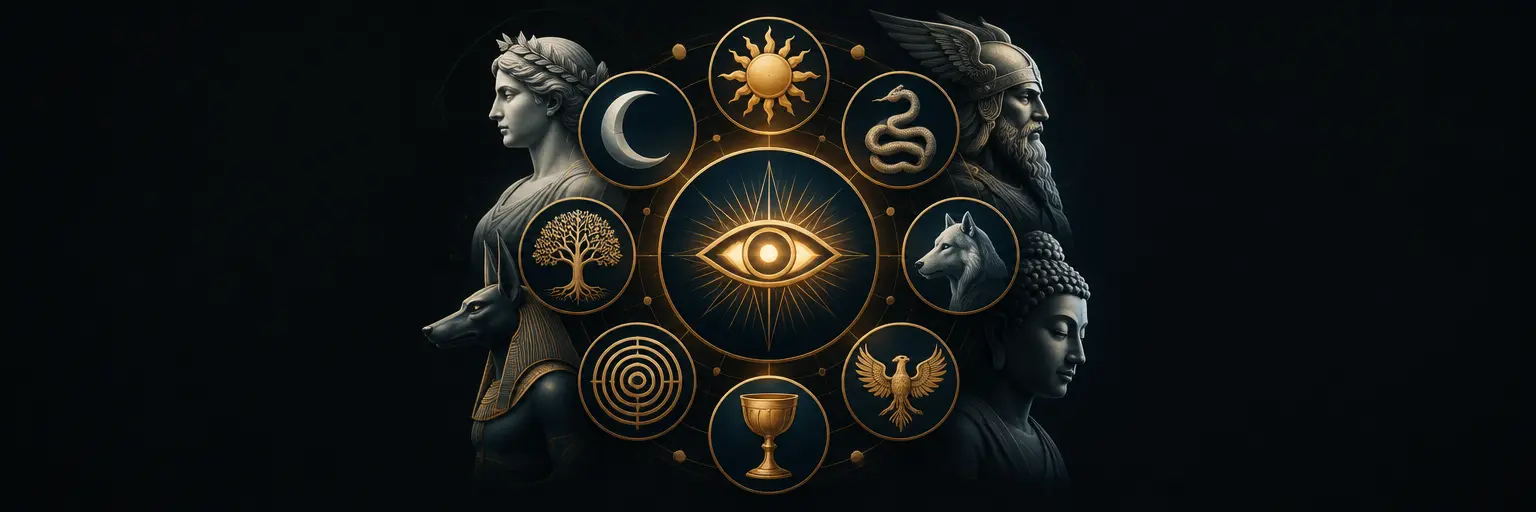
Welcome to the world of Archetypal Symbols, a fascinating subcategory within Comparative Mythology at Mythology and Legends. Here, we decode the universal images, motifs, and patterns that appear across cultures and eras—from the World Tree and the Hero’s Journey to the Serpent and the Great Mother. These symbols are the building blocks of human storytelling, shaping our collective psyche and connecting myths from Greece, India, Norse lands, Mesoamerica, and beyond. Dive in to understand how recurring archetypes reveal shared human truths, influence modern literature, film, and psychology, and offer a lens to see the underlying unity in humanity’s diverse narratives. This guide is your gateway to recognizing these powerful patterns in folklore, religion, and contemporary culture.
🌍 The Universal Language of Mythic Imagery
Archetypal symbols function as a universal language, transcending linguistic and cultural barriers. In this section, you will learn how symbols like the sun, water, and mountain carry similar meanings across ancient Egypt, Aboriginal Australia, and Celtic traditions. For instance, the sun often represents life, rebirth, and divine power, while water symbolizes purification, chaos, or the subconscious. By comparing these patterns, we reveal deep psychological structures—first mapped by Carl Jung—that suggest a shared human experience. Expect to see side-by-side analyses that highlight how different cultures adapt the same core symbol to their unique environments, histories, and spiritual beliefs, enriching our understanding of both the specific myth and the universal mind.
This exploration goes beyond simple recognition. You will discover how archetypal symbols function as narrative shorthand, instantly conveying complex ideas about morality, mortality, and the cosmos. For example, the labyrinth appears both in Greek myth (Theseus) and Native American stories as a spiritual journey inward. We’ll break down the symbolic grammar that storytellers have used for millennia, showing you how to spot these motifs in ancient texts and modern media alike. By the end, you’ll possess a new analytical toolset to appreciate why certain images resonate so deeply, across time and distance, and how they continue to shape our personal and collective identities.
🕊️ The Hero, The Shadow, and The Trickster
This section focuses on character archetypes, the protagonists and antagonists that populate world mythology. Expect detailed examinations of the Hero (e.g., Gilgamesh, Odysseus, Maui), the Shadow (the dark antagonist or inner self), and the Trickster (Loki, Coyote, Anansi). You’ll learn how these figures represent psychological stages and social rules across cultures. The Hero’s journey, formalized by Joseph Campbell, follows a departure, initiation, and return—a pattern visible in countless myths. By comparing these characters, we see how cultures define courage, cunning, and morality differently, yet all use these archetypes to explore the boundaries of human potential and failure.
Moreover, this analysis is not merely academic. Understanding these archetypes helps you decode modern storytelling in films, novels, and video games, which continually recycle these roles. For instance, the Trickster appears in characters like the Joker or Bugs Bunny, challenging order and creating change. The Shadow is central to stories like “Star Wars” or “Fight Club.” Here, we explain the psychological functions these symbols serve—how they model coping mechanisms, social role-playing, and ethical dilemmas. This section bridges ancient myth and contemporary narrative psychology, making comparative mythology directly relevant to your daily life and media consumption.
🌿 Sacred Objects and Natural Elemental Symbols
Delve into the material and elemental symbols that anchor mythological worlds—objects like the golden fleece, excalibur, or the lotus—and natural forces like fire, earth, air, and water. This subcategory reveals how ancient societies personified natural elements into deities and relics. For example, fire is simultaneously a purifier (Agni in Hindu myth) and a destroyer (the Phoenix’s flame). Sacred trees, like Yggdrasil in Norse lore, connect the heavens, earth, and underworld. Each symbol carries ritualistic and spiritual weight, often acting as a conduit between humans and gods. Expect comparisons of how different civilizations assigned values to elements based on their climate, agriculture, and existential threats.
Beyond classification, we examine the practical and ritual use of these symbols. For instance, the staff or wand represents authority and magical transmission, appearing from Hermes’ caduceus to African shamanic tools. You will see how these symbols are not static but evolve with cultures—how the dragon changed from a wise, benevolent entity in Eastern myth to a fire-breathing foe in Western tales. This section also covers how natural symbols influence environmental ethics and modern neo-pagan practices. By understanding the deep roots of these images, you’ll appreciate contemporary movements that seek to reconnect with nature through mythic symbolism, from tree planting ceremonies to earth-based spirituality.
🔢 Numeric and Geometric Archetypes in Myth
Numbers and shapes hold significant archetypal power across mythologies. Here, you’ll explore the recurring significance of numbers like three (trinities, past-present-future), four (directions, seasons, elements), and seven (days, chakras, deadly sins). Geometric shapes—the circle (wholeness), the cross (intersection), and the spiral (growth)—appear in everything from ancient mandalas to Celtic knots. We’ll analyze why these numerical and geometric motifs appear independently in cultures with no contact, suggesting a universal cognitive mechanism. For instance, the creation myth often involves a primordial division (chaos separating into order), frequently represented by a cross or axis mundi. You’ll learn to interpret these patterns as symbolic maps of cosmic order and human consciousness.
This section is essential for anyone interested in sacred geometry and numerology. Expect case studies, such as how the Mayan calendar uses complex cyclical numbers, or how the Buddhist stupa is designed as a vertical cosmic mountain. We illustrate how these archetypes guide architecture, art, and ritual calendars. Furthermore, we connect these ancient symbols to modern uses—from corporate logos using triangles for stability to the Fibonacci sequence in art. By decoding numeric and geometric archetypes, you gain a deeper insight into how civilizations understood time, space, and harmony. This knowledge enhances your ability to read symbols not just in myths, but in daily visual culture, making this a highly practical and enriching educational journey.
📜 Transformation and Rebirth Symbols
Focus on symbols of change, death, and resurrection—the core themes of mythological transformation. Expect deep dives into the butterfly (Psyche), the serpent shedding skin (Ouroboros), the phoenix rising from ashes, and the underworld journey (Inanna, Orpheus). These archetypes represent cycles of destruction and renewal, both of the natural world and the human psyche. You’ll examine how rites of passage and initiation ceremonies in various tribes use these symbols to guide individuals through life transitions. The cosmic egg and the womb-tomb motif are also explored, showing how cultures perceive life as emerging from death. This section reveals the existential comfort these symbols provide, addressing humanity’s fear of mortality with metaphors of continuity.
Moreover, we discuss the modern psychological applications of these transformation symbols. Jungian analysts use the death-rebirth archetype to describe personal growth, therapy, and midlife crises. We connect myths to modern cautionary tales about ecological rebirth and societal regeneration. Expect comparisons between the Greek Persephone story and the Japanese myth of Izanami, both involving descent into the underworld and return with altered status. By understanding these universal symbols, you’ll find new ways to interpret personal experiences of loss, change, and recovery. This section is particularly valuable for those interested in depth psychology, symbolism in literature, and the philosophy of cyclical time, offering a rich tapestry of examples from Native American, African, and Asian traditions.
Frequently Asked Questions
What is the difference between an archetype and a symbol?
An archetype is a universal, inherited pattern of thought or character (e.g., the Hero, the Mother), while a symbol is a specific image or object representing that archetype (e.g., a sword, a rose). Archetypes are abstract; symbols are concrete. For example, the “rebirth” archetype is expressed through symbols like the phoenix, sunrise, or egg. Understanding this helps in comparative mythology.
Why do archetypal symbols appear in unrelated cultures?
Carl Jung argued they arise from the collective unconscious, shared experiences of birth, death, and nature. However, many scholars also note similar human environments—sun, water, gravity—lead to parallel symbols. For instance, mountains are sacred because they are high and connected to sky in many traditions. Both psychological and environmental factors combine to create recurring images.
How can I use archetypal symbols in my own writing or art?
Start by identifying a core archetype (e.g., transformation) and choose a symbol that resonates with your culture or audience (moth, water, door). Use it consistently to reinforce themes. For example, a journey can mirror a descent into the underworld. Study myths from your heritage for authentic symbols, or create new ones that evoke universal feelings.
Are archetypal symbols always positive or negative?
No, they are morally ambiguous and context-dependent. Fire symbolizes creativity and destruction; the serpent can be wisdom or temptation. The same symbol holds different meanings across cultures—snakes are revered in Hindu myth but feared in Christian tradition. Context, narrative, and cultural values dictate polarity, making comparative study essential.
What are some common archetypal symbols in modern movies?
Films are rich with archetypes: thehero’s journey (Luke Skywalker), theshadow (Voldemort), thetrickster (Jack Sparrow), and thewise old man (Gandalf). Symbols like the road, the forest, and water often appear to represent psychological states. Recognizing these enhances your film analysis and appreciation of storytelling’s deep roots.