The Monster in the Mirror: Mythical Reflections of Societal Fears
🌟 Explore how myths serve as mirrors of societal fears, revealing deep-seated anxieties through legendary monsters and legends. "The Monster in the…
Read article
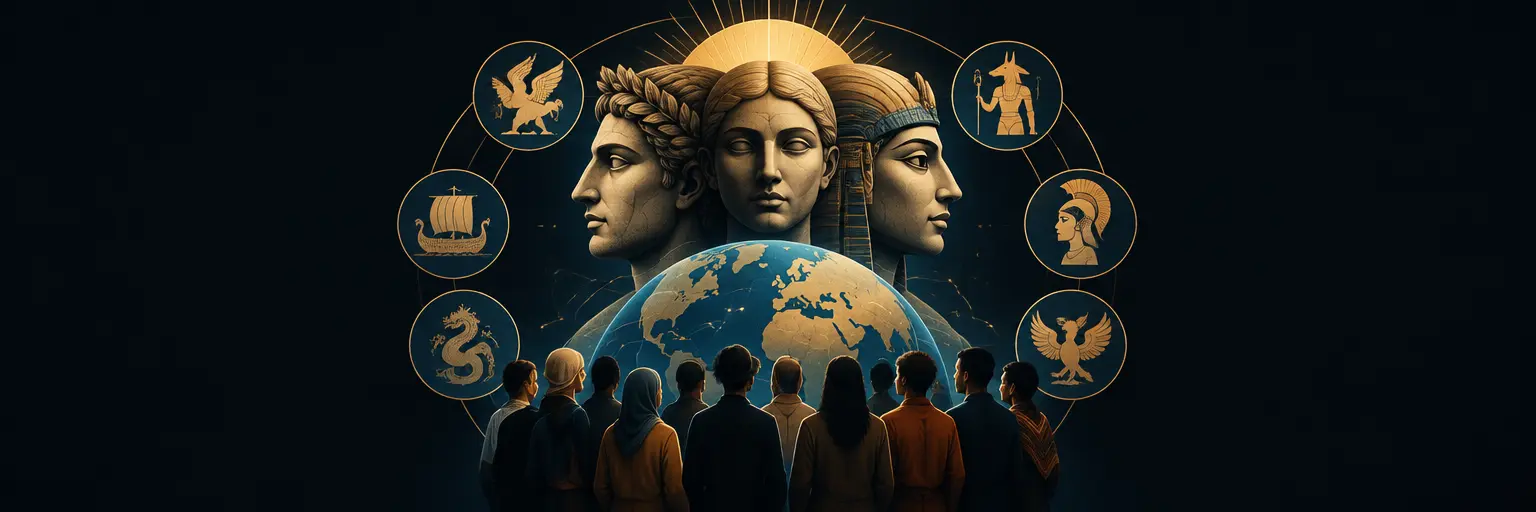
Dive into the fascinating intersection where ancient stories shape modern life—this is the heart of Myth and Sociology. Here, we explore how myths aren’t just old tales but living blueprints that influence social norms, collective identities, and power structures. By examining legends through a sociological lens, you’ll uncover how narratives reinforce cultural values, justify rituals, and even challenge societal hierarchies. From the heroic archetypes that define leadership to the folkloric warnings that encode taboos, this space reveals the unseen social glue that binds communities across generations. Perfect for students, educators, and curious minds, our content connects timeless mythological motifs to contemporary issues like gender roles, nationalism, and ethical debates. 🧠 Unlock the hidden codes of human behavior and social order—discover why the stories we tell are never just fiction, but the very fabric of how societies think, organize, and evolve. Start your journey into the compelling dialogue between myth and social reality today.

🌟 Explore how myths serve as mirrors of societal fears, revealing deep-seated anxieties through legendary monsters and legends. "The Monster in the…
Read article
🌍 Discover how myth-driven social belonging rituals forge community identity, reinforcing cultural bonds and collective values through shared narratives. These practices highlight…
Read article
🌍 Discover how myth societies structure building shapes cultures worldwide, revealing the powerful role of legends and stories in forming societal foundations…
Read articleWelcome to the Myth and Sociology subcategory, a fascinating intersection within Comparative Mythology at Mythology and Legends. Here, we delve into how myths are not just ancient tales but living social forces that influence identity, power structures, and collective behavior. By examining myths through a sociological lens, you’ll uncover the hidden frameworks that bind communities, justify norms, and drive cultural evolution across time and geography. This page is your guide to understanding the dynamic dialogue between storytelling and social structure.
In this section, we explore how shared myths create a sense of collective identity among groups, from ancient tribes to modern nations. Sociologically, myths function as foundational narratives that define who belongs and who is considered “other.” They provide a common vocabulary of symbols and heroes that reinforce social cohesion, often through rituals, festivals, and oral traditions. Expect to learn about national myths, ethnic origin stories, and how these narratives adapt to maintain relevance in changing social landscapes.
We analyze real-world examples, such as the American Dream or Japanese ancestral myths, to demonstrate how mythic frameworks shape citizenship, loyalty, and even resistance. You’ll discover how marginalized groups re-appropriate dominant myths to build counter-narratives, fostering alternative identities. This subcategory also examines the role of mythmaking in digital communities, where online folklore creates new tribes. Ultimately, you’ll gain tools to deconstruct any myth’s social function, recognizing it as a living organism that evolves with its people.
Here, we investigate how myths are strategically used to legitimize power structures, from divine kingship to modern political propaganda. Sociologists argue that myths provide sacred justification for hierarchical systems, making them appear natural and inevitable. You’ll explore case studies like the Divine Right of Kings, imperial founding myths, and corporate origin stories. This content highlights how rulers, elites, and institutions craft or repurpose myths to control narratives and silence dissent.
Beyond top-down control, we examine grassroots mythmaking that challenges authority, such as revolutionary martyr cults or populist folklore. The section also covers the role of media and education in perpetuating or subverting mythic power. By understanding this dynamic, you can critically assess contemporary political rhetoric and recognize when mythic language is being weaponized. Expect practical frameworks for analyzing leadership narratives, crisis storytelling, and the sociology of charisma, all rooted in comparative mythology’s rich traditions.
This facet dissects how myths encode social categories like gender, race, and class, often reinforcing stereotypes but occasionally offering transgressive potentials. We compare mythic archetypes—such as the wise old man, the earth mother, or the trickster—across cultures to reveal recurring patterns that shape societal expectations. Sociological analysis shows how these archetypes are reproduced in literature, film, and advertising, influencing real-world biases and privilege. You’ll learn to identify mythic scripts that dictate “proper” roles for different social groups.
We also highlight counter-myths, like feminist reclamations of goddess figures or anti-colonial reinterpretations of conquest epics. These sections provide actionable insights for educators, writers, and activists seeking to deconstruct harmful norms. Through comparative case studies—from Greek goddesses to African tricksters—you’ll see how myths both mirror and mold social hierarchies. This content empowers you to read any culture’s mythic canon as a map of its tensions, values, and hidden power negotiations.
Here, we focus on the dynamic relationship between myth and social transformation. Rather than static relics, myths are frequently revived, reinterpreted, or invented to support new social movements. We examine historical examples like the Protestant Reformation’s mythic battles, Romantic nationalist revivals, and contemporary ecological mythologies. You’ll learn how social upheavals often draw on ancient narratives to frame current struggles, giving them emotional depth and legitimacy. This section explains the mechanisms of mythic appropriation and mutation in times of crisis.
We also discuss the sociology of collective memory—how societies selectively remember and forget mythic events to suit present needs. Practical applications include analyzing how political parties use founding myths, how social media virality creates modern legends, and how cultural heritage institutions curate mythic histories. By the end, you’ll grasp how myths serve as both conservative forces and revolutionary tools, adapting to survive. This knowledge is essential for anyone studying social movements, generational shifts, or cultural resilience.
In this cross-cultural section, we apply comparative methods to show how similar sociological functions appear in diverse myth systems. We compare creation myths, flood narratives, and hero journeys from Africa, Asia, Europe, and the Americas to identify universal social needs they address—such as explaining mortality, justifying marriage, or framing leadership. Sociologically, this reveals how human societies independently evolve mythic solutions to common challenges, yet inflect them with unique local values. Expect rich examples that bridge anthropology, history, and sociology.
We also explore the globalization of myth, where media and migration create hybrid mythologies that blend traditions. This includes the spread of Japanese manga myths into Western youth culture or the reinterpretation of Greek myths in African American literature. These case studies illustrate how mythic exchange shapes contemporary social identities, fostering both conflict and creativity. By understanding these cross-cultural dynamics, you’ll be better equipped to navigate a world of accelerating cultural contact, appreciating how myths negotiate power and coexistence among peoples.
Mythology studies the narratives themselves, their symbols, and plots. Sociology examines how those narratives function in society—structuring groups, justifying power, or shaping norms. This subcategory combines both lenses, asking not just what a myth means, but what it does for social organization and change.
You can use the frameworks here to analyze modern phenomena, such as brand storytelling, political rallies, or viral internet memes. Look for recurring archetypes and power dynamics. This approach enriches cultural criticism, social media analysis, and even marketing strategies by revealing underlying mythic patterns.
Myths are neither inherently conservative nor progressive; their impact depends on who wields them and how. Established myths often reinforce the status quo, but reinterpretations can challenge norms. For example, reclaiming goddess imagery for feminism or using trickster tales for social satire demonstrates myth’s progressive potential.
Persistence depends on a myth’s ability to address enduring social needs—identity, meaning, and order—while adapting to new contexts. Myths that become too rigid or irrelevant are often replaced or repurposed. Social institutions like education and media also play roles in keeping certain myths alive.
Globalization accelerates cultural exchange, leading to hybrid myths that blend elements from various traditions. This can create shared global narratives, but also provoke defensive revivals of local myths. Sociologically, these dynamics shape transnational identities, conflicts, and cooperation, making myth analysis crucial for understanding our interconnected world.