The Calendar of the Gods: Ritual Timing Across Pantheons
🌟 Discover how ritual timing in ancient pantheons shaped divine celebrations worldwide, revealing the profound cultural significance behind mythological calendars and their…
Read article
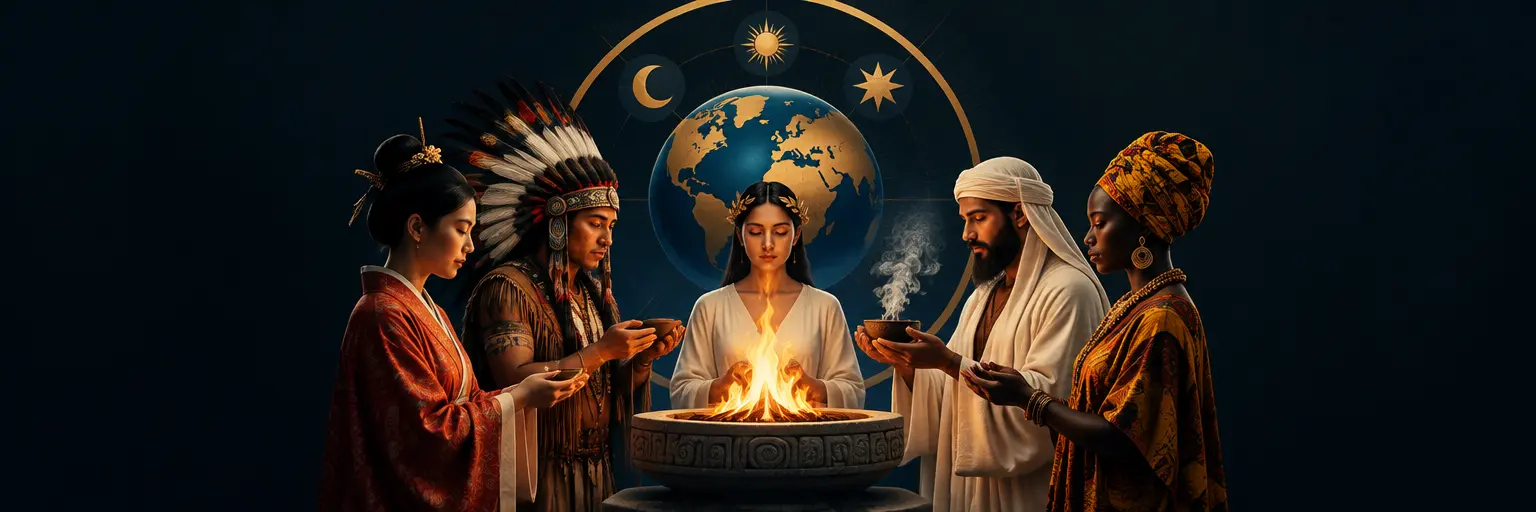
Explore the timeless tapestry of human belief with our deep dive into Rituals and Traditions, where comparative mythology reveals how diverse cultures perform the sacred. From ancient fertility dances to modern solstice celebrations, these practices are the living heartbeat of myth—transforming stories into shared experience. Uncover the symbolic power of rites of passage, seasonal festivals, and sacrificial offerings, and see how they bridge the human and divine across civilizations. Whether you’re tracing the roots of a wedding ceremony or the echoes of a harvest ritual, this resource illuminates the universal patterns that connect us all. Perfect for enthusiasts of folklore, anthropology, and spiritual history, our content is crafted to enrich your understanding of how rituals shape identity, community, and worldview. Discover the hidden meanings behind every gesture, chant, and token, and see why these traditions remain vital in today’s world. Dive in to connect ancient wisdom with modern life—your journey through the world’s sacred customs starts here.
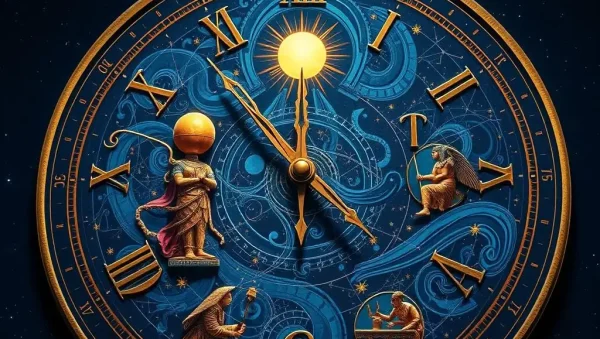
🌟 Discover how ritual timing in ancient pantheons shaped divine celebrations worldwide, revealing the profound cultural significance behind mythological calendars and their…
Read article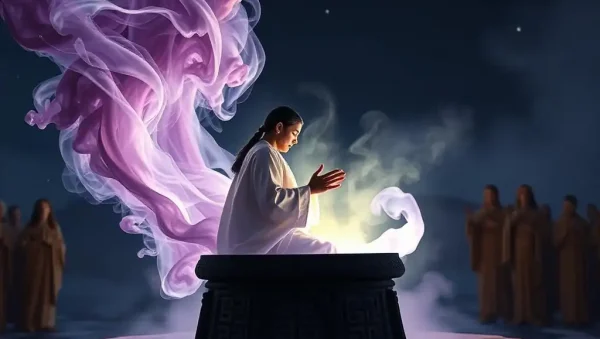
✨ Discover how ancient rituals cleanse body, spirit, and community, embodying powerful traditions that purify individuals and societies alike. Explore these timeless…
Read article
🌍 Discover how myths evolve from storytelling into lasting traditions, revealing the myth creation process origins that shape cultures worldwide. This article…
Read articleIn the vast tapestry of comparative mythology, rituals and traditions serve as the living heartbeat of ancient stories, transforming myth from passive narrative into active cultural practice. This subcategory delves into how different civilizations—from the Nile to the Andes—enacted their sacred myths through ceremony, festival, and rite. By comparing these practices, we uncover universal human needs for order, renewal, and connection to the divine, while also appreciating the unique flavors each culture brings to shared archetypes. Expect a journey through time and space, where cosmology meets choreography, and where every gesture carries millennia of meaning.
Across cultures, rituals marking life’s thresholds—birth, puberty, marriage, and death—are among the most deeply symbolic. In comparative mythology, these rites often mirror mythological journeys: the hero’s descent, the soul’s trials, and rebirth into a new status. For example, the Eleusinian Mysteries of ancient Greece promised initiates a transformed afterlife, echoing the Persephone myth, while Aboriginal Australian initiation ceremonies reenact the Dreamtime ancestral travels. These rituals forge personal identity within a cosmic framework, using tangible acts (scarification, fasting, or veiling) to encode mythological truths.
What makes these rites compelling is their shared structure: separation, liminality, and reintegration. Anthropologist Arnold van Gennep called this the “rite of passage” pattern, visible from Viking warrior initiations to Japanese coming-of-age ceremonies. Comparatively, the *content* of the myths differs—whether the hero is Thor, Osiris, or Sun Wukong—but the *function* remains consistent: to psychologically and socially embed the individual into the community’s sacred story. For mythology enthusiasts, exploring these parallels reveals how humanity has always used ritual to navigate life’s most vulnerable transitions.
Agricultural cycles have long dictated ritual calendars, with myths explaining why seeds die and sprout anew. In this subcategory, you’ll discover how festivals like the Celtic Beltane, the Hindu Holi, and the Incan Inti Raymi are not merely celebrations but reenactments of cosmic dramas. The dying-and-rising god motif—Osiris, Tammuz, or Dionysus—finds its ritual expression in planting and harvest ceremonies, where communities grieve the god’s loss and rejoice in his return. These rites often include fire, fertility dances, and communal feasting, as if to coax the world back into balance.
Comparative analysis shows that despite disparate climates, the *timing* of festivals often aligns with solar and lunar events, suggesting a shared observational astronomy. For example, the winter solstice festivals (Yule, Saturnalia, and Dongzhi) all focus on light returning, while spring equinox rituals emphasize renewal. By studying these, readers gain insight into how myth provides a narrative *reason* for natural phenomena, making the calendar a sacred story told anew each year. This perspective enriches contemporary celebrations, revealing their ancient mythological roots.
Few rituals are more potent—or misunderstood—than sacrifice. In comparative mythology, sacrifice is not mere destruction but a transactional dialogue with deities, spirits, or ancestors. The Aztec flower wars, the Norse blot, and the Hebrew burnt offerings all share a logic: giving something valuable to maintain cosmic order, appease wrath, or secure blessing. This subcategory unpacks the *types* of sacrifice—animal, vegetable, symbolic, or human—and their mythological justifications, such as the self-sacrifice of Odin on Yggdrasil or the Aztec myth of Nanahuatzin giving himself to the fire.
Comparing these rituals reveals a poignant universal theme: reciprocity. Myths often depict gods struggling or creating through sacrifice, and human ritual mirrors that divine act. For instance, the Greek *theoxenia* invited gods to dinner, while Japanese Shinto *naorai* involves sharing food with kami. Modern scholars see sacrifice as a technology for managing anxiety about scarcity and fortune. By examining these practices, readers can understand why violence and gift-giving coexist in sacred contexts, and how myth legitimizes the sometimes difficult act of giving up a portion of one’s livelihood for a greater narrative purpose.
Not all rituals occur in grand public festivals; many myths are enacted daily in homes and shrines. This subcategory contrasts monumental temple rites (like Babylonian New Year celebrations or Egyptian state ceremonies) with intimate household traditions, such as Roman *Lares* worship, Hindu *puja*, or ancestral rites in Chinese culture. Mythology shapes both spaces: temple walls might depict cosmic battles, while household altars honor specific myths of protection, healing, or family lineage. The *Hestia* flame in Greek homes and the *Agni* fire in Vedic rituals both symbolize the center of domestic cosmos.
The comparative value lies in seeing how the same mythological figures adapt by context. For example, the goddess Athena was venerated both in the grand Parthenon processions and in small woven offerings by artisans. Private rituals often emphasize personal stakes—health, luck, fertility—while public rites stress communal identity and political power. This duality explains how mythology remains flexible, surviving via household practice even when official temples fall. For readers, understanding this dynamic reveals that tradition is not monolithic but lived at multiple scales, making mythology accessible to everyone regardless of social rank.
Many traditions transform myth into performance, blurring line between ritual and entertainment. The ancient Greek theatre festivals, Japanese Noh, Mayan ball games, and Egyptian mystery plays all reenact mythological episodes with script, costume, and audience participation. These performances are not mere storytelling; they are *efficacious*—believed to alter reality. For instance, the *Sed* festival of Pharaohs included a running ritual inspired by the myth of Horus, symbolically renewing kingship. Similarly, the medieval European Passion plays reenact Christ’s suffering, creating a shared emotional and spiritual experience.
Comparative analysis shows that ritual drama often provides a release valve for taboo emotions—violence, grief, sexuality—within a safe mythological frame. The Greek *Dionysia* allowed civic catharsis through tragedy, while the Balinese *Barong* dance pits good against evil nightly. By studying these rituals, readers see how myth is a *script* that communities perform with variations, reinforcing social bonds and individual catharsis. This subcategory also highlights the modern revival of such dramas in festivals like Burning Man, showing that the human need to *act out* myth remains vital today.
A myth is a narrative—a story that explains origins, gods, or values—while a ritual is a prescribed action or ceremony that often enacts or commemorates that story. Myths provide the “why,” and rituals provide the “how” and “when.” For example, the myth of Persephone explains seasons, while the Eleusinian mysteries ritualized her journey. Myths can exist without rituals, but ritualsless myths lose their lived power.
Similar rituals often arise from shared human experiences like death, harvest, or solstices, plus universal cognitive patterns—seeking control, expressing gratitude, or marking transitions. Psychologists call this convergent evolution. For instance, fire rituals appear worldwide because fire is both practical and awe-inspiring. Comparative mythology identifies these parallels not as proof of one original culture, but as evidence of common psychological and ecological pressures.
Yes, symbolic and modified sacrifices continue. Animal sacrifice remains in some Hindu, Santería, and Islamic Eid al-Adha practices. Many modern rituals use symbolic substitutes—burning effigies, releasing lanterns, or giving blood donations—to capture the essence of giving up something valuable. Secular forms include fasting, donating to charity, or making vow sacrifices in personal goal-setting, which echo the ancient economy of sacred reciprocity.
Judaism, Christianity, and Islam incorporated or reinterpreted older Mesopotamian, Egyptian, and Roman practices. For example, Christmas overlaps with Saturnalia and Yule, while baptism echoes mystery cult water rites. Easter’s eggs and bunnies have pre-Christian fertility roots. Modern neopagan movements explicitly revive ancient Celtic, Norse, or Greek traditions, adapting them with contemporary values, proving rituals are fluid, not fossilized.
Yes, but with caution. Many living traditions—Hindu puja, Shinto matsuri, Native American sweat lodges—welcome respectful outsiders, but always ask permission and follow local etiquette. Reconstructed ancient rituals (like Greek or Norse festivals) often are open to the public through historical societies or modern pagan groups. However, authenticity is debated; focus on the *spirit* and *meaning* over exact historical accuracy, and never appropriate sacred practices without proper guidance.