
The Mountain: Reaching the Apex of Mythic Symbolism and Spiritual Ascent

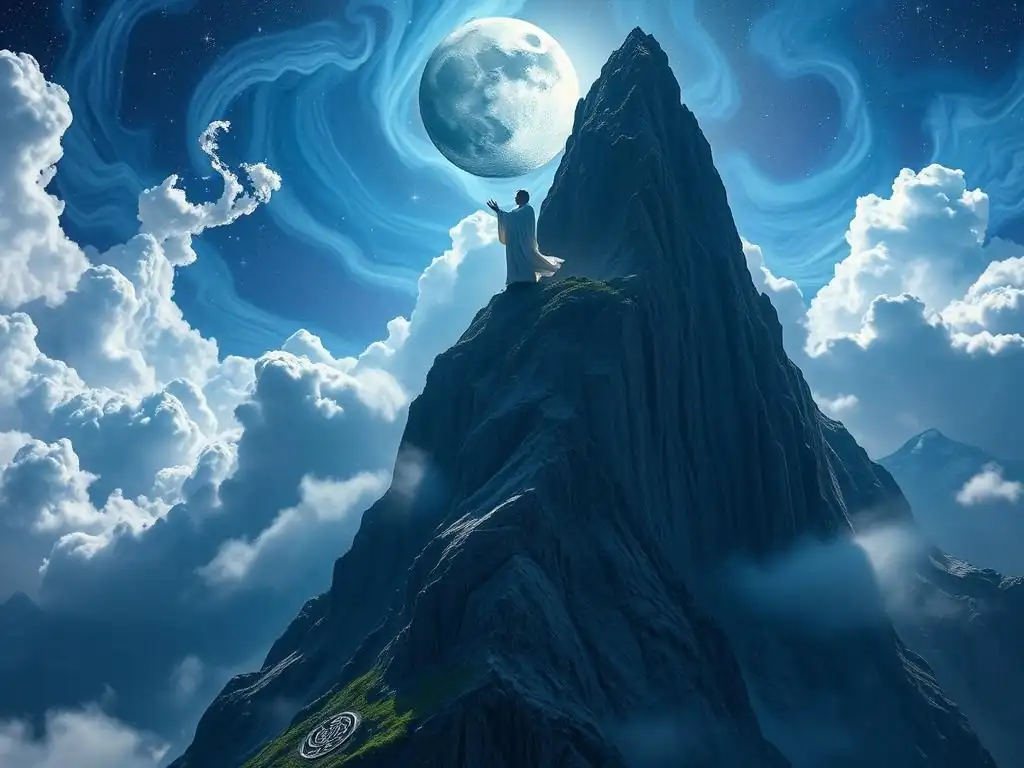
Welcome to Mythology and Legends, where ancient tales come alive!
Delve into the captivating world of folklore from across the globe and uncover the enduring power of narrative. Are you ready to ascend? This exploration of mountain symbolism meaning spiritual journey begins now. Discover how these towering landscapes have, for centuries, represented something far greater than just rock and ice – a path to enlightenment and self-discovery. Prepare to explore the heights of human imagination and the depths of spiritual meaning. What secrets do these mythic peaks hold?
- Introduction: The Mountain as Archetype - Exploring Spiritual Ascent
- The Mountain Symbolism Meaning Spiritual Journey Across Cultures
- The Mountain in Eastern Spiritual Traditions: Mount Meru and Beyond
- Western Interpretations of Mountain Symbolism: From Olympus to Calvary
- The Jungian Perspective: The Mountain as a Symbol of the Self
- The Mountain as a Challenge: Trials, Tribulations, and Transformation
- Mountain Symbolism in Art, Literature, and Film
- Modern Interpretations of the Mountain: Finding Meaning in a Secular World
- Conclusion: The Mountain's Timeless Message of Aspiration and Transcendence
-
Frequently Asked Questions
- What does the mountain commonly symbolize in mythology and legends?
- How does the concept of "spiritual journey" relate to mountain symbolism?
- Why are mountains often considered sacred sites in various cultures?
- What are some examples of myths or legends where mountains play a significant role?
- How can understanding mountain symbolism enrich our understanding of folklore and mythology?
- Final Reflection: Echoes of the Summit: A Journey Within and Beyond
- Unlock Your Inner Mountain: Embark on a Journey of Self-Discovery
Introduction: The Mountain as Archetype - Exploring Spiritual Ascent
The Mountain's Universal Appeal in Mythology and Legends
Across continents and millennia, mountains have held a profound place in human consciousness, featuring prominently in creation myths, epic tales, and religious narratives. From the towering peaks of the Himalayas, revered in Eastern traditions, to the volcanic summits of the Pacific, often seen as homes for ancestral spirits, the mountain is a universal symbol.
This widespread presence underscores a shared human experience: the mountain is not merely a geological formation but a powerful archetype representing stability, challenge, and transcendence. Its sheer scale dwarfs human endeavors, inspiring awe and reverence, and positioning it as a natural bridge between the earthly realm and the celestial or divine.
The enduring appeal of mountains in folklore and legend speaks to their inherent power as symbolic landscapes. They stand as silent witnesses to history, often depicted as the oldest features of the world, predating human civilization. This ancient quality lends them an air of timelessness and wisdom.
Furthermore, their inaccessibility and harsh environments make them ideal settings for trials, quests, and encounters with supernatural beings or forces. The journey to the mountain, or up the mountain, becomes a narrative device for exploring themes of courage, perseverance, and the pursuit of higher knowledge or spiritual enlightenment, deeply connecting to the mountain symbolism meaning spiritual journey.
Why Mountains Represent More Than Just Geography
Mountains are far more than just elevated landmasses; they are imbued with layers of meaning that transcend their physical form. Symbolically, they represent the highest aspirations of humanity, the pursuit of goals that require effort and sacrifice. The act of climbing a mountain mirrors the challenges and difficulties encountered on a spiritual path or during a process of personal growth. Each step upward signifies progress, overcoming obstacles, and leaving behind the lower, mundane aspects of existence. The summit, in turn, represents achievement, enlightenment, or a closer connection to the divine or the ultimate truth.
Beyond aspiration, mountains symbolize the axis mundi, or world axis, in many cosmologies – a central point connecting the earth to the heavens. This makes them sites of divine revelation, sacred rituals, and pilgrimage. The distinct zones of a mountain, from its fertile base to its barren, often snow-capped summit, can also represent different levels of spiritual understanding or states of being.
The arduous ascent requires shedding unnecessary burdens, focusing the mind, and developing inner strength, mirroring the discipline required for a meaningful spiritual journey. This rich tapestry of meaning firmly establishes the mountain symbolism meaning spiritual journey as a core concept across diverse belief systems.
The Mountain Symbolism Meaning Spiritual Journey Across Cultures
Mountains as Sacred Spaces: A Comparative Look
Mountains have served as sacred spaces and pilgrimage sites across countless cultures, embodying the mountain symbolism meaning spiritual journey. Mount Fuji in Japan, for instance, is revered as a dwelling place for deities and a popular destination for pilgrims seeking spiritual purification and connection. Annually, hundreds of thousands of people make the ascent, many starting before dawn to witness the sunrise from the summit, a symbolic act of renewal and enlightenment.
Similarly, Mount Kailash in Tibet is considered sacred by four religions: Hinduism, Buddhism, Jainism, and Bön. Pilgrims undertake a kora (circumambulation) around its base, a challenging trek lasting several days, believing it cleanses sins and brings good fortune. Unlike Fuji, Kailash is considered too sacred to be climbed to its summit, emphasizing its status as an untouchable, divine realm.
The designation of mountains as sacred sites highlights their perceived proximity to the divine or the spiritual world. In ancient Greece, Mount Olympus was the mythical home of the Twelve Olympians, the principal deities of the Greek pantheon. Access to the summit was restricted to the gods, making it the ultimate symbol of divine power and separation from the human world.
In Native American traditions, many mountains are considered sacred ancestral lands or places of spiritual power, used for vision quests and ceremonies. For example, the Lakota people consider the Black Hills (Paha Sapa) of South Dakota sacred, viewing them as the heart of everything that is. These diverse examples demonstrate a shared human intuition that mountains, through their height and majesty, offer a unique connection to the transcendent, reinforcing the core idea of mountain symbolism meaning spiritual journey.
The Mountain as a Metaphor for Personal Growth
The mountain is a potent metaphor for the process of personal growth and self-discovery, aligning perfectly with the mountain symbolism meaning spiritual journey. Just as climbing a physical mountain requires setting a goal, planning the route, enduring hardship, and overcoming physical and mental fatigue, the journey of personal development involves setting aspirations, navigating challenges, persevering through setbacks, and pushing beyond perceived limitations. Each step upward represents progress in shedding old habits, gaining new perspectives, and building resilience. The steep inclines and difficult terrain mirror the moments of crisis or intense challenge that force introspection and transformation.
Consider the path to acquiring a new skill or overcoming a deep-seated fear. It often feels like an uphill battle, requiring consistent effort, facing moments of doubt, and celebrating small victories along the way. The journey is rarely linear; there are plateaus where progress seems slow, and descents where one might feel they are losing ground.
However, the persistent effort, like a climber adjusting their grip or finding a new path, eventually leads to a higher vantage point. Reaching a personal "summit"—whether it's mastering a craft, achieving emotional healing, or realizing a significant life goal—offers a profound sense of accomplishment and a broadened perspective on the journey taken. This parallel between physical ascent and personal evolution is a powerful aspect of mountain symbolism meaning spiritual journey.
The Mountain in Eastern Spiritual Traditions: Mount Meru and Beyond
Mount Meru: The Axis Mundi and Cosmic Mountain
In the cosmologies of Hinduism, Buddhism, and Jainism, Mount Meru (or Sumeru) is a central, mythical mountain of immense significance, embodying the ultimate mountain symbolism meaning spiritual journey at a cosmic scale. It is described as the axis mundi, the cosmic center of the universe, around which all planets and stars revolve. Meru is not merely a geographical feature but a symbolic structure representing the entire cosmos, connecting the realms of gods, humans, and lower beings.
Its summit is often depicted as the dwelling place of Brahma, the creator god in Hinduism, or the location of celestial heavens. The sheer scale attributed to Meru—sometimes described as 84,000 yojanas (a unit of distance, perhaps around 10-15 km) high—underscores its symbolic, rather than literal, nature as the peak of existence.
The concept of Meru provides a framework for understanding the structure of the universe and the path to liberation. Climbing or even contemplating Meru represents the arduous spiritual path towards enlightenment or moksha. The various levels of the mountain correspond to different planes of existence or stages of spiritual development.
Reaching the summit signifies transcending the material world and achieving ultimate reality or union with the divine. While not a physical mountain that can be climbed, its presence as the cosmic center deeply influences the understanding of sacred geography and the ultimate goal of the spiritual journey within these traditions.
Buddhist Perspectives: Climbing the Mountain of Enlightenment
In Buddhism, the mountain serves as a powerful metaphor for the path to enlightenment, a core aspect of mountain symbolism meaning spiritual journey. The journey up the mountain represents the Eightfold Path, the systematic approach to ending suffering and achieving Nirvana. Each step on the path—right understanding, right thought, right speech, right action, right livelihood, right effort, right mindfulness, and right concentration—can be seen as navigating a challenging section of the ascent. The obstacles encountered, such as greed, hatred, and delusion, are the treacherous slopes and difficult terrain that must be overcome through discipline and wisdom.
Meditation and mindfulness practices are often described as tools for steadying the mind and focusing the effort required for the ascent. The summit represents the state of Nirvana or Buddhahood—a state of liberation, profound peace, and complete understanding. Achieving this state is not easy; it requires persistent effort over countless lifetimes, much like a climber might attempt a difficult peak multiple times before succeeding. The metaphor emphasizes that enlightenment is not a gift but an achievement earned through diligent practice and overcoming one's own internal limitations, perfectly capturing the mountain symbolism meaning spiritual journey in a Buddhist context.
Hindu Mythology: The Abode of the Gods
In Hindu mythology, mountains are frequently depicted as sacred abodes of deities, reinforcing their status as liminal spaces between the human and divine realms and highlighting their mountain symbolism meaning spiritual journey connection. The Himalayas, in particular, hold immense religious significance, being home to numerous sacred sites and pilgrimage destinations. Mount Kailash, as mentioned, is considered the dwelling place of Lord Shiva and his consort Parvati. Pilgrimage to Kailash is seen as an act of deep devotion and purification, believed to bring spiritual merit and aid in the quest for liberation.
Other significant mountains include the Vindhya Range, mentioned in various Puranas, and the mythical Mount Govardhan, lifted by Lord Krishna to protect the villagers from Indra's wrath. The presence of deities on mountains signifies their power, transcendence, and connection to the natural world.
Ascending a sacred mountain, or even visiting a temple located on one, is seen as moving closer to the divine presence, undertaking a form of physical and spiritual purification. This tradition of mountain pilgrimage is a tangible expression of the mountain symbolism meaning spiritual journey in Hinduism, where the physical act mirrors the internal aspiration towards the divine.
Western Interpretations of Mountain Symbolism: From Olympus to Calvary
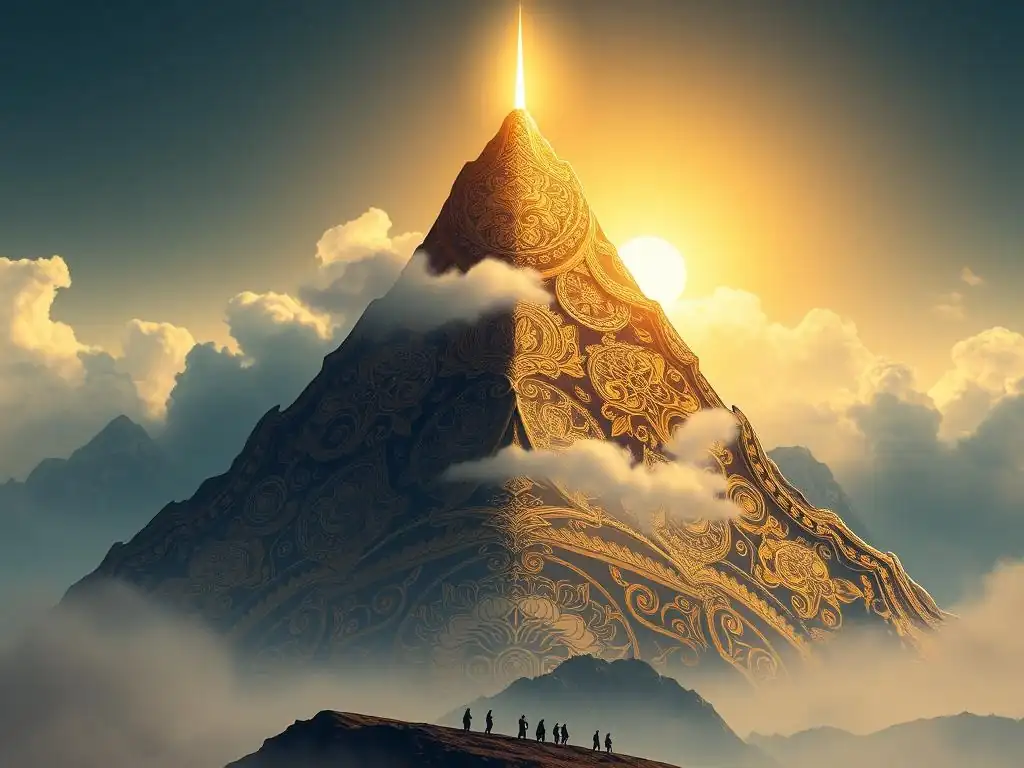
Mount Olympus: The Home of the Greek Gods
In ancient Greek mythology, Mount Olympus was the dwelling place of the twelve principal gods, the Olympians, led by Zeus. Situated in Thessaly, the actual mountain's highest peak is Mytikas, reaching 2,918 meters (9,573 feet). Mythologically, however, the summit of Olympus was considered entirely separate from the human world, perpetually shrouded in clouds and inaccessible to mortals. This made it the ultimate symbol of divine power, authority, and separation from the earthly realm. The gods feasted on ambrosia and nectar there, largely unconcerned with the daily struggles of humanity unless their interests were directly involved.
The inaccessibility of mythical Olympus emphasized the vast gulf between gods and humans. It was a realm of perfection and immortality, contrasted with the transient and imperfect human world below. While mortals did not attempt to climb the mythical Olympus for spiritual reasons (as it was forbidden and impossible), the idea of the mountain as the seat of ultimate power and divine judgment shaped Greek understanding of the cosmos.
It represented the highest point of existence, the pinnacle of authority, and the ultimate destination for those few mortals (like Heracles) who achieved divine status. This interpretation highlights the mountain as a symbol of ultimate power and transcendence, contributing to the broader understanding of mountain symbolism meaning spiritual journey, even if the journey was more mythical than physical for humans.
The Mountain of Calvary: Sacrifice and Redemption
In Christian tradition, the hill known as Calvary or Golgotha (meaning "place of a skull") holds immense symbolic weight, representing sacrifice, suffering, and redemption. While perhaps not a towering peak in the conventional sense (it is often depicted as a small hill or mound outside ancient Jerusalem), its elevation above the surrounding ground is crucial to its symbolism. It is the site where Jesus Christ was crucified, an event central to Christian theology. The ascent to Calvary, bearing the cross, represents the suffering and burden of humanity, as well as Christ's willingness to undergo this trial.
The act of Christ's sacrifice on Calvary is seen as the ultimate atonement for humanity's sins, offering a path to redemption and salvation. The elevation of the cross on the hill signifies Christ's exaltation and the visibility of his sacrifice to the world. For Christians, the spiritual journey often involves contemplating the events of Calvary, understanding the depth of sacrifice, and striving to live a life aligned with Christ's teachings.
While a physical pilgrimage to Jerusalem to visit the traditional site of Calvary is a significant act for many, the spiritual meaning of the "climb" to Calvary is paramount, representing the difficult path of faith, repentance, and seeking divine grace. This unique perspective adds a profound layer to the mountain symbolism meaning spiritual journey within a Western context.
Helgafell: The Sacred Mountain in Norse Belief
In Norse mythology and belief systems, certain mountains were considered sacred, sometimes even serving as burial places or places of ancestral reverence. Helgafell, meaning "Holy Mountain" in Old Norse, is a notable example from Iceland. According to the Eyrbyggja Saga, Thorolf Mostrarskegg, a chieftain who fled Norway to escape King Harald Fairhair, settled in Iceland and considered Helgafell so sacred that no one was allowed to look upon it without washing, nor was any living thing to be killed on its slopes. He believed he would go into the mountain upon his death.
This belief reflects a view of the mountain as a threshold to the afterlife or a dwelling place of ancestors or protective spirits. Entering the mountain upon death can be interpreted as a form of spiritual transition or journey.
While not a site for human ascent in the sense of a pilgrimage for spiritual enlightenment during life, Helgafell's status as a "Holy Mountain" underscores the Norse reverence for certain natural landmarks and their integration into beliefs about the spiritual world and the journey after death. This provides another cultural example of how mountains are intertwined with concepts of the sacred and the spiritual path, albeit with a different focus than the ascent-based mountain symbolism meaning spiritual journey found elsewhere.
The Jungian Perspective: The Mountain as a Symbol of the Self
The Collective Unconscious and the Mountain Archetype
From a Jungian psychological perspective, the mountain is a powerful archetype residing in the collective unconscious, the part of the mind that contains inherited, unconscious elements. As an archetype, the mountain represents fundamental aspects of the human psyche and the process of individuation—the lifelong journey towards becoming a whole, integrated self. The universal appearance of mountain symbolism in myths and dreams across cultures is seen as evidence of this archetypal presence. The mountain embodies stability, permanence, and the aspiration towards higher consciousness.
The journey up the mountain in dreams or active imagination can symbolize the process of exploring the depths of one's own psyche, confronting inner challenges, and striving for self-realization. The summit represents the integrated Self, the culmination of the individuation process, a state of wholeness and harmony. The landscape of the mountain—its hidden caves, challenging cliffs, and serene vistas—can correspond to different aspects of the psyche, including the shadow, the anima/animus, and the Self. Understanding the mountain in this context provides deep insight into the internal dynamics of the spiritual journey.
Integrating the Shadow: Overcoming Obstacles on the Spiritual Path
The ascent of the symbolic mountain in the Jungian framework often involves confronting and integrating the shadow—the unconscious part of the personality that the conscious ego does not identify with. These are often aspects we deem negative or unacceptable. The difficult terrain, treacherous paths, and potential dangers on the mountain can be seen as metaphors for encountering and grappling with these disowned parts of the self. Just as a climber must navigate around or directly confront physical obstacles, the individual on the spiritual or psychological journey must acknowledge and integrate their shadow aspects rather than suppressing them.
Overcoming the fear and resistance associated with facing the shadow is a crucial step in the ascent towards wholeness. This process requires courage, self-awareness, and perseverance, much like a challenging climb. By integrating the shadow, the individual gains access to previously untapped energy and potential, becoming more complete and authentic. This challenging but necessary step is central to the transformative process represented by the mountain climb, solidifying the connection between psychological work and the mountain symbolism meaning spiritual journey.
The Mountain as a Challenge: Trials, Tribulations, and Transformation
Facing Fear and Doubt on the Ascent
The journey up a physical mountain is inherently challenging, demanding physical stamina, mental fortitude, and the ability to confront fear. Treacherous paths, unpredictable weather, sheer drops, and the sheer exhaustion of the climb can all trigger intense fear and self-doubt. Similarly, the spiritual journey, symbolized by the mountain ascent, is fraught with trials and tribulations. Moments of doubt about one's beliefs, fear of the unknown, resistance to change, and the pain of confronting uncomfortable truths are all part of the process.
Consider the experience of a monk undertaking a long, solitary retreat in a mountain monastery, common in traditions like Tibetan Buddhism. The physical isolation and demanding spiritual practices can bring deep-seated fears and doubts to the surface. Overcoming the urge to quit, pushing through mental resistance, and maintaining faith require immense inner strength, mirroring the physical and mental resilience needed to summit a high peak. These challenges are not merely obstacles but integral parts of the transformative process, essential elements of the mountain symbolism meaning spiritual journey.
The Mountain as a Crucible: Forging Resilience
The mountain serves as a crucible, a place where one is tested and transformed, forging resilience and inner strength. The harsh environment, the demanding physical exertion, and the necessity of relying on one's own resources strip away superficialities and reveal one's true character. Every challenge overcome, every moment of fear faced and pushed through, builds resilience. This is true for both the physical climber and the spiritual seeker.
Think of the famous example of Edmund Hillary and Tenzing Norgay's first successful ascent of Mount Everest in 1953. Their journey was marked by extreme cold, oxygen deprivation, dangerous icefalls, and immense physical strain. Their success was not just a feat of physical strength but of incredible mental resilience, teamwork, and determination forged under extreme pressure.
In the spiritual realm, facing illness, loss, or profound existential questions can feel like navigating a storm on a high peak. Emerging from these trials, having found inner resources and strength one didn't know they possessed, is the essence of the transformative power of the "mountain" as a crucible. This forging of resilience is a key aspect of the mountain symbolism meaning spiritual journey.
The View from the Summit: Perspective and Wisdom
Reaching the summit of a mountain offers a unique and often breathtaking perspective on the world below. The vast panorama stretches out, making familiar landmarks seem small and insignificant. This physical vantage point mirrors the expanded perspective and wisdom gained at the culmination of a challenging spiritual journey. Having overcome significant internal and external obstacles, the individual gains clarity, insight, and a broader understanding of themselves and the world.
The view from the summit is not just about seeing the landscape; it's about seeing the path taken, appreciating the distance covered, and understanding the challenges that were overcome. This reflection brings a deep sense of accomplishment and gratitude. In a spiritual context, this might manifest as achieving a state of deep peace, gaining profound self-awareness, or experiencing a sense of connection to something larger than oneself. While the summit might be temporary (the climber must descend), the wisdom and perspective gained are lasting, representing the ultimate reward of the mountain symbolism meaning spiritual journey.
Mountain Symbolism in Art, Literature, and Film
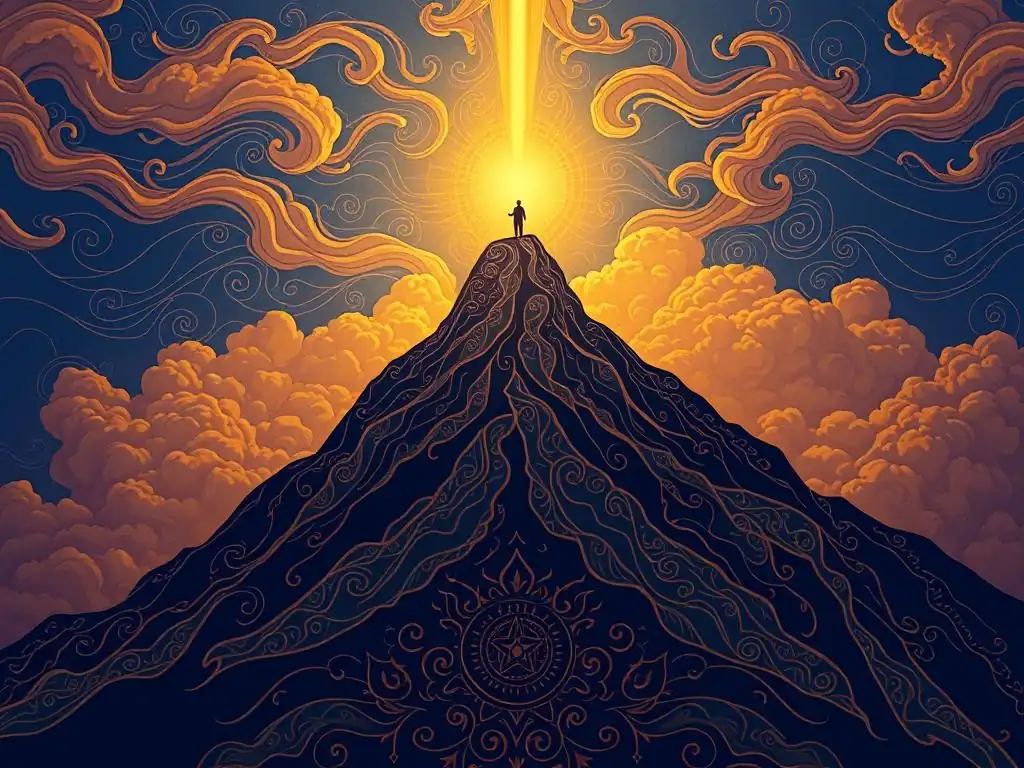
Examples of Mountain Imagery in Art History
Mountain imagery has been a recurring motif throughout art history, reflecting its deep symbolic resonance. In traditional Chinese landscape painting, mountains ( shan) are a fundamental element, often depicted towering over human figures or dwellings, symbolizing the vastness of the cosmos and the place of humans within it.
These paintings often evoke a sense of harmony with nature and the pursuit of spiritual contemplation in remote, mountainous settings. Think of the serene, misty peaks in works by artists like Fan Kuan (e.g., Travelers Among Mountains and Streams, circa 1020), where mountains are not just scenery but active participants in the spiritual landscape.
In Western art, mountains have also evolved in their representation. Early European art often depicted mountains as formidable, even threatening barriers, reflecting a fear of the wild and untamed. However, with the Romantic movement in the 19th century, artists like Caspar David Friedrich began to portray mountains as sublime landscapes that inspired awe, wonder, and a sense of the transcendent (e.g., Wanderer above the Sea of Fog, circa 1818).
The lone figure contemplating the vast mountain landscape embodies the Romantic ideal of encountering the infinite and undertaking an internal, almost spiritual, journey. These artistic interpretations visually underscore the enduring mountain symbolism meaning spiritual journey.
The Magic Mountain as Allegory: Thomas Mann's Exploration of Illness and Transcendence
Thomas Mann's seminal 1924 novel, The Magic Mountain ( Der Zauberberg), uses a sanatorium situated high in the Swiss Alps as a powerful allegory for life, time, illness, and the intellectual and spiritual journey. The protagonist, Hans Castorp, initially visits his cousin but ends up staying for seven years, experiencing a transformation from a naive young man to a more introspective and philosophically developed individual. The mountain setting is isolated from the "flatland" of ordinary life, becoming a microcosm where the characters confront existential questions, illness, death, and the passage of time.
The mountain sanatorium represents a state of detachment from the everyday world, allowing for intense introspection and intellectual exploration. The characters, afflicted by tuberculosis, are forced to confront their mortality and the nature of existence. The different altitudes and the specific routines of the sanatorium become symbolic of different states of being or stages of life.
Castorp's long stay and his engagement with various intellectual and spiritual debates within the mountain's confines represent a prolonged, arduous, and ultimately transformative spiritual journey, albeit one experienced within the confines of illness and isolation. The novel brilliantly captures the mountain symbolism meaning spiritual journey as a prolonged process of confronting reality and seeking understanding.
Everest: The Mountain as a Test of Human Endurance
The story of climbing Mount Everest, the world's highest peak at 8,848.86 meters (29,031.7 feet), has become a modern epic, frequently depicted in literature and film, such as the 2015 film Everest. These narratives often portray the mountain as the ultimate test of human endurance, courage, and the limits of physical and mental strength. While the primary goal is often framed as a physical achievement—reaching the summit—the journey to Everest is invariably described in terms that resonate deeply with the mountain symbolism meaning spiritual journey.
Climbers face extreme conditions, including the "death zone" above 8,000 meters where the human body cannot survive long. The challenges are immense: brutal cold, lack of oxygen, perilous icefalls, and the psychological pressure of extreme risk. Narratives of Everest climbs frequently delve into the motivations of the climbers—the desire for achievement, the quest for meaning, the confrontation with mortality, and the profound sense of connection to nature's raw power.
The descent is often as perilous as the ascent, emphasizing that the journey is not over at the summit. Stories of Everest highlight the mountain as a place where individuals are pushed to their absolute limits, undergoing a profound, often life-altering, transformation through the sheer struggle for survival and achievement, embodying a modern, extreme version of the mountain symbolism meaning spiritual journey.
Modern Interpretations of the Mountain: Finding Meaning in a Secular World
The Mountain as a Symbol of Personal Achievement
In contemporary Western society, while traditional religious interpretations may be less dominant for some, the mountain retains potent symbolic power, often reinterpreted through the lens of personal achievement and self-improvement. Climbing a significant mountain, whether it's a local peak or a world-renowned summit, is frequently viewed as a metaphor for setting ambitious goals and working tirelessly to achieve them. The physical challenge becomes a tangible representation of overcoming obstacles in one's career, personal life, or fitness journey.
The popularization of mountaineering and trekking reflects this shift. People undertake arduous climbs not necessarily for religious reasons, but for the challenge, the physical exertion, and the profound sense of accomplishment that comes from reaching the summit through one's own effort. The journey itself becomes a narrative of perseverance and dedication. Finishing a marathon feels like reaching a personal peak; launching a successful business feels like scaling a challenging ascent. This focus on individual accomplishment reinvents the mountain symbolism meaning spiritual journey, framing it as a quest for personal excellence and self-mastery in a secular context.
Environmentalism and the Sacredness of Mountains
In an era of increasing environmental awareness, mountains are gaining renewed recognition as sacred natural spaces that require protection and respect. Environmental movements often highlight the ecological importance of mountain ecosystems, their role as water sources, and their vulnerability to climate change and human activity. This perspective imbues mountains with a different kind of sacredness—not necessarily as the home of gods, but as vital, fragile components of the Earth's life support system.
Advocates for mountain conservation often speak of a deep spiritual connection to these landscapes, finding solace, inspiration, and a sense of profound interconnectedness with nature when in their presence. Organizations dedicated to preserving mountain environments work to protect their biodiversity and natural beauty, viewing this work as a form of stewardship or reverence for the natural world. This contemporary view aligns with indigenous perspectives that have long considered mountains sacred, adding a collective, ecological dimension to the mountain symbolism meaning spiritual journey, emphasizing the need to protect these powerful natural symbols.
The Enduring Power of Mountain Symbolism for the Spiritual Journey
Despite shifts in cultural and religious landscapes, the mountain symbolism meaning spiritual journey remains remarkably potent and relevant. Whether interpreted through ancient myths, psychological archetypes, or modern narratives of endurance and achievement, the core ideas persist: the mountain represents the aspiration for something higher, the challenge of the ascent, the transformation forged through struggle, and the expanded perspective gained at the peak.
The physical act of climbing, or even contemplating a mountain, continues to evoke feelings of awe, humility, and inspiration. It reminds us of the vastness of the world and the potential within ourselves. In a complex and often overwhelming world, the simple, enduring image of the mountain provides a clear metaphor for setting a path, facing challenges step by step, and striving towards a higher state of being, whether that is defined religiously, psychologically, or personally. The mountain symbolism meaning spiritual journey continues to resonate because it speaks to a fundamental human drive for growth, transcendence, and meaning.
Conclusion: The Mountain's Timeless Message of Aspiration and Transcendence
Reflecting on the Journey Upward
The journey up the mountain is rarely easy. It demands effort, resilience, and the courage to face both external obstacles and internal limitations. Reflecting on this upward path, whether literal or metaphorical, highlights the value of perseverance and the transformative power of challenge. Every difficult step, every moment of doubt overcome, contributes to the strength and wisdom gained along the way. The mountain teaches us that progress is often slow and arduous, requiring consistent effort and a willingness to keep moving forward despite setbacks.
This reflection is crucial for understanding the deep connection between mountain symbolism meaning spiritual journey. It underscores that the value is not solely in reaching the summit, but in the process of the climb itself—the lessons learned, the inner resources discovered, and the person one becomes along the way. The mountain stands as a silent teacher, reminding us that meaningful growth comes through facing difficulties head-on and steadily working towards our highest aspirations.
The Mountain as a Reminder of Our Potential
Ultimately, the mountain serves as a powerful and enduring reminder of our potential for growth, resilience, and transcendence. Its towering presence inspires us to look beyond the immediate horizon and strive for something higher. The possibility of reaching the summit, no matter how challenging the climb, symbolizes the human capacity to overcome adversity and achieve extraordinary states of being or accomplishment.
Whether viewed as the abode of gods, the axis of the cosmos, the landscape of the psyche, or the ultimate physical test, the mountain calls to us. It embodies the universal human aspiration for something more—more understanding, more connection, more freedom, more truth. The mountain symbolism meaning spiritual journey is a timeless narrative woven into the fabric of human culture, urging us to embark on our own personal ascents and discover the vast potential that lies within and before us.
Frequently Asked Questions
What does the mountain commonly symbolize in mythology and legends?
The mountain often represents spiritual aspiration, challenges to overcome, and the connection between the earthly and divine realms. It's a place of transformation and enlightenment.
How does the concept of "spiritual journey" relate to mountain symbolism?
The arduous climb up a mountain mirrors the difficulties and perseverance required on a spiritual journey. Reaching the summit symbolizes achieving enlightenment or a higher state of consciousness.
Why are mountains often considered sacred sites in various cultures?
Mountains are seen as powerful natural formations that inspire awe and reverence. Their height brings them closer to the heavens, making them suitable locations for communion with deities and spiritual practices.
What are some examples of myths or legends where mountains play a significant role?
Mount Olympus in Greek mythology is the home of the gods, while Mount Sinai is where Moses received the Ten Commandments. These examples showcase mountains as centers of divine authority and revelation.
How can understanding mountain symbolism enrich our understanding of folklore and mythology?
By recognizing the recurring motifs of ascent, challenge, and spiritual reward associated with mountains, we gain a deeper appreciation for the universal human desire for self-improvement and connection to something greater than ourselves.
Final Reflection: Echoes of the Summit: A Journey Within and Beyond
The enduring power of mountain symbolism resonates deeply in our modern world, a testament to the timeless human need for spiritual ascension and the pursuit of meaning. Mountains, far from being mere geographical features, serve as potent metaphors for the challenges and triumphs inherent in the human experience, mirroring our own internal landscapes as much as the external world. This enduring relevance is precisely what makes the exploration of mountain symbolism so vital in our increasingly complex times.
The journey to the summit, both literal and metaphorical, is a process of self-discovery, a shedding of limitations, and a gradual unveiling of inner strength. This resonates profoundly with me, as the research for this article became a personal pilgrimage of sorts. The mountain is you. The climb is your life.
This simple yet profound statement encapsulates the essence of the spiritual journey represented by the mountain, a journey that continues long after we reach any perceived "peak." The impact of this symbolism on our cultural narratives, from ancient myths to modern literature, is undeniable, shaping our understanding of heroism, resilience, and the very nature of the divine.
Consider the mountains within yourself. What peaks do you aspire to conquer? What valleys must you traverse? This article is not merely an exploration of symbolism; it's an invitation to embark on your own personal ascent. Reflect on the challenges you face, the strength you possess, and the transformative power of perseverance. Embrace the journey, for the true summit lies not only in reaching the top, but in the growth and understanding gained along the way. Let the mountain be your guide, your inspiration, and your constant reminder of the boundless potential within you.
Unlock Your Inner Mountain: Embark on a Journey of Self-Discovery
Thank you for exploring the rich symbolism and spiritual power of mountains! We hope this journey through myth and legend has ignited a spark within you. Now it's time to translate that inspiration into action.
- Begin your own personal ascent: Reflect on the challenges and triumphs you've faced, and how they mirror the metaphorical climb of a mountain. Journal your thoughts, or create a visual representation of your own "peak experience." This is your primary step towards applying the article's insights to your life.
- Share your mountain story: Inspire others by sharing your reflections on the symbolism of mountains, or what the article means to you in the comments below. Let's build a community of shared experiences!
- Explore further: Delve deeper into the mythology of your favorite mountain range or discover new symbolic interpretations of nature. The possibilities are endless.
What unique lesson did your personal "mountain" teach you about strength, resilience, and the pursuit of higher understanding?