The Memory Keepers: Preserving Culture Through Spoken Word
🌍 Discover how oral traditions preserve global stories, serving as vital echoes of cultural identity. "The Memory Keepers" highlights the power of…
Read article
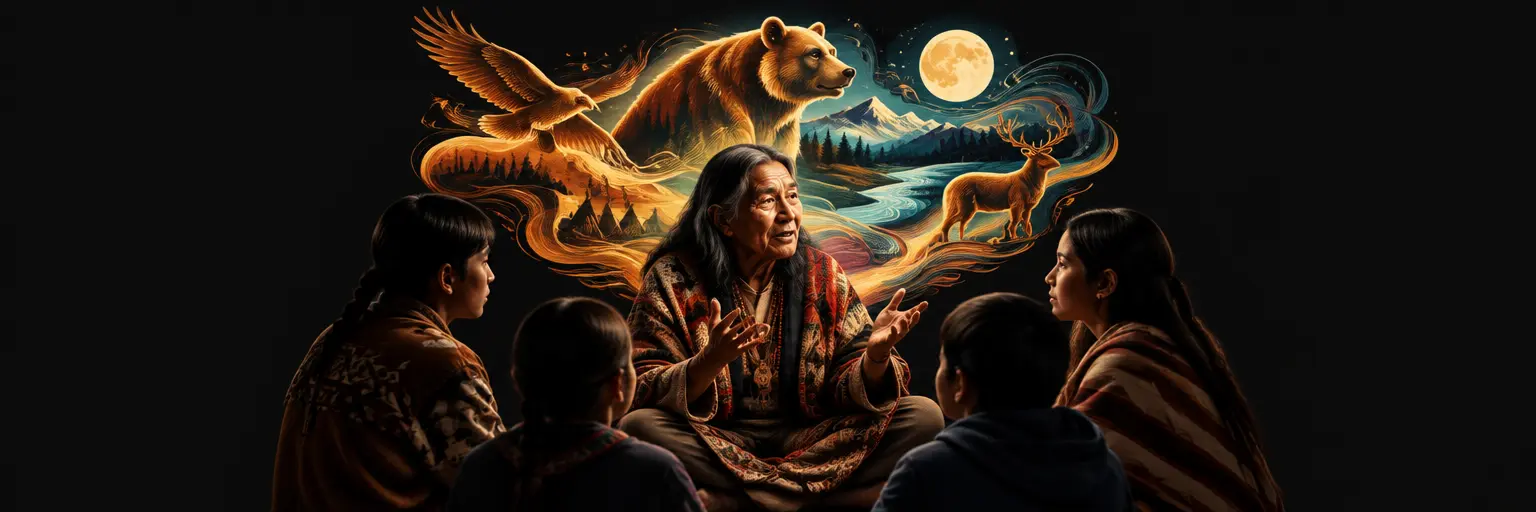
Step into the living pulse of ancient voices with Oral Histories and Legends, where stories are not merely told—they are breathed into existence. Here, we honor the Indigenous and Folk Traditions that have carried wisdom, memory, and wonder across generations, long before the written word. These are not static tales; they are dynamic, evolving narratives passed from elder to child, from shaman to storyteller, each retelling a sacred act of preserving cultural identity. Dive into the heart of mythic cosmology, ancestral heroes, trickster spirits, and creation epics that explain the stars, the seasons, and the very nature of the human soul. Whether it’s the haunting lullabies of the Arctic, the fire-lit legends of West Africa, or the whispered creation chants of the Andes, this collection illuminates how oral traditions shape community bonds, moral codes, and our shared humanity. For enthusiasts of folklore studies, cultural anthropology, or anyone seeking the roots of storytelling, these legends offer a profound lens into how societies encode their history, resilience, and dreams.
🌍 Discover how oral traditions preserve global stories, serving as vital echoes of cultural identity. "The Memory Keepers" highlights the power of…
Read article
🌿 Discover the profound power of ancestral stories and oral traditions in preserving cultural identity, fostering community bonds, and connecting generations—revealing how…
Read article
🌏 Dive into the rich world of Aboriginal Dreamtime stories, uncovering their profound meanings and cultural significance, as they continue to shape…
Read articleOral histories and legends are the heartbeat of Indigenous and folk traditions, passed down through generations by word of mouth, song, and ritual. Unlike written records, these narratives are fluid, alive, and deeply tied to identity, place, and memory. On this page, you’ll explore how spoken stories preserve cultural knowledge, moral codes, and historical events—often blending fact with myth. From creation tales told around fires to heroic epics recited at festivals, this subcategory dives into the art and significance of storytelling as a living archive. Expect rich context on how these legends adapt, survive colonization, and inspire modern media, while learning practical ways to engage with and respect these traditions.
Oral histories are not just stories; they are sophisticated systems of knowledge transfer that encode history, genealogy, environmental wisdom, and social laws. For Indigenous communities, these narratives often serve as legal records, mapping land boundaries, migration routes, and treaties. Unlike static books, oral traditions are performative—memorized with subtle variations that allow each generation to comment on current realities. When you explore this facet, you’ll discover how elders use rhythm, repetition, and mnemonic devices to ensure accuracy, and how storytelling events are communal bonding rituals. This section also examines the dangers of cultural erasure when these voices are silenced, and why revitalization efforts matter for global heritage.
Expect to encounter case studies from Native American, Aboriginal Australian, and African griot traditions, showing how oral histories document events like famines, earthquakes, or colonial encounters. You’ll learn about the “living library” concept, where a human being is the vessel of knowledge, and the ethical debates around recording and digitizing these stories. By understanding the performative and adaptive nature of oral history, you’ll see how legends are not fabricated but are nuanced interpretations of lived experience—offering a powerful counter-narrative to written colonial accounts.
Every culture’s oral repertoire features iconic heroes and tricksters—figures like Coyote, Anansi, Maui, or Raven—who embody cultural values, cautionary warnings, and social satire. These characters are not static; they shape and reflect collective psychology, teaching resilience, cunning, humility, and the consequences of arrogance. In this section, you’ll explore how heroes often combine supernatural origins with human flaws, while tricksters blur the line between chaos and creation. These legends are performed with audience participation, allowing improvisation that critiques political leaders or domestic issues. Understanding these archetypes helps decode cultural identity and provides a bridge to modern superheroes and antiheroes in comics and films.
You’ll also discover how gender roles, age hierarchies, and kinship systems are reinforced or challenged through these tales. For example, female tricksters like Spider Woman or Grandmother Spider in some traditions offer alternative models of power. This subcategory highlights comparative mythology, showing how similar motifs appear across continents due to human neuropsychology or cultural diffusion. Expect detailed breakdowns of story structures, use of humor, and the moral landscapes these legends create—useful for writers, educators, or anyone fascinated by the psychology of mythmaking.
Oral histories are rarely spoken in plain prose; they are sung, chanted, drummed, or danced, melding narrative with music and movement. Performance is essential to memory and meaning, with specific rhythms and melodies serving as mnemonic grids. Here, you’ll learn about epic traditions like the Finnish Kalevala, the Serbian gusle ballads, or the Polynesian haka, where the reciter’s breath, gesture, and voice create emotional gravity. Ritual contexts—initiation ceremonies, harvest festivals, funerals—dictate which stories may be told and to whom, making many legends sacred, restricted, or gendered. This section clarifies why cultural outsiders often miss deeper layers, and why respectful engagement requires learning protocols.
You’ll also explore how contemporary revival movements adapt these performances, using new media while preserving core structures. For instance, Māori kapa haka groups and Indigenous rap artists blend traditional chants with modern beats to keep legends alive. This facet also covers the role of audience: listeners are co-creators, their responses shaping the narration’s pace and detail. Expect insights into how sound, silence, and spatial arrangement affect storytelling efficacy, and how digital archives attempt to capture these ephemeral performances—raising questions about authenticity versus accessibility.
When oral histories clash with written documents, whose version holds truth? This section critically examines the politics of memory, showing how colonial powers dismissed oral accounts as “myth” while treating written records as objective. Yet oral traditions often include corroborating details—such as eclipse dates or extinct animal sightings—that later archaeology verifies. You’ll explore recent collaborative research where Indigenous knowledge holders work with scientists to reconstruct historical landscapes, proving oral histories are valid data sources. However, you must also confront outright legendization: events that become embellished over time, merging with myth to serve identity. Understanding this helps you differentiate between historical claims and allegorical truth.
You’ll find case studies like the Spanish arrival in Mesoamerica, recorded both in Nahuatl codices and Spanish chronicles, showing divergent perspectives. Similarly, Australian oral histories of sea-level rise align with geological evidence—demonstrating an unbroken 10,000-year memory. This subcategory equips you with critical tools: what questions to ask, how to identify mnemonic cues, and how to approach sensitive stories with humility. It also addresses the ethical obligation of researchers to return findings to communities, and the rise of community-owned archives that challenge academic gatekeeping.
The internet has transformed how oral legends are stored and shared, offering both promise and peril. AI transcription, video recordings, and immersive VR can now capture performances in rich detail, yet these technologies risk freezing traditions that are meant to evolve. This section explores projects like the “Living Archive of Aboriginal Languages” or the “World Oral Literature Project,” which balance open access with cultural protocols. You’ll learn about copyright issues—many Indigenous communities refuse Creative Commons licenses, demanding traditional knowledge notices instead. Simultaneously, you’ll see how social media allows younger generations to remix legends, creating memes and short videos that spark renewed interest, but also raise concerns about dilution.
Appropriation is a serious theme: non-Indigenous storytellers, writers, and filmmakers often borrow legendary figures without permission, flattening their sacred contexts. Here, you’ll understand key frameworks like “cultural competency” versus “cultural theft,” and how to support authentic voices instead. You’ll also discover grassroots revitalization programs—language nests, digital storytelling workshops in remote villages—that empower communities to control their narratives. By the end, you’ll see how digital tools can be allies, not replaceers, when guided by the storytellers themselves, ensuring that legends remain lived, not just archived.
Oral histories are performed, interactive, and fluid, changing with each telling and audience context. Written legends are fixed, often filtered through authorial bias and editorial choices. Oral accounts prioritize mnemonic devices, emotional engagement, and communal validation, while written records emphasize chronology and detail. However, both can be narrative and rely on metaphor, but oral ones retain a living relationship with contemporary concerns.
Yes, when triangulated with other evidence. Many oral traditions contain accurate astronomical events, ecological changes, or geological cataclysms verifiable by science. Researchers use ethnohistory and causal-frame analysis to separate functional allegory from historical core. However, reliability varies, and oral histories should not be dismissed simply because they are perishable or symbolic. Ethical scientific practice increasingly includes Indigenous knowledge holders as partners.
Start by asking, “Who owns this story?” Respect cultural protocols—some legends are sacred, gendered, or seasonal. Seek permission from the community, and never reduce a legend to a plot summary. Attribute credit to the nation or people of origin, and avoid adding your own moralizations. If retelling, use direct quotes and contextual framing, and support Indigenous storytellers through purchases or donations.
Check the source: who recorded it, under what conditions, and with whose consent? Authentic recordings show the narrator’s agency, not just the collector’s framing. Look for contextual metadata—date, location, narrator biography, and permission status. Be wary of edited compilations that merge unrelated traditions. Free access doesn’t mean ethical provenance; always look for licensed traditional knowledge notices.
Oral traditions are dynamic by design. Tellers adapt to their audience, address current events, and weave in improvisation—this flexibility is what keeps stories relevant. Change also arises from memory lapses that create new versions or from deliberate innovation by skilled storytellers challenging norms. Variation is a feature, not a flaw; it proves the legend is alive, not a fossil.