Modern Revivals in Indigenous and Folk Traditions
Welcome to the Modern Revivals subcategory, a vibrant exploration of how ancient myths, indigenous narratives, and folk customs are being rediscovered, reimagined, and reintegrated into today's world. Here, we delve into the dynamic intersection where age-old traditions meet contemporary life, from digital storytelling and neo-pagan rituals to cultural preservation movements and pop-culture adaptations. This space is dedicated to understanding how these living traditions are not static relics but evolving, breathing forces that continue to shape identity, spirituality, and community in the 21st century.
🌍 The Resurgence of Indigenous Storytelling in Digital Media
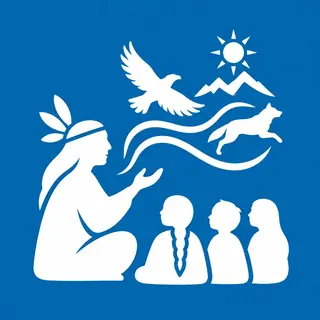
In this section, we explore how indigenous communities are leveraging podcasts, social media, and streaming platforms to reclaim and share their narratives on their own terms. Unlike the colonial-era misrepresentations, these modern revivals prioritize authentic voices, often using digital tools to teach language, pass down oral histories, and counteract cultural erasure. Expect deep dives into successful initiatives like the "Indigenous Story Studio" or viral TikTok creators who blend traditional tales with contemporary issues.
What makes this revival particularly powerful is its global reach—a Maori creation chant can now inspire a classroom in Brazil, or a Native American coyote tale can be animated for a global audience. We analyze how these digital platforms not only preserve but also reinvigorate folklore, making it accessible to younger generations who might otherwise drift from their heritage. You’ll discover case studies on how technology facilitates intergenerational dialogue, ensuring that these ancient wisdom traditions remain relevant and respected in a fast-paced, hyper-connected world.
🧙 Neo-Paganism and the Reinvention of Folk Rituals
Here, we examine the modern revival of pre-Christian European folk traditions, particularly within neo-pagan and Wiccan movements. This includes the reconstruction of seasonal festivals like Yule, Beltane, and Samhain, but adapted for contemporary urban living. You’ll learn how practitioners blend historical research with personal interpretation, creating rituals that honor the old gods, ancestors, and the natural world—often with an environmentalist twist. This is not mere cosplay; it’s a spiritual reconnection.
We also investigate the ethical and cultural complexities, such as cultural appropriation versus respectful adaptation. For instance, how does a modern Druid group in Ohio differ from a Scandinavian Asatru association, and what do these differences reveal about identity politics? Expect profiles of key figures, analyses of ritual tools, and discussions on how folk music, herbalism, and calendar customs are being revived to foster community cohesion and personal meaning in an age of disenchantment.
🎨 Folklore in Contemporary Art, Fashion, and Literature
This facet focuses on how modern artists, designers, and authors are knowingly or unknowingly reviving folk motifs and mythological archetypes in their work. From high-fashion runways featuring traditional weaving patterns to bestselling novels like Madeline Miller’s "Circe" that give voice to sidelined mythic figures, we trace these hybrid creations. The emphasis is on transformation—how a Celtic knot becomes a tattoo design, or how a Japanese yokai inspires a video game character, thus keeping folklore in constant circulation.
Expect analyses of the commercialization vs. cultural celebration debate, featuring examples like Disney’s "Moana" or Studio Ghibli’s adaptations. We also highlight grassroots initiatives like local art fairs that revive dying crafts, such as sami duodji or Mexican alebrijes. Here, you’ll find that modern revivals often serve as a form of soft resistance against global homogenization, using aesthetic expression to assert unique cultural identities while also building bridges across different traditions.
🌱 Community-Based Preservation Projects and Language Revitalization
Moving beyond the virtual, this section covers on-the-ground efforts to revive indigenous languages and folk practices as living heritage. We profile successful language nests (such as the Māori *kohanga reo*), where elders immerse children in native tongues, thereby breathing life back into the myths and legends embedded in those words. These projects are crucial because when a language dies, an entire worldview of folklore and ecological knowledge is lost. We offer practical insights into how communities adapt global models to local needs.
Additionally, we explore folk-based economic revival—how traditional fishing, storytelling, or weaving techniques are being transformed into sustainable tourism or ethical businesses. For example, the revival of the Hawaiian voyaging canoe *Hōkūleʻa* not only resurrected ancient navigation but also sparked a cultural pride movement. Here, you’ll see how these projects combat poverty and alienation, using heritage as a tool for social healing and self-determination, proving that modern revivals are not just nostalgic but deeply pragmatic.
🔮 The Role of Mythology in Modern Psychology and Wellness
This intriguing angle examines how ancient myths and folk symbols have been revived within therapeutic practices, such as Jungian archetype work, narrative therapy, and mindfulness retreats. We analyze how characters like the Trickster, Hero, and Wise Elder are used in coaching and counseling to help individuals interpret their life stories. This revival is not literal belief but a psychological toolkit, offering a profound sense of meaning in a secular world. Expect discussions on shadow work based on folk monsters or the use of creation myths for mindset shifts.
We also cover the wellness industry’s raid on folklore—think of yoga studios using Hindu mythology or “shamanic” breathwork that borrows from various indigenous practices. We critically assess the fine line between inspiration and exploitation, urging readers to support cultural custodians. By the end, you’ll understand how these symbolic revivals provide frameworks for resilience, community belonging, and personal growth, making ancient tales surprisingly effective for modern anxiety and identity formation in a fragmented society.
Frequently Asked Questions
What is the main difference between a modern revival and a simple adaptation of folklore?
A modern revival actively seeks to restore, recontextualize, and give new life to a tradition within its originating community or with respectful collaboration. A simple adaptation often borrows elements for commercial or artistic gain without a deep commitment to cultural preservation. Revivals tend to involve community participation, ritual practice, or language learning, whereas adaptions may exist solely as entertainment.
Can a non-indigenous person participate in modern revivals without causing harm?
Yes, but with caution. You can participate by supporting indigenous-led initiatives, learning from reputable sources, and avoiding the “plastic shaman” phenomenon. Focus on appreciation rather than appropriation—attend events when invited, donate to language programs, and share stories with proper credit. Always ask whether your involvement centers the community’s voice or sidelines it.
Are all modern revivals of pagan traditions historically accurate?
No, and that’s not necessarily a flaw. Many neo-pagan revivals are consciously eclectic, blending pre-Christian sources with modern innovations. For example, the modern Wheel of the Year is a 20th-century construct. However, dedicated reconstructionist groups strive for historical grounding through archaeology and texts. Consider whether your goal is spiritual innovation or historical precision, and choose your path accordingly.
How can I start a folklore revival project in my own community?
Begin with listening—interview elders, visit local archives, and document existing practices, no matter how fragmentary. Then, partner with cultural institutions and educators to design workshops or digital archives. Focus on usability: teach songs, crafts, or stories in engaging formats. Build a core group of volunteers, and celebrate small wins, like hosting a seasonal festival that reintegrates local customs.
Does modern revivalism always involve spirituality, or can it be secular?
Modern revivals span a spectrum. While many involve spiritual or religious elements, others are purely secular, focusing on language, cuisine, music, or craftsmanship. For instance, a folk dance troupe or a heritage food market can revive traditions without any belief system. The key is the active reconnection and continuation of cultural knowledge, not necessarily a reconnection to the sacred.