The Shaman's Path: Navigating the Spirit World
🌿 Embark on the Shaman's Path and explore the mystic realm of the spirit world. Discover how the shamanism spirit world journey…
Read article
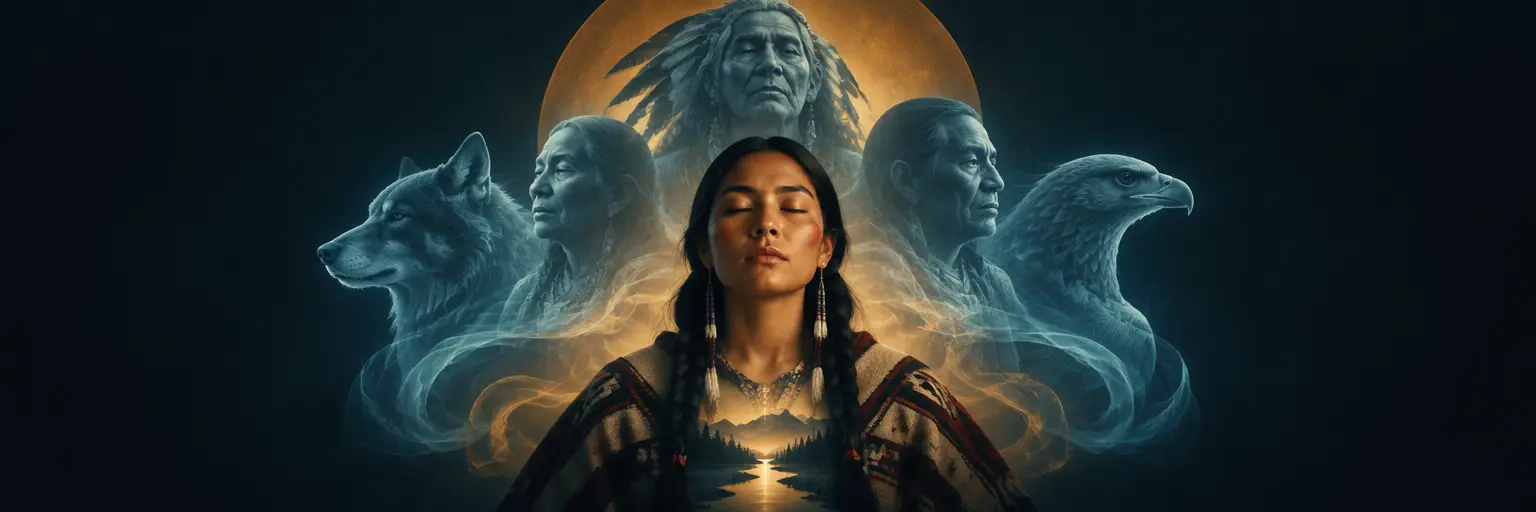
Spirit Worlds and Ancestors delve into the profound, invisible realms where the living commune with the departed, shaping rituals, moral codes, and cosmic balance. Across Indigenous and folk traditions, these ethereal domains are not distant heavens but vibrant, ever-present layers of existence—where ancestors act as guardians, guides, and intermediaries between humanity and the divine. From the Dreamtime of Aboriginal Australia to the veneration of orishas in African diasporic faiths and the Day of the Dead in Mesoamerica, each culture weaves a unique tapestry of spirit communication, rebirth, and ancestral wisdom. Explore how these sacred landscapes influence daily life, seasonal ceremonies, and storytelling, revealing that death is not an end but a transformative journey. 🕯️🌿 Uncover the symbolic thresholds—caves, rivers, and cosmic trees—that bridge worlds, and understand why honoring ancestors remains a cornerstone of identity, healing, and ecological stewardship. This page illuminates the enduring power of these beliefs in modern spiritual practices, offering a gateway to comprehension and respect for timeless traditions that still resonate today. 👣🌌
🌿 Embark on the Shaman's Path and explore the mystic realm of the spirit world. Discover how the shamanism spirit world journey…
Read article
🌍 Discover how ancient spirits and myths continue to influence modern societies, demonstrating that beliefs shape culture today by preserving traditions, inspiring…
Read article
🧙♂️ Explore the perilous realm of the spirit world interaction dangers, where seeking contact with spirits can lead to unforeseen consequences. Delve…
Read articleDive into the profound realm of spirit worlds and ancestral veneration within Indigenous and folk traditions worldwide. This subcategory uncovers how cultures communicate with the unseen, honor the departed, and maintain cosmic balance through rituals, myths, and everyday practices. You will discover that ancestors are not distant figures but active guides, protectors, and mediators between the living and the divine. From shamanic journeys to ancestral altars, this content is designed for myth enthusiasts, spiritual seekers, and researchers seeking deep cultural narratives and practical insights.
Shamanic traditions across Siberia, the Amazon, and North America rely on trance states, drumming, and sacred plants to enter spirit worlds. Expect explanations of the three-tiered cosmos—upper, middle, and lower worlds—where shamans negotiate with animal spirits, ancestor guides, and elemental forces. Learn how these journeys heal communal trauma, retrieve lost souls, and bring prophecies back to the tribe. This section also covers the ethical boundaries of spirit communication, emphasizing respect for indigenous protocols and the dangers of cultural appropriation.
You will find case studies of famous shamanic practices, such as the Mapuche machi and the Sami noaidi, highlighting their unique cosmologies. We break down the symbolic tools—drums, rattles, and ceremonial fires—that facilitate these crossings. Moreover, we discuss contemporary neo-shamanism, helping you differentiate between authentic lineage-based practices and modern adaptations. This knowledge enriches your understanding of how spirit worlds remain living, breathing realities for millions today, influencing healing, ecology, and identity.
From the Mexican Día de los Muertos to African egungun masquerades, ancestral altars are vibrant hubs of remembrance. Expect detailed guides on constructing altars, offering foods, candles, and photographs, and the seasonal cycles when veils between worlds thin. Explore the Aztec concept of Mictlan, the Yoruba Egungun societies, and Southeast Asian puja rituals. You’ll learn how these practices sustain family bonds, transmit moral values, and provide psychological closure for grief.
This section provides step-by-step visual breakdowns of altar layouts, including color symbolism, directional placements, and sacred herbs. We also examine the role of ancestors in legal and social disputes, where elders invoke spirits to mediate justice. Additionally, we compare household shrines in Bali with Korean jesa ceremonies, revealing universal themes of reciprocity and gratitude. By the end, you will appreciate how daily veneration transforms passive memory into active relationship-building, strengthening communal resilience across generations.
Many indigenous cultures believe ancestors are reborn into their bloodlines. This subcategory explores reincarnation among the Tlingit, Akan, and Druze, where children recall past lives and inherit roles, names, and even physical marks. Expect discussions on how ancestral memory shapes personality, talents, and karmic obligations. We also investigate the African concept of abiku or ogbanje—spirit children who cycle between worlds—and the rituals used to stabilize their presence in the physical realm.
Through ethnographic accounts, you’ll see how families identify reincarnated kin, often using divination and dream signs. This section addresses the philosophical implications: does reincarnation erase personal identity or enhance collective continuity? We present comparative analyses with Hindu and Buddhist doctrines, but focus on indigenous frameworks that link land, clan, and cosmos. Moreover, we cover modern genetic studies that align with traditional beliefs, offering a bridge between ancestral lore and scientific curiosity, enriching your grasp of human memory’s deepest roots.
Australian Aboriginal Dreamtime, Greek Hades, and Norse Hel are just a few mythical landscapes detailed here. Expect interactive maps of these spirit worlds, describing rivers, gates, guardians, and trials for souls. Learn how different cultures conceptualize the journey after death—crossing rivers, climbing mountains, or navigating star paths. This section also examines the role of trickster figures like Coyote or Anansi who traverse these realms, bringing back wisdom or chaos.
We decode the symbolism of thresholds: caves, rivers, and mirrors as portals to the unseen. You will encounter Polynesian Hawaiki, the ancestral homeland, and Slavic Nav, a parallel dimension. Each description includes original myths and contemporary artistic representations, from films to literature, showing how these geographies persist. By understanding these maps, you gain a framework for interpreting rituals, burial practices, and even architecture, as temples and tombs mirror these cosmic layouts.
Harvest festivals, solstices, and lunar new years often mark when ancestors are invited back. This section covers Japan’s Obon, Mexico’s Day of the Dead, and Nepal’s Gai Jatra. Expect insights into food offerings, lantern lighting, and public dances that welcome spirits. We analyze the economic and social impact of these festivals, from tourism to local crafts, while preserving their sacred core. You’ll also learn about less-known celebrations like Madagascar’s famadihana, where families exhume and rewrap ancestors’ remains with music and joy.
Each festival description includes historical origins, regional variations, and step-by-step participant guides. We highlight how these events provide emotional catharsis, strengthen kinship networks, and negotiate modernity—for instance, urban adaptations of rural rituals. This section also explores eco-spiritual connections, as many festivals coincide with agricultural cycles, reinforcing reciprocity with the land. By engaging with these calendars, you can plan trips, deepen academic studies, or incorporate respectful elements into your own reflective practices.
Worship implies adoration and god-like status, while veneration is respectful honor. In most indigenous traditions, ancestors are not deities but elevated elders who intercede with higher powers. Practitioners often offer food and prayers, but they do not equate ancestors with supreme creators. The distinction is crucial to avoid misrepresenting cultures.
No, many are conceptual or experiential. For example, Dreamtime is both a past era and a continuous underlying reality. Spirit worlds can be accessed through dreams, ritual, or altered states, but they are not always geographically fixed. The metaphorical nature allows them to evolve with cultural interpretation.
Start by learning from community-authored resources, attending public festivals, or seeking permission from elders. Avoid mixing practices casually, as many rituals have strict protocols tied to lineage. Reflect on your own ancestry first—explore your roots before borrowing others’. Acknowledging origins and giving credit to living cultures is non-negotiable.
Some researchers, like Ian Stevenson, documented thousands of cases in cultures with reincarnation beliefs, noting verified memories and birthmarks. However, science cannot prove consciousness transfer. These findings are compelling yet open to interpretation. Indigenous scholars often argue that empirical proof is unnecessary; lived experience and community validation suffice.
Ancestors are believed to influence health, harvests, and decision-making. Daily altars maintain ongoing conversations, creating a sense of belonging and moral accountability. They serve as repositories of family history, medical knowledge, and land stewardship. Ignoring them is often seen as causing misfortune, so regular attention is essential for collective well-being.