
The Cosmic Serpent Damballah: Haitian Vodou's Primal Energy

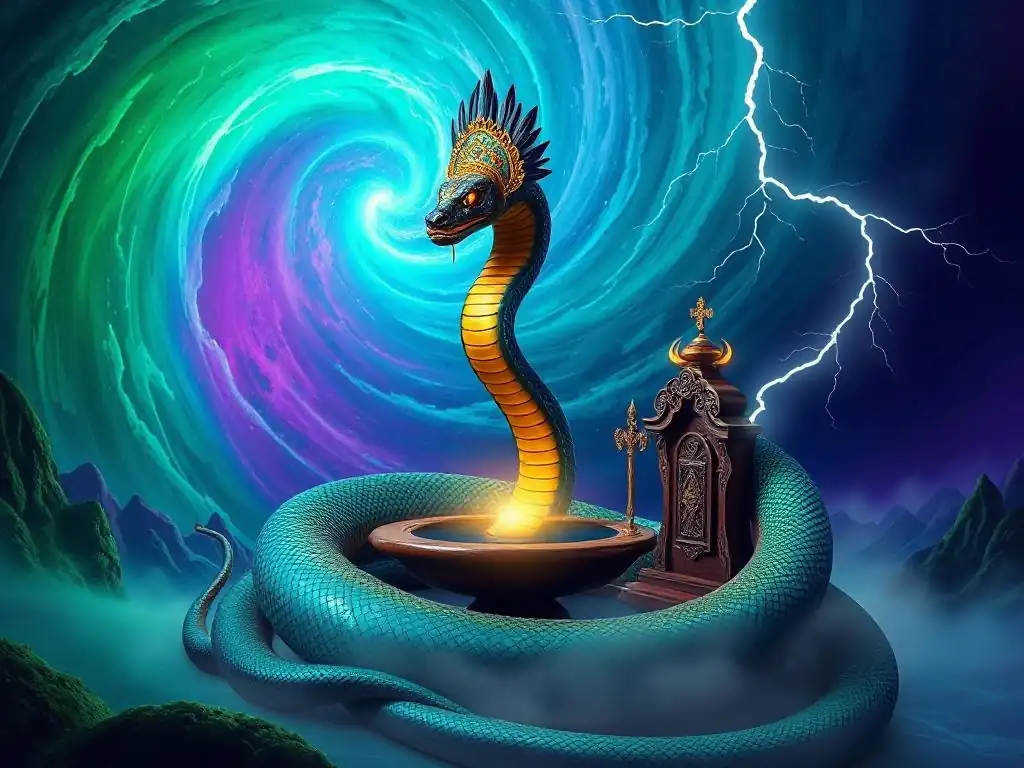
Welcome to Mythology and Legends, where we delve into the captivating stories that shape our world. Ever wondered about the ancient forces that pulse beneath the surface of reality? Today, we embark on a journey into the heart of Haitian Vodou to explore the enigmatic Damballah, the cosmic serpent whose energy permeates existence. Prepare to unravel the mysteries of this primal power and discover its profound influence on culture and belief. Intrigued? The story of Damballah awaits...
- Introduction to Damballah: The Serpent God of Haitian Vodou
- Damballah's Role in Creation Myths and Origin Stories
- Understanding Damballah's Characteristics and Attributes
- Damballah's Connection to Water and Trees in Vodou Rituals
- Damballah's Influence on Haitian Culture and Society
- Damballah vs. Other Serpent Deities in World Mythology
- The Significance of Serpent Worship and Primal Energy in Mythology
- Conclusion: Damballah, A Powerful Representation of Haitian Vodou's Primal Energy
- Frequently Asked Questions
- Final Reflection: Embracing the Primal Energy of Damballah
- Unveil the Mysteries of Damballah: Dive Deeper into Haitian Vodou
Introduction to Damballah: The Serpent God of Haitian Vodou
Haitian Vodou, a vibrant and complex religious tradition, is rich with a pantheon of spirits known as Lwa. Among the most revered and fundamental is Damballah, often depicted as a serpent. Damballah represents the oldest, most primal energy force within the Vodou cosmos. He embodies creation, peace, purity, and the foundational waters of existence, making him a central figure in understanding the core beliefs of Haitian Vodou. His presence is felt in the gentle rain, the flowing rivers, and the very structure of the earth, symbolizing continuity and the ancient wisdom that underpins reality.
The symbolism of the serpent is universal across many mythologies, but in Haitian Vodou, Damballah holds a unique place as the source of life itself. His silent, undulating movement reflects the subtle power of creation and the flow of time. Understanding Damballah is crucial to grasping the deep ecological and ancestral connections inherent in Vodou, a system that sees the divine in nature and the past intimately linked with the present. The Haitian Vodou Damballah serpent energy is considered the root from which all other energies and Lwa emerge.
Damballah's Significance in Haitian Vodou Cosmology
Damballah stands as one of the Pwen, the most ancient and fundamental Lwa, often associated with the Rada rite, which is known for its benevolent and ancestral spirits. Within Haitian Vodou cosmology, he is frequently seen as the father figure, the source from which life springs. His domain includes the sky, the primordial waters, and the very substance of creation. Devotees believe that Damballah's presence brings peace, wisdom, and purity, protecting against chaos and negativity.
The significance of Damballah is underscored by his association with the beginning of time. He is often invoked for blessings, fertility, and healing. His energy is considered immense but often manifested in a gentle, almost imperceptible way, much like the silent movement of a serpent or the quiet flow of water. Recognizing and honoring Damballah's energy is a cornerstone of many Vodou practices, seeking alignment with this foundational, creative force.
Exploring the Roots of Damballah in West African Serpent Deities
The origins of Damballah can be traced back to the Vodun traditions of West Africa, particularly among the Fon and Ewe people in areas corresponding to modern-day Benin and Togo. In these regions, serpent deities, such as Dan, were highly revered as symbols of continuity, prosperity, and cosmic order. The transatlantic slave trade brought these beliefs to the Caribbean, where they blended with indigenous Taino spirituality and European Catholicism, evolving into Haitian Vodou.
The concept of a serpent as a powerful, creative force is a direct inheritance from these West African roots. Dan represented movement, flexibility, and the vital energy that binds the universe. This concept was syncretized and adapted in Haiti, with Damballah emerging as a distinct, yet clearly related, deity embodying these same fundamental principles of creation and primal energy. The Haitian Vodou Damballah serpent energy thus represents a powerful link to the ancestral spiritual homeland of its practitioners.
Damballah's Role in Creation Myths and Origin Stories
In Haitian Vodou, creation is not a single, historical event but an ongoing process, and Damballah is central to this understanding. He is the primordial force that exists before and within all things, the cosmic consciousness from which the universe unfolded. His presence in origin stories emphasizes the cyclical nature of life, death, and rebirth, symbolized by the shedding of a serpent's skin.
Origin myths vary slightly across different Vodou houses (lakou), but Damballah's role as the ultimate source is consistently highlighted. He is the silent, powerful force that initiated existence, often depicted as a vast serpent coiled around the world or moving through the cosmic waters. This positioning places him at the absolute beginning, the alpha of the Vodou universe.
Damballah as the Creator: Shaping the World in Vodou Beliefs
Many Vodou creation narratives describe Damballah as the primary architect of the cosmos. He is often said to have used his immense serpentine body to shape the mountains, carve out the rivers, and fill the oceans. The undulating movement of the serpent represents the shaping of the raw, formless void into the physical world. Some accounts suggest he shed his skin seven times, with each shedding creating a different aspect of the universe or a layer of reality.
This perspective emphasizes Damballah's role not just as a distant creator but as an immanent force present in the structure of the world itself. His energy is seen in the geological formations, the flow of water, and the very life force within living beings. Understanding Damballah as the creator highlights the deep reverence for nature within Vodou, viewing the natural world as a direct manifestation of divine, primal energy.
The Cosmic Egg and Damballah's Serpent Energy
A significant motif in some Vodou origin stories involving Damballah is the concept of the Cosmic Egg. It is said that Damballah, sometimes in conjunction with his consort Ayida-Weddo, coiled around a vast, primordial egg. From the breaking or hatching of this egg, the universe as we know it emerged. This myth mirrors similar concepts in other world mythologies, reinforcing the idea of a contained, unified potential giving rise to diversity.
The serpent's coiling around the egg symbolizes the protective, nurturing, and potent energy required for creation. The Haitian Vodou Damballah serpent energy is the force that incubates, holds, and ultimately releases the potential for existence. This imagery underscores Damballah's role as the source of life and order, bringing forth the cosmos from a state of undifferentiated possibility.
Damballah and Ayida-Weddo: The Rainbow Serpent Partnership
Damballah is almost always paired with his beloved consort, Ayida-Weddo, the Rainbow Serpent. While Damballah represents the white, pure energy of the sky and primordial waters, Ayida-Weddo embodies the vibrant colors of the rainbow, symbolizing diversity, connection, and the bridge between worlds. They are often depicted together as two serpents, intertwined or arching across the sky.
Their partnership is fundamental to the creative process. Damballah provides the substance and structure, while Ayida-Weddo adds color, form, and the connection between different realms (earth, sky, water). Together, they represent the complete spectrum of creation and the balance of energies required for life to flourish. The rainbow is seen as their visible manifestation, a sign of their presence and blessing, connecting the heavens to the earth and embodying the full range of the Haitian Vodou Damballah serpent energy in its dual form.
Understanding Damballah's Characteristics and Attributes
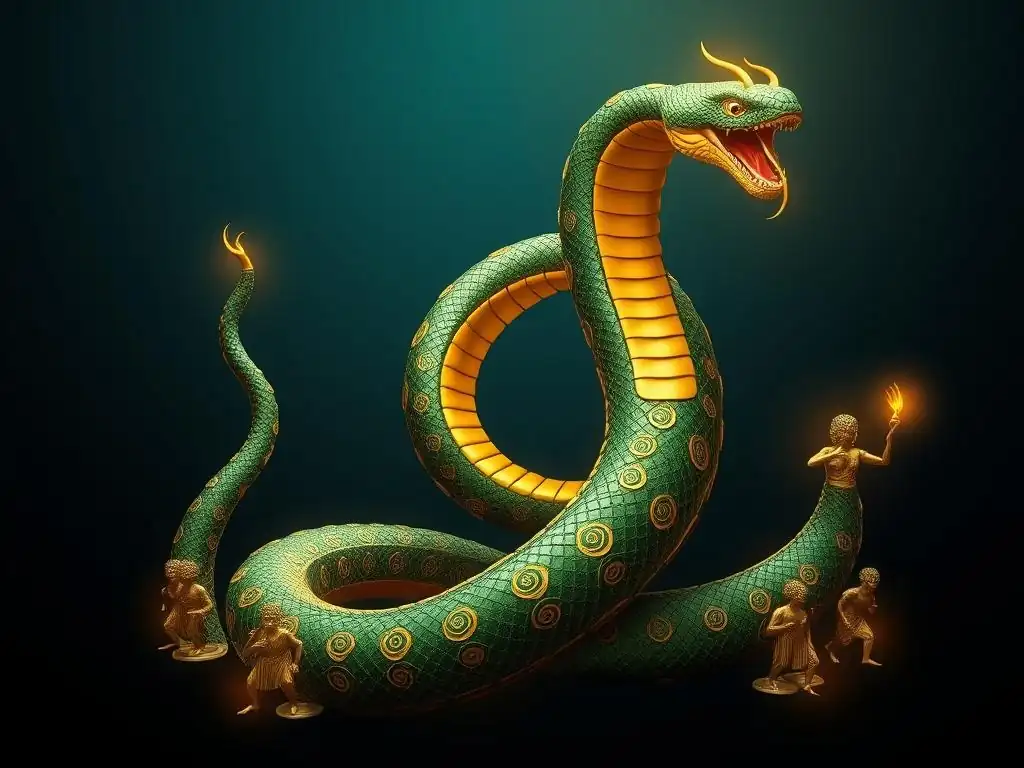
Damballah is characterized by a number of distinct attributes that reflect his ancient and foundational nature. He is often depicted as a wise, silent, and benevolent spirit. His movements, even when possessing a devotee, are typically slow, undulating, and measured, mimicking the serene glide of a serpent or the gentle flow of water.
His energy is considered incredibly potent but rarely volatile. Instead, it is a deep, enduring force that sustains existence. Understanding these characteristics is key to interacting respectfully with this powerful Lwa and appreciating the depth of the Haitian Vodou Damballah serpent energy.
Damballah's Association with Purity, Wisdom, and Good Fortune
Purity is a primary attribute of Damballah. He is associated with white, the color of cleansing, peace, and the beginning. His presence is sought to purify spaces, individuals, and rituals. This purity extends to the mind and spirit, promoting clarity and inner peace.
Wisdom is another core characteristic. As an ancient spirit who witnessed the dawn of creation, Damballah holds profound knowledge. His wisdom is often conveyed subtly, through intuition or quiet inspiration, rather than direct pronouncements. Devotees seek his guidance for difficult decisions and spiritual understanding. Furthermore, Damballah is strongly linked with good fortune and prosperity, particularly in the form of wealth that comes from the earth, like fertile land or abundant harvests. His blessing is believed to bring stability and abundance.
The Serpent's Silent Power: Interpreting Damballah's Communication
One of the most notable characteristics of Damballah is his silence. Unlike many other Lwa who may speak through devotees during possession (mounting), Damballah typically communicates through his movements, gestures, and the energy he imparts. When Damballah mounts a devotee, they often hiss, move in serpentine patterns, and may lick the floor or objects, symbolizing his connection to the earth and water.
Interpreting Damballah's communication requires sensitivity and understanding of his symbolism. His silent presence is seen as immensely powerful, representing the deep, unspoken truths of the universe. His gestures are symbolic, conveying blessings, protection, or the flow of energy. This silent power is integral to the Haitian Vodou Damballah serpent energy, emphasizing that not all profound communication requires words.
Damballah's Colors: Symbolism of White, Green, and Gold
While white is the color most strongly associated with Damballah, representing purity, peace, and the sky, other colors also hold significance. Green is linked to his connection with the earth, vegetation, and fertility. It symbolizes growth, life, and the natural world over which he presides in many aspects.
Gold is also frequently associated with Damballah, symbolizing prosperity, abundance, and the preciousness of life. It reflects the good fortune he can bestow and the richness of the earth he helped create. Together, white, green, and gold form a palette that encapsulates Damballah's multifaceted nature as a pure, life-giving, and benevolent force, embodying the various aspects of the Haitian Vodou Damballah serpent energy.
Damballah's Connection to Water and Trees in Vodou Rituals
Water is profoundly sacred to Damballah. As the primordial waters are his domain, springs, rivers, and even bowls of water on altars are seen as direct manifestations of his presence and energy. Water is used extensively in rituals honoring Damballah for purification, blessing, and invoking his presence.
Similarly, trees are considered sacred to Damballah, serving as dwelling places or points of connection to his energy. The roots reaching deep into the earth and the branches reaching towards the sky mirror Damballah's connection between the terrestrial and celestial realms. Specific types of trees, such as the kapok tree (mapou), are often dedicated to him.
The Sacred Springs and Damballah's Presence in Nature
Sacred springs and bodies of water are vital sites for Damballah's worship. Pilgrimages are often made to these natural locations to offer prayers, leave offerings, and seek his blessings. The water from these springs is considered holy, imbued with Damballah's purifying and life-giving energy.
For example, sites like Saut-d'Eau in Haiti, while strongly associated with Ezili Dantò and the Virgin Mary due to syncretism, also hold significance for other Lwa, including Damballah, due to the presence of powerful waterfalls and springs. Devotees believe that immersing themselves in or collecting water from these sacred sources connects them directly to the Haitian Vodou Damballah serpent energy, receiving purification and spiritual strength.
Trees as Damballah's Dwelling Places: Honoring the Serpent God
Large, old trees, particularly in the peristyle (Vodou temple courtyard) or in significant natural locations, are often consecrated to Damballah. These trees serve as poteau mitan (center post) in a broader sense, acting as conduits between the spirit world and the human world. Offerings are placed at the base of these trees, and rituals are performed around them.
The selection and consecration of a tree for Damballah involve specific rituals and prayers, making it a sacred space. The tree becomes a focal point for invoking his presence and connecting with his ancient energy. This practice highlights the deep respect for nature within Vodou and the belief that the divine resides within the natural world, accessible through these sacred points.
Ritual Offerings and Practices for Damballah
Offerings to Damballah typically reflect his attributes: purity, peace, and a connection to nature. Common offerings include:
- White items: White cloths, white candles, white flowers (like lilies or gardenias).
- Water: Fresh spring water, sometimes sugarcane syrup (siwo myèl) or milk.
- Eggs: Often raw eggs, symbolizing the cosmic egg and potentiality.
- Rice: White rice, cooked or uncooked, symbolizing purity and sustenance.
- Cotton: Raw cotton, representing clouds and the sky.
Rituals often involve drawing vevè (sacred symbols) of Damballah, which are intricate designs drawn on the ground with flour or cornmeal, representing his coiled or undulating form. Drumming, singing specific songs (chan pwen) for Damballah, and silent meditation are also key components, creating an atmosphere conducive to connecting with the Haitian Vodou Damballah serpent energy.
Damballah's Influence on Haitian Culture and Society
Damballah's significance extends beyond religious practice into the broader cultural fabric of Haiti. As a foundational Lwa, his symbolism and stories are woven into various aspects of Haitian life, reflecting the deep integration of Vodou beliefs into the national identity.
His representation in art, music, and popular folklore speaks to his enduring presence and importance. Damballah embodies resilience, peace, and the ancestral link, qualities deeply valued in Haitian society, which has a history marked by struggle and perseverance.
Damballah's Representation in Art, Music, and Dance
In Haitian art, Damballah is frequently depicted as a white serpent, often alongside Ayida-Weddo as a rainbow serpent. These images appear in paintings, sculptures, and sequined flags (drapo Vodou) used in ceremonies. The simplicity and fluidity of the serpent form are central motifs.
Music and dance are integral to Vodou rituals, and specific rhythms and movements are dedicated to invoking Damballah. The Rada drums play rhythms associated with his gentle, undulating energy. The dance movements when a devotee is mounted by Damballah mimic the slow, powerful coil and sway of a serpent. These artistic expressions serve to honor Damballah and make his presence tangible within the community, reflecting the power of the Haitian Vodou Damballah serpent energy.
The Enduring Legacy of Damballah in Vodou Practices Today
Despite historical suppression and external misunderstandings, Vodou continues to be a vibrant and central part of Haitian life, both within Haiti and the diaspora. Damballah remains a deeply respected and frequently invoked Lwa in contemporary Vodou practices.
Initiation ceremonies (Kanzo) often involve rituals dedicated to Damballah, recognizing him as the source of spiritual power and purity. Households maintain altars (pwen) dedicated to him, ensuring his presence and blessings are felt daily. His legacy endures as a symbol of the ancient roots, the source of life, and the potential for peace and prosperity within the Vodou tradition. The continued reverence for Damballah underscores the ongoing importance of his primal energy in Haitian Vodou.
Kanzo Initiation and Damballah's Role in Spiritual Transformation
The Kanzo initiation is a pivotal rite of passage in Haitian Vodou, marking a devotee's deepening commitment and connection to the Lwa. Damballah plays a crucial role in certain stages of this process, particularly those emphasizing purification and connection to the ancestral lineage.
During initiation, devotees may undergo rituals involving water and symbolic death and rebirth, aligning with Damballah's association with primordial waters and the shedding of skin. His energy is invoked to purify the initiate, bestow wisdom, and empower them with spiritual strength. The encounter with the Haitian Vodou Damballah serpent energy during Kanzo is considered a profound spiritual transformation, rooting the initiate in the foundational energies of the cosmos.
Damballah vs. Other Serpent Deities in World Mythology
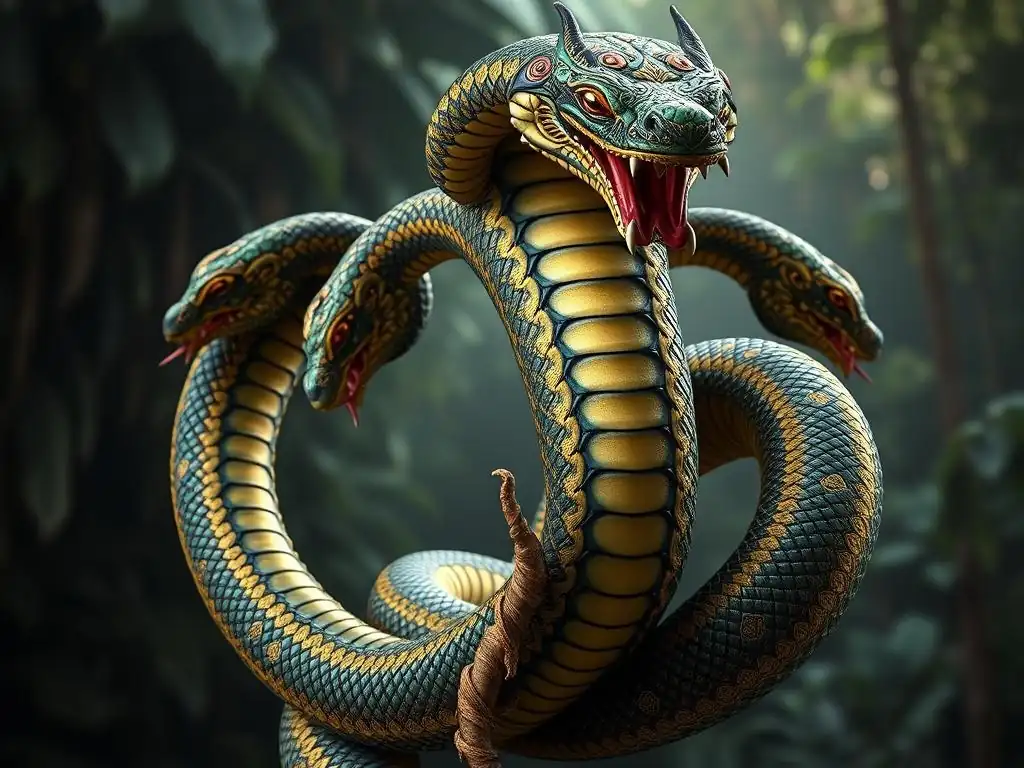
Serpent deities appear in mythologies across the globe, symbolizing various concepts including creation, wisdom, chaos, healing, and transformation. While Damballah shares the serpent form with these deities, his specific attributes and role within Haitian Vodou cosmology offer unique comparisons.
Examining Damballah alongside figures like Jormungandr, Quetzalcoatl, and Wadjet highlights both the universal appeal of the serpent symbol and the distinct cultural contexts that shape its meaning and the type of primal energy it represents.
Comparing Damballah to Jormungandr: The World Serpent of Norse Mythology
Jormungandr, also known as the Midgard Serpent, is a colossal serpent in Norse mythology, one of the children of Loki. He is so large that he encircles the entire world (Midgard), biting his own tail. His role is primarily eschatological; he is destined to fight Thor during Ragnarök, the twilight of the gods, bringing about the end of the world.
In contrast to Damballah's association with creation, peace, and origins, Jormungandr is linked to chaos, destruction, and the cyclical end of the world. While both are massive, world-encircling serpents, their fundamental energies and roles are opposite – Damballah as the benevolent source, Jormungandr as the chaotic destroyer. This comparison highlights Damballah's unique position as a force of pure, creative Haitian Vodou Damballah serpent energy.
Damballah and Quetzalcoatl: Similarities and Differences in Serpent Worship
Quetzalcoatl, the Feathered Serpent deity from Mesoamerican mythologies (Aztec, Toltec, Maya), is another prominent serpent figure. He is associated with wind, wisdom, the planet Venus, merchants, arts, and knowledge. Quetzalcoatl is a complex deity embodying both the earth (serpent) and the sky (feathers).
Similarities with Damballah include the association with wisdom and a connection to both earth and sky (Damballah's sky/water and Ayida-Weddo's rainbow bridge). Both are seen as benevolent forces. However, Quetzalcoatl's domain is broader, encompassing specific human endeavors like trade and learning, while Damballah's focus is more purely on primordial creation, peace, and the foundational life force. Quetzalcoatl is also often depicted in a more active, transformative role compared to Damballah's silent, enduring presence.
Comparison with Wadjet: The Egyptian Cobra Goddess
Wadjet is an ancient Egyptian cobra goddess, primarily associated with Lower Egypt, kingship, protection, and the sun disk (Uraeus). She was seen as a fierce protector of the pharaoh and a symbol of royal authority. Her image, the Uraeus, was worn on the pharaoh's crown as a symbol of divine power and protection.
Wadjet shares the serpent form and an association with purity and protection with Damballah. However, her role is specifically tied to kingship, political power, and aggressive protection, often spitting venom at enemies. Damballah's protection is more passive and inherent, stemming from his pure, peaceful nature and foundational energy. Wadjet's connection is primarily to the sun and earthly power, while Damballah is linked to primordial waters and the sky, representing a different kind of primal energy compared to the Haitian Vodou Damballah serpent energy.
The Significance of Serpent Worship and Primal Energy in Mythology
The recurring motif of the serpent in mythologies globally speaks to its powerful symbolic resonance. Serpents are liminal creatures, moving between different realms (underground, earth, water, climbing trees towards the sky). They shed their skin, symbolizing renewal and transformation. Their often silent, swift movement can evoke both fear and awe.
Across cultures, the serpent is frequently linked to foundational energies – whether creative, destructive, or transformative. They represent the raw, untamed forces of nature and the unconscious mind. Understanding the significance of serpent worship provides insight into humanity's attempts to grapple with concepts like creation, death, rebirth, and the mysterious forces that govern existence.
Interpreting the Symbolism of Serpents Across Cultures
Serpent symbolism is incredibly diverse, but common themes include:
- Creation and Primordial Forces: As seen with Damballah and some creation myths involving cosmic serpents.
- Transformation and Renewal: Due to the shedding of skin.
- Wisdom and Knowledge: The serpent in the Garden of Eden, or the Ouroboros (serpent eating its tail) representing cyclical knowledge.
- Healing: The Rod of Asclepius, a serpent coiled around a staff, a symbol of medicine.
- Chaos and Destruction: Jormungandr or the Apophis serpent in Egyptian mythology.
- Fertility and Life Force: Due to their phallic shape and connection to the earth.
Interpreting these symbols requires context, but the prevalence of the serpent suggests it taps into fundamental human experiences and archetypes. The Haitian Vodou Damballah serpent energy fits squarely within the 'Creation, Wisdom, and Renewal' cluster of this symbolism.
Damballah and the Understanding of Creation and Renewal
Damballah's specific symbolism within Haitian Vodou strongly emphasizes creation and renewal. He is the starting point, the pure energy from which everything originates. His connection to water reinforces the idea of life-giving force and cleansing. The serpent's ability to shed its skin perfectly mirrors the concept of spiritual renewal and transformation, essential aspects of Vodou practice.
Honoring Damballah is, in essence, honoring the source of life and the potential for constant rebirth and purification. He represents the enduring cycle of existence, reminding devotees that endings are often just preludes to new beginnings, powered by the fundamental Haitian Vodou Damballah serpent energy.
Serpent Imagery as a Representation of the Unconscious Mind
Psychologically, the serpent is often interpreted as a symbol of the unconscious mind, primal instincts, and hidden knowledge. Its ability to move stealthily and inhabit dark places resonates with the mysterious depths of the psyche. Encounters with the serpent in dreams or myths can symbolize confronting hidden fears, accessing deep intuition, or undergoing psychological transformation.
In the context of Damballah, his silent wisdom and connection to primordial origins can be seen through this lens. He represents the deepest layers of the collective unconscious, the shared ancestral memory and the fundamental blueprints of existence. Connecting with Damballah's energy can be interpreted as tapping into this deep well of primal energy and ancestral wisdom residing within the human psyche.
Conclusion: Damballah, A Powerful Representation of Haitian Vodou's Primal Energy
Damballah, the serpent Lwa of Haitian Vodou, stands as a profound symbol of primal energy, creation, purity, and peace. Rooted in West African traditions and transformed within the unique cultural landscape of Haiti, he embodies the source of life, the wisdom of ages, and the enduring power of nature.
From his role in shaping the cosmos alongside Ayida-Weddo to his silent presence in sacred springs and trees, Damballah's influence permeates Haitian Vodou cosmology and practice. His association with white, green, and gold, his silent communication, and the specific rituals dedicated to him all highlight his benevolent and foundational nature. Compared to serpent deities in other mythologies, Damballah's focus on origins, peace, and pure life force distinguishes him. He remains a vital figure, representing the ancient, powerful, and sustaining Haitian Vodou Damballah serpent energy that forms the bedrock of this rich spiritual tradition.
Frequently Asked Questions
What is Damballah in Haitian Vodou?
Damballah is a central lwa (spirit) in Haitian Vodou, representing the primordial creator serpent. He is associated with wisdom, peace, and the life-giving force of water.
Damballah is the embodiment of serpent energy. This cosmic serpent energy is considered the source of all creation and the foundation of the universe in Vodou belief.
What are some common symbols associated with Damballah?
Common symbols include snakes (especially white ones), eggs, and trees. These represent his connection to creation, fertility, and the earth.
How does Damballah influence contemporary Haitian society?
Damballah's influence is seen in Vodou rituals, art, and music. He represents a connection to ancestral wisdom and the natural world, offering spiritual guidance and protection.
How is Damballah's energy accessed or honored in Vodou practices?
Damballah is honored through offerings, prayers, and dances, often involving white clothing and ceremonial items. Practitioners seek to connect with his primal energy for blessings and spiritual growth.
Final Reflection: Embracing the Primal Energy of Damballah
The enduring power of Damballah Wedo, the cosmic serpent of Haitian Vodou, resonates deeply within the contemporary world, reminding us of the interconnectedness of all life and the potent force of nature. His image, a symbol of creation and primordial energy, continues to inspire awe and reverence, challenging our anthropocentric worldview and urging us to reconsider our relationship with the natural world. The serpent, often misunderstood and feared, becomes a powerful metaphor for the untamed, creative energy that shapes our existence.
Damballah's influence extends far beyond the confines of religious practice; his symbolism has seeped into the cultural landscape, influencing art, literature, and even popular culture. His representation as a benevolent creator, a force both gentle and powerful, speaks to our innate yearning for connection with something larger than ourselves. The serpent is not evil; it is a symbol of transformation, of shedding the old skin to reveal the new.
This understanding of Damballah allows us to see the cyclical nature of life, death, and rebirth, and to embrace the transformative power inherent in change.
Consider the lessons Damballah offers: the importance of respecting the natural world, the power of embracing change, and the enduring strength found in connection to something greater than oneself. You, too, can tap into this primal energy. Reflect on your own connection to nature, to the cyclical rhythms of life, and to the transformative power within you. Embrace the serpent's wisdom, shed your old skin, and allow yourself to be reborn into a more authentic and connected existence.
Here's a CTA tailored for the article "The Cosmic Serpent Damballah: Haitian Vodou's Primal Energy" on MythologyAndLegends.org:
Unveil the Mysteries of Damballah: Dive Deeper into Haitian Vodou
Thanks for exploring the fascinating world of Damballah, the cosmic serpent of Haitian Vodou! We hope you gained a new appreciation for this powerful deity and its significance in Haitian culture. Ready to take your understanding further?
- Delve into related Vodou deities: Research other powerful figures within the Vodou pantheon and uncover their unique roles and stories. This will give you a much richer understanding of the complex spiritual world.
- Share your thoughts and interpretations: What resonated most with you about Damballah's story? Join the conversation in the comments below and share your insights with fellow mythology enthusiasts!
- Explore authentic Haitian art depicting Damballah: Seek out visual representations of this powerful deity. The artistry often reflects deep spiritual meaning and can enhance your appreciation for the tradition.
What other intriguing aspects of Haitian Vodou would you like to explore further?