
The Great River Spirit: Origin of LifeGiving Waters


Welcome to Mythology and Legends, where ancient whispers echo through the ages. Ever wondered about the lifeblood coursing through civilizations, personified in powerful, unseen forces? Delve into the mystical realm of Ancient river spirit beliefs, particularly within the vibrant tapestry of African and Caribbean folklore, and discover how these watery deities shaped not just landscapes, but entire cultures. What secrets lie beneath the surface of these life-giving waters? Let the journey begin...
- Yemọja: Origin of Life-Giving Waters
- Introduction: Exploring Ancient River Spirit Beliefs in Yoruba and Afro-Caribbean Folklore
- The Origins of Yemọja: A Yoruba Creation Myth
- Yemọja's Role in Shaping the World
- Variations in River Spirit Beliefs Across African Cultures
- River Spirits in Caribbean Folklore: Transatlantic Echoes
- Yemọja's Gifts: Life, Sustenance, and Healing
- The Importance of Respecting Yemọja
- The Enduring Legacy of Ancient River Spirit Beliefs
- Conclusion: The Timeless Power of Yemọja
-
Frequently Asked Questions
- What are some common characteristics attributed to ancient river spirits?
- How did ancient cultures typically interact with river spirits?
- Why were rivers and their spirits so important in ancient societies?
- Did beliefs about river spirits vary significantly across different cultures?
- How do ancient river spirit beliefs influence contemporary society?
- Final Reflection: The Enduring Power of River Spirits
- Unveil Your Inner Mythmaker: Share the River Spirit's Story!
Yemọja: Origin of Life-Giving Waters
Introduction: Exploring Ancient River Spirit Beliefs in Yoruba and Afro-Caribbean Folklore
The Significance of Water in Creation Myths
Across numerous cultures and epochs, water has held a profound, often sacred, significance in narratives describing the genesis of the cosmos and life itself. From the primordial waters (Nun) in ancient Egyptian cosmology, out of which the first landmass arose, to the biblical account where the Spirit of God hovers over the waters before creation begins, this element consistently appears as the fundamental substrate or source from which existence emerges.
This pervasive theme underscores humanity's innate understanding of water's essential role in sustaining life; without it, biological processes cease, and landscapes become barren. The deep-seated connection between water and creation provides fertile ground for the development of ancient river spirit beliefs, where the life-giving properties of rivers and oceans are personified and revered.
This universal reverence for water is not merely symbolic; it is rooted in practical observation. Civilizations historically flourished along major river systems—the Nile, the Tigris and Euphrates, the Indus, the Yellow River—because these waterways provided sustenance, facilitated agriculture through irrigation, and served as vital arteries for transportation and trade.
The predictability of floods and droughts, while sometimes destructive, also marked the rhythm of life and sustenance. This dependence fostered a spiritual connection, leading to the conceptualization of powerful entities residing within or governing these waters, thus giving rise to complex systems of ancient river spirit beliefs that sought to understand, appease, and harness the power of these vital natural forces.
Introducing the Concept of River Spirits as Life Givers
The concept of river spirits is a cornerstone of many indigenous belief systems, particularly in regions heavily reliant on freshwater sources. These spirits are often seen as the custodians of the river's power, embodying its flow, its depth, its fertility, and sometimes its destructive potential.
Unlike abstract deities, river spirits are intimately connected to specific geographical locations – a particular bend in the river, a waterfall, a deep pool – making their presence tangible and immediate to the communities living nearby. These ancient beliefs about river spirits often portray them not just as passive inhabitants but as active agents capable of bestowing blessings, such as bountiful harvests, successful fishing, and fertile land, or inflicting punishments, like floods, droughts, or sickness, depending on human respect and actions.
In many traditions, river spirits are explicitly linked to the concept of life itself. They are believed to control the waters necessary for crops to grow, animals to thrive, and humans to survive. This role elevates them beyond simple nature deities; they are often seen as primordial mothers or fathers, sources from which all life springs.
The worship and appeasement of these spirits form a significant part of community life, involving rituals, offerings, and strict adherence to environmental taboos aimed at preserving the purity and vitality of the water source. These practices reflect a sophisticated understanding of ecological interdependence, framed within a spiritual context, showcasing the profound depth of ancient river spirit beliefs and their practical application in daily life.
The Origins of Yemọja: A Yoruba Creation Myth
Olodumare and the Emergence of Yemọja
In the intricate cosmology of the Yoruba people of West Africa, Olodumare is recognized as the Supreme Being, the creator of the universe and everything within it. Olodumare is often depicted as distant and transcendent, operating through intermediaries known as Orishas or Òrìṣà. These Orishas are divine entities or spirits who govern specific aspects of creation and human life, acting as conduits between humanity and the divine realm. The origin of the Orishas varies in different Yoruba narratives, but many myths describe them as emanating from Olodumare or being created by the Supreme Being to oversee the nascent world.
Yemọja, whose name is often translated as "Mother whose children are fish" (from Yeye - mother, omo - children, eja - fish), is one of the most revered Orishas and plays a crucial role in Yoruba creation myths. While some accounts place her origin directly from Olodumare, others describe her as the daughter of Obatala (the Orisha of purity and creation) and Oduduwa (the progenitor of the Yoruba people), or even as the mother of many other Orishas.
This multiplicity of origin stories highlights the dynamic nature of oral traditions, yet consistently positions Yemọja as a foundational figure, intrinsically linked to the primordial waters and the very beginnings of existence. Her emergence signifies the presence of the life-giving watery element necessary for creation to unfold.
Yemọja: Embodiment of Fertility and Motherhood
Yemọja is universally recognized as the great mother Orisha, the source from which life springs forth. She is the goddess of the Ogun River in Yorubaland, Nigeria, but her domain extends to encompass all waters, particularly the oceans and large rivers, symbolizing the vast, fertile potential inherent in water.
Her connection to motherhood is profound; she is considered the mother of many other Orishas, including Ogun, Oshun, Oya, and Shango, among others, effectively making her the matriarch of the Orisha pantheon and, metaphorically, the source of all life on Earth. This role as a universal mother figure emphasizes her nurturing, protective, and life-sustaining qualities, central tenets of ancient river spirit beliefs.
Her association with fertility is not limited to divine offspring; Yemọja is the patroness of pregnant women and childbirth. Women seeking to conceive, those experiencing difficult pregnancies, or those hoping for safe delivery often pray to Yemọja and make offerings at riversides or the ocean.
Her waters are believed to hold the power to cleanse, nourish, and bring forth new life, mirroring the biological processes of conception and birth which are fundamentally dependent on water. This makes her a vital figure in the lives of individuals and communities, embodying the hope for continuation and abundance, a key aspect of the reverence shown in ancient river spirit beliefs.
Yemọja's Role in Shaping the World
Creating the Rivers: Yemọja's Power
One of the central myths describing Yemọja's influence on the physical world recounts how the world's rivers and oceans came into being through her power. According to these narratives, Yemọja became overwhelmed with grief or experienced a physical rupture, and from her body, or from a vessel she carried, burst forth the primordial waters that flooded the land, carving out the riverbeds and filling the oceans.
This dramatic act signifies her immense power and her intrinsic connection to the watery landscape. The rivers are seen as her veins, carrying lifeblood across the land, while the oceans are her vast, deep womb, holding the potential for infinite life.
This myth of the world's waters originating from Yemọja highlights her role not just as a mother of deities, but as a shaper of the physical environment. The presence of rivers and oceans is attributed directly to her actions, making every waterway a manifestation of her divine presence and power. This perspective fosters a deep respect for water sources, viewing them not merely as natural resources but as sacred entities imbued with the spirit of Yemọja. It reinforces the ancient river spirit beliefs that recognize the divine agency behind the natural world, particularly the vital element of water.
The Interconnection of Water and Life: A Sacred Bond
The myths surrounding Yemọja powerfully illustrate the Yoruba understanding of the fundamental interconnection between water and life. Her domain over water is synonymous with her domain over fertility, birth, and sustenance. Every drop of water in a river or the ocean is seen as carrying a part of her essence, making it inherently sacred. This sacred bond mandates respectful interaction with water bodies; pollution, wasteful use, or disrespect towards rivers and oceans is not just an environmental issue but a spiritual transgression against Yemọja.
This sacred bond is reflected in daily life and rituals. Fishermen depend on her for a good catch, farmers rely on rain and rivers for their crops, and communities source drinking water from streams and wells. In return, they offer respect, prayers, and sacrifices to her spirit.
The cyclical nature of water – evaporation, rain, river flow, ocean – mirrors the cycle of life, death, and rebirth, further solidifying Yemọja's position as a deity of profound natural and spiritual significance. This intricate relationship between the physical necessity of water and its spiritual veneration is a hallmark of ancient river spirit beliefs and forms the core of Yemọja's worship.
Variations in River Spirit Beliefs Across African Cultures

Yoruba: Yemọja, The Mother of All Orishas
As explored earlier, Yemọja holds a paramount position in the Yoruba pantheon, widely revered as the Mother of All Orishas and the goddess of the Ogun River, oceans, and motherhood. Her worship is deeply ingrained in the cultural and spiritual life of the Yoruba people in Nigeria, Benin, and Togo, as well as in the African diaspora.
Her association with the ocean, in particular, became highly significant during the transatlantic slave trade, as enslaved Yoruba people carried her veneration across the Atlantic, seeing the ocean as both the source of their forced passage and the domain of the mother spirit who might offer solace or return them home.
Yemọja's character embodies both gentle nurturing and fierce power. Like the ocean, she can be calm and giving, providing sustenance and healing, but she can also be tempestuous and destructive, unleashing floods and storms. This dual nature reflects the inherent unpredictability and power of the natural forces she represents. Her followers understand that while she is a benevolent mother, she demands respect and adherence to her principles of purity, fertility, and community harmony. Her worship involves specific colors (blue and white), symbols (shells, particularly cowrie shells, and fans), and rhythms, reflecting her deep connection to the watery realm.
Rituals and Offerings to Yemọja
Rituals dedicated to Yemọja are integral to the spiritual practices of her followers. These ceremonies often take place near bodies of water, such as rivers, lakes, or the ocean, which are considered her sacred spaces. Offerings typically include items she is believed to favor, such as melons, coconuts, white flowers, honey, and sometimes white cloths or fans.
These offerings are made to seek her blessings for fertility, health, protection during travel (especially over water), and general prosperity. The act of placing offerings in the water symbolizes returning gifts to the divine source from which life flows, a common practice in ancient river spirit beliefs.
One significant ritual is the annual festival celebrating Yemọja, often held near the Ogun River or by the ocean. These festivals involve large gatherings of devotees, processions to the water, drumming, singing, dancing, and the casting of offerings into the water. These public displays of devotion reinforce community bonds and express collective reverence for the life-giving spirit of the waters. Private rituals also occur, where individuals or families approach the water to pray, meditate, and make personal offerings, demonstrating the personal and communal dimensions of worshipping this powerful river spirit.
Kongo: Simbi Spirits and Protection of the Waters
In the cosmology of the Kongo people of Central Africa (spanning parts of the Democratic Republic of Congo, the Republic of Congo, Angola, and Gabon), water spirits known as Simbi hold significant importance. Unlike the single, overarching figure of Yemọja, Simbi are a diverse group of spirits associated with specific bodies of water – rivers, lakes, springs, and sometimes even rain.
They are often described as residing within these waters or in nearby rocks, caves, or forests, serving as guardians of these vital natural resources. Simbi can be benevolent or capricious, depending on how they are approached and whether their sacred spaces are respected.
Simbi are deeply intertwined with the landscape and the well-being of the Kongo people. They are believed to control the flow of water, the abundance of fish, and the fertility of the land irrigated by rivers and streams. Access to clean water is critical in these regions, making the spirits who govern these sources incredibly powerful figures in local belief systems.
The Simbi are seen as intermediaries between the human world and the spiritual realm, often possessing individuals or appearing in dreams to communicate messages, offer guidance, or demand appeasement. This belief system reflects a localized version of ancient river spirit beliefs, focused on the specific water bodies that sustain Kongo communities.
Stories of the Simbi's Benevolence and Guidance
Numerous stories and oral traditions within Kongo culture recount interactions between humans and Simbi spirits, often highlighting their protective and guiding roles. One common theme involves individuals who encounter Simbi near a water source and are granted special knowledge, healing abilities, or protection from harm.
For example, a fisherman might attribute an unusually large catch to the favor of a local Simbi, or a healer might claim that their remedies were revealed to them by a Simbi spirit encountered by a sacred spring. These narratives reinforce the belief that the natural world, particularly water sources, is alive with spiritual energy and potentially benevolent forces.
Conversely, stories also serve as cautionary tales, describing the negative consequences of disrespecting Simbi or polluting their waters. Illness, accidents, or crop failure might be attributed to the wrath of offended Simbi. These stories function as a spiritual framework for environmental ethics, encouraging sustainable practices and reverence for water sources. They teach younger generations about the importance of maintaining harmony with the natural world and the spirits that inhabit it, preserving the core tenets of ancient river spirit beliefs within the Kongo cultural context.
River Spirits in Caribbean Folklore: Transatlantic Echoes
The Influence of Yoruba Beliefs on Afro-Caribbean Water Lore
The transatlantic slave trade forcibly brought millions of West Africans, including many Yoruba people, to the Caribbean. Despite the brutal conditions and attempts to suppress their cultural and religious practices, enslaved Africans preserved and adapted their belief systems, leading to the formation of syncretic religions like Haitian Vodou, Cuban Santería, Trinidadian Orisha, and others. The reverence for Orishas, including Yemọja, was carried across the ocean and integrated into new cultural contexts, demonstrating the resilience of ancient river spirit beliefs.
In the Caribbean, Yemọja (often known by variations like Yemayá in Cuba, Yemanjá in Brazil, or La Sirène/Lasiren in Haiti, who shares some characteristics) maintained her association with water, fertility, and motherhood. However, her domain expanded significantly to encompass the vast, powerful Atlantic Ocean itself – the body of water that represented both separation from their homeland and the potential for connection to ancestral spirits.
This adaptation highlights the dynamic nature of folklore as it travels and encounters new environments, yet the core identity of Yemọja as a powerful, maternal water spirit remained central, influencing the development of unique Afro-Caribbean water lore.
Mami Wata and Other Afro-Caribbean River Spirits
While Yemọja's influence is prominent, particularly in traditions directly linked to Yoruba heritage, other water spirits also feature in Afro-Caribbean folklore, sometimes blending with or existing alongside Yemọja figures. A notable example is Mami Wata, a pan-African water spirit whose worship spread across West and Central Africa and subsequently to the Americas via the slave trade. Mami Wata is often depicted as a beautiful, sometimes seductive, mermaid-like figure associated with wealth, healing, and danger. While not exclusively a river spirit (she is also linked to oceans), she embodies the power and mystery of deep waters.
In various Caribbean islands and communities, localized water spirits or variations of African deities associated with water emerged. For instance, in Haitian Vodou, the Lwa (spirits) Agwé (master of the sea) and La Sirène (a mermaid spirit often associated with Yemọja) are revered. These figures, while distinct, share commonalities with African ancient river spirit beliefs, representing the vital, unpredictable, and spiritually charged nature of water. They demonstrate the adaptation and evolution of African religious concepts in the New World, where the surrounding seas and local rivers became the new sacred landscapes for these powerful water deities.
Yemọja's Gifts: Life, Sustenance, and Healing
Water as a Source of Life: Yemọja's Blessing
At the heart of Yemọja's worship lies the recognition of water as the fundamental source of life, a direct blessing from the goddess herself. Without water, crops wither, animals perish, and human life is impossible. Rivers provide drinking water, irrigation for agriculture, and habitats for fish and other aquatic life that serve as food sources. The ocean, Yemọja's primary domain in the diaspora, is a vast provider of food and a pathway for connection. This practical dependence on water elevates Yemọja to a deity of ultimate sustenance, responsible for providing the very means of survival.
Followers of Yemọja understand that the abundance provided by water is not automatic but is a gift contingent upon her favor. Therefore, maintaining a respectful relationship with her and her domain is paramount to ensuring continued access to this vital resource. Rituals and offerings are seen as ways to honor her and ensure that the waters remain pure and plentiful, capable of sustaining life. This direct link between spiritual devotion and physical sustenance is a powerful aspect of ancient river spirit beliefs centered around Yemọja.
Yemọja's Role in Fertility and Childbirth
Beyond providing general sustenance, Yemọja is specifically invoked for matters of fertility and childbirth. As the universal mother, she is believed to have the power to open the womb, facilitate conception, and ensure safe delivery. Women hoping to become mothers often make pilgrimages to her sacred waters, praying for her intervention and leaving offerings. The cool, cleansing nature of water is seen as metaphorically and literally beneficial for the reproductive process.
The act of bathing in or drinking water from a sacred spring or river dedicated to Yemọja is sometimes performed with the intention of enhancing fertility or seeking a blessing for a pregnancy. Her connection to the moon and tides, which influence the rhythms of the ocean, is also sometimes linked to the menstrual cycle and the biological timing of conception. This makes Yemọja a deeply personal and vital deity for individuals and families concerned with procreation and the continuation of lineage, reinforcing her role as a life-giver within ancient river spirit beliefs.
Healing Properties of Sacred Waters: Yemọja's Intervention
Water, particularly from sources considered sacred to Yemọja, is also believed to possess significant healing properties. Followers may use water from a specific river, spring, or the ocean in rituals aimed at curing illnesses, cleansing negative energy, or promoting physical and spiritual well-being. The idea is that the water, imbued with Yemọja's spiritual essence, can purify and restore balance to the body and spirit.
In practice, this might involve ritual bathing, drinking blessed water, or using water in conjunction with medicinal herbs, with the spiritual power of Yemọja invoked to enhance the healing process. For example, a person suffering from a persistent ailment might be advised to wash with water collected from a river at a specific time of day or after certain prayers have been recited.
These practices underscore the belief that health and healing are not purely physical but are also influenced by spiritual forces and the benevolent intervention of deities like Yemọja, whose domain over life naturally extends to restoring vitality and health, echoing common themes in ancient river spirit beliefs worldwide.
The Importance of Respecting Yemọja
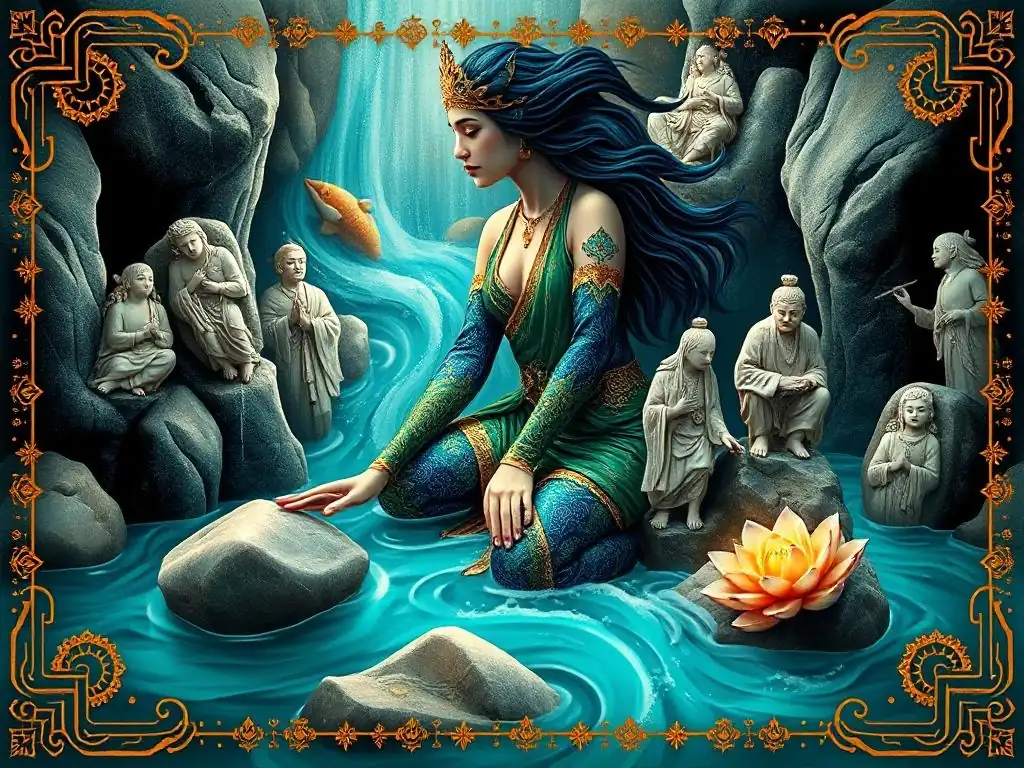
Maintaining Harmony with Nature: Ethical Considerations
The worship of Yemọja inherently promotes an ethical framework centered on maintaining harmony with nature, particularly water ecosystems. Since rivers and oceans are seen as the body and home of the goddess, polluting or damaging these environments is not just an environmental transgression but a profound spiritual offense. This belief system fosters a sense of responsibility towards the natural world, viewing it as sacred and interconnected rather than merely a resource to be exploited.
Traditional practices often include rules and taboos designed to protect water sources. This might involve prohibitions against washing certain items in a river, disposing of waste near springs, or engaging in destructive fishing practices. These rules, passed down through generations, serve as practical guidelines for environmental stewardship, driven by the spiritual imperative to respect Yemọja. They highlight how ancient river spirit beliefs can provide a powerful foundation for ecological ethics, encouraging communities to live in balance with their natural surroundings.
Consequences of Disrespecting Yemọja
Disrespecting Yemọja or her sacred waters is believed to incur negative consequences, ranging from personal misfortune to communal disaster. Stories abound of individuals who suffered illness, financial ruin, or accidents after polluting a river or mocking her power. On a larger scale, droughts, floods, or depletion of fish stocks might be interpreted as Yemọja's displeasure with a community's actions or lack of reverence towards her domain.
These beliefs serve as a powerful deterrent against environmental degradation and irresponsible behavior towards water sources. They reinforce the idea that human well-being is inextricably linked to the health of the natural world and the favor of the spirits who govern it. By attributing negative events to divine retribution, these belief systems encourage adherence to traditional ecological practices and maintain the spiritual significance of ancient river spirit beliefs, ensuring that communities remain mindful of their impact on the environment and their relationship with the powerful Yemọja.
The Enduring Legacy of Ancient River Spirit Beliefs
Yemọja in Contemporary Yoruba and Afro-Caribbean Culture
Despite the pressures of modernization, urbanization, and the influence of other religions, the worship of Yemọja and other ancient river spirit beliefs continue to thrive in contemporary Yoruba communities in Africa and throughout the Afro-Caribbean diaspora. In places like Salvador, Brazil, and Havana, Cuba, Yemanjá/Yemayá festivals are major cultural events, drawing thousands of devotees and spectators. These celebrations often coincide with New Year's Eve, where offerings of flowers and gifts are cast into the ocean, a powerful expression of hope and seeking blessings for the future.
In Nigeria, the annual Osun-Osogbo Festival dedicated to Oshun, another important river Orisha (often considered Yemọja's daughter), also demonstrates the continued vitality of river spirit worship. While Yemọja's primary sacred site is the Ogun River, her presence is felt and celebrated across Yorubaland. These contemporary expressions show that the ancient beliefs about river spirits are not relics of the past but living traditions that continue to adapt and provide spiritual meaning, cultural identity, and a connection to ancestral heritage for millions of people.
The Preservation of Traditional Water Rituals
The preservation of traditional water rituals dedicated to Yemọja and other river spirits is crucial for maintaining these ancient belief systems. These rituals, whether large public festivals or private family ceremonies, serve to pass down knowledge, values, and practices from one generation to the next. They provide a tangible link to the ancestors and the spiritual forces that shaped their world, reinforcing cultural identity in the face of globalizing influences.
Efforts by cultural organizations, religious leaders, and community elders play a vital role in safeguarding these traditions. Documenting oral histories, teaching traditional songs and dances, and organizing annual ceremonies help ensure that the stories and practices associated with ancient river spirit beliefs are not lost. Furthermore, in some cases, the spiritual significance of these water bodies has led to conservation efforts, demonstrating how traditional beliefs can contribute to environmental protection, providing a compelling modern relevance to these ancient practices.
Conclusion: The Timeless Power of Yemọja
Reflecting on the Significance of Water and Spirituality
The enduring legacy of Yemọja and other ancient river spirit beliefs offers a powerful reflection on the fundamental significance of water in human life and spirituality. These traditions highlight how vital natural resources are not merely physical commodities but are often imbued with deep spiritual meaning and power. The reverence for water as a source of life, fertility, and healing transcends specific cultures, appearing in various forms across the globe, but finding particularly rich expression in the figure of Yemọja.
Studying these belief systems provides insight into humanity's age-old quest to understand its place within the natural world and its dependence on forces beyond its immediate control. The personification of rivers and oceans as divine beings like Yemọja represents an intuitive recognition of nature's power and mystery, fostering a relationship based on respect, reciprocity, and awe. This spiritual connection to water underscores its irreplaceable role, not just for survival but for the very fabric of cultural and spiritual identity, demonstrating the profound depth of ancient river spirit beliefs.
Yemọja as a Symbol of Life and Renewal
Ultimately, Yemọja stands as a potent symbol of life, renewal, and the nurturing power of the divine feminine. As the mother of rivers and oceans, and the mother of many Orishas, she represents the origin and continuation of existence. Her association with fertility and childbirth underscores the cyclical nature of life, death, and rebirth, mirroring the endless flow and transformation of water itself.
In a world increasingly facing challenges related to water scarcity and environmental degradation, the ancient wisdom embedded in Yemọja's worship holds renewed relevance. Her veneration encourages a perspective that views water not as an infinite resource to be exploited but as a sacred gift to be protected and respected. The timeless power of Yemọja lies in her ability to connect her followers to the fundamental source of life, reminding them of the sacred bond between humanity and the natural world, and the enduring importance of ancient river spirit beliefs in navigating this relationship.
Frequently Asked Questions
What are some common characteristics attributed to ancient river spirits?
River spirits are often depicted as powerful beings associated with fertility, abundance, and the flow of life. They are frequently seen as guardians of the waters and can be both benevolent and malevolent.
How did ancient cultures typically interact with river spirits?
Interaction often involved rituals, offerings, and prayers for blessings, such as plentiful harvests and safe passage on the water. Displeasing the spirit could supposedly result in droughts, floods, or other calamities.
Why were rivers and their spirits so important in ancient societies?
Rivers were crucial sources of drinking water, irrigation, and transportation, making them vital for survival and prosperity. River spirits, therefore, held significant religious and cultural importance.
Did beliefs about river spirits vary significantly across different cultures?
Yes, while the core concept of a river spirit existed globally, the specific attributes, names, and stories associated with them varied greatly depending on the local environment, cultural values, and mythological traditions.
How do ancient river spirit beliefs influence contemporary society?
Although often less literal, the reverence for rivers and the importance of water conservation echo the ancient respect for river spirits. They are also reflected in art, literature, and environmental activism.
Final Reflection: The Enduring Power of River Spirits
The reverence for ancient river spirits, far from being a relic of the past, remains deeply relevant in our modern world. Our increasing awareness of environmental fragility and the crucial role of water in sustaining life underscores the wisdom embedded in these ancient beliefs. The interconnectedness of humanity and nature, a core tenet of river spirit veneration, is a message we urgently need to heed in the face of climate change and resource depletion.
The enduring influence of these beliefs on cultural practices, artistic expressions, and even modern environmentalism is undeniable. River spirits, often depicted as benevolent guardians, embody the life-giving power of water and the need for its respect. Their stories, passed down through generations, serve as powerful reminders of our responsibility to protect these vital resources. We do not inherit the earth from our ancestors, we borrow it from our children.
This sentiment, though often attributed to various sources, perfectly encapsulates the timeless wisdom inherent in the veneration of river spirits.
Consider the stories you've read, the images you've seen, and the profound connection to nature they evoke. What echoes of these ancient beliefs resonate within you? How can we, in our modern lives, cultivate a deeper appreciation for the natural world and the vital role of water in sustaining all life? Let the legacy of the Great River Spirit inspire you to become a steward of the earth, ensuring that the life-giving waters continue to flow for generations to come.
Here's a CTA tailored for the article "The Great River Spirit: Origin of Life-Giving Waters" on MythologyAndLegends.org:
Thanks for exploring the fascinating origins of the Great River Spirit! We hope you gained a deeper appreciation for the power of myth and its connection to the natural world. Ready to dive even deeper?
- Craft your own River Spirit tale: Let your imagination flow! Write a short story, poem, or even a song inspired by the legends you’ve just read. What new adventures would you give the River Spirit?
- Share your creation with our community: Post your work in the comments below – let's build a collection of modern myths together!
- Explore other water-related legends: Delve into our archives to discover more fascinating stories from around the globe. What other mythical creatures guard life-giving waters?
What unique power would your River Spirit possess? Let's discuss!