
The Spiritual Hierarchy of Haitian Vodou: Loa and Beyond
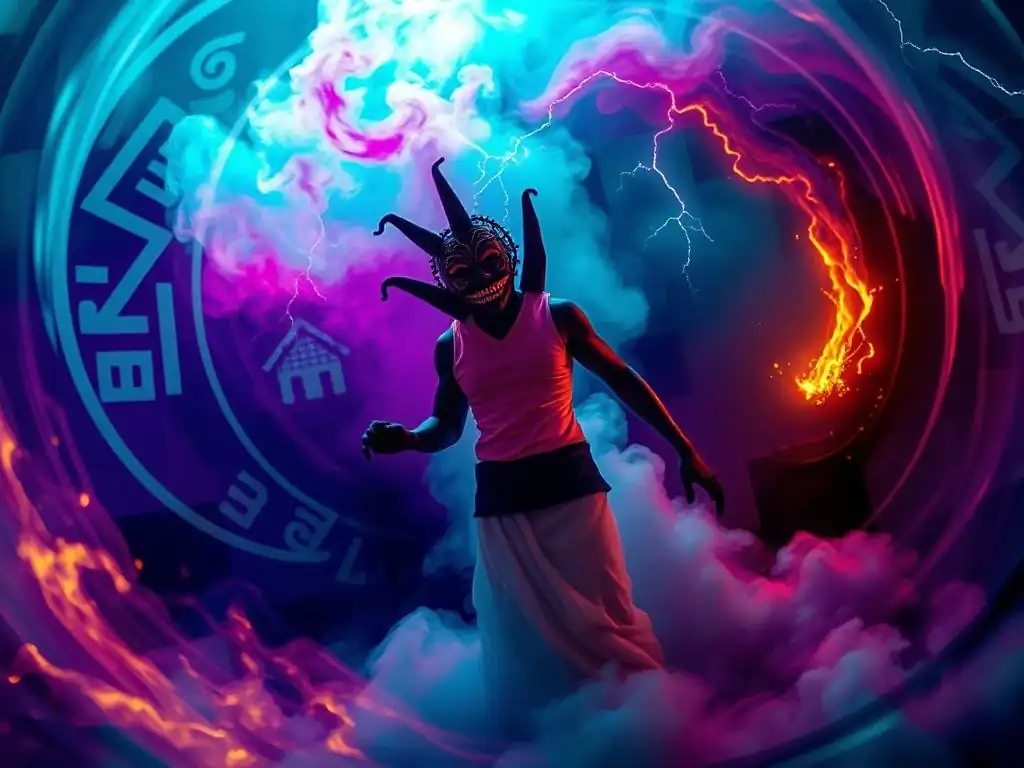
Welcome to Mythology and Legends, where the whispers of ancient tales echo through the ages. Ever wondered about the vibrant tapestry of spirituality woven into the heart of Haitian culture? Delve into the captivating world of Haitian Vodou Loa spirits and uncover the intricate spiritual hierarchy that governs this fascinating belief system. Prepare to be intrigued as we explore the powers, personalities, and significance of these deities and their profound influence on the lives of those who venerate them. What secrets lie hidden within the Loa's embrace? Let's begin this extraordinary journey together...
- Unveiling the Spiritual Hierarchy of Haitian Vodou: Understanding the Loa Spirits
- The Heart of Vodou: The Loa Spirits (Lwa)
- Beyond the Loa: Other Spiritual Entities in Haitian Vodou
- The Interconnectedness of the Spiritual Hierarchy
- Conclusion: Appreciating the Depth and Complexity of the Haitian Vodou Spiritual Hierarchy
-
Frequently Asked Questions
- What are Loa spirits in Haitian Vodou, and what role do they play?
- How does the hierarchy of Loa spirits function within Haitian Vodou?
- How do practitioners of Haitian Vodou interact with Loa spirits?
- What is the significance of nanchons like Rada and Petro in understanding Loa spirits?
- How has Haitian Vodou, including its beliefs about Loa spirits, influenced contemporary society?
- Final Reflection: Navigating the Sacred: Loa, Legacy, and the Future of Vodou
- Unveil Your Inner Loa: Dive Deeper into Vodou
Unveiling the Spiritual Hierarchy of Haitian Vodou: Understanding the Loa Spirits
Introduction to Haitian Vodou and its Rich Spiritual Landscape
Haitian Vodou, a syncretic religion born from the blending of West African spiritual traditions brought by enslaved people and elements of Roman Catholicism in Haiti, possesses a complex and deeply rooted spiritual hierarchy. At its heart lies a vibrant cosmology populated by a multitude of divine entities, each with distinct personalities, responsibilities, and domains of influence. Understanding this hierarchy is crucial to grasping the core beliefs and practices of Vodou, which emphasizes the interconnectedness of the human world and the spirit world, mediated by these powerful forces.
This spiritual landscape is not static but dynamic, reflecting the lived experiences and historical journey of its adherents. While often misunderstood or misrepresented, the system is intricate, providing a framework for navigating life's challenges, seeking guidance, and maintaining balance within the community and the cosmos. The interaction with the divine, particularly through the Haitian Vodou Loa spirits, is central to the daily and ceremonial life of practitioners, forming the bedrock of their spiritual practice and cultural identity.
The Foundations: Bondye - The Supreme Creator in Haitian Vodou
At the very apex of the Haitian Vodou spiritual hierarchy stands Bondye, the Supreme Creator God. The name "Bondye" derives from the French "Bon Dieu," meaning "Good God," reflecting the influence of Catholicism. Bondye is considered the ultimate source of all creation, the universe, life, and everything within it. This entity is all-powerful and all-knowing, the prime mover who set the cosmos into existence according to Vodou cosmology.
However, despite Bondye's supreme status, this creator god is generally considered distant and uninvolved in the daily affairs of humanity. Bondye does not interact directly with people, does not receive prayers or offerings, and is not invoked in ceremonies. This characteristic of a remote, transcendent creator is common in many African traditional religions that form the substrate of Haitian Vodou, where direct interaction is reserved for lesser deities or spirits who act as intermediaries.
Bondye: The Distant Creator God
The concept of Bondye's distance is a defining feature of Haitian Vodou theology. Having created the world, Bondye is seen as having stepped back, allowing the universe to unfold according to its own principles. This detachment means that human concerns, petitions, and problems are directed elsewhere in the spiritual hierarchy. Practitioners do not build altars to Bondye or conduct rituals aimed at gaining Bondye's favor.
This theological structure means that while Bondye is acknowledged as the ultimate source, the focus of Vodou practice is on the spirits who do interact with the human realm. This arrangement effectively delegates the management and interaction with the world to the powerful pantheon of spirits, the Haitian Vodou Loa spirits, making them the primary focus of religious devotion and activity. It highlights the pragmatic nature of Vodou, centered on seeking practical help and guidance from accessible spiritual forces.
The Heart of Vodou: The Loa Spirits (Lwa)
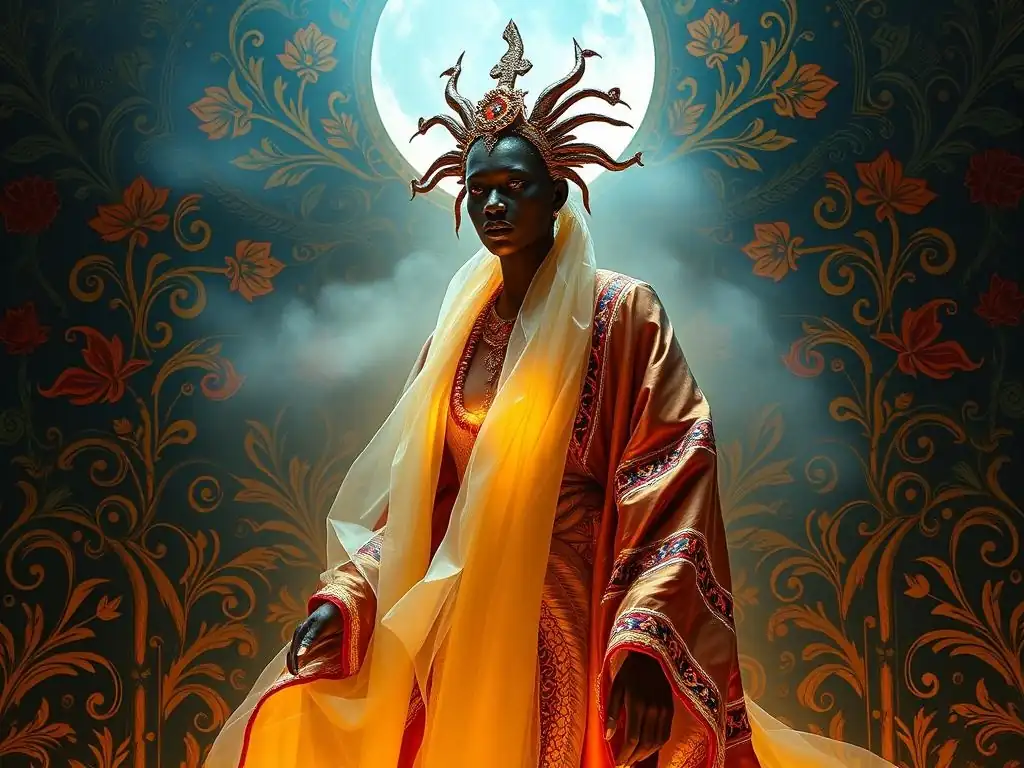
Who are the Loa? Defining the Divine Spirits of Haitian Vodou
The Loa (also spelled Lwa) are the central figures in the spiritual life of Haitian Vodou practitioners. They are divine spirits, intermediaries between Bondye and humanity, and are responsible for overseeing various aspects of life, nature, and human experience. Unlike Bondye, the Loa are immanent; they are present in the world, interact with people, and are actively involved in human affairs, responding to prayers, offerings, and rituals.
The Loa are complex beings with distinct personalities, preferences, strengths, and weaknesses. They are not simply abstract forces but are addressed as individuals with whom practitioners build relationships. Through possession (trance states during ceremonies), the Loa can communicate directly with their devotees, offering advice, healing, or sometimes expressing displeasure. It is through this direct interaction that the bulk of Haitian Vodou practice unfolds, making the relationship with the Haitian Vodou Loa spirits paramount.
Major Families of Loa: Nanchon and their Characteristics
The vast number of Haitian Vodou Loa spirits are organized into distinct families or "nanchon," meaning "nations" in Haitian Creole. These families often reflect their origins in different African regions or distinct historical developments within Haiti. While there are many nanchon, the most prominent and widely recognized are the Rada, Petro, and Gede families.
- Rada Loa: The Rada Loa are generally considered the elder, more benevolent, and gentle spirits. Their origins are primarily associated with the Kingdom of Dahomey (modern-day Benin). They are linked to coolness, water, ancestral wisdom, and foundational aspects of Vodou practice. Examples include Legba, Loko, Ayizan, and Erzulie Freda. Ceremonies for Rada Loa are often characterized by calm drumming rhythms and white clothing.
- Petro Loa: The Petro Loa are often seen as fiery, assertive, and sometimes volatile spirits. This family is believed to have originated in Haiti itself, born out of the intensity and struggles of the colonial era and the Haitian Revolution. They are associated with fire, passion, resistance, justice, and protection, though they can also be demanding or unpredictable. Examples include Ezili Dantor, Ogou Feray, and Kalfu. Petro ceremonies feature faster, more aggressive drumming and often incorporate the color red.
- Gede Loa: The Gede Loa are the spirits of death, sexuality, and rebirth. Presided over by Baron Samedi and Maman Brigitte, they are known for their irreverent humor, wisdom related to the cycle of life and death, and their ability to heal or curse. They are deeply connected to ancestors and the transition between life and death. Gede ceremonies are often lively and bawdy, reflecting their comfort with taboo subjects and their role as life-affirming forces despite their connection to the grave.
Key Loa Spirits and Their Roles in Vodou Practice
Within these families, certain Haitian Vodou Loa spirits are particularly prominent and frequently invoked due to their essential roles. Understanding these key figures provides insight into the practical application of Vodou beliefs in daily life and ceremonial contexts.
- Papa Legba: Papa Legba is one of the most important Loa, as he is the gatekeeper between the human world and the spirit world. He stands at the spiritual crossroads and must be saluted and asked for permission before any other Loa can be contacted during a ceremony. Depicted as an old man with a crutch or cane, often accompanied by dogs, he symbolizes the difficulty and necessity of communication between realms. Without Legba opening the "gate," no spiritual work involving other Loa can effectively proceed. His role is foundational to every ritual.
- Erzulie (Ezili): There are several Erzulie Loa, but perhaps the most well-known is Erzulie Freda, a Rada spirit embodying love, beauty, luxury, and femininity. She is often depicted as a mulatto woman, draped in pink and white, adorned with jewelry. Devotees seek her help in matters of the heart, relationships, and prosperity, though her pursuit of perfection can sometimes lead to sorrow or disappointment as she represents ideals that are difficult to attain in the material world. Another prominent Erzulie is Ezili Dantor, a Petro spirit, fierce protector of women and children, associated with motherhood, independence, and often depicted with scars.
- Ogou: The Ogou family comprises several spirits of iron, war, politics, and justice, primarily belonging to the Petro nanchon. Ogou Feray, for instance, is a warrior spirit invoked for strength, protection, and leadership. Ogou Balindjo is associated with healing waters, while Ogou Badagri represents strategic planning. These Haitian Vodou Loa spirits are called upon for courage in conflict, resolving disputes, overcoming obstacles, and matters requiring authority and force. They represent the assertive, often fiery energy needed to confront challenges in the world.
Beyond the Loa: Other Spiritual Entities in Haitian Vodou
The Role of Ancestors (Zansèt) in Vodou Spirituality
While the Haitian Vodou Loa spirits are central, the spiritual landscape also includes the significant presence of ancestors (Zansèt). Respect for and connection with ancestors is a vital component of Vodou, rooted deeply in African traditions. Ancestors are seen as having transitioned from the physical world to the spirit world but remain connected to their living descendants.
Ancestors are believed to watch over and influence the lives of their families. They can offer guidance, protection, and blessings, but they can also express displeasure if neglected or if family traditions and moral codes are not upheld. Maintaining a good relationship with one's ancestors through remembrance, offerings, and adherence to family lineage is considered essential for well-being and success in life. Altars dedicated to specific ancestors are common in practitioners' homes, demonstrating their ongoing importance.
Understanding the Concept of Ti Bon Ange and Gwo Bon Ange
Haitian Vodou cosmology also includes concepts related to the human soul or spirit. The "Ti Bon Ange" (Little Good Angel) and "Gwo Bon Ange" (Big Good Angel) are two distinct components of a person's spiritual essence. The Ti Bon Ange is the part of the soul that contains the individual's consciousness, personality, memory, and character – the unique self. It is this part that can be temporarily displaced during sleep or possession by a Loa spirit.
The Gwo Bon Ange, in contrast, is a more universal life force or cosmic energy that all living beings share. It is the animating principle, the breath of life, which returns to a collective cosmic pool after death. While the Ti Bon Ange retains individual identity after death (becoming an ancestor), the Gwo Bon Ange does not. Understanding these two aspects helps explain phenomena like spirit possession, where the Loa temporarily displaces the Ti Bon Ange to inhabit the body of the practitioner, while the Gwo Bon Ange remains to sustain life.
The Role of the Houngan and Mambo: Vodou Priests and Priestesses
The spiritual hierarchy in Haitian Vodou is not solely comprised of divine or ancestral beings; it also includes the human practitioners who facilitate interaction with the spirit world. The primary religious leaders are the Houngan (male priests) and Mambo (female priestesses). These individuals undergo extensive training and initiation to serve their communities and the Loa.
Houngans and Mambos are responsible for leading ceremonies, performing rituals (like healing, divination, or initiations), maintaining altars (oumfò), and serving as intermediaries between the community and the Haitian Vodou Loa spirits. They must possess deep knowledge of the spirits, rituals, songs, and drumming rhythms specific to different Loa and nanchon. They play a crucial role in maintaining the spiritual health and balance of the community, acting as spiritual guides, counselors, and protectors.
The Interconnectedness of the Spiritual Hierarchy
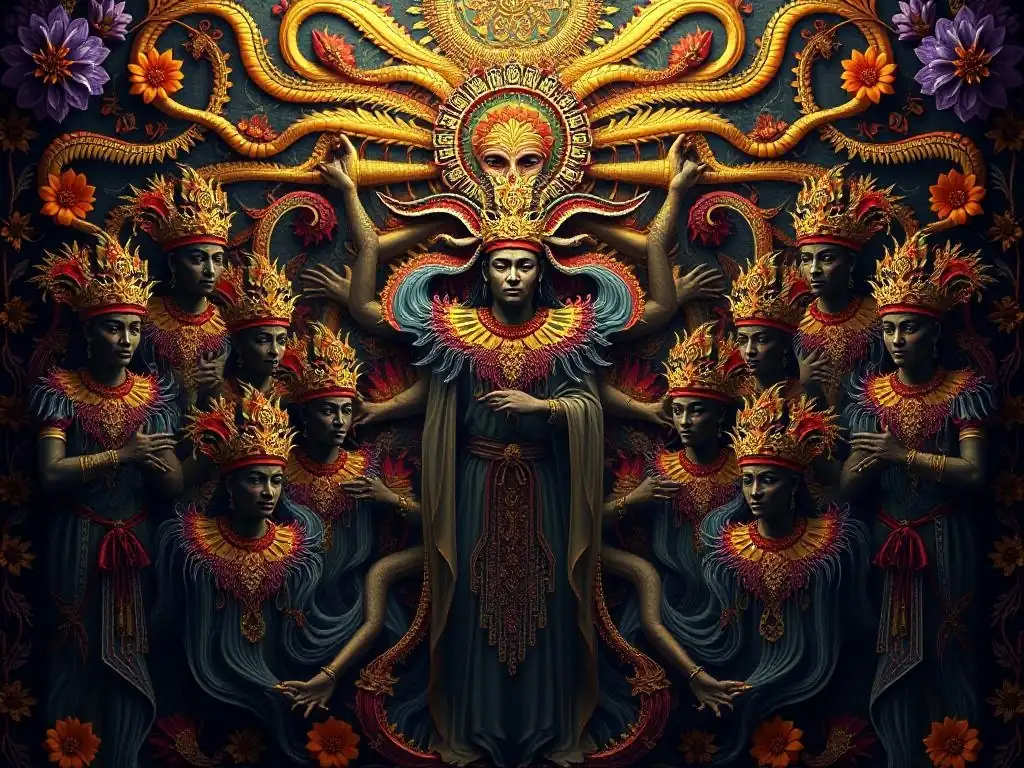
How the Different Levels of the Vodou Hierarchy Interact
The various levels of the Haitian Vodou spiritual hierarchy operate not in isolation but as an interconnected system. Bondye, though distant, is the ultimate source from which all other spiritual power originates. The Loa spirits act as Bondye's agents or administrators in the world, managing specific domains and interacting directly with humanity. They are the accessible face of the divine.
Ancestors occupy a space between the living and the Loa, often serving as guides or intercessors themselves, and their veneration is foundational before approaching the Loa in many instances. The human components, the Ti Bon Ange and Gwo Bon Ange, are the vessels for spiritual interaction, allowing for possession and the continuation of individual spirit after death as ancestors.
Finally, the Houngans and Mambos are the human anchors of the system, facilitating communication and ritual interaction, ensuring the flow of spiritual energy and guidance between the realms. This intricate web of relationships defines the dynamic spiritual landscape of Haitian Vodou, where every element plays a vital role in the cosmic balance and human experience.
Conclusion: Appreciating the Depth and Complexity of the Haitian Vodou Spiritual Hierarchy
The Enduring Power and Relevance of Haitian Vodou Beliefs
The spiritual hierarchy of Haitian Vodou, with its distant creator Bondye, the vibrant and diverse Haitian Vodou Loa spirits, revered ancestors, and the vital roles of human practitioners, constitutes a deeply complex and functional system. It offers a framework for understanding the world, navigating challenges, and fostering community through shared ritual and spiritual connection. The Loa, in particular, serve as powerful archetypes and accessible divine forces that address the myriad concerns of human life, from love and prosperity to justice and healing.
Despite historical persecution and widespread misunderstanding, Haitian Vodou and its spiritual hierarchy remain a powerful and relevant force in the lives of millions of people in Haiti and the diaspora. The enduring power of these beliefs lies in their adaptability, their focus on direct spiritual experience through possession, and their ability to provide a sense of agency and connection in a world often marked by hardship. The intricate relationships between the different levels of the hierarchy reflect a sophisticated cosmology that continues to shape identity, culture, and resilience.
Frequently Asked Questions
What are Loa spirits in Haitian Vodou, and what role do they play?
Loa spirits are divine entities in Haitian Vodou, acting as intermediaries between humans and Bondye (God). They possess distinct personalities and domains, offering guidance and assistance in various aspects of life.
How does the hierarchy of Loa spirits function within Haitian Vodou?
While not strictly hierarchical, Loa are grouped into nanchons (nations or families), such as Rada and Petro. Each nanchon has its own characteristics and associated rituals, influencing the type of interaction with followers.
How do practitioners of Haitian Vodou interact with Loa spirits?
Interaction typically involves rituals, offerings, and possession. Through these practices, devotees seek guidance, blessings, and assistance from the Loa in their daily lives.
What is the significance of nanchons like Rada and Petro in understanding Loa spirits?
Nanchons categorize Loa based on their origin, temperament, and powers. Rada Loa are generally seen as benevolent and peaceful, while Petro Loa are often associated with fire, revolution, and more intense energies.
How has Haitian Vodou, including its beliefs about Loa spirits, influenced contemporary society?
Haitian Vodou has significantly impacted Haitian culture, art, music, and literature. Its influence extends beyond Haiti, contributing to discussions about spirituality, identity, and the preservation of cultural heritage.
The intricate spiritual hierarchy of Haitian Vodou, with its pantheon of Loa, remains a potent force shaping Haitian culture and identity today. Understanding this complex system is not merely an academic exercise; it's crucial for appreciating the resilience, creativity, and profound spiritual depth of the Haitian people. This understanding fosters respect and challenges harmful stereotypes often associated with Vodou.
The influence of the Loa extends far beyond the confines of religious practice; it permeates art, music, literature, and even the daily lives of Haitians. Their stories, their personalities, and their interactions form a rich tapestry woven into the very fabric of Haitian society. As anthropologist Karen McCarthy Brown eloquently stated, Vodou is not a religion of fear, but a religion of power, a religion of hope, and a religion of community.
This quote encapsulates the essence of Vodou's enduring appeal and its ability to provide solace, strength, and a sense of belonging in the face of adversity. My own research has deepened my appreciation for the nuanced beauty and profound wisdom embedded within this tradition.
Now, I invite you to reflect on the journey we've taken through the spiritual landscape of Haitian Vodou. Consider how the Loa, with their diverse attributes and roles, resonate with your own understanding of spirituality and community. Let this exploration inspire you to seek out further knowledge, to engage with diverse cultures respectfully, and to appreciate the power of faith in shaping individual lives and collective identities. The legacy of the Loa continues to inspire and challenge us; let us carry that legacy forward with understanding, empathy, and a commitment to celebrating the richness of Haitian culture.
Here's a CTA tailored to the article "The Spiritual Hierarchy of Haitian Vodou: Loa and Beyond" on MythologyAndLegends.org:
Unveil Your Inner Loa: Dive Deeper into Vodou
Thank you for exploring the fascinating world of Haitian Vodou! We hope you gained a new appreciation for the complexity and richness of its spiritual hierarchy. Ready to take your understanding further?
- Delve into further research: Explore reputable sources on Vodou spirituality and learn more about specific Loa that resonated with you. Consider focusing on one Loa for deeper study.
- Share your thoughts and discoveries: Start a discussion in the comments below! What aspects of Vodou surprised or intrigued you the most?
- Discover related mythologies: Explore other syncretic religions and pantheons on our site— you might find surprising connections to Vodou's rich history and beliefs.
What other spiritual traditions resonate with the power and mystery of Haitian Vodou, and why?