
Anansi's Web: Connecting Stories Across Continents


Welcome to Mythology and Legends, where echoes of the past resonate with the present! Ever wondered how a cunning spider could outsmart gods and humans alike? Delve into the intricate world of Anansi stories in our exploration of West African folktales, and discover how these timeless narratives continue to weave their magic on cultures worldwide. The web of mythology is vast and fascinating – are you ready to unravel its secrets?
- Introduction to Anansi: The Spider Trickster of West African Folktales
- Anansi's Character: Deconstructing the Spider Trickster
- Anansi Stories: A Tapestry of West African Folktales
- Anansi's Journey Across Continents: The Diaspora of a Trickster
- The Enduring Legacy of Anansi: West African Folktales in Contemporary Culture
- Exploring Related Mythological Tricksters: Beyond Anansi
- Conclusion: Anansi's Web and the Power of Storytelling
- Frequently Asked Questions
- Final Reflection: Anansi's Enduring Legacy
- Unravel Anansi's Wisdom: Spin Your Own Story!
Introduction to Anansi: The Spider Trickster of West African Folktales
The Origins of Anansi in West African Folklore
Anansi is one of the most beloved and enduring figures in the vast landscape of West African folktales. Originating primarily among the Akan people of what is now Ghana, his stories are central to their oral tradition, serving not just as entertainment but as vital vehicles for transmitting cultural knowledge, moral lessons, and historical perspectives across generations.
The figure of Anansi, often depicted as a spider, embodies a complex mix of characteristics, from cunning and trickery to wisdom and resourcefulness, making him a fascinating protagonist capable of both great feats and embarrassing blunders. These West African folktales centered on Anansi have been told for centuries, shaping the worldview and values of the communities where they are shared.
The narratives featuring Anansi are deeply embedded in the cultural fabric of the Akan people and neighboring groups. They explain natural phenomena, explore human behavior, and often comment on social structures and power dynamics. The spider's small size but immense wit allows him to outsmart larger, more powerful creatures and even deities, highlighting the potential for intelligence and cleverness to overcome brute strength or authority. This foundational role in West African folktales is what makes Anansi such a significant figure, a trickster whose exploits resonate with universal themes while remaining distinctly rooted in his cultural origins.
Anansi's Enduring Popularity: From Ghana to the World
From his origins in Ghana, the tales of Anansi have spread far beyond West Africa, carried by people during historical migrations and the transatlantic slave trade. This dispersal led to Anansi stories becoming a cherished part of folklore in the Caribbean and parts of the Americas, where they adapted and evolved in new cultural contexts.
Despite geographic separation and the passage of time, the core character of Anansi the trickster has largely persisted, demonstrating the remarkable resilience and adaptability of these West African folktales. His journeys reflect the journeys of the people who told his stories, becoming a symbol of survival, resistance, and cultural continuity.
Today, Anansi's popularity extends globally, featuring in children's literature, animated series, comics, and scholarly studies. Retellings of classic Anansi stories introduce new generations to the wit and wisdom contained within these ancient narratives. His presence in contemporary media ensures that the rich tradition of West African folktales, particularly those featuring the clever spider, continues to thrive and connect people across different cultures and backgrounds. The enduring appeal of Anansi speaks to the universal themes of overcoming adversity, the complexities of human nature, and the sheer joy of a well-told story.
Anansi's Character: Deconstructing the Spider Trickster
Anansi as a Symbol of Wisdom and Cunning
Anansi is perhaps best known for his extraordinary cunning and strategic intelligence, traits that often position him as a symbol of wisdom within West African folktales, albeit a cunning, self-serving kind. He frequently uses his sharp mind and ability to manipulate situations and other characters to his advantage, often to acquire something he desires, whether it's food, wealth, or even ownership of all the stories in the world.
One famous tale recounts how Anansi managed to capture powerful creatures like the leopard, the hornets, and the fairy Mmoatia, and even the serpent Osebo, using only his cleverness and a bit of trickery, ultimately earning him the right to be the owner of all tales from Nyame, the sky god. This narrative highlights how mental agility is often portrayed as a superior force to physical might in Anansi stories.
While his methods can be questionable, Anansi's ability to solve complex problems and outsmart formidable opponents positions him as a figure who embodies a particular kind of practical wisdom. He navigates a world filled with challenges, relying on his wit rather than strength.
This aspect of his character resonates deeply within the tradition of West African folktales, offering lessons on resourcefulness, adaptability, and the power of intellect. His cunning is not always benevolent, but it is undeniably effective, making him a compelling and multifaceted character whose actions prompt reflection on the nature of intelligence and its application in the world.
The Dual Nature of Anansi: Benevolence and Mischief
Anansi's character is inherently complex, embodying a significant duality that swings between acts of mischievous self-interest and moments of surprising benevolence. While many Anansi stories depict him as a purely selfish trickster who deceives others for personal gain, often leading to humorous or cautionary outcomes, there are also tales where he inadvertently or intentionally helps others or brings valuable things to the world.
For instance, some narratives attribute the origin of certain cultural practices or the distribution of knowledge to Anansi's actions, even if his initial motivation was self-serving. This blend of trickery and unintended positive consequences makes him a less predictable figure than a purely evil or purely good character.
This dual nature is crucial to understanding Anansi's role in West African folktales. He is not a simple hero or villain but a reflection of the complexities of human nature itself – capable of both great ingenuity and petty deceit.
His actions often lead to chaos or trouble, but just as often, they result in lessons learned, order restored (sometimes by others cleaning up his mess), or the acquisition of something valuable. This multifaceted portrayal allows Anansi stories to explore a wide range of moral and ethical questions, providing rich material for discussion and interpretation within the communities where these West African folktales are shared.
Anansi's Physical Attributes: More Than Just a Spider
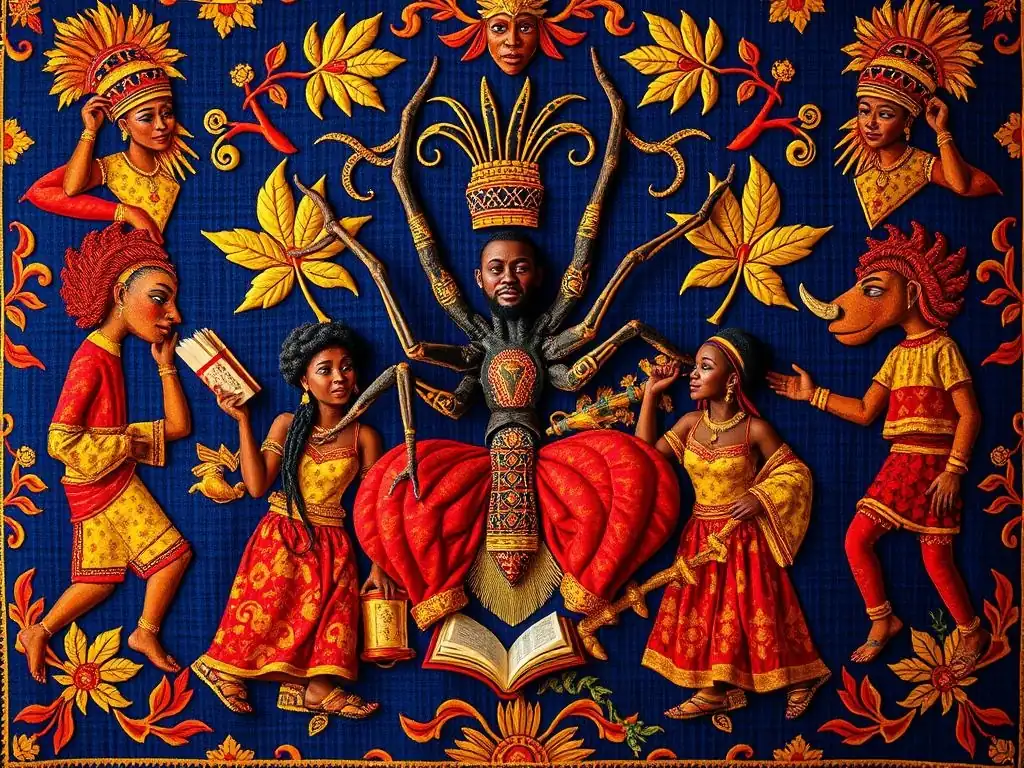
Although commonly depicted as a spider, Anansi's physical representation in West African folktales is often fluid and symbolic rather than strictly literal. He can appear as a spider, a spider with human features, or even a fully human form, sometimes retaining spider-like characteristics like the ability to spin webs.
This flexibility in his appearance allows him to interact with the world in various ways – his small spider form enables him to observe unnoticed and navigate tight spaces, while his human-like aspect allows for more complex social interactions and dialogue. This adaptability in form mirrors his adaptability in character and strategy, making him capable of operating in both the animal and human realms.
The spider imagery itself is significant. Spiders are known for their ability to spin intricate webs, which can be seen metaphorically as connections, traps, or the weaving of stories themselves. Anansi's web is often a symbol of his cunning plans or the intricate narratives he creates or becomes entangled in.
His relatively small size compared to many other characters in the stories emphasizes that his power comes not from physical strength but from his intellect and ability to manipulate. Thus, Anansi's physical attributes, particularly his spider form and its associated abilities, are integral to his identity as the ultimate trickster figure in West African folktales.
Anansi Stories: A Tapestry of West African Folktales
Common Themes and Moral Lessons in Anansi Tales
The vast collection of Anansi stories shares several recurring themes that offer valuable insights into the worldview and values embedded within West African folktales. A central theme is the triumph of the weak over the strong, where Anansi uses his wit to outsmart larger, more powerful adversaries like animals, humans, or even gods. This often highlights the importance of intelligence, cunning, and perseverance.
Another common theme is the exploration of human flaws such as greed, laziness, vanity, and dishonesty, often personified by Anansi himself or the characters he interacts with. His actions frequently lead to consequences that serve as cautionary examples, illustrating the negative outcomes of these behaviors.
Beyond cautionary tales, Anansi stories also impart lessons about resourcefulness, adaptability, and the power of communication. Many narratives demonstrate how clever planning and persuasive language can overcome seemingly insurmountable obstacles. The stories often emphasize the importance of community, cooperation (though Anansi often disrupts this), and the consequences of breaking social norms. The inherent morality in these West African folktales is rarely presented didactically; instead, it is woven into the narrative, allowing listeners to infer lessons from Anansi's successes and failures, making them engaging and thought-provoking.
The Significance of Storytelling in Anansi's World
Storytelling is not merely a medium for Anansi's adventures; it is often a theme and even a prize within the narratives themselves. One of the most famous Anansi stories, "How Anansi Obtained the Sky-God's Stories," directly addresses the origin of storytelling among humans, attributing it to Anansi's successful completion of impossible tasks set by Nyame.
This meta-narrative underscores the immense cultural value placed on stories within West African societies, positioning them as precious commodities, sources of knowledge, and symbols of power and influence. The act of telling and listening to Anansi stories is itself a continuation of this vital tradition.
In the context of West African folktales, storytelling is a dynamic, interactive process involving the teller and the audience, often incorporating call-and-response elements, songs, and dramatic performance. The Anansi tales thrive in this environment, their structure and language often tailored for oral delivery.
The stories serve as a communal activity, reinforcing social bonds and transmitting cultural heritage from elders to younger generations. Thus, the significance of storytelling in Anansi's world extends beyond the plot of individual tales to encompass the vital role of oral tradition in preserving culture and identity, making Anansi the spider a fitting patron for this art form.
Key Anansi Stories: Anansi and the Pot of Wisdom, Anansi and the Yam Hills, Anansi Borrows Money
Several Anansi stories are particularly well-known and exemplify the common themes and character traits of the spider trickster in West African folktales. "Anansi and the Pot of Wisdom" tells how Anansi attempts to hoard all the world's wisdom in a pot hung on his stomach, only for it to fall and break, scattering wisdom among the people.
This story highlights his greed and folly but also inadvertently explains the distribution of knowledge. Another popular tale, "Anansi and the Yam Hills," often shows Anansi attempting to trick others out of their food or crops, showcasing his constant struggle with hunger and his often-failed schemes to get food without working, illustrating the consequences of laziness and deceit.
"Anansi Borrows Money" (or variations thereof) frequently explores Anansi's financial troubles and his elaborate, often dishonest, methods for acquiring wealth or avoiding debt. These stories often involve complex chains of borrowing and trickery, leading to humorous and sometimes chaotic outcomes. These core narratives, alongside countless others, form the rich tapestry of Anansi stories. They are retold and adapted across different regions and cultures, but the core elements of Anansi's cunning, his insatiable desires, and the lessons learned from his antics remain central to these classic West African folktales.
Anansi's Journey Across Continents: The Diaspora of a Trickster
Anansi in the Caribbean: Adaptation and Evolution
The figure of Anansi traveled from West Africa to the Caribbean and parts of the Americas during the transatlantic slave trade. Enslaved people brought their oral traditions with them, and Anansi stories became a crucial part of the folklore that developed in the New World.
In the Caribbean, particularly in islands like Jamaica, Suriname, and the Dutch Antilles, Anansi (often spelled Anancy or Anansi) retained his core identity as a cunning spider-trickster but also adapted to his new environment. The stories incorporated elements of Caribbean life, including local flora and fauna, social structures shaped by colonialism and slavery, and interactions with new characters.
The adaptation of Anansi in the Caribbean reflects the resilience and creativity of enslaved populations who used storytelling as a means of cultural preservation, subtle resistance, and psychological survival. Anansi's ability to outsmart powerful figures resonated strongly in a context where enslaved people faced overwhelming oppression. His victories, however small or temporary, offered a symbolic triumph of wit over brute force and authority. The vibrant tradition of Anancy stories in the Caribbean is a direct continuation and evolution of West African folktales, demonstrating how folklore can transform while maintaining its essential spirit across vast distances and challenging circumstances.
Anansi's Influence on Afro-Caribbean Folklore: The Persistence of Storytelling Traditions
Anansi's arrival had a profound influence on the development of Afro-Caribbean folklore. His character and narrative patterns became central to the oral traditions of these communities, often serving as a foundation upon which new stories and characters were built. The emphasis on cleverness, survival, and outsmarting oppressive figures remained a key element, reflecting the lived experiences of people in the Caribbean. The storytelling sessions themselves became important social gatherings, preserving a vital link to African heritage and fostering a sense of community and shared identity.
The persistence of Anansi stories highlights the power of oral tradition to bridge cultural divides and maintain continuity across generations, even when faced with immense disruption. These narratives became a form of cultural currency, passed down through families and communities, ensuring that the spirit of West African folktales endured. Anansi's influence can be seen not only in the direct retelling of his tales but also in the development of other trickster figures and narrative styles within Afro-Caribbean folklore, solidifying his place as a foundational character in the region's rich oral heritage.
Comparing Anansi Tales: West Africa vs. the Caribbean
While the Anansi stories told in the Caribbean share a common ancestor with West African folktales, there are notable differences that reflect the distinct cultural contexts in which they evolved. In West Africa, Anansi's trickery often operates within a complex social and cosmological framework involving interaction with deities, kings, and a wide array of animals representing various aspects of nature and society. The focus is often on explaining origins, teaching moral lessons within a traditional societal structure, and celebrating cleverness as a valued trait.
In the Caribbean, while moral lessons are still present, Anansi's trickery often takes on a more pronounced edge related to survival and resistance against figures of authority, sometimes interpreted as symbolic representations of enslavers or colonial power structures. The stories might incorporate elements of Creole language, specific Caribbean landscapes, and characters unique to the region's folklore.
The focus might shift slightly towards themes of navigating hardship, finding freedom within constraints, and using wit as a tool for subversion. Despite these differences in context and emphasis, the core character of Anansi – the cunning, often flawed, but always resourceful spider – remains remarkably consistent, a testament to the enduring power of the original West African folktales.
The Enduring Legacy of Anansi: West African Folktales in Contemporary Culture
Anansi in Literature and Art: Children's Books and Graphic Novels
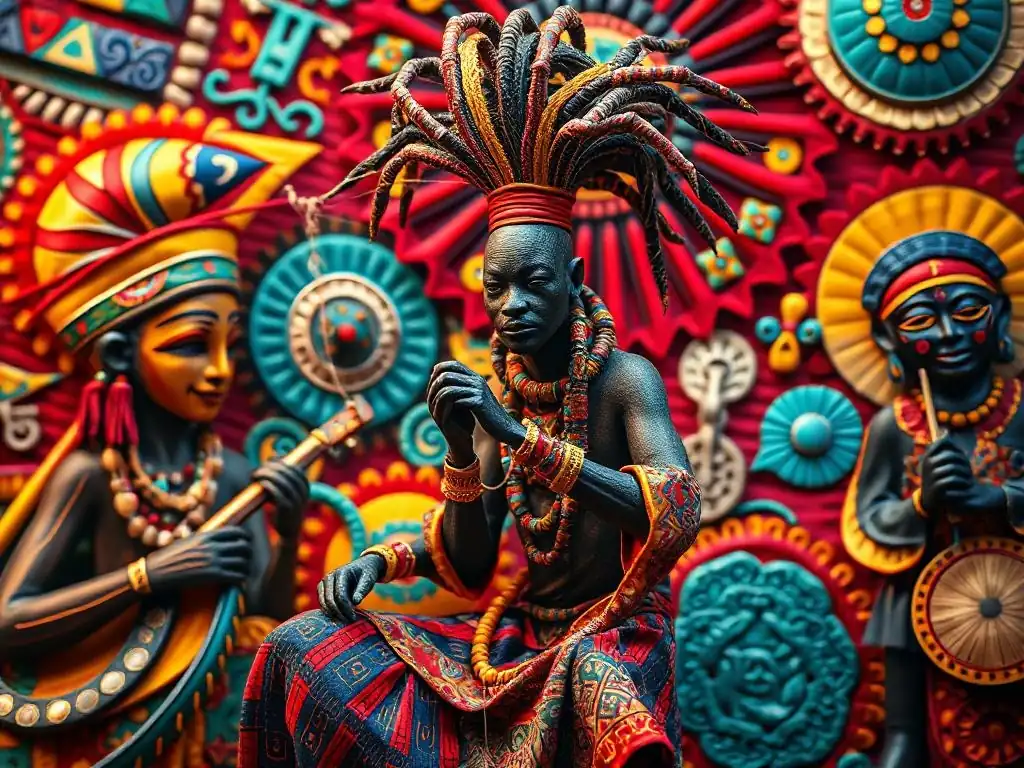
Anansi's reach extends far beyond traditional oral storytelling, profoundly influencing contemporary literature and art. His character and stories have been retold and adapted in countless children's books worldwide, introducing young readers to the rich tradition of West African folktales through engaging narratives and vibrant illustrations. Authors like Peggy Appiah, Gail E. Haley, and Eric Kimmel have published popular collections of Anansi stories, often adapting them for a modern audience while retaining their core themes and characters. These books play a crucial role in preserving and disseminating these important cultural narratives.
Beyond children's literature, Anansi has appeared in various forms of art and media, including graphic novels, comics, and even adult fiction, notably featuring prominently in Neil Gaiman's novel Anansi Boys, which explores his family life in a contemporary setting. His visual representation varies, from a literal spider to a human or hybrid form, reflecting the flexibility of his traditional portrayal.
This continued presence in published works and visual media ensures that the legacy of Anansi and the tradition of West African folktales remain alive and accessible to a global audience, demonstrating the adaptability and timeless appeal of the trickster figure.
Anansi's Influence on Contemporary Trickster Archetypes
Anansi is not just a character in stories; he is a powerful archetype that has influenced the portrayal of trickster figures in contemporary culture. His blend of cunning, humor, self-interest, and occasional benevolence resonates with many modern characters across different media. The idea of a seemingly weak character using intellect and guile to navigate a world dominated by more powerful forces is a recurring motif in literature, film, and television, and Anansi's long history as a prime example of this archetype undoubtedly contributes to its continued relevance.
Examining contemporary trickster figures often reveals echoes of Anansi's traits: the ability to disrupt norms, the use of wit over strength, the ambiguous morality, and the role as a catalyst for change, whether intentional or accidental. While not always explicitly named, the spirit of the clever spider from West African folktales can be seen in characters who challenge authority through non-traditional means, survive by their wits, and often operate outside conventional moral boundaries. This influence underscores the enduring power of Anansi as a foundational figure in the global pantheon of tricksters.
Why Anansi Still Matters: Lessons for Today's World
The enduring relevance of Anansi stories lies in their ability to offer timeless lessons applicable to contemporary life. Anansi's struggles with greed, laziness, and the consequences of his actions provide cautionary tales that remain pertinent. His successes, achieved through cunning and resourcefulness, highlight the importance of creativity, adaptability, and strategic thinking in overcoming challenges, qualities highly valued in today's complex world. The stories encourage critical thinking, prompting audiences to consider the motivations behind actions and the nuances of morality.
Furthermore, Anansi stories, as part of the rich tradition of West African folktales and their diaspora, serve as important cultural bridges. They offer insights into different worldviews, promote cultural understanding, and celebrate the resilience and ingenuity of people who have faced historical adversity. In a world that often feels overwhelming, Anansi's ability to navigate difficulty with wit and humor provides a compelling example of perseverance. His continued presence in popular culture ensures that these valuable lessons and the vibrant heritage of West African folktales continue to be shared and appreciated.
Similar Trickster Figures in African and Caribbean Mythology: Legba, Papa Bois
While Anansi is perhaps the most famous, African and Caribbean mythologies are rich with other trickster figures who share some similarities with the cunning spider. In West African and Vodou traditions, Legba (or Eshu/Elegua in other systems) is a powerful trickster spirit who serves as the gatekeeper between the human world and the spirit world.
Like Anansi, Legba is associated with communication, crossroads, and the ability to manipulate situations, often demanding offerings for passage or causing mischief if displeased. However, Legba is typically viewed as a more overtly divine or spiritual figure than Anansi, who often operates on a more human or animalistic plane, despite interacting with gods.
In Caribbean folklore, particularly in Trinidad and Tobago, Papa Bois is a nature spirit often depicted as an old man with cloven feet, sometimes considered a trickster figure. He is the protector of the forest and its animals, capable of deceiving hunters or leading them astray to protect nature. While his primary role is guardianship rather than pure mischief or self-gain like Anansi, Papa Bois uses cunning and illusion to achieve his goals, demonstrating a trickster-like approach within his domain. Exploring these figures alongside Anansi reveals the diverse ways the trickster archetype manifests across related cultural traditions.
Comparing Anansi to Other Global Trickster Gods: Loki
Comparing Anansi to trickster figures from other global mythologies, such as Loki from Norse mythology, highlights both universal aspects of the trickster archetype and cultural specificities. Loki is a god known for his shape-shifting abilities, cunning schemes, and role in bringing both benefit and disaster to the Norse gods and giants. Like Anansi, Loki often acts out of self-interest, causing chaos and disruption, but his actions can also inadvertently lead to important developments or the acquisition of valuable items (like Thor's hammer).
However, key differences exist. Loki is explicitly a god, part of the Aesir pantheon (though often an outsider), operating on a cosmic scale with significant divine power. Anansi, while interacting with gods like Nyame, typically operates more within the realm of animals and humans, and his power stems from wit rather than inherent divine might.
Anansi's stories often have a clearer focus on moral lessons and community values within West African folktales, while Loki's tales are more centered on the dramatic and often violent interactions within the Norse cosmic order. Despite these differences, the core function of both Anansi and Loki as boundary-crossers, agents of change through deception, and figures who embody complex, often contradictory traits, underscores the widespread human fascination with the trickster archetype.
Conclusion: Anansi's Web and the Power of Storytelling
The Importance of Preserving West African Folktales and Anansi Stories
The preservation of West African folktales, particularly the vast collection of Anansi stories, is crucial for several reasons. Firstly, these narratives are invaluable cultural artifacts, containing centuries of history, wisdom, and artistic expression from the Akan people and other related cultures. They provide insights into traditional beliefs, social structures, and moral philosophies that are vital for understanding the heritage of West Africa and the African diaspora. Documenting and sharing these stories ensures that this rich cultural legacy is not lost to time or changing social landscapes.
Secondly, Anansi stories offer important lessons and entertainment that remain relevant today. Their themes of cunning, resilience, morality, and the power of wit resonate across cultures and generations. Preserving these tales, whether through written records, audio recordings, or continued oral tradition, ensures that future generations can access this source of cultural knowledge, ethical guidance, and imaginative inspiration. The ongoing effort to preserve and promote West African folktales, including the adventures of Anansi, is an investment in cultural continuity and global understanding.
Anansi: A Timeless Symbol of Resilience and Ingenuity
Anansi the spider has endured for centuries as a powerful and timeless symbol of resilience and ingenuity. Originating in West African folktales, his journey across continents mirrors the resilience of the people who carried his stories through immense hardship. His ability to survive and even thrive using only his wit, despite being small and seemingly insignificant, offers a powerful message of hope and empowerment. He represents the idea that cleverness and adaptability can overcome even the most formidable obstacles.
His ingenuity is evident in the elaborate schemes he devises, whether to outsmart powerful beings or simply to get a meal. While his motives are often flawed, his methods demonstrate remarkable creativity and problem-solving skills. This aspect of his character makes him a compelling figure whose exploits continue to inspire and entertain. Anansi's enduring presence as a trickster in West African folktales and beyond is a testament to the universal appeal of a character who embodies the spirit of survival through intelligence and the boundless possibilities of a clever mind.
Further Exploration: Resources for Learning More About Anansi and West African Folklore
For those interested in delving deeper into the world of Anansi and the broader scope of West African folktales, a wealth of resources are available. Academic texts and folklore collections provide detailed analyses of Anansi's origins, character, and thematic significance within various cultural contexts. Anthropological studies often discuss the role of Anansi stories in transmitting cultural values and maintaining social cohesion in West African communities.
Numerous published books feature retellings of classic Anansi stories, ranging from scholarly editions to vibrant children's picture books, offering accessible entry points for readers of all ages. Online archives and digital libraries dedicated to folklore and oral traditions often contain recordings or transcriptions of Anansi narratives from different regions. Exploring these resources allows for a deeper appreciation of the complexity, humor, and profound wisdom contained within the enduring legacy of Anansi and the rich tradition of West African folktales.
Frequently Asked Questions
What are Anansi stories, and where do they originate?
Anansi stories are a collection of West African folktales featuring Anansi, a trickster spider. They primarily originate from the Ashanti people of present-day Ghana, but have spread throughout the African diaspora.
What role does Anansi typically play in these folktales?
Anansi is usually depicted as a trickster figure, often using his cunning and wit to outsmart larger and more powerful characters. He is known for being both clever and selfish, making him a complex and engaging character.
How have Anansi stories impacted contemporary society?
Anansi stories have profoundly impacted contemporary society, particularly in the African diaspora. They serve as a cultural bridge, preserving African heritage and influencing art, literature, and storytelling traditions.
What are some common themes explored in Anansi folktales?
Common themes include the importance of resourcefulness and intelligence, the dangers of greed and selfishness, and the power of storytelling to transmit cultural values. Many also explore themes of justice and morality.
Why are Anansi stories important for understanding West African culture?
Anansi stories offer valuable insights into West African cultural values and beliefs. They reflect the worldview, social structures, and moral principles of the communities from which they originated, providing a window into their history and traditions.
Final Reflection: Anansi's Enduring Legacy
The enduring power of Anansi's tales transcends geographical boundaries; they are not simply stories of the past, but vibrant threads woven into the fabric of our present. These West African folktales, with their clever trickster and timeless moral lessons, continue to resonate deeply, offering valuable insights into human nature and the complexities of our world. Their adaptability and enduring popularity highlight the universal appeal of strong narratives and the power of storytelling to connect us across cultures and generations.
Anansi's influence extends far beyond the borders of West Africa; his mischievous spirit and cunning strategies have shaped storytelling traditions across the globe, influencing literature, film, and even modern-day marketing. His stories offer a rich tapestry of cultural exchange, demonstrating how narratives can travel and evolve while retaining their core essence. Stories are a powerful way to pass on knowledge, values, and traditions from one generation to the next. They shape our understanding of the world and our place within it.
This quote perfectly encapsulates the lasting impact of Anansi's tales, not just as entertainment, but as a vital part of cultural heritage.
Consider Anansi's lessons – the importance of wit, the consequences of greed, the value of community – and how they apply to your own life. What clever strategies can you employ to overcome challenges? What lessons can you learn from Anansi's triumphs and failures?
Let Anansi's web of stories inspire you to weave your own narratives, to share your own wisdom, and to connect with the rich tapestry of human experience that stretches across continents and through time. Embrace the power of storytelling, and let the legacy of Anansi continue to enrich your life and the lives of those around you.
Unravel Anansi's Wisdom: Spin Your Own Story!
Thanks for joining us on this journey through the fascinating world of Anansi! We hope you gained a deeper appreciation for the power of storytelling and its ability to connect cultures across continents. Ready to weave your own narrative?
- Share your favorite Anansi tale (or a similar folk story from your culture!) in the comments below. Let's build a vibrant tapestry of global myth!
- Explore other captivating legends on our site – discover the rich diversity of storytelling traditions worldwide.
- Consider writing your own Anansi-inspired short story; unleash your creativity!
What unique element of your own cultural heritage could you share to enrich the global storytelling experience?