
Anansi's Web: Unraveling the Ashanti Origin of Stories


Welcome to Mythology and Legends, where the echoes of ancient tales still resonate. Ever wondered how stories themselves came to be? Prepare to be ensnared as we delve into Anansi's Web, exploring the vibrant Ashanti folklore and the trickster spider who, quite literally, spun the very fabric of narrative. What secrets lie within Anansi's cunning? Let's begin unraveling the threads...
- Introduction to Anansi and Ashanti Storytelling
- The Ashanti People: Guardians of Anansi Lore
- Anansi: The Spider-God and Master Trickster
- The Creation of Stories: Anansi's Quest for Knowledge
- Key Themes and Lessons in Anansi Narratives
- Anansi Stories in Ashanti Folklore: Examples and Analysis
- Anansi's Journey Beyond Africa: Diaspora and Adaptation
- Anansi's Enduring Relevance in Contemporary Society
- The Future of Anansi Stories and Ashanti Folklore
- Conclusion: Anansi's Web of Influence
- Frequently Asked Questions
- Final Reflection: The Enduring Legacy of Anansi
- Unlock the Secrets of Anansi's Web
Introduction to Anansi and Ashanti Storytelling
The Enduring Legacy of Anansi in African Folklore
Anansi, the trickster spider, is one of the most recognizable figures in African folklore, his tales spreading far beyond his origins. While most closely associated with the Ashanti people of Ghana, variations of the Anansi character and his stories can be found across West Africa and into the Caribbean and Americas due to the transatlantic slave trade.
This widespread presence underscores his significant cultural impact, serving as a common thread in diverse storytelling traditions. His adaptability and the universal themes present in his adventures have allowed him to resonate with audiences across continents and centuries, becoming a symbol of wit and resilience.
The enduring legacy of Anansi speaks to the power of oral tradition and the ability of compelling characters to transcend geographical and linguistic boundaries. From the intricate narratives told in villages under the moonlight to modern adaptations in literature and film, Anansi continues to capture the imagination. His tales serve not only as entertainment but also as vital cultural repositories, preserving history, social norms, and moral lessons passed down through generations. The spider's ability to outsmart more powerful beings through cunning rather than strength offers a potent metaphor explored in countless variations of Anansi stories across various cultures.
Anansi Stories in Ashanti Folklore: A Cultural Cornerstone
Within the rich tapestry of Ashanti culture, Anansi stories hold a particularly revered position, often considered the foundation of storytelling itself. These narratives are not merely children's fables but complex allegories that teach important lessons about life, morality, and the world. They are integral to the educational and social fabric of the Ashanti people, used by elders to instruct younger generations on history, customs, and ethical behavior. Storytelling sessions, particularly during the evening after daily work is done, are traditional community gatherings where Anansi's adventures are recounted, often with participatory elements from the audience.
The specific versions of Anansi stories in Ashanti folklore are deeply intertwined with the history and values of the Ashanti Kingdom. They reflect the social structure, beliefs, and daily life of the people. For example, tales often reference specific animals, landscapes, and social roles familiar within the Ashanti context.
The stories provide a framework for understanding the complexities of human nature, illustrating the consequences of actions like greed, pride, and deceit while celebrating cleverness and perseverance. These narratives are a living heritage, constantly being retold and interpreted, ensuring that the spirit and lessons of Anansi remain relevant to contemporary Ashanti society.
The Ashanti People: Guardians of Anansi Lore
The Kingdom of Ashanti: A Historical Context for Anansi Tales
The Ashanti Kingdom, or Asante, was a powerful and influential state that emerged in the 17th century in what is now modern-day Ghana. Known for its sophisticated political structure, military prowess, and significant wealth derived from gold and the kola nut trade, the kingdom fostered a rich cultural environment where arts, crafts, and oral traditions flourished. Kumasi served as the capital, becoming a center of learning and culture.
This historical context is crucial to understanding the origins and development of Anansi stories Ashanti folklore. The stable and prosperous environment of the kingdom provided fertile ground for the development and widespread dissemination of complex narratives.
The hierarchical structure of the Ashanti Kingdom, with its emphasis on wisdom, leadership, and community welfare, is often subtly reflected in Anansi's interactions with other characters, including the sky god Nyame and various animal figures representing different aspects of society. The kingdom's history of resistance and resilience, particularly against colonial powers, also resonates with Anansi's ability to overcome seemingly insurmountable obstacles through wit. The tales served as a means of preserving collective memory and reinforcing cultural identity within the kingdom, ensuring that the wisdom and experiences of previous generations were passed down effectively.
Oral Tradition and the Preservation of Anansi Stories
For centuries, Anansi stories in Ashanti folklore have been preserved and transmitted through the powerful medium of oral tradition. Before widespread literacy, storytelling was the primary method of education, entertainment, and cultural transmission. Skilled storytellers, often respected elders or griots (though the term griot is more commonly associated with Mande cultures, similar roles existed), played a vital role in keeping these narratives alive, ensuring their accuracy and engaging their audiences. The performance aspect of storytelling was crucial, involving not just recitation but also dramatic flair, intonation, and interaction with listeners.
This reliance on oral tradition meant that while core elements remained consistent, stories could adapt and evolve over time, incorporating new experiences or emphasizing different lessons depending on the context and the storyteller. The communal nature of storytelling sessions fostered a shared understanding of cultural values and history among the Ashanti people.
Even with the advent of written language and modern media, oral tradition remains a significant way that Anansi stories Ashanti folklore are shared, particularly in homes and community gatherings, connecting younger generations to their heritage. Efforts are also being made to document and preserve these oral traditions in written and audio formats for wider access and future safeguarding.
Anansi: The Spider-God and Master Trickster
Anansi's Divine Origins: From Nyame's Helper to Cultural Hero
In many Ashanti origin myths, Anansi is depicted as a figure with close ties to the supreme sky god, Nyame. Some narratives portray him initially as a humble servant or messenger of Nyame, dwelling in the heavens.
This divine connection gives Anansi a unique status, positioning him not just as an animal character but as a being capable of interacting with the divine realm. It is from this vantage point, in proximity to the source of all things, that Anansi is often said to have gained his extraordinary cleverness and his desire for knowledge and power, ultimately leading to his most famous feat: acquiring all the stories in the world from Nyame.
While not always worshipped as a god in the same vein as Nyame, Anansi's divine association elevates him beyond a mere trickster animal. He becomes a liminal figure, bridging the gap between the divine and the human, the animal world and the spiritual realm. This unique positioning allows him to serve as a mediator or an instigator of change, often disrupting the established order through his actions. His journey from a potentially subservient role to a culture hero who brings wisdom and narratives to humanity is a central theme in understanding his significance in Anansi stories Ashanti folklore.
Anansi's Character: Cleverness, Greed, and Ambiguity
Anansi's character is famously complex and often contradictory. He is renowned for his unparalleled cleverness and wit, capable of outsmarting creatures far larger and stronger than himself, including formidable foes like the python Onini, the leopard Osebo, and the hornets Mmoatia. His intelligence is his primary weapon, allowing him to navigate difficult situations and achieve seemingly impossible goals. This aspect of his character is celebrated as a source of inspiration, demonstrating that ingenuity can overcome brute force.
However, Anansi is also frequently portrayed as driven by greed, selfishness, and a desire for personal gain, often at the expense of others. He can be lazy, deceitful, and even cruel, using his intelligence to manipulate and exploit. This moral ambiguity is a key feature of Anansi stories Ashanti folklore.
Anansi is not a simple hero or villain; he embodies both admirable traits and significant flaws, reflecting the complexities of human nature itself. This makes his stories rich with layers of meaning, allowing them to explore not only the triumphs of cleverness but also the negative consequences of unchecked ambition and deceit.
The Creation of Stories: Anansi's Quest for Knowledge

How Anansi Won the Stories From Nyame: A Defining Myth
The most famous and foundational Anansi story in Ashanti folklore is the tale of how he acquired all the stories in the world from the sky god, Nyame. According to the myth, Nyame possessed all the narratives, keeping them locked away. Anansi, desiring these stories for himself and his people, approached Nyame and asked to purchase them. Nyame set seemingly impossible tasks as the price: capturing the python Onini, the leopard Osebo, the hornets Mmoatia, and the Mboro (a dangerous fairy or spirit). Nyame doubted the small spider could succeed.
Through sheer cunning, Anansi devised ingenious plans to trap each creature. He tricked Onini into letting himself be measured and tied up, lured Osebo into a pit, fooled Mmoatia into a calabash by simulating rain, and captured Mboro by covering her with sticky sap. Presenting these formidable captives to Nyame, Anansi proved his extraordinary wit.
Impressed by Anansi's cleverness, Nyame declared that from that day forward, all stories would be known as "Anansi stories" (Anansesem) and gave them to the spider to distribute among humanity. This myth explains the origin of storytelling itself for the Ashanti people and cements Anansi's role as the keeper and dispenser of wisdom and narratives.
The Significance of Anansi Owning the Stories
The act of Anansi winning the stories from Nyame carries profound cultural significance within Ashanti folklore. It signifies that knowledge, wisdom, and the power of narrative are not inherent possessions of the mighty or divine, but can be acquired through intellect, perseverance, and cleverness, even by the smallest and seemingly weakest of beings. By bringing the stories down from the heavens to the earth, Anansi democratized knowledge, making it accessible to humanity. This myth establishes Anansi as the ultimate storyteller and the source from which all other tales flow.
Furthermore, the ownership of stories grants Anansi immense power and influence. Stories shape understanding, transmit values, and explain the world. By becoming the owner of all narratives, Anansi effectively gained control over the collective knowledge and cultural memory of the people. This reinforces his status as a central figure in Ashanti culture, not just a character within stories, but the very reason why stories exist and matter. The concept of Anansi stories Ashanti folklore thus refers not just to tales about Anansi, but often to storytelling itself, acknowledging his pivotal role in its origin.
Key Themes and Lessons in Anansi Narratives
Wisdom and Cleverness in Anansi's Adventures
A prominent theme in Anansi stories is the triumph of wisdom and cleverness over physical strength or status. Anansi, a small spider, consistently outsmarts larger, more powerful animals and even humans or spirits. This highlights the value placed on intelligence and strategic thinking within Ashanti culture. Tales like "Anansi and the Pot of Wisdom" explicitly deal with the acquisition and distribution of knowledge, showing Anansi's initial attempt to hoard wisdom before it ultimately spills out for everyone.
These narratives serve as practical lessons in problem-solving and critical thinking. They encourage listeners to think creatively and use their minds to overcome challenges, rather than relying solely on brute force. The intricate plots Anansi devises to trick his opponents provide examples of strategic planning and execution. While Anansi's motives are often self-serving, the methods he employs underscore the power and effectiveness of intellect, a valuable trait admired and promoted through the telling of Anansi stories Ashanti folklore.
The Consequences of Greed and Trickery: Moral Lessons in Anansi Tales
While celebrating cleverness, Anansi stories also frequently offer cautionary tales about the negative consequences of greed, selfishness, and unchecked trickery. Many stories depict Anansi's schemes backfiring, leaving him in embarrassing or painful situations. For instance, in tales where he tries to hoard food or resources, he often ends up losing everything or being punished for his avarice. These narratives serve as important moral lessons for the audience.
By showing Anansi's failures and the repercussions of his negative traits, the stories teach valuable lessons about fairness, community, and the importance of ethical behavior. Children listening to these tales learn about the potential downsides of deceit and the importance of considering others. The ambiguous nature of Anansi's character allows for nuanced discussions about morality – while his cleverness is often applauded, his motives and the outcomes of his selfish actions are frequently presented as warnings, reinforcing social norms and ethical standards within the Ashanti community through Anansi stories Ashanti folklore.
Anansi stories often function as vehicles for social commentary, subtly critiquing authority, challenging social norms, and exploring power dynamics within the community. Anansi's ability to outwit powerful figures, whether they are animals, humans, or even the sky god himself, can be interpreted as a form of resistance against oppression or rigid social structures. His adventures often expose the follies and weaknesses of those in positions of power.
The tales also reinforce key cultural values of the Ashanti people, such as respect for elders, the importance of community cooperation (though Anansi himself often acts selfishly, the negative outcomes highlight the value of cooperation), and the significance of fulfilling one's responsibilities. By presenting these values within engaging narratives, Anansi stories Ashanti folklore help transmit them across generations. The stories provide a safe space to discuss complex social issues, allowing listeners to explore different perspectives through the actions and consequences faced by Anansi and the other characters.
Anansi Stories in Ashanti Folklore: Examples and Analysis
"Anansi and the Pot of Wisdom": A Classic Tale
One of the most illustrative Anansi stories in Ashanti folklore is "Anansi and the Pot of Wisdom." In this tale, Anansi discovers that Nyame has a pot containing all the wisdom in the world. Anansi, driven by his desire to possess this knowledge exclusively, manages to acquire the pot. He decides to hide it at the very top of the tallest tree so that no one else can access it. He ties the pot to his stomach and begins the arduous climb, but the pot constantly bumps against his knees, making the ascent difficult.
Anansi's young son, Ntikuma, watching from below, calls out and suggests he tie the pot to his back instead. Anansi, realizing the simple wisdom of this suggestion, is surprised that his son, without the pot of wisdom, could be wiser than he.
In his frustration and anger, he throws the pot down, causing it to break and the wisdom to scatter among the people. This story not only explains the origin of scattered wisdom among humanity but also highlights Anansi's flawed nature – his desire to hoard knowledge and his inability to recognize wisdom in others, even his own child, until it's pointed out.
"Anansi and the Yam": Exploring Themes of Deceit
The story of "Anansi and the Yam" is another classic that explores themes of deceit and its consequences. In one version of this tale, Anansi is lazy and does not want to cultivate his own yam farm. He devises a plan to steal yams from his neighbor, Akwasi the farmer. He digs a tunnel under Akwasi's farm to steal the yams secretly. However, his greed leads him to steal so many that Akwasi notices the loss.
Akwasi sets a trap, often involving sticky sap or a snare. Anansi, returning for more yams, gets caught in the trap. Akwasi discovers Anansi and punishes him, sometimes by beating him or exposing his theft to the community. This story serves as a clear moral lesson against laziness, theft, and deceit. It demonstrates that while Anansi's cunning might allow him to get away with things temporarily, his actions ultimately lead to his downfall and public humiliation, reinforcing the importance of hard work and honesty within the community as taught through Anansi stories Ashanti folklore.
"Anansi and the Lizard": Justice and Wisdom
The tale of "Anansi and the Lizard" (sometimes "Anansi and the Pigeon") often deals with themes of justice, truth, and the consequences of false accusations. In a common version, Anansi is involved in a dispute or commits a wrong, and the Lizard witnesses it. Anansi attempts to bribe or threaten the Lizard to prevent him from telling the truth to the chief or the community.
Despite Anansi's efforts, the Lizard bravely recounts what he saw, leading to Anansi being held accountable for his actions. This story emphasizes the value of truthfulness and the importance of witnesses in ensuring justice. It shows that even the cleverest trickster cannot escape the truth forever when someone is willing to speak up. This narrative reinforces community values around fairness and accountability, highlighting how honesty can overcome manipulation, even by a master trickster like Anansi, a key lesson embedded in Anansi stories Ashanti folklore.
Anansi's Journey Beyond Africa: Diaspora and Adaptation
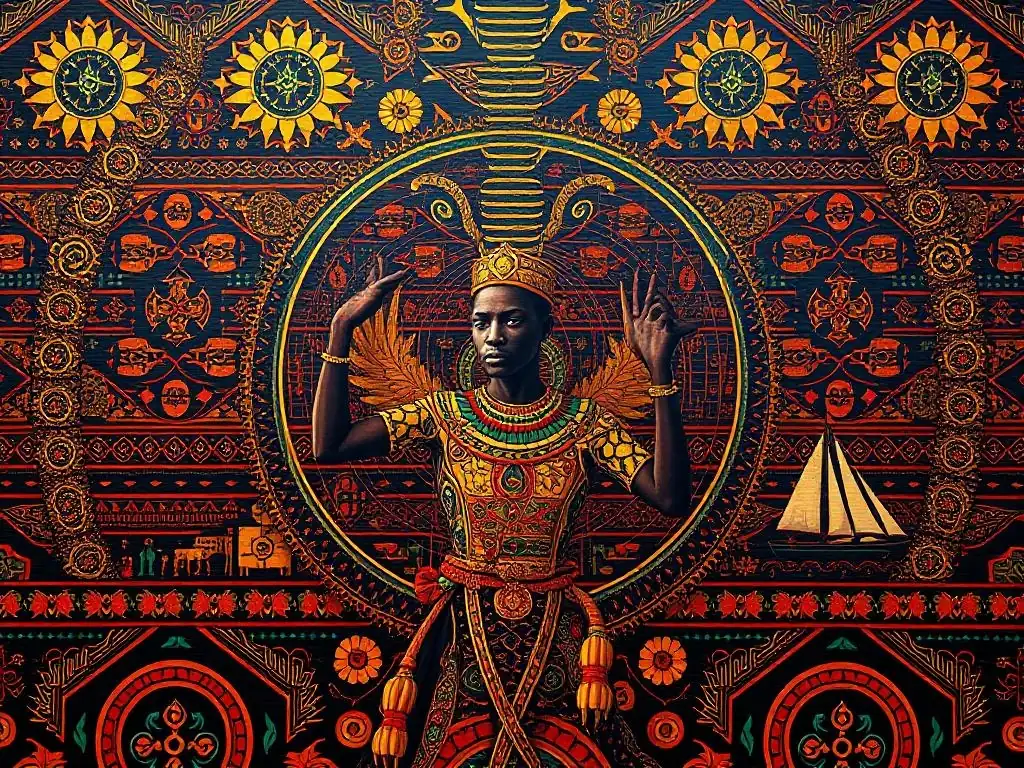
Anansi in the Caribbean: Influence on Folk Tales and Storytelling
During the transatlantic slave trade, enslaved people from West Africa, including those of Ashanti descent, carried their cultural traditions, including Anansi stories, to the Caribbean islands. In this new context, Anansi's character and tales adapted and evolved, blending with other African traditions and local influences. In the Caribbean, Anansi (often spelled Anancy or Nancy) became an even more potent symbol of resistance, representing the ability of the enslaved to use their wit and intelligence to survive and outsmart their oppressors.
Anancy stories in the Caribbean often feature similar trickster motifs but are set within the specific landscapes, social structures, and challenges faced by enslaved and later, free black communities. The tales served as a form of cultural preservation, maintaining a connection to African heritage, and as a means of covert communication and psychological resilience. They often poked fun at authority figures (sometimes thinly veiled representations of slave owners) and celebrated the small victories achieved through cleverness. This adaptation demonstrates the dynamic nature of Anansi stories Ashanti folklore as they traveled and transformed in new environments.
The Evolution of Anansi's Character in Different Cultures
As Anansi stories spread from their Ashanti origins to various parts of the African diaspora and beyond, the character of Anansi underwent subtle but significant evolutions. While his core identity as a clever trickster spider remained, the emphasis on certain traits and the specific roles he played varied depending on the cultural context and the needs of the community telling the stories.
In some cultures, the trickster aspect might be more pronounced, focusing purely on his ability to deceive and manipulate. In others, particularly in the Caribbean, his role as a symbol of survival and resistance against oppressive systems became more central. In some narratives, he might be more benevolent, while in others, his greed and selfishness are highlighted. This evolution showcases the flexibility and enduring appeal of the Anansi archetype, allowing him to serve diverse narrative and cultural purposes. Despite these variations, the fundamental link back to the original Anansi stories Ashanti folklore remains a recognized lineage.
Anansi's Enduring Relevance in Contemporary Society
Anansi as a Symbol of Resistance and Empowerment
In contemporary society, Anansi continues to be a powerful symbol, particularly for people of African descent. His ability to use intellect to overcome seemingly insurmountable odds resonates deeply with historical experiences of oppression and marginalization. Anansi represents the power of the underdog, demonstrating that wit and strategic thinking can challenge and sometimes defeat brute force and systemic power.
For many, Anansi serves as an empowering figure, embodying resilience, adaptability, and the capacity to find creative solutions in difficult circumstances. His stories inspire individuals to use their minds and voices to navigate challenges and assert their agency. This interpretation of Anansi as a symbol of resistance is particularly strong in post-colonial contexts and among communities that have historically faced discrimination, highlighting how ancient Anansi stories Ashanti folklore continue to offer relevant lessons for modern struggles.
Anansi in Literature, Art, and Popular Culture
Anansi's influence extends far beyond traditional oral storytelling, permeating contemporary literature, art, music, and popular culture around the world. Numerous authors have retold or adapted Anansi stories, introducing the character to new generations of readers. Notable examples include Neil Gaiman's novel "Anansi Boys," which features Anansi's descendants in a modern setting, and various children's books that introduce younger audiences to his adventures.
In the visual arts, Anansi's image is often depicted in various forms, from traditional African carvings and textiles to modern illustrations and graphic novels. He appears in animation, theater, and music, often as a charming but unpredictable character. This widespread presence in popular culture demonstrates the enduring appeal of Anansi's character and the universal nature of the themes explored in Anansi stories Ashanti folklore, ensuring that the cunning spider continues to capture the imagination globally.
The Future of Anansi Stories and Ashanti Folklore
Preserving and Promoting Anansi Traditions for Future Generations
Ensuring the survival of Anansi stories Ashanti folklore requires dedicated efforts in preservation and promotion. While oral tradition remains vital, documenting these stories in written form, audio recordings, and digital formats is crucial for their long-term survival, especially as modern lifestyles change traditional storytelling practices. Initiatives by cultural institutions, universities, and community organizations in Ghana and the diaspora are working to collect, transcribe, and archive these narratives.
Promotional efforts are equally important, involving translating stories into various languages, creating educational materials for schools, and supporting contemporary artists who draw inspiration from Anansi. Encouraging young people to learn and tell Anansi stories is key to keeping the tradition alive. By making these stories accessible and relevant to new audiences, their cultural significance and the valuable lessons they contain can continue to be shared and appreciated.
The Role of Education and Storytelling in Maintaining Anansi's Legacy
Education plays a critical role in maintaining the legacy of Anansi stories Ashanti folklore. Incorporating these stories into school curricula, both in Ghana and among diaspora communities, provides a structured way for young people to learn about their cultural heritage and the moral and social lessons embedded in the tales. Teachers can use Anansi stories as engaging tools to teach literacy, critical thinking, and cultural history.
Furthermore, fostering environments where traditional storytelling can continue to thrive is essential. Community centers, libraries, and cultural festivals can host storytelling sessions, bringing together elders and youth. Encouraging intergenerational storytelling allows for the direct transmission of narratives and the performance styles associated with them. By emphasizing both formal education and informal community storytelling, the vibrant tradition of Anansi stories Ashanti folklore can be passed down effectively, ensuring Anansi's web of stories continues to expand.
Conclusion: Anansi's Web of Influence
Anansi Stories in Ashanti Folklore: A Timeless Source of Inspiration
Anansi stories originating from the Ashanti people of Ghana represent a timeless and profound source of inspiration. These narratives, woven through the cunning adventures of a small spider, encapsulate the wisdom, values, and history of a great kingdom and its people. They offer complex characters, engaging plots, and layers of meaning that continue to resonate with audiences of all ages. From explaining the very origin of stories to teaching crucial moral lessons, Anansi's tales serve as a vital cultural touchstone.
The enduring appeal of Anansi stories Ashanti folklore lies in their ability to entertain while simultaneously educating. They highlight the power of intellect, expose the pitfalls of human flaws, and provide a framework for understanding the complexities of the world. As they have traveled across continents and adapted to new contexts, they have proven their remarkable resilience and relevance, demonstrating the universal power of well-told narratives rooted in specific cultural experiences.
Celebrating the Cultural Significance of Anansi and Ashanti Storytelling
Celebrating the cultural significance of Anansi and Ashanti storytelling means recognizing the profound impact these traditions have had and continue to have. It involves acknowledging the creativity and wisdom of the Ashanti people who originated these tales and the resilience of those who carried them across the diaspora. It is a celebration of oral tradition as a powerful means of preserving history, transmitting values, and building community.
Anansi's web, both literally and metaphorically, connects the past to the present, Ghana to the Caribbean and beyond, and the divine to the human. By continuing to tell, listen to, and analyze Anansi stories Ashanti folklore, we honor a rich cultural heritage and gain valuable insights into human nature and the enduring power of narrative. The clever spider ensures that the stories continue, spinning new threads of meaning for each generation.
Frequently Asked Questions
What is Anansi's role in Ashanti folklore?
Anansi is a trickster spider figure in Ashanti folklore. He is often credited with being the originator of stories and wisdom, obtaining them from the sky god Nyame.
Where did the Anansi stories originate?
The Anansi stories are deeply rooted in Ashanti folklore from Ghana, West Africa. They have been passed down through oral tradition for generations.
What are some common themes in Anansi stories?
Common themes include trickery, wisdom, and resourcefulness. Anansi often uses his cunning to overcome larger and stronger opponents.
How have Anansi stories impacted contemporary society?
Anansi stories have influenced literature, art, and music, particularly in the African diaspora. They serve as a reminder of cultural heritage and resilience.
Why is Anansi often depicted as a spider?
The spider form represents Anansi's ability to weave intricate webs of deceit and strategy. It also symbolizes his connection to knowledge and storytelling.
Final Reflection: The Enduring Legacy of Anansi
Anansi's tales, far from being mere children's stories, represent a vibrant tapestry of Ashanti wisdom, resilience, and cultural identity that continues to resonate powerfully in the modern world. These narratives, passed down through generations, offer invaluable insights into the complexities of human nature, the importance of community, and the enduring power of storytelling itself. Their continued relevance speaks volumes about the timeless wisdom embedded within Ashanti folklore.
The impact of Anansi's stories extends far beyond the borders of Ashanti culture. They have become a cornerstone of global storytelling, influencing literature, film, and even modern psychology. The trickster figure of Anansi, with his cunning and resourcefulness, serves as a powerful metaphor for the human condition, reminding us that even in the face of adversity, creativity and perseverance can triumph. Anansi's stories are not just stories; they are a living testament to the power of narrative to shape our understanding of the world and ourselves.
This quote encapsulates the enduring power of these tales to inspire and challenge us.
Consider, for a moment, the lessons woven into Anansi's web. What aspects of his character resonate most with you? How can the wisdom embedded in these ancient stories inform your own life, your own approach to problem-solving, and your own understanding of the world?
I invite you to delve deeper into the rich tapestry of Ashanti folklore, to explore the many variations of Anansi's adventures, and to discover the enduring power of these timeless tales for yourself. Let Anansi's legacy inspire you to weave your own narratives, to share your own stories, and to contribute to the ongoing evolution of this rich and vital tradition.
Unlock the Secrets of Anansi's Web
Thank you for exploring the fascinating world of Anansi and the Ashanti origins of storytelling! You’ve now gained a deeper understanding of rich cultural traditions and the power of narrative. Ready to weave your own stories?
- Craft your own Anansi tale: Let your imagination run wild and create a modern Anansi story, incorporating his cleverness and trickery in a contemporary setting. Share it with us in the comments!
- Share this article: Let others discover the magic of Anansi and the Ashanti tradition. Spread the knowledge!
- Explore further: Delve deeper into Ashanti folklore by researching other prominent figures and myths.
What unexpected twists would you add to a modern Anansi adventure?