Tír na nÓg: Stepping into the Land of Eternal Youth and Beauty
🌿 Discover Tír na nÓg, the legendary Irish mythology realm of eternal youth and beauty, where time stands still. Explore how this…
Read article
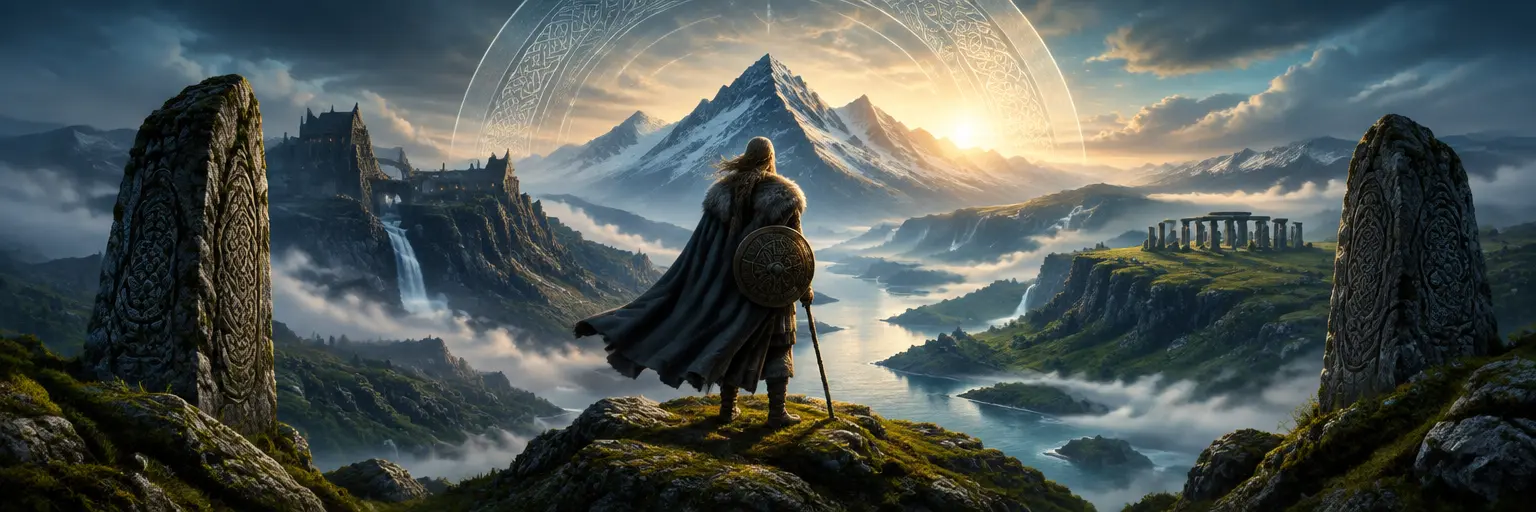
Journey into the heart of ancient lore where towering fjords meet misty moors, and divine forces shape the very earth beneath your feet. Mythic Landscapes invites you to explore the breathtaking, otherworldly settings of Norse and Celtic mythology—from the frost-bitten peaks of Jotunheim to the emerald valleys guarded by the Tuatha Dé Danann. Here, every mountain holds a giant’s breath, every sacred well whispers prophecies, and every stone circle stands as a gateway to the Otherworld. Discover how these enchanted terrains were not mere backdrops but living characters in epic sagas, influencing heroes, gods, and fate itself. Uncover the symbolic power of Yggdrasil’s roots, the eerie beauty of the Fairy Mounds, and the eternal struggle between order and chaos carved into glaciers and cliffs. Whether you are a seeker of ancient wisdom, a fan of fantasy worlds, or a traveler dreaming of real-life mythic sites, this exploration reveals how these landscapes still shape our stories, art, and sense of wonder today.
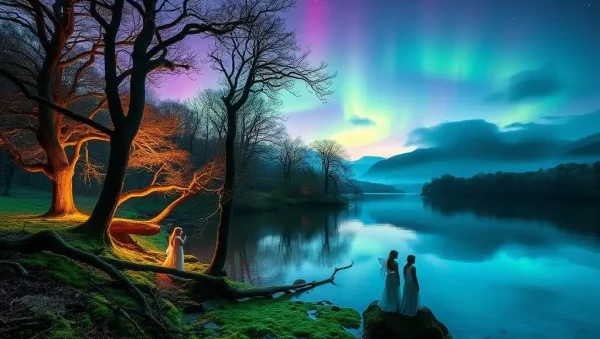
🌿 Discover Tír na nÓg, the legendary Irish mythology realm of eternal youth and beauty, where time stands still. Explore how this…
Read article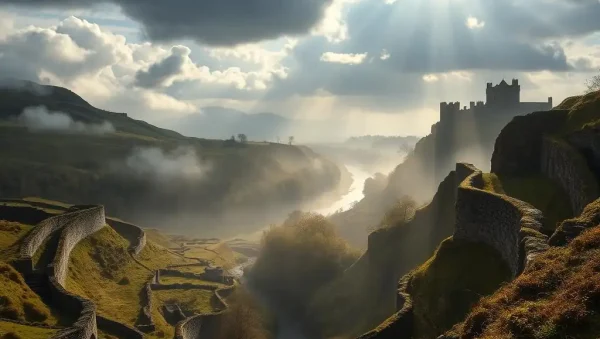
🌍 Dive into the fascinating world of Arthurian landscapes, where myth and history intertwine, exploring medieval Britain locations that fueled legendary tales…
Read article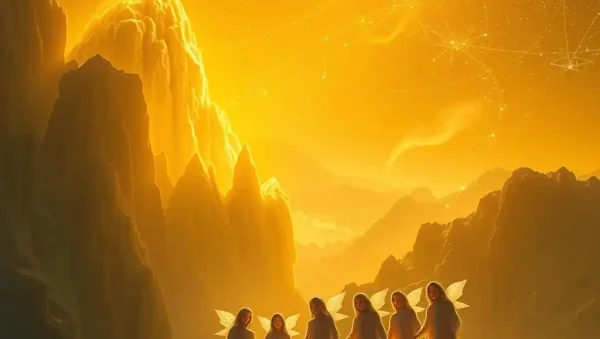
✨ Discover the enchanting world of Alfheim, where Light elf mythology origins reveal a luminous realm of elegance and magic, inspiring legends…
Read articleWelcome to the Mythic Landscapes subcategory, where the rugged fjords of Scandinavia meet the misty hills of the Celtic world. Here, geography is not merely a backdrop but a living character in ancient stories. From Yggdrasil’s cosmic roots to the Otherworld’s shimmering gates, these landscapes shape heroes, gods, and destinies. Dive into a curated journey that reveals how natural features—mountains, rivers, and forests—were sacralized by Norse and Celtic peoples, offering profound insights into their worldview and enduring cultural legacy. This page is your gateway to understanding the sacred geography that still echoes in modern fantasy and spiritual practice.
In Norse mythology, Yggdrasil is the immense ash tree that connects the nine realms, its branches reaching into Asgard and its roots descending into Niflheim and Hel. This World Tree is more than a symbol—it is the axis mundi, the center of the cosmos where gods hold daily counsel. Celtic traditions similarly revered sacred groves, such as the oak groves of the druids, where rituals connected the earthly realm to the divine. These arboreal landscapes were seen as portals, places where the veil between worlds thinned, allowing communication with ancestors and spirits.
For readers, this section unveils how trees functioned as living maps of time and space. You’ll learn about the runic symbolism carved into Yggdrasil, the role of mistletoe in Celtic rites, and how medieval texts like the *Prose Edda* and the *Mabinogion* describe these holy sites. Understanding these landscapes enriches your appreciation of ancient ecology—how early peoples managed forests not just for timber but for spiritual sustenance. Expect detailed analysis of archeological sites like the sacred oak groves at Uppsala and archaeological evidence of tree worship in Iron Age Britain.
Water in Norse and Celtic mythology is never mere H2O—it is a boundary, a purifier, and a dangerous passage. The Norse believed in rivers like Élivágar, whose icy waves spawned the first giant, while Celtic lore is saturated with lakes such as Lough Neagh, said to conceal submerged palaces of the Tuatha Dé Danann. Standing stones beside waterways often marked these thresholds, where heroes like Cú Chulainn would cross into the Otherworld after swearing oaths. The concept of the *imram*—a sea voyage to magical isles—further cements water as a mediator between mortal and immortal realms.
This segment explores the symbolic geography of water, from the Well of Urd beneath Yggdrasil, where the Norns weave fate, to the Salmon of Knowledge in Irish rivers. You’ll discover how seasonal floods and tidal patterns were interpreted as divine messages, and how sacred springs became pilgrimage sites for healing. Modern readers will find parallels in fantasy literature, from Tolkien’s rivers to Neil Gaiman’s *American Gods*, demonstrating how these ancient hydrologies continue to shape narrative landscapes. Practical insights include how to identify mythological river names in place-names across Scandinavia and the British Isles.
Mountains in Norse cosmology are more than elevations—they are the bones of the world, carved from the corpse of the primordial giant Ymir. Asgard’s throne of Hlidskjalf allows Odin to gaze over all peaks, while Celtic tradition places the *sidhe* mounds (fairy forts) within hills and mountains, such as the iconic Croagh Patrick or the Cave of Cruachan. These high places were arenas for divine battles, thunderous forges, and meetings with elusive deities. Caves served as entrances to underground halls, home to both benevolent dwarves and fearsome dragons like Fafnir.
Here, we dissect how topographical extremes influenced mythological narratives. For example, the Norse believed that mountains channeled the breath of frost giants, creating blizzards, while Celts viewed certain peaks as omphalos—centers of creation. You’ll examine archaeological sites like the Hill of Tara, where coronation rituals mimicked mythical ascents to power. The article also connects these landscapes to contemporary mountaineering culture, where climbers still name peaks after gods, preserving ancient reverence. Focus is on how physical hardship in these terrains was metaphorically linked to spiritual trials, a theme that resonates in modern adventure narratives.
The Celtic Otherworld—known as Tír na nÓg, Avalon, or Mag Mell—is often depicted as an island veiled in mist, accessible only to chosen heroes. Norse parallels include the realm of Muspelheim and the floating halls of the Valkyries, but also the concept of *Útgarðr*, a fenced domain of illusion beyond mortal lands. These invisible realms were not separate planes but layered atop everyday geography, requiring a special state of mind or object—like a golden apple or a horse’s bridle—to perceive. Stone circles and burial mounds were believed to be portholes, especially during Samhain or Yule.
This section demystifies the geography of the unseen. You’ll learn about historical attempts to map the Otherworld, from medieval Irish *dindshenchas* (place-lore poems) to Norse *landnámabók* settlement chronicles. We highlight how tidal islands, such as the Isle of Man’s St. Patrick’s Isle, were renamed to Christianize pagan sites, blending myth with history. For creatives, this provides rich material—how to design fictional worlds where the supernatural breathes beside the mundane. Expect comparisons with Japanese *kami* landscapes and Greek nymph-haunted groves, showing a universal human impulse to sacralize the horizon.
Mythic landscapes are not passive backdrops—they are active tests for heroes. Norse sagas describe journeys through *Jotunheim*’s freezing wastes or the fire-giant’s realm of *Múspellsheimr*, where only bravery can ignite a path. Celtic epics like the *Táin Bó Cúailnge* force warriors to ford hostile rivers, cross plains of curse, and navigate forests that shift paths. These trial-laden terrains symbolize inner transformation, where overcoming geographic obstacles mirrors moral and psychic growth. The landscape itself—whether a chasm, a cursed wood, or a volcanic valley—acts as an antagonist or mentor.
Here, we analyze narrative patterns across both mythologies: the hero’s departure from home, encounters with threshold guardians at rivers or cliffs, and the final return with boons. You’ll see how historical climate events, such as the volcanic winter of 536 CE, may have inspired particular landscapes of doom. We also draw parallels to survival literature and modern wilderness therapy, arguing that ancient trials inform current resilience psychology. Practical takeaways include mapping personal “mythic landscapes” in storytelling and how environmental metaphors can structure compelling character arcs in novels or games.
Norse landscapes tend to be stark and vertical—giant trees, icy peaks, and fiery caverns—reflecting a harsh Northern environment. Celtic landscapes are softer but equally mystical, emphasizing green hills, lakes, and winding rivers that hide portals. Both use geography to express cosmic order, but Norse focuses on struggle against cold and chaos, while Celtic highlights liminality and transformation.
Yes, many sites still exist, like Sweden's Gamla Uppsala for Norse worship or Ireland's Hill of Tara and Newgrange for Celtic rituals. Norway’s Lofoten Islands evoke giant territory, while Scotland’s Isle of Skye offers “fairy pools.” These are tourist destinations, but respect local customs—many are still considered sacred.
Authors like J.R.R. Tolkien (Mirkwood, Moria) and George R.R. Martin (The Wall) draw directly from Norse and Celtic geography. The pattern of a dangerous journey through symbolic terrain—forests, mountains, waters—remains a core narrative device. Subverting these tropes, such as making the forest a refuge, adds freshness.
Absolutely. Norse tales warn against overharvesting (the dwarves and gold) and revering trees as sacred. Celtic lore emphasizes reciprocity with rivers and hills, punishing those who pollute. These myths advocate sustainable stewardship, highlighting that disrespecting landscape leads to cosmic imbalance.
Begin with the *Poetic Edda* (Norse) and the *Mabinogion* (Welsh). Then explore visual resources like the British Museum’s Norse collection and the Museum of Celtic Heritage in Ireland. For a modern retelling, read *Norse Mythology* by Neil Gaiman and *The Táin* translated by Ciaran Carson to grasp landscape’s role.