Mythic Kings and Legendary Leaders: Royal Power and National Identity
🌍 Discover how mythic kings and legendary leaders shape national identity through royal leadership mythology worldwide, revealing the enduring power of legendary…
Read article
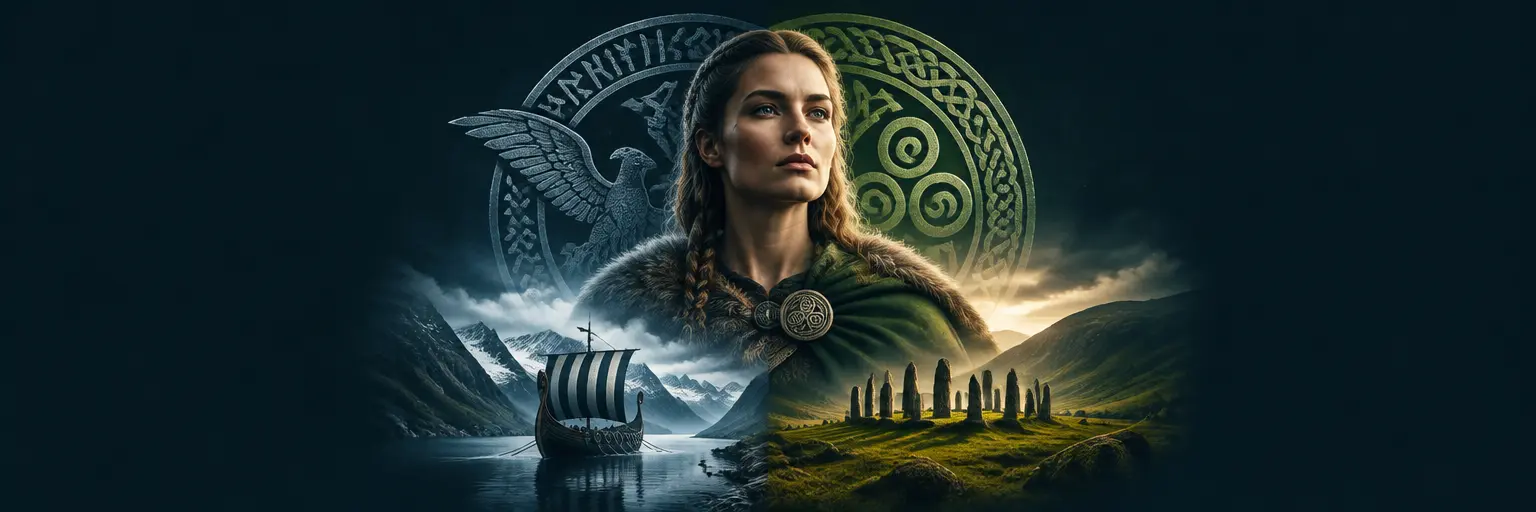
Dive into the powerful connection between ancient tales and modern nationhood with our exploration of Myth and National Identity within Norse and Celtic traditions. Discover how legendary figures, epic sagas, and timeless folklore have shaped collective consciousness, fueled patriotism, and defined cultural boundaries across Scandinavia, Ireland, Scotland, and Wales. From the heroic deeds of Odin and Cú Chulainn to the symbolic landscapes of Valhalla and Tir na nÓg, these stories are far more than relics—they are living blueprints of identity, resilience, and pride. Understand how mythmakers and political movements have reimagined these narratives to forge unity, justify sovereignty, and inspire artistic revival. Whether you’re a history enthusiast, a mythology buff, or a traveler seeking deeper meaning, this resource illuminates how myths remain a potent force in contemporary debates on heritage, nationalism, and belonging. Uncover the enduring power of legend as a mirror to the soul of a people—perfect for students, educators, and cultural explorers eager to connect past glory with present purpose.
🌍 Discover how mythic kings and legendary leaders shape national identity through royal leadership mythology worldwide, revealing the enduring power of legendary…
Read article
🛡️ Discover how Thor's Hammer transcends its role as a weapon to embody Norse mythology symbol meanings of strength and protection, highlighting…
Read article
🌟 Explore how Norse Celtic division myths have been exploited to foster societal divides, revealing the darker manipulation behind legendary stories and…
Read articleWithin the vast tapestry of Norse and Celtic Mythology, the subcategory Myth and National Identity explores how ancient sagas, deities, and heroic legends have been strategically woven into the modern fabric of nationhood across Scandinavia, Ireland, Scotland, and Wales. This isn't just about retelling old stories; it is a fascinating study of how cultural memory, political movements, and romantic nationalism have resurrected and reshaped myths to forge cohesive identities, justify territorial claims, and distinguish one people from their neighbors. Here, you will uncover the symbiotic relationship between folklore and patriotism, examining how figures like Odin, Cú Chulainn, and the Tuatha Dé Danann have transcended their mythological origins to become potent symbols of national pride, resilience, and collective destiny. Expect rigorous analysis, historical context, and contemporary relevance as we decode the enduring power of these ancestral narratives.
Dive deep into the 18th and 19th centuries, a period when the rediscovery of Norse sagas and Celtic epics fueled a surge of romantic nationalism. Intellectuals and poets from Iceland to Ireland deliberately mined ancient texts to construct a glorious, pre-colonial past that could unite fragmented populations under a single cultural banner. This movement often involved selective reinterpretation—elevating certain heroic virtues while downplaying inconvenient historical realities—to craft a narrative of inherent bravery, wisdom, and moral superiority that justified a distinct national character. For example, the Viking figure of the hardy, democratic farmer-warrior became a central icon for Scandinavian nation-building, while the tragic hero Cú Chulainn was repurposed by Irish revivalists as a martyr for sovereignty.
On this page, you will learn how these mythic revivals were not merely academic exercises but served concrete political agendas, from fueling independence movements to legitimizing new monarchies. We will examine the works of key figures like the Brothers Grimm (though German, their influence was pan-European) and Icelandic scholar Jón Sigurðsson, showing how translated texts were edited for nationalistic appeal. Expect case studies on the "Viking Revival" in Denmark and Norway, and the Celtic Twilight movement, revealing how each nation cherry-picked its mythological pantheon to project an idealized self-image to both its citizens and the wider world. This section is essential for understanding why certain myths persist while others fade.
Central to the construction of national identity is the claim of a prestigious, often divine, ancestry. In this subcategory, we dissect how royal dynasties and emerging nations across both Norse and Celtic spheres used mythology to trace their bloodlines back to gods like Odin, Thor, or Lugh. By establishing a literal descent from deities, rulers could sacralize their authority, making rebellion against the crown tantamount to defying cosmic order. The Icelandic Landnámabók documents settler genealogies linking them to Norse gods, while medieval Scottish and Irish chronicles invented lineages connecting Scottish kings to the Milesians and ultimately to biblical and mythological figures, thereby establishing ancient legitimacy in European politics.
Explore how this ancestral obsession influenced everything from heraldic symbols to place names, embedding mythological identity into the physical landscape. We will compare the Norse concept of ódal (ancestral property) with the Celtic dúthchas (hereditary right to land), showing how myths of origin justified ownership and sovereignty. This section provides a precise genealogical map of how a shared mythological heritage was continuously reinvented to crown new kings and unify rival clans. You will gain insight into the propaganda uses of epic poetry, such as the Heimskringla, which framed Norwegian kings as direct heirs of the Æsir, and the Irish Lebor Gabála Érenn, which established a layered national genesis narrative.
Beyond narratives, myths have been transformed into tangible national symbols—flags, coat of arms, monuments, and even everyday objects—that reinforce collective identity daily. In this section, we analyze how mythological motifs were encoded into national imagery: the Norse hammer of Thor appearing on Scandinavian currency, the Celtic triskele or the harp of Brian Boru representing Irish heritage, and the dragon or serpent on Welsh banners. These symbols carry heavy emotional weight, moving beyond decorative art to function as visual shorthand for shared values, resilience, and historical continuity. Contemporary nationalist movements often resurrect these emblems, sometimes deliberately ignoring their original pagan meanings to fit modern religious or political sensibilities.
You will discover the fascinating process of mythic branding, from the design of national flags (like the Icelandic flag’s colors allegedly echoing the blood and white of Norse myth) to public statues of legendary warriors placed in capital squares. We will look at how archaeological finds, such as the Oseberg ship or the Gundestrup cauldron, were repurposed as national treasures and symbols of a "golden age." Additionally, the section explores the revival of runic inscriptions and Ogham stones in public spaces as acts of symbolic reclamation. This material perspective reveals how abstract mythological ideas become concrete, daily reminders of belonging and heritage, crucial for national unity in both historical and modern contexts.
Equally important to forming national identity is the definition of who is excluded—the "other"—and myths have historically served to demarcate these boundary lines. In Norse and Celtic narratives, this is evident in the portrayal of neighboring groups as monstrous, cowardly, or culturally inferior. For instance, medieval Irish texts often depict Vikings (or Norse-Gaels) as savage, demonic raiders, while later Scottish folklore villainized the English through the lens of Arthurian or Pictish legends. This section heavily focuses on how national myths were weaponized to justify warfare, colonial expansion, or cultural superiority, embedding stereotypical traits of rival nations into their foundational stories.
We will explore the concept of mythic ethnocentrism, using comparative examples: how the Norse Saga literature portrays the Sami as magical and untrustworthy, reinforcing Scandinavian dominance, and conversely, how Celtic myths cast the Saxons as invaders lacking honor. You will learn how modern political movements still deploy these ancient tropes to fuel xenophobic rhetoric, often distorting historical texts to support anti-immigrant or separatist agendas. This analytical layer is crucial for critical consumption of mythology today; it encourages you to recognize that even beloved national epics contain embedded biases. By unmasking these exclusionary strategies, the subcategory champions a more nuanced, inclusive understanding of heritage that transcends narrow nationalist boundaries.
In the contemporary era, the relationship between myth and national identity has evolved into a dynamic, transnational exchange. This section investigates how ancient Norse and Celtic myths have transitioned from state-sanctioned heritage into global pop culture phenomena, influencing national branding in tourism, literature, film, and video games. Countries like Iceland, Ireland, and Norway actively promote their mythological landscapes (volcanoes, fjords, ancient ruins) as travel destinations, constructing an "authentic" national experience for international visitors. Simultaneously, international franchises like Marvel’s Thor or the Assassin’s Creed Valhalla game repackage Norse myths, while Netflix’s Vikings and fantasy novels like those of Neil Gaiman introduce Celtic deities to new audiences, often blending or flattening distinct traditions.
Here, we analyze the tension between cultural authenticity and commercial appropriation, asking uncomfortable questions: Who owns these myths when they become global commodities? How do diaspora communities use mythology to maintain connection to a homeland? Expect in-depth discussions on the "Norse revival" in neo-pagan movements (Ásatrú) and the "Celtic identity" celebrated across the US and Australia, showing how these myths are recoded to fit modern environmental, feminist, or spiritual values. This last section positions myth as a living, breathing entity—no longer static national relics but fluid narratives that continue to shape self-perception in a hyperconnected world, proving their indispensability in talking about identity today.
During the 19th-century romantic nationalism, Scandinavian nations, especially Denmark and Norway, resurrected Old Norse sagas and Eddas to forge a distinct cultural identity separate from continental Europe. Scholars and artists promoted figures like Odin and Thor as symbolic of freedom and democratic values, aligning them with emergent nation-states. This revival legitimated monarchies and inspired flags, national costumes, and educational curriculums, embedding mythological heritage into the core of modern Scandinavian self-perception.
Cú Chulainn, the hero of the Ulster Cycle, became a martyr-like exemplar of resistance and sacrifice during the Irish Literary Revival in the early 20th century. His defiance against overwhelming odds symbolized the Irish struggle for independence from British rule. Writers like W.B. Yeats and Lady Gregory celebrated his deeds, linking heroism to sovereignty. The hero's statue in Dublin’s General Post Office stands as a memorial, forever tying myth to the 1916 Easter Rising and nationalist aspirations.
Yes, various nationalist and regionalist groups, ranging from Scandinavian identitarian movements to Scottish and Welsh autonomy campaigns, frequently reference mythological symbols. For example, the Norse rune Odal has been used by white nationalist groups, while Celtic crosses and symbols like the Triquetra appear in separatist tokenism. However, these uses are often contested, as many mainstream cultural institutions strive to reclaim these myths from extremist appropriation, emphasizing their inclusive, multicultural origins rather than tribal exclusivity.
Norse identity is often rooted in shared language, communal law (lög), and the concept of vík (bay) leading to nation-states, with a stronger emphasis on egalitarian assemblies like the Althing. Celtic identity, conversely, tends to emphasize clan lineage, sacred kingship, and a mystical connection to the land (dúthchas). While Norse myths highlighted seafaring and frontier expansion, Celtic myths celebrated the spirit of place and ancestral continuity, which later became central to Irish and Scottish definitions of nationhood tied to tribal history.
Absolutely. Modern multicultural nations can reinterpret mythological symbols to reflect universal values of courage, community, and stewardship of nature rather than exclusive ethnicity. For instance, Iceland promotes the Ásatrú temple as a symbol of spiritual diversity, and Ireland’s Tree of Life motif is used in environmental campaigns. By decoupling myth from lineage, these symbols become open narratives that welcome immigrants while preserving heritage, turning potential divisive artifacts into bridges that highlight shared human creativity and resilience.