
Alfheim's Radiance: The Luminous Realm of the Light Elves

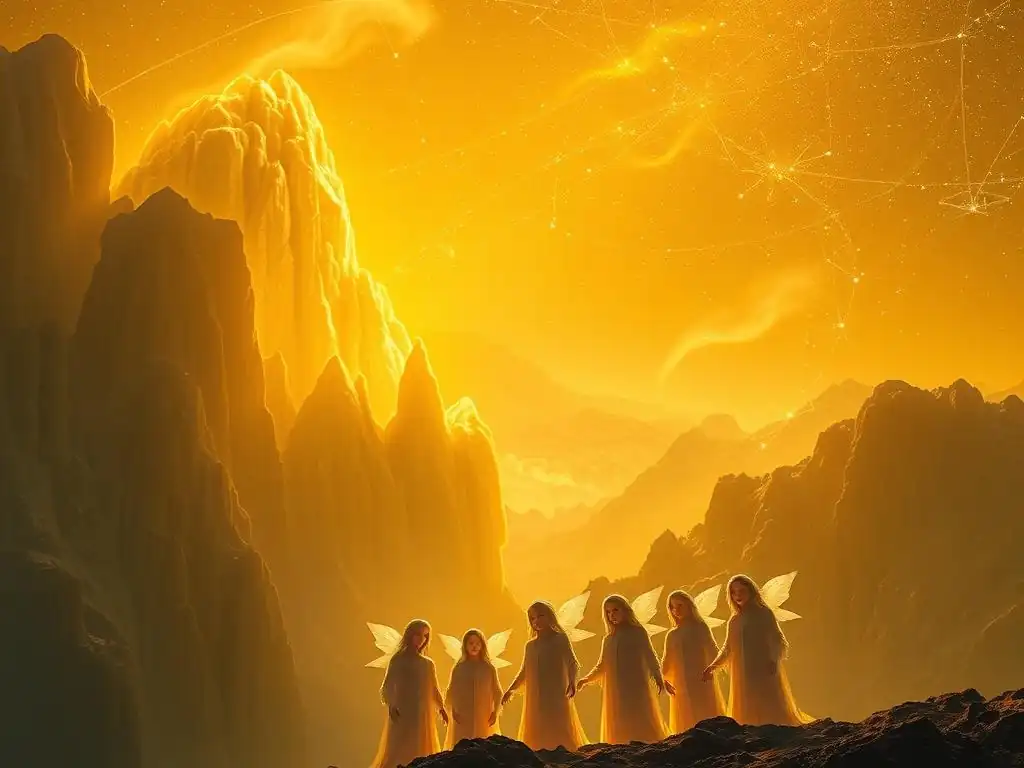
Welcome to Mythology and Legends, where we delve into the captivating tales that have shaped civilizations. Ever wondered about the ethereal beings said to dwell in realms of pure light? Prepare to be enchanted as we unravel the origins of light elf mythology, venturing into the radiant world of Alfheim and exploring the profound influence these luminous beings have had on Norse legend and beyond. Discover secrets whispered through the ages – the journey begins now...
- Introduction to Alfheim: Exploring the Mythic Homeland of the Light Elves
- Light Elf Mythology Origins: Tracing the Roots of the Ljósálfar
- The Ljósálfar: Characteristics and Attributes of the Light Elves
- Contrasting Alfheim with Svartalfheim: Light Elves vs. Dark Elves (Dökkálfar)
- Alfheim's Ruler: Examining the Role of Freyr in the Realm of Light Elves
- Alfheim's Cultural Significance and Legacy: Influence on Art and Literature
- Exploring the Landscape of Alfheim: Descriptions and Features
- The Light Elves' Interactions with Humans and Gods
- Alfheim Today: The Enduring Presence of the Light Elves in Modern Culture
-
Frequently Asked Questions
- ### What are Light Elves, and where do they originate in mythology?
- ### Where is Alfheim located, and what are its key characteristics?
- ### What is the relationship between Light Elves and other beings in Norse mythology?
- ### What are some of the common attributes or powers associated with Light Elves?
- ### How has the mythology of Light Elves influenced modern culture and fantasy literature?
- Final Reflection: Echoes of Alfheim in the Modern World
- Ignite Your Inner Light: Explore Alfheim's Magic!
Introduction to Alfheim: Exploring the Mythic Homeland of the Light Elves
Unveiling Alfheim: A Realm of Light and Beauty in Norse Cosmology
Alfheim (Álfheimr in Old Norse), meaning "Elf Home" or "Elf World," stands as one of the nine realms in Norse cosmology, situated near Asgard, the home of the Aesir gods. It is traditionally depicted as a place of unparalleled beauty, bathed in radiant light, and serves as the dwelling place of the Ljósálfar, the Light Elves.
Unlike the earthly realm of Midgard or the icy reaches of Niflheim, Alfheim is often described with ethereal qualities, seemingly more vibrant and luminous than other parts of the cosmos. Its existence is primarily noted in texts like the Prose Edda, compiled by Snorri Sturluson in the 13th century, which provides a structured overview of Norse mythological beliefs, placing Alfheim in a prominent position within the cosmic order.
The nature of Alfheim's light is a central theme in its depiction. It is not merely sunlight but an intrinsic radiance, perhaps reflecting the nature of its inhabitants. This realm is often associated with celestial bodies, purity, and the positive aspects of existence.
While detailed descriptions of its physical geography are sparse in primary sources, the consistent emphasis is on its luminous quality and inherent beauty, suggesting a realm distinct from the more rugged or dark landscapes found elsewhere in the Norse cosmos. Understanding Alfheim is key to appreciating the full scope of Norse mythology, providing context for the beings who inhabit it and their place in the grand scheme of the nine worlds.
The Significance of Alfheim within the Norse World Tree, Yggdrasil
Alfheim holds a significant position within the structure of Yggdrasil, the immense ash tree that connects and supports the nine realms of Norse cosmology. While the exact location of each realm relative to the others can vary slightly across different accounts, Alfheim is typically placed in the upper or middle layers, often near Asgard.
This proximity to the realm of the principal gods underscores its importance and suggests a connection between the Aesir and the Ljósálfar. The placement within Yggdrasil signifies that Alfheim is a fundamental component of the cosmic structure, integral to the balance and functioning of the universe as perceived by the ancient Norse.
The World Tree Yggdrasil represents the interconnectedness of all things, and Alfheim's place within it highlights the role of the Light Elves in the broader mythological narrative. Their realm is not isolated but part of a larger system, influencing and being influenced by the other worlds.
This cosmic positioning also emphasizes the celestial or elevated nature often ascribed to Alfheim and its inhabitants. Studying the relationship between Alfheim and Yggdrasil helps illuminate the spatial and hierarchical relationships between the different beings and places in Norse mythology, providing a crucial piece in understanding the Light elf mythology origins and their place in the cosmos.
Light Elf Mythology Origins: Tracing the Roots of the Ljósálfar
The Genesis of the Light Elves: Creation Myths and Divine Ancestry
The precise Light elf mythology origins are not explicitly detailed in a single, comprehensive creation myth within the surviving Norse texts. However, the Prose Edda, specifically in Gylfaginning, provides the most direct reference to their creation and distinction from other elves.
Snorri Sturluson notes that the Light Elves dwell in Alfheim, while the Dark Elves (Dökkálfar) reside underground in Svartalfheim. He states that the Ljósálfar are "fairer than the sun to look upon," implying a connection to divine light or a celestial source, although their specific lineage from gods or giants is not clearly defined in the same way as, for example, the origins of humanity from Ask and Embla.
One theory regarding the Light elf mythology origins links them to the Vanir, an older group of Norse deities associated with fertility, wisdom, and magic. This association is strengthened by the fact that Freyr, a prominent Vanir god, is given dominion over Alfheim.
While not explicitly stated that the Ljósálfar are Vanir themselves or descendants of them, their close relationship and Freyr's rulership suggest a potential connection or parallel in their nature and powers. The lack of a single, definitive creation story for the Ljósálfar allows for some interpretation, but their inherent association with light, beauty, and Alfheim remains a constant across the primary mythological sources.
Light Elves in Norse Sagas and Poems: Early Literary Depictions
References to elves (álfar) appear in various Old Norse sources, including the Poetic Edda and sagas, though the specific distinction between Light Elves (Ljósálfar) and Dark Elves (Dökkálfar) is most clearly articulated in Snorri's Prose Edda. The Poetic Edda poem Grímnismál mentions Alfheim as one of the dwellings of the gods and heroes, stating that Freyr received it as a gift from the Aesir when he cut his first tooth. This early mention establishes Alfheim's existence and its connection to a major deity, predating Snorri's more detailed classification of elf types.
While sagas and earlier poems often refer to álfar collectively, sometimes associating them with mounds, ancestors, or specific locations, the concept of distinct Light elf mythology origins based on their luminous nature and residence in Alfheim solidifies with Snorri's work. These earlier mentions of álfar may encompass beings later categorized as Ljósálfar, Dökkálfar, or potentially other types of wights.
The evolution of these descriptions highlights how the understanding and classification of mythological beings developed over time, with Snorri providing a more structured framework that has significantly shaped modern interpretations of Light elf mythology origins and their place within the Norse pantheon.
The Ljósálfar: Characteristics and Attributes of the Light Elves
Physical Appearance of the Light Elves: Radiance, Beauty, and Grace
The defining characteristic of the Ljósálfar is their radiant beauty, which is often described as surpassing that of humans and even some deities. As mentioned in the Prose Edda, they are "fairer than the sun to look upon," a hyperbole emphasizing their brilliant and luminous appearance. This radiance is not merely skin deep but seems to emanate from their very being, perhaps reflecting their connection to light and the celestial aspects of Alfheim. They are typically depicted as beings of grace and elegance, embodying idealized forms of beauty.
Their appearance sets them apart from other beings in Norse mythology, particularly the Dökkálfar, who are described as dark or swarthy. While specific details about their height, build, or features are less commonly provided than their luminous quality, the consistent emphasis on their fairness and radiance paints a picture of beings associated with purity, light, and aesthetic perfection. This physical description is central to understanding the Ljósálfar and their distinct identity within the complex tapestry of Norse mythological races, stemming from their Light elf mythology origins in Alfheim.
Powers and Abilities: Magic, Healing, and Influence over Nature
The powers and abilities attributed to the Ljósálfar in Norse mythology are not as extensively documented as those of major gods or giants, but they are generally associated with magic, healing, and influence over nature. Their connection to Alfheim, a realm of fertility and abundance under Freyr's rule, suggests an inherent link to the vitality and growth of the natural world. They may possess knowledge of ancient magic (seidr), particularly concerning light, illusion, or perhaps subtle manipulations of the environment.
Furthermore, elves in general, and by extension the Ljósálfar, are sometimes associated with healing. In some folklore stemming from Norse beliefs, elves are seen as either causing or curing ailments, often through magical means. While primary texts don't provide a detailed list of specific spells or powers, their association with light and beauty implies abilities related to inspiration, enchantment, and perhaps protection against darkness or decay. These abilities are woven into their Light elf mythology origins and their role as inhabitants of a realm of light and life.
The Light Elves and Their Connection to the Sun and Light
The connection between the Ljósálfar and light is fundamental to their identity, as explicitly stated in their name, meaning "Light Elves." Their realm, Alfheim, is described as being filled with radiant light, and their appearance is said to be "fairer than the sun." This strong association suggests that light is not just their environment but potentially an intrinsic part of their essence or power. They embody the positive, vibrant, and life-giving aspects often symbolized by light in mythology.
This connection might also link them symbolically to the sun (Sól in Norse mythology) or other celestial phenomena, though primary texts do not establish a direct lineage or servitude. Instead, their relationship seems more symbolic, representing the luminous and beautiful aspects of existence within the Norse cosmos. This intrinsic link to light is a key element differentiating them from the Dökkálfar and is crucial for understanding the basis of their Light elf mythology origins and their role as inhabitants of the bright realm of Alfheim.
Contrasting Alfheim with Svartalfheim: Light Elves vs. Dark Elves (Dökkálfar)
The Dichotomy of Light and Darkness: Exploring the Opposing Realms
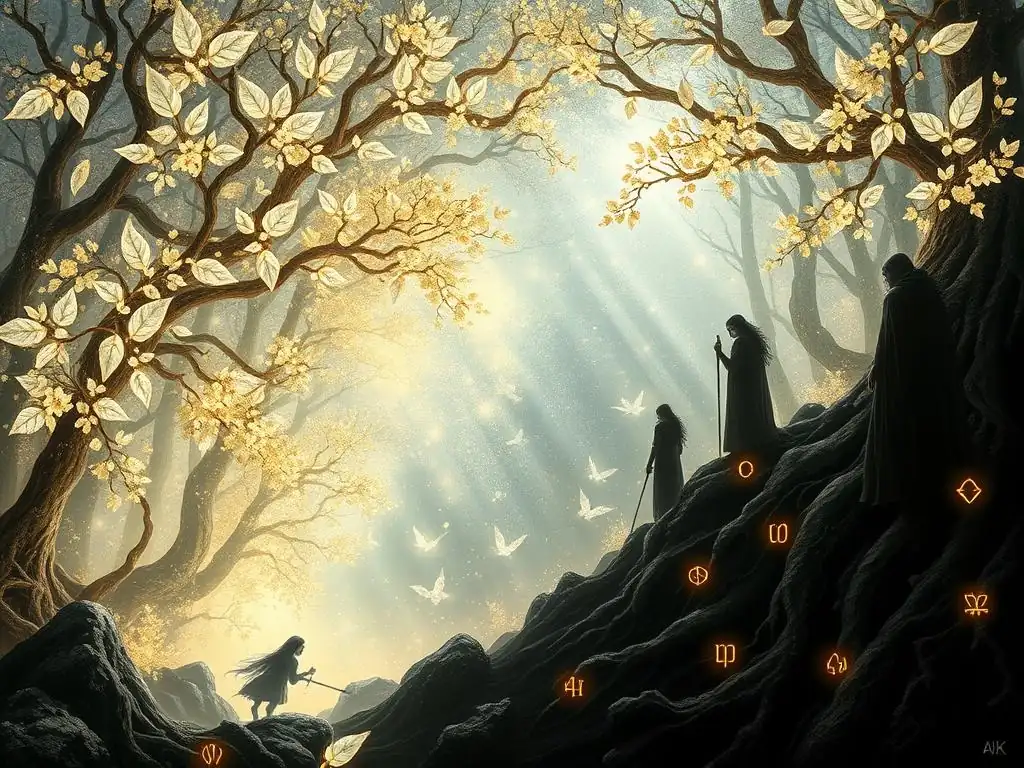
One of the most striking contrasts in Norse cosmology is the clear division between Alfheim and Svartalfheim (or Niðavellir), the respective homes of the Ljósálfar and the Dökkálfar (Dark Elves) or dwarves. This separation represents a fundamental dichotomy between light and darkness, beauty and perhaps a more rugged or hidden nature, and above-ground versus subterranean existence. Alfheim is envisioned as bright, open, and beautiful, often associated with air and light, while Svartalfheim is located underground, described as dark, and is primarily associated with mining, craftsmanship, and hidden places.
This dualism is not necessarily framed as a simple good-versus-evil conflict in the primary texts, but rather as a representation of different aspects of the cosmos. The Ljósálfar embody the luminous, ethereal, and perhaps more outwardly beautiful elements, while the Dökkálfar/dwarves represent the chthonic, hidden, and skilled aspects, often associated with metalwork and treasures found deep within the earth. The existence of these two distinct realms and types of elves highlights the Norse mythological worldview's capacity to encompass contrasting but complementary forces within its structure.
Distinguishing the Ljósálfar from the Dökkálfar: Differences in Nature and Purpose
The primary distinction between the Ljósálfar and the Dökkálfar lies in their nature, appearance, and dwelling places. As described by Snorri, the Ljósálfar are "fairer than the sun" and live in Alfheim, a radiant realm. In contrast, the Dökkálfar are "blacker than pitch" and inhabit Svartalfheim, a dark, subterranean realm. While some interpretations conflate Dökkálfar with dwarves (dvergar), the texts sometimes list them separately, suggesting they might be distinct groups sharing the underground realm.
Their purposes and associations also differ. The Ljósálfar are linked to light, beauty, and potentially fertility through their association with Freyr. The Dökkálfar/dwarves, however, are renowned for their unparalleled craftsmanship, particularly in metalworking and creating magical artifacts like Thor's hammer Mjolnir or Odin's spear Gungnir. Their existence is tied to the earth's hidden resources. This stark contrast in appearance, habitat, and primary associations underscores the deliberate differentiation made in Norse mythology between these two types of beings, highlighting the unique Light elf mythology origins tied to their luminous realm.
The Role of Alfheim and Svartalfheim in Norse Mythology's Balance
The existence and distinct nature of Alfheim and Svartalfheim contribute to the overall balance and complexity of the nine realms within Yggdrasil. They represent opposing yet necessary aspects of the cosmos: light and darkness, surface beauty and hidden depths, perhaps even the ethereal versus the material. This balance is not static but part of the dynamic interactions between the realms.
While there isn't extensive narrative detail about direct conflict between the Ljósálfar and Dökkálfar in the primary myths, their segregation into separate realms implies a necessary separation or perhaps a state of non-interaction that maintains cosmic order. The distinct Light elf mythology origins and Dark Elf/dwarf origins place them in different spheres of influence, each contributing unique elements to the mythological world. Alfheim's radiance and Svartalfheim's darkness are integral parts of the diverse landscape of the Norse cosmos, essential for its completeness.
Alfheim's Ruler: Examining the Role of Freyr in the Realm of Light Elves
Freyr, God of Fertility and Prosperity: His Association with Alfheim
Freyr, a prominent god of the Vanir tribe, holds dominion over Alfheim. He is primarily known as a deity of fertility, prosperity, sunshine, fair weather, and good harvests. His association with Alfheim is established in the Poetic Edda, specifically in Grímnismál, which states that Alfheim was given to Freyr as a gift. This grant signifies Freyr's authority and connection to the realm and its inhabitants.
Freyr's domain over Alfheim strengthens the realm's association with positive attributes. As a god of fertility and light (sunshine being crucial for harvests), his rulership aligns perfectly with the descriptions of Alfheim as a beautiful, radiant place. This connection suggests that Alfheim is a realm of abundance, growth, and vitality, mirroring the aspects that Freyr himself embodies. His presence as ruler is a key element in defining Alfheim's nature and its significance within the Norse pantheon and the Light elf mythology origins.
Freyr's Influence on the Light Elves and Alfheim's Abundance
As the ruler of Alfheim, Freyr's influence on the Ljósálfar and the realm itself is significant, though the precise nature of this relationship is not deeply explored in the surviving myths. It can be inferred that his presence as a god of fertility and prosperity contributes to the realm's described beauty and abundance. Alfheim's radiance and vitality might be a direct reflection of Freyr's power and beneficence.
The Ljósálfar, as his subjects, might be seen as embodying aspects of his domain – perhaps radiating the prosperity and light he represents. While they are not typically depicted as worshippers of Freyr in the same way humans might be, their existence within his realm implies a harmonious relationship and a shared essence related to light, beauty, and perhaps the more gentle or positive forces in the cosmos. Freyr's rule is thus integral to understanding the character of Alfheim and the context of the Light elf mythology origins.
The Relationship between Freyr and the Light Elves in Norse Lore
The relationship between Freyr and the Ljósálfar is primarily defined by his status as their ruler and the recipient of Alfheim. While the myths don't contain detailed narratives of Freyr interacting extensively with the Ljósálfar as a group, his position over their realm is consistently mentioned. This suggests a relationship of authority and perhaps mutual benefit, where Freyr provides benevolent rule over a realm that embodies the very qualities he represents.
Folklore and later interpretations sometimes expand on this, portraying the Light Elves as attendants or allies of Freyr, assisting him in matters related to fertility or light. However, based strictly on the primary Eddic sources, the relationship is more structural – Freyr possesses Alfheim, and the Ljósálfar live there. This foundational relationship, established in the earliest accounts of Alfheim, is crucial for understanding the realm's governance and the hierarchical structure within which the Light elf mythology origins are situated.
Alfheim's Cultural Significance and Legacy: Influence on Art and Literature
The Enduring Appeal of Alfheim: Symbolism and Archetypes
Alfheim, as the luminous realm of the Light Elves, holds enduring cultural appeal due to its powerful symbolism. It represents idealized beauty, light, purity, and perhaps a connection to the ethereal or spiritual aspects of existence. In a cosmology that includes dark, dangerous, and chaotic realms, Alfheim stands out as a place of inherent goodness and radiance. This makes it a compelling archetype for a utopian or heavenly domain within fantasy and mythology.
The concept of radiant, beautiful elves dwelling in a bright, separate realm has resonated across cultures and continues to capture the imagination. Alfheim embodies the archetype of a hidden, magical world parallel to our own, one that is inherently benevolent and filled with wonder. This symbolism, rooted in the original Light elf mythology origins, contributes significantly to its lasting presence in cultural consciousness.
Alfheim's Influence on Modern Fantasy Literature and Art
The imagery and concepts associated with Alfheim have profoundly influenced modern fantasy literature, art, and media. The idea of a distinct race of beautiful, magical beings associated with light and nature, living in their own ethereal realm, is a cornerstone of much fantasy world-building. While authors often adapt and transform these concepts, the basic archetype traceable to Alfheim and the Ljósálfar is undeniable.
From illustrations depicting luminous forests and graceful elven figures to descriptions in novels, the visual and conceptual elements of Alfheim have provided fertile ground for creative expression. Artists and writers draw upon the themes of radiance, natural beauty, and the mystique of a hidden world to create their own versions of elven realms, often echoing the fundamental qualities attributed to Alfheim in Norse myth. The Light elf mythology origins serve as a foundational source for countless fictional elven cultures.
Alfheim in Tolkien's Middle-earth and Other Fantasy Worlds
Perhaps the most famous example of Alfheim's influence is seen in J.R.R. Tolkien's Middle-earth. While Tolkien drew on a wide range of mythologies, his Elves, particularly the Eldar, share striking similarities with the Norse Ljósálfar. They are portrayed as ancient, beautiful, wise, and often associated with light (like the Vanyar or the Noldor who saw the light of the Two Trees). Their realms, such as Lothlórien or the Undying Lands (Valinor), function similarly to Alfheim as places of immense beauty, magic, and separation from the mortal world.
Beyond Tolkien, elements of Alfheim appear in numerous fantasy settings. Video games, tabletop role-playing games, and fantasy novels frequently feature elven races residing in bright, enchanted forests or hidden valleys, possessing magical abilities and a deep connection to nature – all traits echoing the Light elf mythology origins and the descriptions of their luminous realm. The enduring archetype of the radiant elf-home, traceable back to Alfheim, continues to thrive in contemporary fantasy.
Exploring the Landscape of Alfheim: Descriptions and Features
The Natural Wonders of Alfheim: Forests, Rivers, and Celestial Light
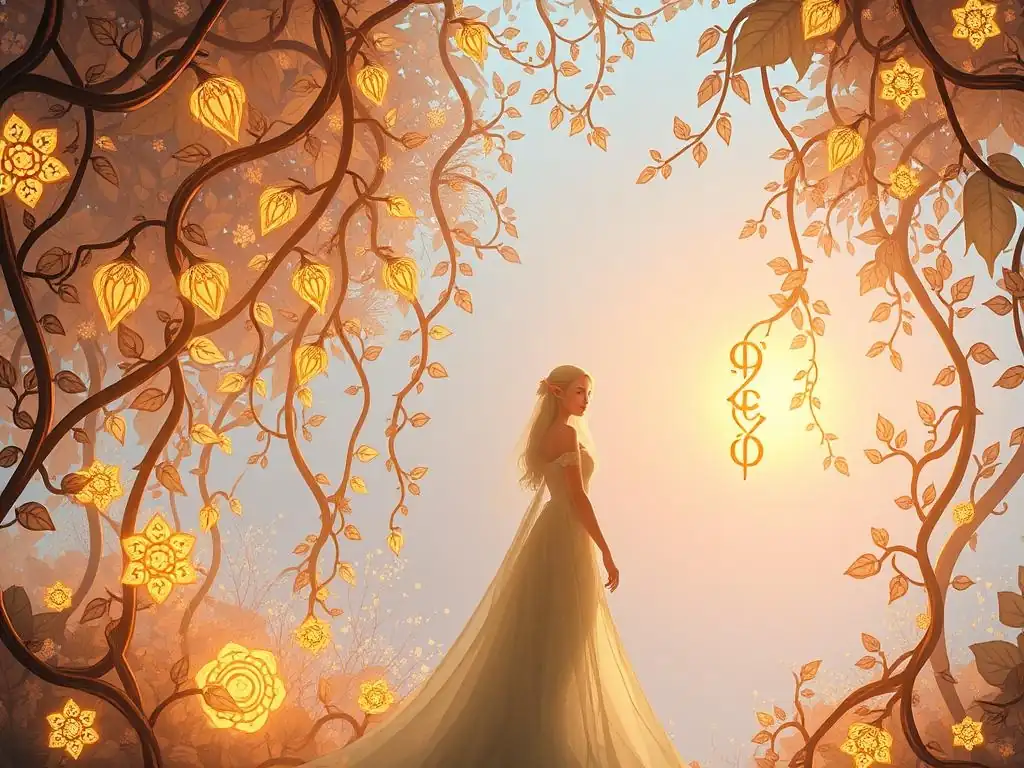
Descriptions of Alfheim's landscape in primary Norse sources are not exhaustive but consistently emphasize its beauty and radiance. It is often depicted as a realm of lush forests, clear rivers, and vibrant natural life, all bathed in a pervasive, soft, celestial light that seems to emanate from the realm itself. This light is a defining feature, distinguishing Alfheim from the other realms and contributing to its ethereal atmosphere.
Imagine forests where the leaves shimmer with an inner luminescence, rivers flowing with water that sparkles like liquid light, and meadows perpetually bathed in a gentle glow. While specific geographical details are scarce, the overarching impression is one of a paradisiacal natural world, untouched by decay or harshness. This emphasis on luminous nature is deeply connected to the Light elf mythology origins and their inherent link to light and beauty.
Bilskirnir and Other Notable Locations
Within Alfheim, specific notable locations are rarely detailed in the same way as places in Asgard or Midgard. The most prominent structure associated with Alfheim is Bilskirnir, mentioned in the Poetic Edda as the hall of Thor. However, the Prose Edda places Thor's hall, also named Bilskirnir, in Asgard. This discrepancy highlights the challenges of reconciling different mythological sources and suggests that the association of a major hall within Alfheim is less central than the realm itself being the home of the Ljósálfar.
While some later folklore or interpretations might populate Alfheim with specific groves, halls, or landmarks, the primary focus in the Eddas is on the realm as a whole – a beautiful, luminous dwelling place. The lack of specific named locations (aside from the contested Bilskirnir) reinforces the idea of Alfheim as a realm defined more by its overall quality of light and beauty than by detailed geography, further emphasizing its connection to the Light elf mythology origins rather than complex architectural features.
The Role of Nature in Alfheim's Magic and Beauty
Nature plays a fundamental role in the magic and beauty of Alfheim. The realm's described radiance isn't just a backdrop; it seems intertwined with the natural elements themselves. The forests, rivers, and air of Alfheim are imbued with a magical quality, radiating light and vitality. This suggests that the magic of the Ljósálfar is deeply connected to their environment, perhaps drawing power from the luminous nature of their home.
The beauty of Alfheim's landscape is also a form of magic in itself, capable of enchanting those who behold it. This connection between nature, light, beauty, and magic is central to the depiction of Alfheim and provides context for the abilities attributed to the Light Elves. Their Light elf mythology origins are intrinsically linked to this radiant natural world, making them not just inhabitants but perhaps guardians or embodiments of its luminous essence.
The Light Elves' Interactions with Humans and Gods
Encounters between Humans and the Ljósálfar: Folklore and Tales
Direct interactions between the Ljósálfar and humans are not frequently detailed in the primary Norse Eddas. However, the broader category of álfar (elves) in Norse folklore is often depicted interacting with humans, sometimes benignly, sometimes causing trouble. These interactions range from inspiring poetry and music to causing illness or leading people astray. It is difficult to definitively attribute all such folklore to the Ljósálfar specifically, as opposed to other types of elves or wights.
Later folklore and sagas sometimes feature encounters with elves who reside in beautiful, hidden places, which could be interpreted as echoing the concept of the Ljósálfar in Alfheim. These tales often involve humans stumbling into elven realms, experiencing magical events, or receiving gifts or curses. While the primary sources provide the Light elf mythology origins and their realm, the specifics of their interactions with mortals are more fluid and found in a wider body of less canonical folklore.
The Light Elves and the Aesir Gods: Alliances and Conflicts
The primary interaction mentioned between the Light Elves and the gods is the gifting of Alfheim to Freyr by the Aesir, as noted in Grímnismál. This suggests a degree of cooperation or at least peaceful coexistence between the gods and the Ljósálfar, with the gods having the authority to grant dominion over the realm. Beyond this initial gift, there are no major narratives of alliances or conflicts between the Ljósálfar as a group and the Aesir or Vanir gods in the Eddas.
While individual elves (álfar) might appear in myths involving gods (e.g., the dwarf Alvíss, though his classification as Dökkálfar or dwarf is relevant here), the collective Ljósálfar of Alfheim are largely presented as inhabitants of their realm, separate from the main political or military struggles of the gods. Their relationship seems one of mutual existence within the cosmic structure rather than active participation in the dramatic events of Norse mythology, highlighting their distinct place stemming from their Light elf mythology origins.
The Gift of Alfheim to Freyr and Other Interactions
The gift of Alfheim to Freyr is the most significant documented interaction between the gods and the realm of the Light Elves. This event solidifies Freyr's connection to the realm and establishes the Ljósálfar under his benevolent rule. The reason for this gift is not explicitly detailed beyond it being given when Freyr cut his first tooth, potentially signifying a rite of passage or the recognition of his growing divine power.
Other potential interactions might be inferred from the general concept of álfar having relationships with gods, perhaps through shared ancestry (if the Vanir link is considered) or through the broader cosmic order maintained by Odin and the other major deities. However, specific tales of the Ljósálfar engaging in quests, battles, or councils with the gods are notably absent from the core mythological texts, leaving their direct interactions largely confined to the context of Freyr's rulership over their beautiful realm, a key aspect of their Light elf mythology origins.
Alfheim Today: The Enduring Presence of the Light Elves in Modern Culture
The Legacy of Alfheim: Inspiration for Contemporary Beliefs and Practices
The legacy of Alfheim and the Ljósálfar extends into contemporary culture, inspiring various beliefs and practices, particularly within modern Heathenry and Asatru. Adherents of these paths often honor the álfar, including the Ljósálfar, as wights or spiritual beings associated with nature, light, and ancestral veneration. Alfheim is sometimes viewed as a spiritual plane or a symbolic representation of inner radiance and connection to the divine in nature.
While modern interpretations vary widely from strict adherence to the Eddas to more syncretic approaches, the concept of beautiful, benevolent light elves residing in a separate, pure realm remains a powerful image. This legacy demonstrates how the Light elf mythology origins, though rooted in ancient texts, continue to influence spiritual and cultural practices in the present day, adapting to contemporary understandings of mythology and spirituality.
Alfheim in Video Games and Modern Interpretations
Alfheim and the Ljósálfar have found new life in numerous modern media, especially video games, which frequently draw upon Norse mythology for settings and characters. Games like God of War (2018 and Ragnarök) feature Alfheim as a distinct realm, often depicting it with glowing flora, radiant architecture, and its inhabitants, the Elves, engaged in conflicts that were not present in the original myths.
These interpretations often take liberties with the source material, introducing conflicts between Light and Dark Elves or portraying the Ljósálfar as warriors, which adds narrative depth suitable for gaming but diverges from the more passive descriptions in the Eddas.
Other fantasy games and media also borrow elements, featuring luminous elf cities or races directly inspired by the concept of the Ljósálfar and their radiant home. These modern interpretations, while not strictly canonical to ancient Norse beliefs, play a crucial role in keeping the concept of Alfheim and the Light elf mythology origins alive and introducing them to new audiences worldwide.
Conclusion: Celebrating the Luminous Realm of Alfheim and its Light Elf Mythology Origins.
Alfheim, the luminous realm of the Light Elves, stands as a beacon of beauty and radiance within the complex tapestry of Norse cosmology. Its description as a place of unparalleled light, its position high within Yggdrasil, and its association with the benevolent god Freyr paint a picture of a realm distinct from the darker, more tumultuous parts of the nine worlds. The Light elf mythology origins, though somewhat veiled in the primary sources, are intrinsically linked to this bright domain and the inherent luminous nature of the Ljósálfar themselves.
From their radiant appearance and potential magical abilities to their contrast with the subterranean Dökkálfar and their enduring influence on modern fantasy, the Light Elves and their home continue to capture the imagination. Exploring Alfheim provides valuable insight into the Norse perception of light, beauty, and the diverse forms of life inhabiting their mythological universe. The legacy of Alfheim and the Light elf mythology origins reminds us of the power of myth to create worlds of wonder that resonate across centuries and continue to inspire creative and spiritual exploration today.
Frequently Asked Questions
### What are Light Elves, and where do they originate in mythology?
Light Elves, also known as Ljósálfar, are beings of light and beauty originating from Norse mythology. They reside in Alfheim, a realm often associated with radiance and joy.
### Where is Alfheim located, and what are its key characteristics?
Alfheim is one of the Nine Realms in Norse cosmology. It's characterized by its bright, luminous landscape and is ruled by the god Freyr.
### What is the relationship between Light Elves and other beings in Norse mythology?
Light Elves are distinct from Dark Elves (Svartálfar), who dwell underground. They are generally considered benevolent and are often associated with fertility and beauty.
### What are some of the common attributes or powers associated with Light Elves?
Light Elves are often described as being beautiful, wise, and skilled in magic. They are sometimes said to possess the ability to influence the natural world and bring good fortune.
### How has the mythology of Light Elves influenced modern culture and fantasy literature?
The concept of Light Elves has significantly influenced fantasy literature and gaming. They often appear as graceful, ethereal beings with connections to nature and magic, shaping modern interpretations of elves.
Final Reflection: Echoes of Alfheim in the Modern World
The enduring fascination with light elf mythology speaks volumes about our persistent yearning for beauty, grace, and the inherent power of light itself. These ethereal beings, woven into the tapestry of Norse mythology, continue to captivate imaginations, influencing art, literature, and even our understanding of fantasy itself. Their radiant image, a potent symbol of hope and ethereal beauty, remains remarkably relevant in a world often shrouded in darkness.
The exploration of Alfheim's origins reveals not just a historical narrative, but a reflection of our own cultural values and aspirations. The light elves, with their connection to nature and their inherent goodness, represent an idealized vision of harmony and balance. Their very existence challenges us to consider the importance of preserving the beauty around us and nurturing the light within ourselves. The light shines brightest where the darkness is deepest.
This timeless adage perfectly encapsulates the enduring power of the light elf mythos, reminding us that even in the face of adversity, hope and beauty can prevail.
Consider the impact of Alfheim's radiance on your own life. Do you find yourself drawn to stories of light and hope? How can you, in your own way, cultivate a sense of beauty and grace in your daily life? Let the luminous legacy of the light elves inspire you to seek out the light within yourself and the world around you, and to actively contribute to a brighter future. Let their story be a beacon, guiding you towards a more radiant existence.
Ignite Your Inner Light: Explore Alfheim's Magic!
Thanks for delving into the luminous realm of Alfheim! We hope you gained a deeper appreciation for the light elves and their captivating mythology. Now it's time to let that inspiration shine!
- Craft your own Alfheimian scene: Let your imagination run wild and create a piece of art, a short story, or even a poem inspired by the beauty and magic of Alfheim. Share your creation with us – we’d love to see it!
- Research a lesser-known aspect of Alfheim: Did something in the article spark a question? Dive deeper and explore the less-discussed aspects of Alfheim's culture, creatures, or history. Share your findings in the comments below!
- Share this journey with a friend: Introduce someone to the enchanting world of Alfheim – perhaps they’ll uncover their own inner light!
What element of Alfheim's radiance resonated most strongly with you, and how will you let that light illuminate your day?