Beyond Text: Images, Artifacts, and Digital Lore
🌍 Discover how images, artifacts, and digital lore deepen our understanding of ancient myths, showcasing their enduring impact on modern storytelling. Explore…
Read article
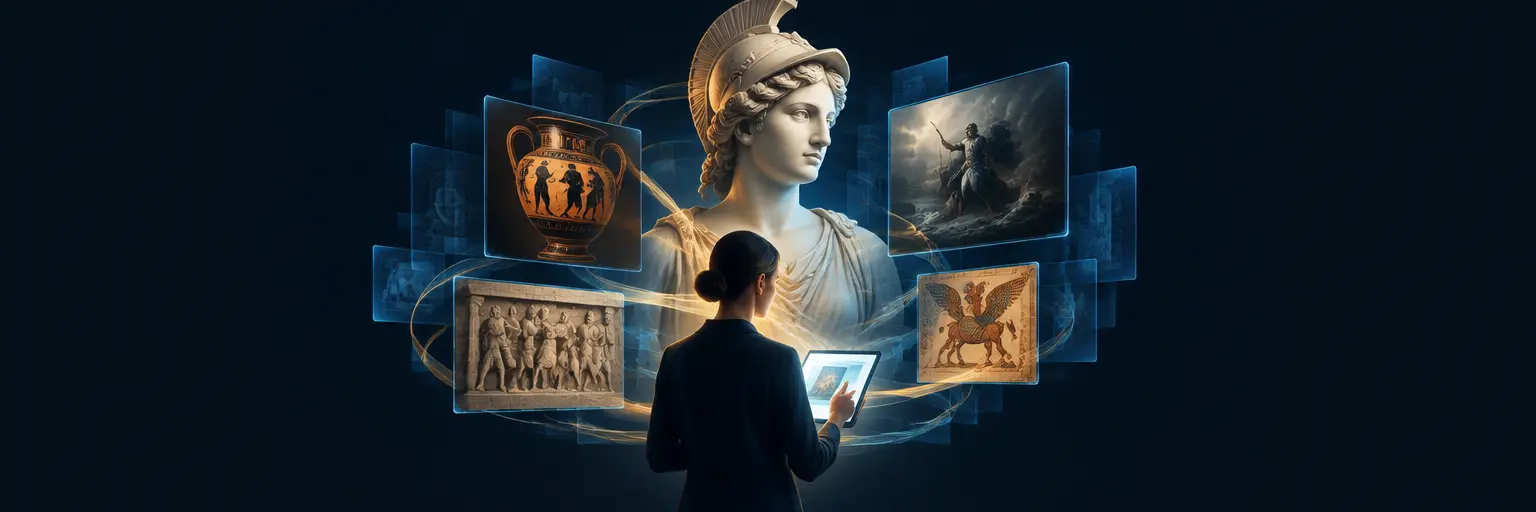
Explore the timeless power of myths brought to life in the digital age. Our Digital Archives & Exhibits transform ancient legends into immersive, interactive experiences, blending high-resolution artifacts, curated storytelling, and modern visual narratives. Dive into meticulously organized collections of folklore, epic poetry, and ritual objects, each paired with expert commentary that bridges past and present. From virtual gallery tours of mythological art to interactive timelines tracing the evolution of heroic archetypes, these exhibits are designed for curious minds, educators, and creators alike. Discover how ancient symbols resonate in today’s media, gaming, and literature, while our searchable databases make every dragon, deity, or creation myth just a click away. Whether you’re researching cultural parallels or simply seeking visual inspiration, our digital showcases offer a dynamic, accessible portal to humanity’s shared mythic heritage—proving that old stories never die; they just get a new interface. Start exploring where tradition meets technology, and let each curated piece spark your next story.
🌍 Discover how images, artifacts, and digital lore deepen our understanding of ancient myths, showcasing their enduring impact on modern storytelling. Explore…
Read article
🌍 Technology reshaping ancient myths is revolutionizing how we access and interpret folklore, bridging cultures and generations. This digital transformation deepens our…
Read article
✨ Unlock the secrets of history with digitized ancient mythic grimoires online, making rare, sacred texts accessible to all. This breakthrough bridges…
Read article
🌍 Unlock the world of myth research digital archives, a vital online resource that preserves global legends and folklore. Dive into diverse…
Read articleWelcome to the Digital Archives & Exhibits subcategory, a cornerstone of Modern Interpretations and Visual Storytelling on our mythology platform. Here, we transform ancient tales, legendary artifacts, and folklore traditions into immersive, interactive online experiences. Unlike static encyclopedic entries, these digital collections use high-resolution imaging, 3D models, narrative timelines, and curated multimedia to let you explore myths as if you were walking through a living museum. Whether you are a student, a creative professional, or a lifelong mythology enthusiast, this space bridges the gap between historical scholarship and cutting-edge digital presentation, making timeless stories accessible, engaging, and deeply visual.
Our digital archives feature meticulously curated galleries of mythological artifacts from global cultures—ranging from Greek amphorae painted with heroic scenes to Norse runestones and Hindu temple carvings. Each artifact is presented with ultra-high-resolution zoom capabilities, allowing you to examine minute details like brushstrokes, inscriptions, and wear patterns that physical museum visits often obscure. Accompanying every item is a contextual narrative explaining its mythological significance, origin story, and the cultural rituals it was part of, making the object a doorway to deeper storytelling.
What you can expect here is a visually rich, scholarly yet accessible experience. We prioritize provenance and authenticity, ensuring that every piece is sourced from reputable institutions or open-access collections. The galleries are organized by culture, era, and mythological theme, so you can easily compare, for instance, how different civilizations depicted the concept of the underworld. This section is ideal for visual learners and educators seeking primary-source imagery to enrich their understanding of mythology’s material culture.
Imagine donning a virtual headset or simply scrolling through a 360-degree interactive tour of a reconstructed temple dedicated to Athena or a Viking burial mound. Our virtual museum walkthroughs offer exactly that—using photogrammetry and panoramic video, we recreate sacred spaces and ceremonial sites where myths were once enacted. You can click on hotspots to reveal pop-up stories, audio narrations, and short video clips explaining the symbolism of architectural elements, frescoes, and ritual objects. This immersive format transforms passive reading into active exploration, making you feel like an archaeologist uncovering layers of meaning.
Expect navigable, user-friendly interfaces that work on desktop, tablet, and mobile devices. Each walkthrough includes a guided mode for beginners and a free-exploration mode for advanced users, with built-in search functions to jump directly to specific mythological figures or themes. We also provide downloadable companion guides in PDF format for offline study or classroom use. This subcategory aims to democratize access to cultural heritage, ensuring that even those who cannot travel to distant museums can still experience the awe of standing before mythological wonders.
For those drawn to the written word, our digital archives house a growing collection of annotated mythological manuscripts—from ancient Egyptian papyri and medieval European bestiaries to Japanese Kojiki scrolls. Each document is digitized with transcriptions, translations, and line-by-line annotations that explain obscure references, linguistic nuances, and cross-cultural parallels. The annotations are authored by philologists and folklorists, yet written in clear, jargon-free prose, making complex texts approachable for non-specialists. You can toggle between the original script, a transliteration, and a modern English translation, all synchronized to highlight correspondences.
This section delivers depth and intellectual rigor, perfect for research projects or personal fascination. We frequently update the collections with newly digitized materials from library partnerships, and each entry includes a citation guide and suggested further readings. Expect robust search filters by language, era, culture, and key mythological motifs (e.g., creation, flood, hero journey). Whether you are tracing the evolution of a single legend across centuries or diving into a forgotten local myth, this archive provides a scholarly treasure trove with intuitive navigation.
Combining film, animation, and archival photography, our multimedia documentary exhibits are curated storytelling experiences that unpack a single myth or legend from multiple angles. Each exhibit is structured like a short film (10–20 minutes), broken into chaptered segments, with embedded quizzes and reflection prompts to reinforce learning. For example, a documentary on the Medusa myth might explore its origins in Greek art, its reinterpretation in Renaissance paintings, and its modern feminist reclamation in visual media. We incorporate interviews with contemporary artists, historians, and mythologists, adding layered perspectives that challenge monolithic interpretations.
Here, you can expect cinematic quality production with closed captions and transcripts for accessibility. These exhibits are designed to be shared in classrooms or discussion groups, and we provide downloadable discussion guides with suggested activities. The visual storytelling is accompanied by original music and sound design that evoke the emotional tone of each myth—whether it is the haunting silence of a creation void or the triumphant crescendo of a hero’s victory. This section exemplifies how modern digital tools can breathe new life into ancient narratives.
Our platform thrives on collective wisdom, and this subcategory features community-contributed exhibits where users can submit digital archives of local legends, family folklore, or regional myth variants. Each submission undergoes a light editorial review to ensure cultural sensitivity and factual accuracy, then is displayed with the contributor’s narrative explaining the context. You can explore, for instance, a community archive of Appalachian ghost stories or a digital collection of Filipino creation myths passed down through oral tradition. These exhibits are annotated with metadata about the source community, language, and geographic origin, fostering cultural preservation.
Expect a dynamic, ever-growing repository that celebrates diversity and grassroots storytelling. We provide clear guidelines and templates for contributors, making it easy to upload images, audio recordings, and text. Each exhibit includes a comments section for respectful discourse and cross-cultural comparison. This section not only enriches the archive with authentic voices but also empowers visitors to become active participants in the preservation of mythological heritage, ensuring that no story is lost to time.
No, all exhibits are accessible through standard web browsers on desktops, tablets, and smartphones. While we do offer optional VR mode for some walkthroughs, it works with Google Cardboard or similar low-cost viewers, and the full experience is just as compelling in 2D. The interface auto-adjusts to your device’s screen size.
Yes, our digital archives primarily feature high-resolution scans and 3D models of real artifacts from partner institutions like the British Museum, Louvre, and national libraries. We also include open-access resources from cultural heritage platforms. All items are credited with their physical location and accession number.
Most content is provided under Creative Commons licenses for educational, non-commercial use. Each item’s copyright status is clearly indicated, and you can download watermarked previews freely. For high-resolution files or commercial projects, we provide direct links to the source institution’s licensing portal.
We add at least two new curated exhibits per month, but community-contributed exhibits are published weekly. Our editorial team also rotates temporary exhibitions tied to current events or anniversaries, so there is always something fresh to explore. Subscribers receive a monthly newsletter highlighting new additions.
Absolutely! Visit our “Contribute” page, which provides a step-by-step submission form for images, audio, and text. You can attach up to 20 files per exhibit, and our editorial team will review your submission within two weeks. Approved submissions are published with your name and a personal bio.