The Craft of Creepypasta: Anatomy of a Modern Horror Myth
🕯️ Dive into "The Craft of Creepypasta" to uncover how modern horror myths are crafted using innovative creepypasta creation techniques online, revealing…
Read article
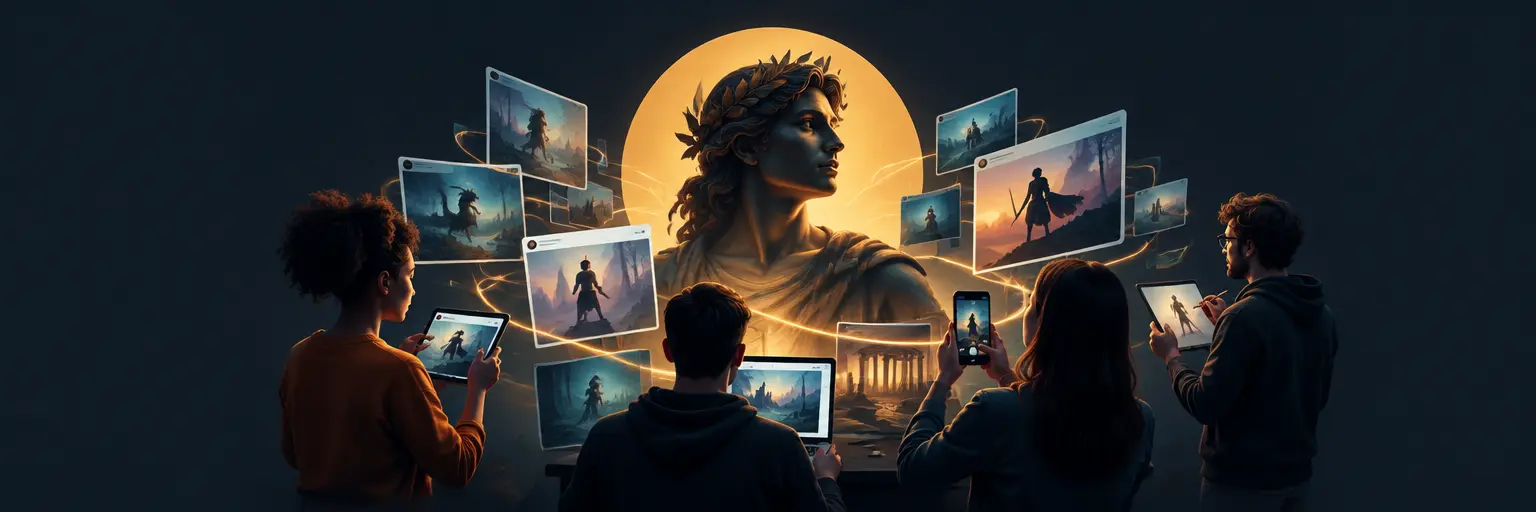
User-generated mythmaking is reshaping how ancient tales evolve, transforming passive readers into active co-creators of living legends 🌍✨. From viral folklore on social media to fan-driven retellings, this modern phenomenon blends ancestral archetypes with personal expression, making mythology more accessible, diverse, and relevant than ever before. By remixing gods, heroes, and monsters through digital art, short-form video, and interactive storytelling, communities worldwide are forging new myths that reflect contemporary values, struggles, and dreams. Whether you’re exploring #mythtok reinterpretations, collaborative world-building, or indie comics reimagining classic epics, this space celebrates collective imagination as the heartbeat of cultural memory. Discover how your own voice can contribute to the endless tapestry of human storytelling, where every post, comment, or illustration becomes a thread in an ever-expanding mythological web 🌟🔮.
🕯️ Dive into "The Craft of Creepypasta" to uncover how modern horror myths are crafted using innovative creepypasta creation techniques online, revealing…
Read article
🌍 Discover how digital collaborative storytelling myths and legends unite diverse cultures, fostering shared creativity and preserving ancient narratives in the modern…
Read article
🌍 Dive into the online myth authenticity exploration, revealing how digital storytelling blurs fact and fiction. Discover how modern myths shape cultural…
Read articleWelcome to the digital crossroads where timeless legends collide with modern creativity. User-Generated Mythmaking explores how everyday people—through social media, fan fiction, streaming platforms, and interactive games—are reshaping, remixing, and reimagining ancient myths into living, breathing narratives. This subcategory focuses on the democratization of storytelling, where no single author owns the tale, and every participant becomes a co-creator in a global mythological tapestry. Expect to uncover how platforms like TikTok, Reddit, and YouTube fuel new deities, urban legends, and hero cycles that reflect today’s anxieties, hopes, and identities.
User-generated mythmaking thrives on serialized, collaborative narratives that evolve through comments, remixes, and shared lore. Think of Slender Man, a creature born from a Photoshop contest, which spawned thousands of stories, games, and even a film. These digital folkloric cycles resemble oral traditions, where each retelling adds a new layer. You’ll see how “creepypasta” communities, subreddits like r/nosleep, and Twitter threads operate as modern campfires, passing tales with no fixed origin. Expect analysis of how repetition, variation, and audience feedback create a sense of authenticity and collective ownership, mirroring how ancient bards adapted Greek or Norse myths for local crowds.
This facet emphasizes that virality is the new ritual, with hashtags acting as invocation spells. For instance, #MythTok sees users casting themselves as Persephone or Loki, while Discord servers build entire pantheons from scratch. These cycles often address shared cultural traumas—pandemics, climate change, or AI anxiety—by projecting them onto mythic archetypes. The result is a feedback loop: a myth emerges, gets memeified, then spawns “canon” through fan consensus. Unlike traditional authorship, here the community polices continuity, rewarding those who weave new threads into existing webs. This democratic process ensures myths stay relevant, flexible, and intimately tied to real-time social sentiment.
Fandoms—from Harry Potter to Marvel—are prime laboratories for user-generated mythmaking. Fans don’t just consume; they expand universes with headcanons, alternate timelines, and “fix-it” fics that reinterpret canonical events. This section dives into how platforms like Archive of Our Own (AO3) and FanFiction.net host millions of stories that transform minor characters into heroes or villains, effectively creating new mythic figures. For example, the “Dark Hermione” trope reimagines her as a cunning trickster, while “Dead Dove” tags explore taboo versions of Orpheus-like journeys. Here, mythmaking is not about historical accuracy but emotional resonance and identity exploration.
Expect deep dives into transformative works and how they mirror classical reception. Greek playwrights rewrote Homer; medieval romancers reworked Arthurian legends. Today, fans do the same with metatextual commentary, often inserting modern issues like queerness, disability, or decolonization into ancient frames. This H3 also covers “fanon” versus “canon” debates, showing how collective agreement becomes the new authoritative text. Crucially, these mythologies are performative—cosplay, fan art, and AMVs (anime music videos) act as visual hymns, while con panels serve as modern mystery cults. The takeaway: fandom provides a safe sandbox for testing mythic variations before they bleed into mainstream culture.
Video games and ARGs (alternate reality games) are perhaps the most immersive arenas for user-generated mythmaking. Titles like “Hades,” “God of War,” and “Elden Ring” don’t just retell myths; they invite players to piece together fragmented lore from item descriptions, NPC dialogues, and environmental clues. This H3 examines how game modding communities (e.g., Skyrim’s “Beyond Skyrim”) create entirely new pantheons, while live-service games like “Fortnite” host in-game concerts and events that feel like seasonal mythic festivals. Players aren’t just consumers—they’re bards who produce walkthroughs, theories, and “lore books” on YouTube channels dedicated to deciphering hidden narratives.
This participatory dynamic redefines the hero’s journey: you are the protagonist, but your choices ripple through shared mythos. Example: “Destiny 2” players collectively solved a puzzle that changed the game’s narrative, a modern echo of the Eleusinian Mysteries. ARGs like “Ingress” or “The Lost Experience” blur reality and fiction, allowing players to become myth-makers in real-world spaces. Tutorials, fan wikis, and strategy guides become mythological exegesis, turning every player into a theologian. Expect analysis of how procedural generation and live updates keep myths in a state of perpetual becoming, far exceeding any scripted cinematic experience.
User-generated mythmaking has accelerated cultural exchange, creating hybrid deities and syncretic stories. For instance, Afro-Latino users blend Yoruba orishas with Aztec gods; Korean webtoons mix Buddhist lore with sci-fi. Social media’s algorithmic “for you” pages expose creators to global mythologies, leading to mashups like Anubis meeting Hestia in a modern urban fantasy. This H3 explores how creators deliberately decolonize mythology, reclaiming figures like Medusa or Lilith as feminist icons, or turning tricksters like Coyote into commentary on surveillance capitalism. The result is a vibrant, anti-canonical space where authenticity is measured by emotional truth, not cultural pedigree.
These remixes often correct historical erasures—for example, Native American creators use TikTok to revive and recontextualize their own legends, bypassing academic gatekeepers. Meanwhile, diasporic communities use mythmaking to negotiate dual identities, embedding elders’ stories into contemporary settings. Expect case studies of viral “myth swaps,” like “what if Zeus was a single mom?” or “African gods in cyberpunk Tokyo.” This section isn’t about cultural appropriation but about transformative appreciation, where new narratives build bridges, not barriers. The key takeaway: myths are not static property; they are living ecosystems that thrive when diverse voices co-create, challenge, and evolve them.
TikTok, Instagram Reels, and YouTube Shorts have birthed “micro-mythology”—concentrated story nuggets of 15 to 60 seconds. Creators use eerie audio cues, visual distortions, and jump scares to compress entire hero cycles into snackable content. The “Schrödinger’s Cat” TikTok trend, where creators narrate alternate realities, or “The Backrooms” lore—a meme originating from a 4chan image—are perfect examples. This H3 explores how platform algorithms reward serialized storytelling, pushing creators to leave cliffhangers and “part 2” promises, effectively building episodic myths that demand continued engagement. Expect analysis of “duet” and “stitch” features, where creators respond to each other, turning mythmaking into a public, adversarial debate.
These micro-myths often rely on ambiguity and unresolved tension—like the “Siren Head” creature that has no fixed backstory, inviting endless interpretation. Unlike classic epics, they are ephemeral; a myth can die in a week, only to be reborn as a meme template. This democratization lowers barriers to entry, enabling six-second videos to spawn entire fan universes. Crucially, audio (sped-up tracks, distorted whale calls) and visual glitches serve as modern “invocation” techniques, inducing a trance-like state in viewers. For SEO, these myths generate massive search volumes as viewers hunt for explanations, proof, or sequels. The result is a virtuous cycle: user-generated mythmaking formats feed on algorithmic virality while feeding their own mythology back into the platform’s recommender systems.
It’s the collective creation and evolution of stories, characters, and lore by everyday internet users rather than a single author. Examples include creepypasta like Jeff the Killer, fandom headcanons, game lore theories, or viral TikTok narratives. These myths emerge from crowdsourced collaboration, feedback loops, and remixing, often without a central canon. They function like oral traditions in digital spaces, with the community as the ultimate authority on what “counts” as part of the story.
Traditional folklore arises organically over centuries within a bounded community, shaped by oral transmission and cultural continuity. User-generated mythmaking happens at internet speed, is global, and is heavily influenced by platform algorithms, copyright issues, and transmedia cross-pollination. While folklore often serves to reinforce shared values or explain natural phenomena, user-generated myths frequently critique modern life—tech anxiety, identity politics, or social isolation—using ancient tropes in ironic or transformative ways.
Yes, if they persist and gain cultural traction. For example, Slender Man influenced real-world violence and academic study, while “The Backrooms” have been adapted into independent films and games. Over time, these myths can become “canon” for subcultures, complete with creation stories, moral codes, and initiation rituals. However, their eternal relevance often depends on constant reinvention. Unlike Zeus, who survived millennia, a TikTok myth might fade unless communities actively preserve it in wikis, films, or annual remembrances.
Absolutely. Misinformation can spread, as seen with harmful legends that inspire real-life stunts or harassment. Also, mythmaking can amplify cultural appropriation when creators distort sacred traditions without understanding context. Platforms also monetize and exploit viral myths, often stripping them of original meaning for algorithmic gains. Additionally, the rapid turnover can cause collective memory loss, disconnecting communities from deeper historical roots. Responsible mythmaking requires reflexive critique and respect for source cultures.
Start by joining existing communities like r/worldbuilding, TikTok’s #mythtok, or Discord servers focused on live-action roleplay. Share a short story, create fan art, or write a “what if” alternative ending for a popular myth. Use open-source tools like Twine for interactive fiction, or upload a lore video to YouTube. The key is to be receptive to community feedback and build on others’ contributions. Avoid claiming absolute ownership; instead, celebrate remixing. Always credit inspirations, but feel free to bend rules—mythmaking thrives on playful subversion.