The Hero's Shadow: Comparing Villains and Their Heroic Counterparts.
🌟 Dive into "The Hero's Shadow," where a Villainous Heroes Comparative Analysis reveals how villains mirror and challenge their heroic counterparts, enriching…
Read article
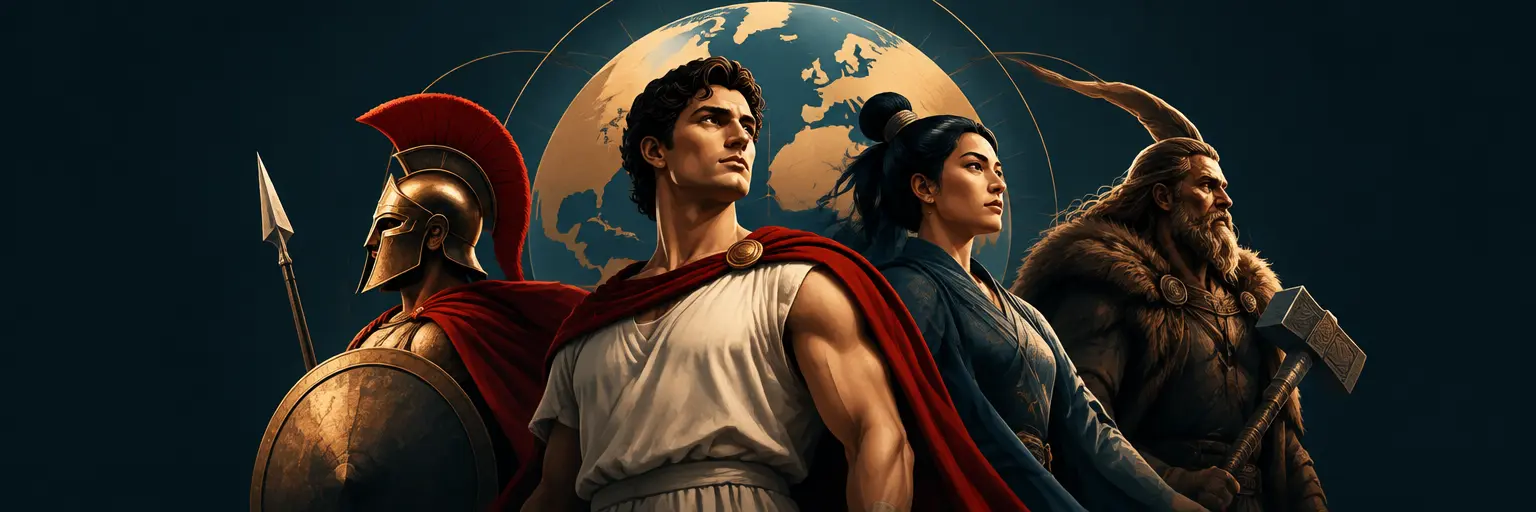
Comparative Heroism dives deep into the timeless question: what makes a hero? By examining legendary figures across cultures—from Greek demigods and Norse warriors to Eastern sages and modern cinematic icons—we uncover the universal threads of courage, sacrifice, and resilience, alongside the unique cultural values that shape each archetype. This exploration reveals how context defines heroism, highlighting the stark contrasts between a lone warrior’s glory and a community’s collective savior. Whether you’re a mythology enthusiast, a storyteller, or a seeker of moral inspiration, our comparative lens offers fresh insights into iconic narratives and their enduring relevance. Discover how these age-old tales continue to influence leadership, ethics, and identity in today’s world, and see why the hero’s journey remains a powerful mirror for our own challenges. 🏛️⚔️✨

🌟 Dive into "The Hero's Shadow," where a Villainous Heroes Comparative Analysis reveals how villains mirror and challenge their heroic counterparts, enriching…
Read article
🌟 Explore the legendary Odysseus Rama homecoming journey, comparing their epic quests and heroism. Delve into how these mythic figures embody resilience…
Read article
🌟 Explore how the legendary Beowulf heroism modern interpretation challenges traditional ideals, prompting us to reconsider ancient heroism through contemporary values and…
Read article
🌍 Explore how hero underworld descent symbolism meanings reveal profound cultural insights, illustrating universal themes of transformation, death, and rebirth across myths…
Read articleWelcome to our deep dive into Comparative Heroism, a fascinating subcategory within Hero Myths and Legendary Figures. Here, we examine how heroes from different cultures—from Greek demigods to Norse warriors, from African tricksters to Asian sages—share universal traits yet reflect unique societal values. By comparing these legendary figures side-by-side, you’ll uncover the archetypes, moral codes, and narrative patterns that connect humanity across time and geography. This page is your gateway to understanding what makes a hero, how cultures define bravery and sacrifice, and why these tales still shape modern storytelling, film, and identity.
When comparing heroes like Gilgamesh, Hercules, and Sun Wukong, a core tension emerges: universal archetypes (such as the "chosen one" or "trickster") versus culturally specific virtues. For example, Greek heroes often embody physical prowess and tragic flaws, while Japanese heroes like Momotaro highlight collective duty and harmony. This section reveals how each culture molds the hero template to reinforce its own ideals—be it honor, wisdom, or resilience. Expect to see side-by-side comparisons of origin stories, supernatural gifts, and fatal weaknesses that illuminate shared human concerns about mortality, power, and legacy.
By analyzing these patterns, you’ll recognize that heroism is not a fixed concept but a mirror of societal priorities. A Viking hero seeks glory in battle, while a Hindu hero like Rama upholds dharma and righteousness. This contrast helps modern readers appreciate diverse moral frameworks and historical contexts. Whether you’re a student, writer, or mythology enthusiast, this comparative lens enriches your understanding of how legends function as cultural DNA, passing down values from generation to generation.
Joseph Campbell’s monomyth—the hero’s journey—serves as a powerful tool for comparing narratives. From the call to adventure to the return with a boon, this structure appears in the Odyssey, the Mahabharata, and even the epic of Sundiata in West Africa. However, the details diverge dramatically: Greek heroes often face external monsters, while Celtic heroes like Cú Chulainn battle internal rage and fate. Here, we break down key stages—departure, initiation, and return—across diverse traditions, showing how each culture defines trials, mentors, and ultimate rewards.
This comparative approach reveals that while the skeleton is similar, the flesh is unique. For instance, the "belly of the whale" stage may involve a literal whale in Jonah, a dragon in Beowulf, or a spiritual desert in the Buddha’s enlightenment. By mapping these variations, you’ll see how geography, religion, and social structure influence the hero’s obstacles and allies. This not only deepens your appreciation but also offers practical insights for writers crafting new myths or marketers building brand narratives.
Comparative heroism challenges the male-dominated canon by spotlighting female and non-binary heroes across cultures. Figures like Greek Atalanta, Russian Vasilisa the Wise, Japanese warrior Tomoe Gozen, and Inuit Sedna demonstrate that courage, cunning, and sacrifice are not gendered. This section contrasts their journeys: while male heroes often rely on physical strength, female heroes frequently deploy intellect, persuasion, or magical assistance. Moreover, some cultures feature gender-fluid heroes, such as Loki’s transformative antics or the two-spirit heroes in Native American legends, offering rich terrain for modern reinterpretation.
These comparisons reveal systemic biases and historical erasures, prompting readers to question who gets remembered as a hero. For example, Amazon warriors and Celtic queens disrupt the "damsel in distress" trope, while African and Indigenous traditions often integrate female deities with heroic agency. By exploring these figures, you’ll gain a more inclusive understanding of heroism, useful for educators, social scientists, and creatives seeking diverse role models. This perspective also fuels contemporary debates about representation in movies and literature.
Heroes often embody their culture’s ethical frameworks, making comparative heroism a lens on moral philosophy. Compare the pragmatic cunning of Odysseus, the self-sacrifice of Christ-like figures, and the detached wisdom of the Buddha—each solves problems differently. This section examines how heroes navigate dilemmas like revenge versus mercy, personal glory versus communal welfare, and obedience to gods versus individual conscience. For instance, Achilles’ wrath versus Aeneas’ pietas showcases contrasting Greco-Roman values, while the Chinese hero Yue Fei epitomizes loyalty to the state over family.
By juxtaposing these moral codes, you’ll see how myths function as ethical simulations, teaching proper behavior within a society. This is particularly valuable for modern professionals in leadership, ethics, and psychology, as these ancient tales offer timeless frameworks for decision-making. Moreover, recognizing that no hero is perfect—they often fail, betray, or die—humanizes them, making their stories emotionally resonant and pedagogically powerful for all ages.
Comparative heroism extends beyond ancient texts into contemporary films, games, and literature. Marvel’s Thor reinterprets Norse mythology, while Disney’s Moana blends Polynesian heroes with modern sensibilities. This section analyzes how modern adaptations compare to their originals, highlighting what is preserved, altered, or subverted to fit current audiences. For example, the tragic hero becomes a redeemable anti-hero in shows like The Witcher, while ancient goddesses are reimagined as feminist icons. These reinventions reveal ongoing cultural negotiations about values like violence, justice, and identity.
Tracking these transformations helps creators and scholars see hero myths as living traditions, not static relics. Whether it’s the persistent appeal of King Arthur’s roundtable or the viral spread of Indian epic memes, comparative analysis shows how legends evolve with technology and social change. For marketers, this offers insights into storytelling that resonates across demographics; for fans, it deepens enjoyment by uncovering hidden references and reinterpretations.
To illustrate comparative heroism concretely, we dive into pairings like Greek Heracles and Mesopotamian Gilgamesh (both superhuman questers), Norse Sigurd and Japanese Yamato Takeru (dragon slayers), and Irish Fionn mac Cumhaill and Zulu Shaka (warrior-chiefs). This section provides short, side-by-side analyses of their origins, feats, flaws, and cultural impact. For instance, both Heracles and Shaka struggle with rage and leadership but end differently—tragic death versus political triumph. Such pairings show convergent solutions to shared challenges like monster threats or succession crises.
These case studies serve as practical examples for readers to conduct their own comparisons, whether for academic papers or creative inspiration. You’ll learn how to identify key variables—supernatural aid, fatal flaw, societal role—and apply them to new narratives. Additionally, by seeing heroes from marginalized or lesser-known cultures, you expand your global literary canon and challenge Eurocentric biases. This comparative toolkit empowers you to appreciate the richness of human storytelling and its enduring relevance.
Comparative heroism seeks to identify shared patterns and unique differences among heroes from various cultures. This helps reveal universal human concerns, such as facing mortality or defining justice, while also highlighting how societies encode their own values and history into legendary figures. It enriches our understanding of storytelling and cultural exchange.
Regular myth study often focuses on one culture in isolation, tracing its internal logic and symbols. Comparative heroism intentionally places heroes from multiple traditions side-by-side, using methods like archetype analysis or structuralism to find echoes and contrasts. This cross-cultural lens uncovers hidden connections and promotes a global perspective on folklore.
Absolutely. Many modern heroes—from Harry Potter to Black Panther—are consciously designed using mythic templates. By comparing them to ancient counterparts, we see how creators adapt old motifs to contemporary issues like technology, identity, or climate change. This application helps writers craft deeper characters and critics analyze popular media with academic rigor.
While male heroes are historically more prominent in written records, comparative research reveals a rich trove of female, queer, and gender-fluid heroes across African, Indigenous, East Asian, and Greek traditions. The perceived scarcity is often due to translation gaps and colonial biases. Re-examining source materials uncovers many powerful heroines like Mulan, Isis, and Brihannala.
Similarities arise from shared human psychology, such as the need to overcome fear, plus common social structures like family and warfare. Additionally, cultures often borrowed stories through trade, conquest, or religion, leading to diffusion. Comparative heroism studies these overlaps to distinguish between independent invention and cultural transmission, offering insight into historical contact and human universals.