Divine Rulers: When Kingship Touched the Gods
✨ Discover how ancient mythology depicts kingship gods, revealing the divine authority granted to rulers. Explore legendary narratives where kingship touched the…
Read article
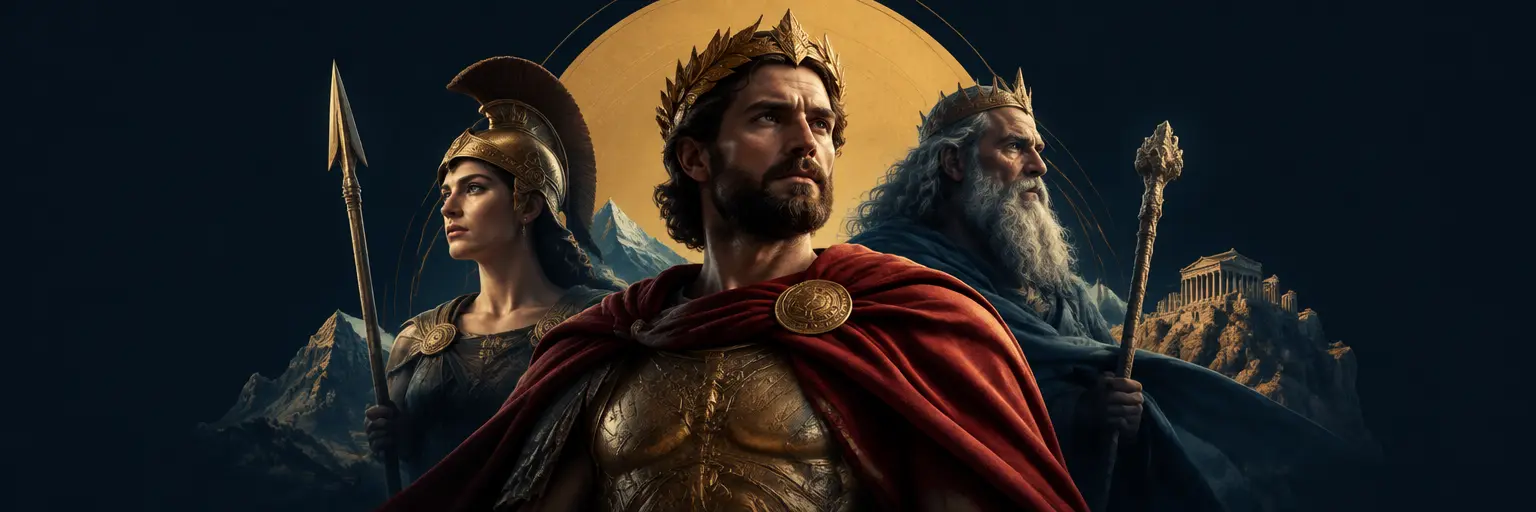
Mythical Leaders stand as towering figures in world mythology—kings, queens, warlords, and lawgivers whose divine or heroic deeds shaped entire civilizations. From the cunning Odysseus and the steadfast Arthur to the fierce Mulan and the wise Solomon, these legendary rulers embody the ideals, flaws, and moral dilemmas of their cultures. Their stories are not just ancient tales; they are living blueprints for leadership, sacrifice, and legacy, offering timeless lessons on power, justice, and the human spirit. Dive into the epic sagas of these iconic characters and discover how their mythical reigns continue to inspire modern leadership, governance, and storytelling across literature, film, and art.
✨ Discover how ancient mythology depicts kingship gods, revealing the divine authority granted to rulers. Explore legendary narratives where kingship touched the…
Read article
🌍 Discover the fascinating world of mythical kings in ancient folklore, uncovering hidden tales that shaped legends across cultures. This article reveals…
Read article
🌟 Discover how Mythical leaders power lessons from legends like King Arthur and Odin, offering timeless insights into leadership, authority, and influence.…
Read articleWelcome to the Mythical Leaders subcategory, nestled within our expansive Hero Myths and Legendary Figures section. Here, we delve into the powerful archetypes of kings, queens, emperors, and chieftains whose divine or heroic mandates shaped ancient civilizations. From the wise lawgiver to the tyrannical conqueror, these figures embody the political, spiritual, and moral values of their cultures. This page is your gateway to understanding how legendary rulership influenced mythology, governance, and storytelling, with rich content optimized for SEO to help you discover the foundational narratives of leadership across the globe.
Many mythical leaders were not merely mortal rulers but were believed to possess a divine mandate or direct lineage from gods. This section explores figures like King Arthur, whose sovereignty was legitimized by the magical sword Excalibur, and Gilgamesh, the Sumerian king who was two-thirds divine. These narratives often served to justify political power, cement social hierarchies, and explain the prosperity or decline of a kingdom. Expect detailed analyses of how myths framed leadership as a sacred duty, with rituals, omens, and prophecies playing pivotal roles in the rise and fall of these iconic sovereigns.
For readers seeking mythology symbolism and leadership archetypes, this segment provides a comparative lens. We examine how different cultures—from Egyptian pharaohs to Japanese emperors—used divine descent to consolidate authority. You’ll uncover stories of rulers who communicated directly with deities, received supernatural regalia, or faced divine punishment for hubris. These tales not only entertain but also offer profound insights into ancient political philosophy and the human need for legitimate authority, making them essential for students of folklore, history, and comparative religion.
Beyond conquest, many mythical leaders were celebrated for establishing legal codes and maintaining cosmic order. This category highlights figures such as Hammurabi, whose code was divinely inspired, and Minos, the Cretan king who judged the dead in the underworld. Explore how these leaders embodied justice, fairness, and the delicate balance between mercy and retribution. Their myths often reflect societal anxieties about crime, punishment, and the ruler’s role as the ultimate arbiter, providing rich material for understanding ancient legal systems and ethical reasoning.
Here, you’ll find deep dives into the legendary jurisprudence that shaped civilizations. Learn about Solomon’s wisdom in judgment, Numa Pompilius who instituted Roman religious laws, and Celtic judges like Brehon lawgivers. These stories emphasize that true mythical leadership involved not just power, but profound moral responsibility. Our content connects these ancient judgments to modern legal principles, showing how the archetype of the “wise judge” persists in contemporary culture, from courtroom dramas to political rhetoric, making this a valuable resource for readers interested in ethics, history, and mythology.
This segment focuses on mythical leaders whose reign was defined by epic battles, strategic genius, and territorial expansion. Figures like Alexander the Great—often mythologized as a divine hero—and Rama, the exiled prince who waged war against demons, represent the archetype of the warrior-king. These narratives are packed with valor, sacrifice, and the heavy cost of glory. Expect thrilling recounts of sieges, divine weapons, and alliances with supernatural beings, all framed within the leader’s quest to restore order or achieve immortality through fame.
Our exploration reveals how heroic militarism shaped cultural identity and national pride. We analyze the symbolism of weapons, war cries, and battlefield omens, as well as the moral dilemmas faced by leaders who must choose between mercy and victory. Compare the tragic hubris of Pentheus in Greek myth with the strategic wisdom of King Prasutagus’s legacy in Celtic lore. These stories are perfect for history buffs, gamers, and fantasy writers seeking authentic leadership tropes and dramatic conflict resolution, all taught through the lens of mythological narrative.
Mythical leadership was not exclusively male. This subcategory celebrates powerful queens and female sovereigns whose wisdom, cunning, or martial prowess matched any king. Discover Cleopatra—often mythologized as a sorceress—and Zenobia, the warrior queen of Palmyra who defied Rome. Also included are divine figures like Athena as a civic leader and Isis, the magical queen of the gods. These narratives highlight feminine strategies of governance, from diplomatic marriage alliances to direct combat, offering a counter-narrative to patriarchal myth structures.
This section provides essential feminist mythology perspectives, analyzing how female leaders navigated gender restrictions or wielded them to their advantage. We explore figures like Makeda, the Queen of Sheba, and Clytemnestra, whose ambiguous rule was both praised and cursed. Expect discussions on matriarchal societies, goddess-led cities, and the symbolic use of weaving, magic, or fertility to assert power. This content is ideal for scholars of women’s studies, feminist theory, and anyone seeking diverse examples of leadership in world folklore, enriching your understanding of gender roles in ancient societies.
Not all mythical leaders won their thrones through strength or birthright. Some, like Odysseus and Loki, used deception, wit, and adaptability to outmaneuver enemies and secure authority. This category examines leaders who broke traditional rules, manipulating prophecies, using disguises, and relying on underhanded tactics. Their stories challenge the heroic ideal, showing that intelligence and cunning could be as effective as brute force. Expect fascinating analyses of how these trickster-leaders expose societal flaws and often emerge as unlikely heroes or anti-heroes, enriching the moral complexity of myth.
Our content explores the strategic manipulation of information, alliances, and popular support. Consider the Raven in Native American trickster tales who becomes a cultural hero, or Anansi the spider who outwits larger beings. These leaders prove that mythical governance often required adaptive problem-solving and a willingness to cross moral lines. This section is perfect for those interested in strategic thinking, political satire, and the evolution of the “smart leader” archetype in literature, offering a fresh perspective on how myths teach us about survival and ingenuity amidst chaos.
A mythical leader is typically a ruler, chief, or sovereign who possesses divine ancestry, supernatural gifts, or a legendary destiny. They often embody cultural ideals of justice, warfare, or wisdom, and their stories explain the origins of dynasties, laws, or cities. Unlike historical rulers, these figures are amplified by myth, featuring magical artifacts, prophecies, or direct interactions with gods, serving as moral exemplars or cautionary tales for their societies.
Mythical heroes often undertake personal quests, slaying monsters or achieving individual glory. In contrast, mythical leaders focus on governance, community welfare, and the establishment of order. While heroes might become kings, their primary role is adventure. Leaders, however, are tied to institutions, laws, and the fate of their people, with their myths emphasizing collective outcomes, succession, and political legitimacy rather than just personal feats.
Yes, common archetypes include the Divine King (divinely sanctioned), the Wise Lawgiver (who codifies rules), the Warrior Conqueror (militarily dominant), the Feminine Sovereign (using diplomacy or fertility), and the Trickster-Strategist (ruling via intellect). These archetypes recur globally, reflecting universal human needs for authority, justice, protection, and adaptability, while each culture adds unique symbolism and moral lessons based on local environments and history.
Mythical leaders serve as cultural mirrors, revealing how ancient societies justified power, defined gender roles, and coped with crises. Their stories encode historical events—wars, famines, migrations—into memorable narratives, providing insight into social hierarchies, religious beliefs, and political propaganda. By analyzing these myths, historians and anthropologists reconstruct values, fears, and aspirations that shaped everyday life, offering a richer perspective than dry chronicles alone.
Yes, many modern leaders are mythologized through media, slogans, and charismatic personas, often invoking archetypes like the “father of the nation” or “savior in crisis.” Political campaigns frequently use symbolic narratives, from Lincoln’s log cabin to Churchill’s bulldog tenacity, echoing ancient myths. However, today’s myths are secularized, emphasizing personal biography over divine birth, yet they still influence public perception and legitimacy, proving that the archetype of the mythical leader persists in contemporary society.