
The Enigma of the Orisha Èṣù: Trickster, Messenger, and Crossroads Spirit


Welcome to Mythology and Legends, where ancient tales come alive!
Delve into the captivating world of folklore as we unravel the mysteries that have shaped civilizations. What if everything you thought you knew about tricksters was wrong? Prepare to embark on a journey into the heart of African and Caribbean traditions as we explore the multifaceted Èṣù Yoruba mythology meanings, a figure far more complex than simple mischief suggests. Uncover the profound wisdom hidden within this enigmatic Orisha and discover his enduring influence. Intrigued? Let's begin...
- Introduction to Èṣù: Unveiling the Complexities of a Yoruba Deity
- Èṣù: The Divine Messenger and Intermediary
- Èṣù as the Lord of Crossroads: Guardian of Opportunities and Decisions
- Èṣù's Trickster Archetype: Understanding the Purpose Behind the Chaos
- Èṣù and the Concept of Ase: Power and Manifestation
- Common Misconceptions and Controversies Surrounding Èṣù
- Èṣù in the African Diaspora: Evolution and Syncretism
- Èṣù Yoruba Mythology Meanings: A Deep Dive into Key Interpretations
- Conclusion: The Enduring Power and Relevance of Èṣù
-
Frequently Asked Questions
- What are the primary meanings and roles associated with Èṣù in Yoruba mythology?
- How does Èṣù function as a messenger between the Orishas and humanity?
- Why is Èṣù often described as a trickster and how does this influence his perception?
- What is the significance of Èṣù's association with the crossroads in Yoruba belief?
- How does understanding Èṣù's complex nature impact our understanding of Yoruba religion and philosophy?
- Final Reflection: Èṣù's Enduring Legacy: Beyond the Crossroads
- Unveil Your Own Èṣù Connection
Introduction to Èṣù: Unveiling the Complexities of a Yoruba Deity
Èṣù's Role in Yoruba Mythology: More Than Just a Trickster
In the rich tapestry of Yoruba mythology, Èṣù occupies a unique and often misunderstood position. Frequently labeled simply as a 'trickster,' this Orisha's role is far more profound and complex. Èṣù is not merely a mischievous figure causing trouble; he is the dynamic force that initiates movement, opens possibilities, and tests human resolve. He stands at the threshold of every choice and interaction, embodying the unpredictable nature of existence itself.
Unlike deities who represent fixed principles, Èṣù thrives in fluidity, challenging stagnation and forcing transformation. His actions, while sometimes perceived as chaotic, often serve a deeper purpose, revealing hidden truths or prompting necessary change. The true Èṣù Yoruba mythology meanings extend far beyond simple trickery, encompassing concepts of destiny, communication, and the vital energy of the universe.
Èṣù is considered one of the most ancient and powerful Orishas, present at the very moment of creation. Oral traditions suggest he was the first Orisha created by Olódùmarè, the Supreme Being, or perhaps emerged alongside the primordial energies. His presence is ubiquitous; he is said to be everywhere at once, observing and influencing events.
This omnipresence highlights his critical function as the enforcer of divine law and the orchestrator of consequences, both positive and negative. Offerings and proper respect are paramount when dealing with Èṣù, as neglecting him can lead to obstacles and misfortune, while honoring him can open pathways to blessings and success. Understanding Èṣù requires moving beyond simplistic binary interpretations of good and evil and embracing the nuanced understanding central to Yoruba belief systems, where balance and interdependence are key.
The Importance of Understanding Èṣù's Multifaceted Nature
Grasping the full scope of Èṣù requires acknowledging his many facets. He is simultaneously the divine messenger, carrying offerings and prayers between humans and the Orishas, and the guardian of the crossroads, symbolizing choice and destiny. He is the trickster who disrupts complacency, and the keeper of Aṣẹ, the vital life force that enables manifestation.
Each of these roles is interconnected, illustrating the dynamic and essential nature of Èṣù within the cosmic order. His complexity reflects the inherent unpredictability and interconnectedness of life itself, where opportunities can arise from challenges and obstacles can be lessons in disguise. Failing to appreciate this multifaceted nature leads to a superficial understanding that misses the core significance of Èṣù in Yoruba cosmology.
The importance of delving into these various roles is crucial for anyone seeking to understand Yoruba philosophy and practice. Èṣù's influence touches upon every aspect of life – communication, travel, decision-making, justice, and even the beginning and end of things. In divination practices like Ifá, Èṣù is indispensable, acting as the interpreter and enabler of communication between the diviner, the client, and the divine forces.
His presence ensures that the readings are effective and that the prescribed actions can manifest results. Therefore, studying Èṣù is not just about learning about a deity; it is about gaining insight into the fundamental principles that govern existence according to Yoruba wisdom, offering profound Èṣù Yoruba mythology meanings relevant to navigating the world.
Èṣù: The Divine Messenger and Intermediary
Èṣù as the Link Between Orun and Aye: Connecting the Spiritual and Material Realms
One of Èṣù's most critical functions is his role as the divine messenger, the Ajọ́gùn (one who runs errands). He is the indispensable link between Orun (the spiritual realm, home of Olódùmarè and the Orishas) and Aye (the material world, where humans reside). Without Èṣù, communication between these two realms would be impossible.
Prayers, offerings, and sacrifices made by humans must pass through Èṣù to reach the intended Orishas or Olódùmarè. He is the gatekeeper, deciding whether communication flows freely or is obstructed. This role underscores his immense power and influence; the effectiveness of any ritual or supplication often depends on having Èṣù's favor and ensuring he is properly acknowledged and appeased.
This intermediary function is central to the practical application of Yoruba religious beliefs. When a devotee makes an offering, whether it's a simple libation or a more complex sacrifice, it is offered to Èṣù first, or Èṣù is invoked to carry it to the other Orishas. This demonstrates his position as the necessary bridge. Oral traditions describe Èṣù's swiftness, capable of traversing the vast distance between the realms instantly.
He hears everything, sees everything, and knows the intentions behind every action. His role as messenger is not passive; he doesn't just deliver messages; he interprets them, sometimes testing the sincerity of the sender or the receiver. This active interpretation is part of his trickster nature, ensuring that interactions between the realms are dynamic and meaningful, revealing deeper Èṣù Yoruba mythology meanings.
Decoding Èṣù's Messages: Interpreting the Orisha's Guidance
As the divine messenger, Èṣù is also the carrier of signs, omens, and guidance from the spiritual realm to the material world. His messages often come in unexpected forms – chance encounters, sudden obstacles, unusual occurrences, or even through the words of others. Decoding these messages requires keen observation, intuition, and an understanding of Èṣù's subtle ways.
Unlike the direct pronouncements sometimes associated with other deities, Èṣù's communication is often veiled in ambiguity, requiring careful interpretation. This ambiguity is not arbitrary; it encourages reflection, critical thinking, and a deeper engagement with one's circumstances. Learning to read Èṣù's signs is a vital skill in Yoruba practice, enabling individuals to align themselves with divine will and navigate their paths effectively.
Interpreting Èṣù's guidance is frequently facilitated through divination, particularly Ifá. The Babalawo (Ifá priest) consults the sacred palm nuts ( ikin) or the divination chain ( opèlè), revealing specific patterns known as Odù. Each Odù carries complex narratives, proverbs, and prescriptions, often referencing Èṣù's actions and influence within that specific context.
Èṣù is intimately connected with Orúnmilà, the Orisha of wisdom and divination, and is essential for the proper functioning of Ifá. He opens the path for the Odù to speak and ensures the messages are conveyed, albeit sometimes in a manner that challenges perception. The ability to correctly interpret these signs, understanding the underlying Èṣù Yoruba mythology meanings within the context of the Odù, is key to receiving and acting upon divine guidance.
Èṣù as the Lord of Crossroads: Guardian of Opportunities and Decisions
The Significance of Crossroads in Yoruba Cosmology
Crossroads, both literal and metaphorical, hold profound significance in Yoruba cosmology, and Èṣù is their undisputed master, often referred to as Èṣù Ọ̀nà (Èṣù of the Road/Crossroads). A physical crossroads is a place where multiple paths meet, representing choice, transition, and the convergence of different possibilities. It is a liminal space, neither here nor there, a point of decision and potential transformation.
Spiritually, the crossroads symbolize the points in life where crucial decisions must be made, where one path ends and another begins, or where different energies intersect. It is a place of power, but also a place of vulnerability, as one is exposed and must choose a direction.
Because of their symbolic weight, crossroads are traditionally considered sacred spaces associated with Èṣù. Offerings are often left at crossroads to honor him and seek his favor, particularly before embarking on a journey, making a significant decision, or initiating a new endeavor. The crossroads embody the choices we face and the consequences that flow from them, concepts deeply intertwined with Èṣù's domain.
He is present at these junctures, observing the choices made and influencing the outcomes. His presence reminds practitioners that every decision has weight and that the path forward is not always clear, embodying the intricate Èṣù Yoruba mythology meanings related to destiny and free will.
Navigating life's crossroads requires wisdom, courage, and often, the guidance of Èṣù. When faced with difficult choices, seeking Èṣù's favor is a common practice to help illuminate the potential paths and their outcomes. This doesn't mean Èṣù makes the decision for you; rather, he might reveal aspects of the situation previously unseen, challenge assumptions, or introduce unexpected factors that clarify the path forward.
His influence at the crossroads is about enabling the individual to make a choice with a fuller understanding of the potential consequences, rather than simply leading them down one specific road. He opens the doors of opportunity but also presents the obstacles inherent in each direction.
Seeking guidance from Èṣù at life's crossroads can involve personal prayer, offerings, or divination. A Babalawo might consult Ifá to understand the energies at play at a particular decision point, identifying which Odù governs the situation and what actions Èṣù recommends or warns against.
For instance, an Odù might reveal that a certain path is fraught with unforeseen difficulties orchestrated by Èṣù as a test, or that another path, though initially challenging, holds significant blessings if Èṣù is appeased. By understanding Èṣù's role as the master of these junctures, individuals gain a framework for approaching decisions not just as practical matters, but as interactions with powerful spiritual forces, appreciating the complex Èṣù Yoruba mythology meanings.
Èṣù's Trickster Archetype: Understanding the Purpose Behind the Chaos
The Trickster in Mythology: A Universal Figure
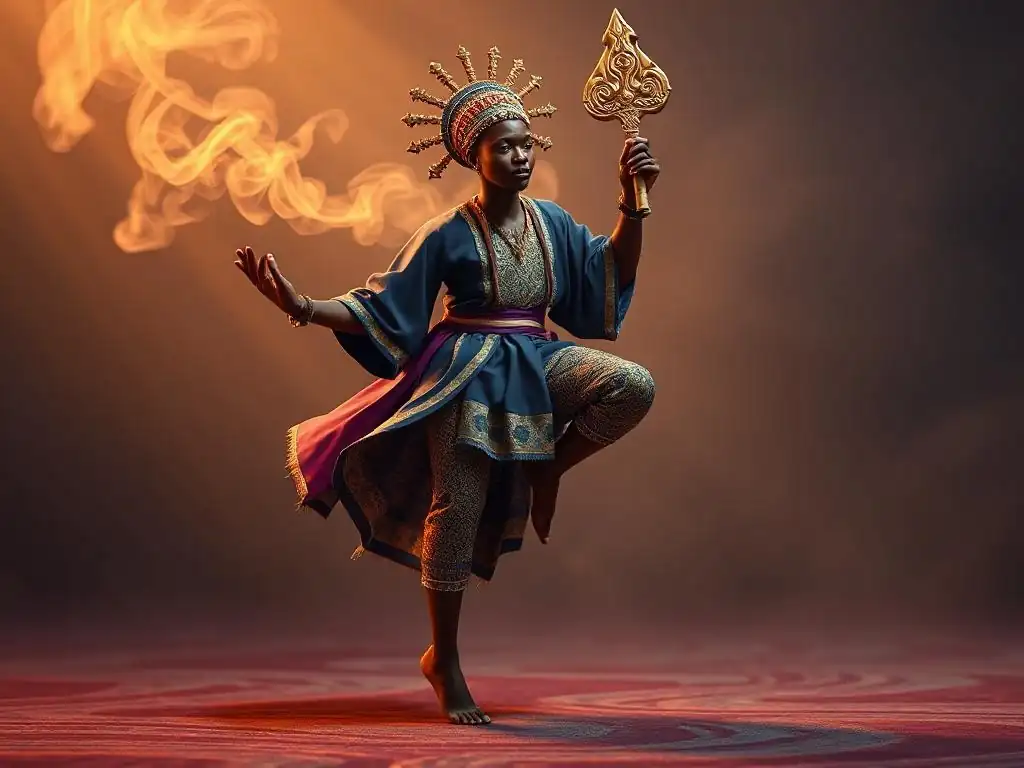
The Trickster is a ubiquitous archetype found in mythologies across the globe, from Anansi the Spider in West Africa to Loki in Norse mythology and Coyote in Native American traditions. These figures share common characteristics: they are often shapeshifters, boundary-crossers, and disruptors of the status quo. They challenge rules, social norms, and even the laws of nature.
Their actions can be selfish, humorous, cruel, or creative, often blurring the lines between right and wrong. While sometimes causing trouble or confusion, tricksters also play crucial roles in creation myths, cultural development, and the introduction of important knowledge or skills. They embody contradiction and ambiguity, reflecting the inherent unpredictability and paradoxes of existence.
Tricksters operate in the liminal spaces – between heaven and earth, culture and nature, order and chaos. They are agents of change, forcing individuals and societies to confront their assumptions and adapt. Their stories often serve as cautionary tales, teaching about the consequences of folly, but also as narratives of liberation, demonstrating how rigid structures can be challenged and overcome.
Understanding the universal trickster archetype provides a broader context for appreciating Èṣù's specific manifestations and purposes within Yoruba belief. He shares many traits with his global counterparts but is also distinct, deeply integrated into the specific cosmology and philosophical framework of the Yoruba people, giving unique Èṣù Yoruba mythology meanings to the archetype.
Èṣù's Tricksterism: Catalyst for Change and Self-Discovery
Èṣù's trickster nature is perhaps his most famous, yet most often misinterpreted, attribute. His trickery is not arbitrary malice; it serves a purpose within the Yoruba worldview. Èṣù disrupts routines, creates confusion, and introduces unexpected challenges to test individuals, expose hidden truths, and prevent stagnation.
For example, a story might tell of Èṣù causing a misunderstanding between two friends who failed to make a required offering, leading to a conflict that ultimately reveals underlying resentments they needed to address. His interventions, while sometimes painful or annoying, are catalysts for growth and self-discovery. By shaking things up, Èṣù forces people to become more aware, adaptable, and resilient.
This disruptive force is essential for progress. Without Èṣù's challenges, the world might become static, and individuals might fail to learn important lessons or recognize new opportunities. His trickery can reveal weaknesses, test faith, or highlight hypocrisy. It encourages introspection and forces individuals to look beyond superficial appearances. In this sense, Èṣù's tricksterism is a form of divine pedagogy, teaching valuable lessons about life's unpredictability, the importance of humility, and the need for constant vigilance and adaptability. Understanding this pedagogical aspect is key to appreciating the profound Èṣù Yoruba mythology meanings embedded in his seemingly chaotic actions.
Èṣù and the Concept of Ase: Power and Manifestation
Ase: The Divine Force in Yoruba Belief
Aṣẹ (pronounced ah-shay) is a fundamental concept in Yoruba philosophy, representing the divine power, energy, and authority that permeates the universe. It is the life force that enables things to happen, to manifest, and to become. Aṣẹ is present in all things – in humans, Orishas, ancestors, nature, words, and rituals.
It is the power to command, to create, and to influence reality. Olódùmarè possesses the ultimate Aṣẹ, and portions of this power are distributed among the Orishas and, to a lesser extent, humans and other elements of creation. The effective use and direction of Aṣẹ are central to Yoruba spiritual practice, influencing prayer, ritual, healing, and even everyday interactions.
Possessing or channeling Aṣẹ grants the ability to bring about change, to heal, to bless, or even to curse. Words spoken with Aṣẹ have the power to manifest reality. This is why truthfulness and careful speech are valued; lies or careless words can have negative consequences because they misuse this powerful force.
Rituals are designed to gather, concentrate, and direct Aṣẹ towards a specific purpose. Understanding Aṣẹ is crucial for comprehending the dynamics of power and influence within the Yoruba worldview and appreciating how deities and humans interact with the fabric of existence. It is the underlying energy that makes everything possible.
Èṣù's Connection to Ase: Activating Potential and Influencing Outcomes
Èṣù is intimately connected with Aṣẹ, arguably more so than any other Orisha in terms of its dynamic application. While Olódùmarè is the source and other Orishas embody specific forms of Aṣẹ, Èṣù is the one who activates and directs it, particularly in the realm of human affairs and interactions between the realms. He is often referred to as the "owner" or "keeper" of Aṣẹ in the context of its movement and manifestation in the world.
Without Èṣù's involvement, Aṣẹ might remain dormant or undirected, unable to bring about desired changes or responses from the spiritual realm. He is the force that puts Aṣẹ into motion.
This connection means that Èṣù has the power to either enable or obstruct the flow of Aṣẹ. If Èṣù is appeased and favorable, he can clear the path for Aṣẹ to flow towards a person's intentions, helping prayers be answered and efforts to manifest. If he is displeased, he can block the path, causing frustration, delays, and failures, even if Aṣẹ is potentially available.
His role is like the switch or the traffic controller for this divine energy. Therefore, properly honoring Èṣù is essential for anyone seeking to effectively utilize Aṣẹ in their lives, whether for healing, prosperity, or spiritual growth. This dynamic relationship between Èṣù and Aṣẹ is a cornerstone of Èṣù Yoruba mythology meanings, highlighting his executive power in the cosmos.
Common Misconceptions and Controversies Surrounding Èṣù
Debunking Myths: Separating Fact from Fiction in Èṣù's Portrayal
Perhaps the most pervasive misconception about Èṣù, particularly outside of traditional Yoruba contexts, is his simplistic equation with the Judeo-Christian figure of Satan or the Devil. This comparison is fundamentally inaccurate and stems primarily from colonial-era misunderstandings and deliberate misrepresentations. Unlike Satan, who represents absolute evil and opposition to a singular good deity, Èṣù is a complex, amoral, and essential force within a polytheistic system that values balance.
He serves Olódùmarè and the divine order, even through his disruptive actions. He is not inherently evil; he embodies the necessary chaos and unpredictability of life, which can lead to both positive and negative outcomes depending on context and human interaction.
Another common myth is that Èṣù is solely malicious or harmful. While he can cause trouble and misfortune, this is often portrayed in myths as a consequence of disrespect, neglect, or as a test. He is also the source of blessings, opportunities, and protection for those who honor him.
For example, a story might describe Èṣù creating conflict in a village but also revealing a hidden resource that ultimately saves them from famine. His actions are dual-natured, reflecting the reality that challenges can bring growth. Understanding the true Èṣù Yoruba mythology meanings requires discarding these simplistic, often demonizing, interpretations and embracing the nuanced perspective of Yoruba philosophy.
Èṣù's Depiction in the Diaspora: Transformations and Adaptations
When Yoruba people were forcibly brought to the Americas during the transatlantic slave trade, they carried their religious beliefs and practices with them. In the crucible of the diaspora, these traditions interacted with other African religions, Indigenous beliefs, and the imposed Christianity, leading to various forms of syncretism. Èṣù's portrayal underwent significant transformations in these new contexts, sometimes adapting to survive under oppressive conditions that forbade African religious practices. In some instances, due to the pressure from Christian colonizers who identified African deities with demons, Èṣù was deliberately or mistakenly conflated with the Devil.
This complex history has led to diverse and sometimes controversial depictions of Èṣù (or his syncretized forms) in the diaspora. While many traditional practitioners maintain a deep understanding of his complex nature, some interpretations, particularly those influenced by colonial perspectives or sensationalized portrayals in popular culture, continue to perpetuate the misconception of Èṣù as purely malevolent. Understanding these historical adaptations and the reasons behind them is crucial for appreciating the full spectrum of Èṣù Yoruba mythology meanings across different cultural landscapes and for distinguishing traditional beliefs from later interpretations.
Èṣù in the African Diaspora: Evolution and Syncretism
Èṣù's Presence in Candomblé and Santería: Blending with Other Traditions
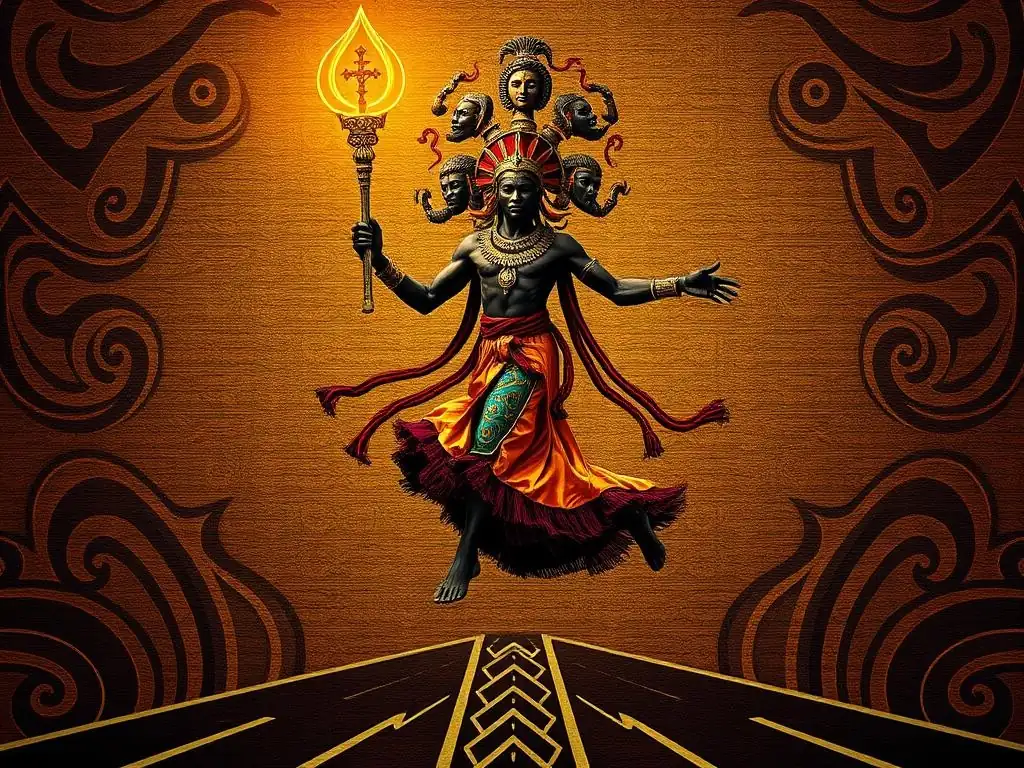
The Orisha Èṣù is a pivotal figure in major African diaspora religions such as Candomblé in Brazil and Santería (also known as Lukumí) in Cuba, Puerto Rico, and elsewhere. In these traditions, Èṣù's core functions as messenger, opener of paths, and gatekeeper remain central, but his manifestations and associations have evolved through syncretism. In Candomblé, Èṣù (often spelled Exu) is a highly revered and complex Orixá, maintaining many of his traditional roles.
He is seen as the first Orixá to be propitiated in rituals, ensuring communication with the others. He is associated with the streets, marketplaces, and crossroads, embodying vitality and motion.
In Santería, Èṣù is often syncretized with Catholic saints, though this syncretism can be debated and varies among practitioners. One common association is with Saint Anthony of Padua, perhaps due to his association with finding lost things (Èṣù can cause things to be lost or found) or his image often depicting him near a crossroads symbol.
Another common syncretism is with Saint Michael the Archangel, who battles forces of chaos, reflecting Èṣù's role in managing dynamic energies. While these syncretisms allowed the tradition to survive, many practitioners emphasize that the Orisha Èṣù is distinct from the Catholic saint, representing the continuity of Èṣù Yoruba mythology meanings within a new cultural context.
The Enduring Legacy of Èṣù: Continued Influence on Contemporary Culture
The influence of Èṣù extends beyond religious practice into various aspects of contemporary culture, particularly in regions with significant African diaspora populations. His image and stories appear in art, music, literature, and popular folklore, often reflecting his complex and sometimes contradictory nature. In Brazil, Exu is a prominent figure in Umbanda and Quimbanda, religions that blend African, Indigenous, and European spiritual elements, where his depictions can range widely. His presence is felt in street culture, dance, and artistic expression that draws upon Afro-Diasporic roots.
Furthermore, the philosophical concepts embodied by Èṣù – such as the importance of navigating choice, the power of communication, the necessity of disruption for growth, and the dynamic nature of reality – continue to resonate with people seeking frameworks for understanding life's complexities. As African and Afro-Diasporic spiritual traditions gain wider recognition, there is growing interest in understanding the authentic Èṣù Yoruba mythology meanings, moving beyond colonial misinterpretations to appreciate his vital role in cosmology and his relevance to contemporary challenges of change, communication, and decision-making in a chaotic world.
Èṣù Yoruba Mythology Meanings: A Deep Dive into Key Interpretations
Exploring the Symbolism of Èṣù's Attributes
Understanding Èṣù's symbolism offers profound insights into his nature and function. One of his most recognizable attributes is the ogó (club or staff), often depicted with calabashes or carved heads. This staff symbolizes his authority, his power to enforce divine will, and his ability to open or close paths.
It represents his dynamic energy and his capacity to create both order and disorder. Another key symbol is the crossroads itself, representing choice, destiny, opportunity, and the intersection of worlds. Offerings left at crossroads, often including palm oil ( epo), gin ( oti), or kola nuts ( obi), are symbolic acts of acknowledgment and propitiation, essential for gaining his favor.
Èṣù is also associated with the numbers 3 and 7, which carry specific symbolic weight in Yoruba numerology and ritual. His colors are typically red and black, representing passion, danger, transformation, and the duality he embodies – creation and destruction, good fortune and misfortune. The cowrie shell ( owo eyo), historically used as currency, is also strongly linked to Èṣù, symbolizing wealth, exchange, and communication. These symbols are not mere decorations; they are potent representations of Èṣù's power, his domains, and the principles he governs within the complex system of Èṣù Yoruba mythology meanings.
Èṣù's Names and Epithets: Unveiling Different Facets of His Character
Èṣù is known by numerous names and epithets throughout Yorubaland and the diaspora, each highlighting a specific aspect of his multifaceted character. These names provide a deeper understanding of Èṣù Yoruba mythology meanings by pointing to his various roles and powers. For example, Èṣù Ọ̀nà refers to him as the "Èṣù of the Road" or "Èṣù of the Crossroads," emphasizing his connection to travel, paths, and decisions.
Èṣù Elégbára means "Èṣù, the Lord of Power" or "Master of Force," denoting his immense Aṣẹ and executive authority. Èṣù Alájé links him to wealth and prosperity, indicating his ability to bring good fortune.
Other epithets include Èṣù Òta Òrìṣà ("Èṣù, the Stone of the Orisha"), referencing his primordial nature and solidity, or Èṣù Òdàrà ("Èṣù, the Transformer/One who creates difference"), pointing to his role in bringing about change and sometimes difficulty. In Ifá, certain Odù are associated with specific manifestations of Èṣù, each with unique characteristics and functions.
For instance, Èṣù Lálù is often associated with opening the path for communication and rituals. The multitude of names reflects the vastness of Èṣù's influence and the various ways he interacts with the world and its inhabitants, offering a rich lexicon for exploring Èṣù Yoruba mythology meanings.
Conclusion: The Enduring Power and Relevance of Èṣù
Embracing the Complexity of Èṣù: A Call for Deeper Understanding
The Orisha Èṣù, far from being a simple 'devil' or 'trickster,' is a cornerstone of Yoruba cosmology, embodying the dynamic forces of communication, transformation, and choice. His complexity is not a flaw but a reflection of the intricate and often paradoxical nature of existence itself. He is the necessary disruptor, the indispensable messenger, and the guardian of the crucial junctures in life.
Embracing the full spectrum of Èṣù Yoruba mythology meanings requires moving beyond superficial interpretations and engaging with the rich philosophical depth of the tradition. This deeper understanding reveals a deity vital for navigating the world, fostering growth, and maintaining balance between the spiritual and material realms.
Acknowledging Èṣù's multifaceted nature encourages a more nuanced approach to life's challenges and opportunities. It teaches that obstacles can be tests leading to strength, that communication requires effort and clarity, and that every choice, made at the crossroads, carries weight. Studying Èṣù is an invitation to confront unpredictability not with fear, but with awareness and respect for the forces that shape reality. It highlights the importance of intention, respect, and proper relationship with the divine, principles essential for anyone seeking to live in harmony with the cosmic order as understood in Yoruba belief.
Èṣù's Continued Influence: The Orisha's Timeless Wisdom for Today
The wisdom embedded in the myths and practices surrounding Èṣù remains remarkably relevant in the contemporary world. In an era characterized by rapid change, constant communication, and complex decisions, Èṣù's lessons offer valuable guidance. His role as messenger underscores the importance of clear and effective communication in both personal and global contexts. His mastery of the crossroads speaks to the continuous need to make informed choices and understand their consequences in an increasingly interconnected world. His trickster aspect reminds us that disruption can be a catalyst for innovation and adaptation, essential qualities in navigating modern challenges.
Furthermore, Èṣù's connection to Aṣẹ highlights the power of intention and the spoken word, a concept echoed in various contemporary philosophies about manifestation and personal power. By understanding Èṣù, practitioners and scholars alike gain access to a profound system of thought that provides a framework for understanding the dynamic interplay between order and chaos, destiny and free will, and the spiritual and material realms. The enduring legacy of Èṣù, carried from Yorubaland to the diaspora and beyond, continues to offer timeless Èṣù Yoruba mythology meanings and insights for those seeking to understand themselves and the world around them.
Frequently Asked Questions
What are the primary meanings and roles associated with Èṣù in Yoruba mythology?
Èṣù is primarily known as a trickster deity, a divine messenger between the gods and humans, and the guardian of the crossroads, places of decision and opportunity.
How does Èṣù function as a messenger between the Orishas and humanity?
Èṣù is the intermediary who delivers sacrifices and prayers from humans to the Orishas, and carries their messages back. This role makes him crucial for communication with the divine.
Why is Èṣù often described as a trickster and how does this influence his perception?
Èṣù's trickster nature highlights his ability to challenge assumptions, test boundaries, and bring about unexpected change. This doesn't necessarily mean "evil," but rather a catalyst for growth and understanding.
What is the significance of Èṣù's association with the crossroads in Yoruba belief?
The crossroads symbolize choice, opportunity, and potential danger. Èṣù, as its guardian, represents the consequences of decisions and the unpredictable nature of fate.
How does understanding Èṣù's complex nature impact our understanding of Yoruba religion and philosophy?
By understanding Èṣù, we gain insights into the Yoruba emphasis on balance, duality, and the acceptance of ambiguity. He embodies the understanding that good and bad are intertwined.
Final Reflection: Èṣù's Enduring Legacy: Beyond the Crossroads
The complex figure of Èṣù continues to resonate deeply within contemporary society, challenging our simplistic notions of good and evil and forcing us to confront the ambiguities inherent in life itself. His enduring presence, far from being relegated to the dusty pages of historical texts, serves as a potent reminder of the ever-present tension between chaos and order, chance and destiny. Understanding Èṣù is not merely an academic exercise; it's a key to unlocking a more nuanced understanding of ourselves and the world around us.
Èṣù's influence extends far beyond the confines of Yoruba religious practice; his symbolic power has seeped into the cultural consciousness, shaping narratives and influencing artistic expression. He embodies the unpredictable nature of life, the necessary disruption that precedes transformation, and the often uncomfortable truth that progress rarely follows a straight path. His image, whether depicted as a mischievous trickster or a powerful messenger, continues to inspire awe and fear in equal measure. Èṣù is not simply a devil; he is the embodiment of the crossroads, the liminal space where possibilities converge and diverge.
This quote encapsulates the multifaceted nature of this powerful Orisha, highlighting his role as both a catalyst for change and a reflection of our own internal struggles.
Consider Èṣù's lessons. Embrace the unexpected turns life throws your way, for within them lie opportunities for growth and understanding. Dare to question the binary oppositions that often limit our perspectives, recognizing the shades of grey that exist between seemingly opposing forces. Let Èṣù's enigmatic nature inspire you to explore the complexities of your own being, to acknowledge the shadow self alongside the light, and to embrace the journey, however winding it may be. The path to self-discovery, much like the crossroads Èṣù embodies, is rarely straightforward, but it is always richly rewarding.
Unveil Your Own Èṣù Connection
Thanks for exploring the fascinating world of Èṣù with us! We hope you gained a deeper understanding of this complex and often misunderstood Orisha. Now it's time to take that knowledge further.
- Deepen your understanding: Research other Orisha associated with Èṣù, exploring their roles and interactions within the Yoruba pantheon. This will give you a richer, more nuanced understanding of Èṣù's place within the larger spiritual framework.
- Share your thoughts: What resonated most with you in Èṣù's story? Share your insights and interpretations in the comments below – let's spark a conversation!
- Consider a creative expression: Write a short story, poem, or even a piece of art inspired by Èṣù's trickster nature. Let his energy guide your creative flow.
What aspect of Èṣù's multifaceted nature intrigues you the most, and why?