
From Africa to the Americas: The Journey of a Story


Welcome, seekers of ancient wisdom!
Delve into the captivating world of Mythology and Legends, where we unravel the timeless tales that have shaped cultures across the globe. Ever wondered how stories travel and transform? Our latest exploration uncovers the fascinating African folklore migration patterns, tracing their echoes from the heart of the continent to the vibrant landscapes of the Americas. Prepare to be intrigued by the journey of a story – and discover how its threads are woven into the fabric of our own lives. What secrets will you unearth? Let the adventure begin...
- From West Africa to the Americas: Tracing the Journey of Anansi the Spider Through Folklore and Cultural Adaptation
- The Roots in West Africa: Original Contexts and Themes of Anansi Tales
- The Middle Passage: A Forcible Transplantation of Culture and Memory
- The Americas: Rebirth and Transformation of Anansi Folklore
- Case Studies: Specific Anansi Stories and Their Journey
- The Legacy: Anansi's Enduring Influence
- Conclusion: Celebrating the Transatlantic Journey of Anansi and its Ongoing Relevance
-
Frequently Asked Questions
- How did African folklore travel to the Americas?
- What types of stories were most likely to survive the migration?
- How did the experience of slavery affect the stories?
- What impact did African folklore have on American culture?
- Are there specific regions in the Americas where African folklore is more prevalent?
- Final Reflection: Echoes Across the Ocean
- Uncover Your Ancestral Echoes: Continue the Journey!
From West Africa to the Americas: Tracing the Journey of Anansi the Spider Through Folklore and Cultural Adaptation
The Enduring Power of Oral Traditions in West African Culture
Oral traditions hold a paramount position in West African societies, serving as the primary means of preserving history, transmitting cultural values, and educating younger generations. Before widespread literacy, the spoken word was the living library, carrying the collective memory of communities across centuries. Figures like the griot in the Mande culture, or the akpalo among the Ewe, were not merely storytellers but also historians, musicians, and advisors, entrusted with vast repertoires of epics, genealogies, proverbs, and folktales.
This deep-rooted practice of storytelling created a dynamic, yet enduring, cultural framework, where narratives like those featuring Anansi the Spider were central to understanding the world and one's place within it. The structure and performance of these tales, often involving call-and-response, song, and dramatic impersonation, made them highly memorable and adaptable, facilitating their persistence across time and space, crucial for understanding African folklore migration patterns.
The richness of West African oral traditions is reflected in the sheer volume and diversity of its stories, each serving specific functions, from entertainment to moral instruction, and even social critique. These traditions were intrinsically linked to community life, performed during specific times like evening gatherings, harvest festivals, or initiation rites.
The participatory nature of the storytelling ensured that the audience was not passive but actively involved, reinforcing the communal bond and the shared understanding of the narratives. This robust system of oral transmission meant that even without written records, complex and nuanced stories could travel across villages, regions, and eventually, continents, laying the groundwork for the significant African folklore migration patterns observed during the transatlantic slave trade.
Introducing the Concept of Cultural Adaptation in Folklore
Cultural adaptation in folklore refers to the process by which stories, characters, and themes evolve and transform as they move from one cultural context to another. This is not simply a matter of translation, but a complex interplay where new environments, social structures, languages, and belief systems influence the narrative.
Elements may be added, removed, or altered to resonate with the experiences and perspectives of the new audience. This process is particularly evident in the history of African folklore migration patterns, where tales carried across the Atlantic were forced to adapt to harsh new realities while retaining core elements of their original meaning and function.
The adaptation of folklore serves several critical purposes in diaspora communities. It helps maintain a connection to ancestral heritage, providing a sense of continuity and identity in a disrupted environment. It also allows the stories to address contemporary issues and challenges faced by the community, making them relevant and empowering.
For instance, trickster tales that once explained natural phenomena might be reinterpreted to subtly comment on power dynamics between enslaved people and their enslavers. Understanding cultural adaptation is key to appreciating the resilience and creativity inherent in the transmission of oral traditions, offering insights into how African folklore migration patterns shaped new cultural landscapes in the Americas.
The Roots in West Africa: Original Contexts and Themes of Anansi Tales
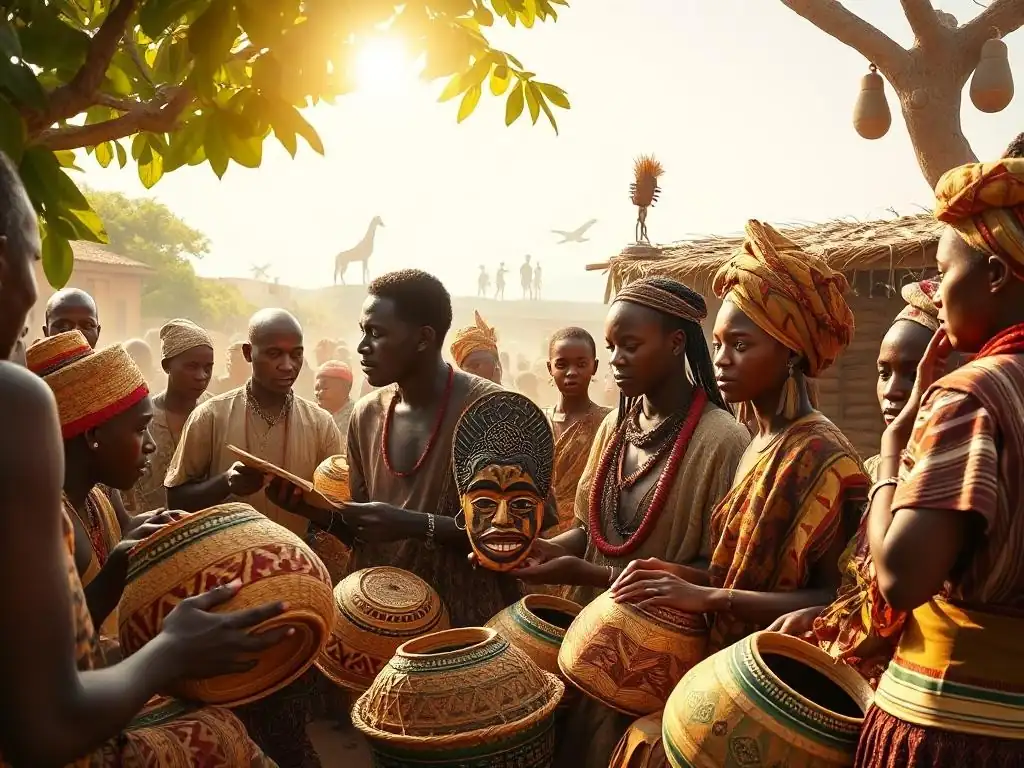
Core Narratives and Archetypes: Anansi the Spider as Trickster and Wisdom Figure
In his original West African context, particularly among the Ashanti people of modern-day Ghana, Anansi is a complex and multifaceted figure. He is predominantly known as a trickster god or spirit, often depicted as a spider, but capable of taking human form. His tales are characterized by his cunning, greed, laziness, and insatiable desire for food and wealth.
Anansi constantly attempts to outsmart other animals, humans, and even powerful deities, often through elaborate schemes that highlight his intelligence and wit. A famous cycle of stories recounts how Anansi acquired all the stories in the world from the sky god Nyame, demonstrating his ambition and the value placed on narrative knowledge. This core trickster archetype is central to understanding the initial phase of African folklore migration patterns.
Beyond his trickster persona, Anansi also embodies aspects of a wisdom figure, albeit one whose wisdom is often learned through his own failures and misadventures. His stories frequently serve as cautionary tales, illustrating the consequences of deceit, arrogance, or laziness. Yet, they also celebrate cleverness and the ability to navigate a difficult world using intellect rather than strength.
The duality of Anansi – both foolish and wise, selfish and occasionally benevolent – makes him a deeply human character, capable of eliciting both laughter and reflection. This rich complexity ensured his stories were not only entertaining but also carried profound cultural weight, making them robust candidates for survival during the difficult process of African folklore migration.
Storytelling Techniques: Griots, Songs, and Moral Lessons
The performance of Anansi stories in West Africa was a highly skilled art form, often led by master storytellers or griots. These performances were interactive events, not passive recitations. The storyteller would use vocal inflections, gestures, facial expressions, and dramatic pauses to bring the characters to life. Call-and-response elements were common, with the audience participating by repeating phrases, singing songs, or offering commentary. This active engagement ensured that the stories were deeply embedded in the community's consciousness and memory, vital for their transmission across generations and ultimately, across continents as part of African folklore migration patterns.
Music and song were integral components of Anansi storytelling. Specific songs were often associated with particular characters or recurring motifs, serving as mnemonic devices and adding emotional depth to the narrative. The rhythm and melody helped to structure the performance and captivated the audience.
Furthermore, Anansi stories were almost always imbued with explicit or implicit moral lessons. After the tale concluded, the storyteller or an elder might explain the 'proverb' or 'message' of the story, connecting it to social norms, ethical behavior, or practical wisdom. This pedagogical function reinforced the importance of the stories beyond mere entertainment and contributed to their cultural significance, making them resilient during their journey as part of African folklore migration patterns.
The Significance of Place and Landscape in Ashanti Anansi Stories
The original Anansi stories are deeply rooted in the specific geography and environment of the Ashanti region of Ghana. The narratives frequently feature local animals such as tigers (leopards), snakes, and various birds, as well as specific plants, rivers, and landscapes that are familiar to the Ashanti people. The setting is often the village compound, the surrounding forest, or nearby farms, reflecting the everyday life and environment of the community.
For example, stories might involve Anansi planting yams or hunting in the forest, grounding the fantastical elements in a recognizable reality. This connection to place provided a strong cultural anchor for the stories before the onset of African folklore migration patterns.
The specific details of the Ashanti landscape and its inhabitants are not just decorative; they often play an active role in the plot and themes of the stories. The characteristics attributed to animals often reflect local observations of their behavior. The challenges Anansi faces might be related to the physical environment, such as navigating dense bush or dealing with seasonal changes.
This intimate relationship between narrative and environment highlights how folklore is often an expression of a community's connection to its land. While these specific environmental details would inevitably change during the transatlantic journey, the core themes and character of Anansi proved adaptable, allowing the stories to take root in new landscapes as part of African folklore migration patterns.
The Middle Passage: A Forcible Transplantation of Culture and Memory
The Impact of Slavery on the Transmission of Anansi Folklore
The transatlantic slave trade, often referred to as the Middle Passage, represented a catastrophic disruption of African societies and a brutal challenge to the continuity of oral traditions. Over approximately 400 years, an estimated 10 to 12 million enslaved Africans survived the horrific journey to the Americas. This forced migration tore individuals away from their families, communities, and cultural contexts.
The conditions aboard slave ships were designed to dehumanize and strip away identity, making the transmission of complex cultural forms like storytelling incredibly difficult. People from diverse linguistic and ethnic backgrounds were often mixed indiscriminately, creating barriers to communication and shared cultural practice. This period represents a critical, traumatic phase in the history of African folklore migration patterns.
Upon arrival in the Americas, enslaved Africans faced further obstacles to cultural preservation. Slave owners actively suppressed African languages, religions, and cultural expressions, fearing that shared identity and communication could facilitate rebellion. The brutal labor regimes and constant threat of violence or separation made organized cultural transmission challenging.
Despite these immense pressures, the instinct to preserve cultural heritage persisted. Stories, songs, and traditions were shared in secrecy, in the limited moments of respite, or through subtle, coded forms. Anansi stories, with their inherent cleverness and often hidden meanings, were particularly well-suited to survive and adapt in this oppressive environment, demonstrating the resilience within African folklore migration patterns.
Adaptation and Resilience: How Anansi Stories Survived the Trauma of the Journey
The survival of Anansi stories through the Middle Passage and into slavery in the Americas is a testament to the resilience of human culture and memory under extreme duress. The stories were carried not in books, but in the minds of enslaved individuals. Their adaptability was key; core narratives could be simplified or altered to fit new circumstances and audiences composed of people from various African backgrounds.
The character of Anansi, the small, weak creature who outsmarts larger, more powerful adversaries, resonated deeply with the enslaved population, offering a symbolic outlet for resistance and a source of hope. This thematic resonance was crucial for the survival and transformation observed in African folklore migration patterns.
The performance context shifted dramatically. Instead of formal gatherings led by griots, stories were shared informally in slave quarters, fields, or hidden locations. They became a vital form of psychological escape, entertainment, and solidarity.
The interactive elements, like call-and-response, could be maintained in these intimate settings, reinforcing community bonds. The flexibility of oral tradition allowed storytellers to subtly weave in allusions to their new reality, transforming Anansi's tricks into metaphors for navigating the dangers and injustices of slavery. This process of adaptation ensured that the stories remained relevant and meaningful, playing a significant role in the evolution of African folklore migration patterns in the Americas.
The Role of Community in Preserving and Retelling Anansi Tales
Community was the bedrock upon which African oral traditions, including Anansi tales, were preserved and transmitted in the Americas. Despite the fragmentation caused by slavery, enslaved Africans formed new communities based on shared experiences and remnants of shared culture. In these nascent communities, often centered around the 'quarters' or informal gatherings, storytelling became a crucial activity for maintaining connection, identity, and morale.
Elders, particularly those who had direct memories of Africa or who had learned from others with such memories, played a vital role as custodians of these traditions. The shared act of listening and participating in stories created a sense of continuity with the past and fostered solidarity in the present.
The communal retelling of Anansi stories allowed for collective memory to be reinforced and for the narratives to be adapted and enriched by the diverse experiences within the new community. Children learned the stories from their parents and other adults, ensuring intergenerational transmission even when formal instruction was impossible.
The stories provided a common cultural language and a shared frame of reference, helping to bridge differences between individuals from various African ethnic groups and facilitating the formation of new, creolized cultures. This communal effort was indispensable in ensuring that African folklore migration patterns resulted in the survival and flourishing of traditions like Anansi storytelling in the diaspora.
The Americas: Rebirth and Transformation of Anansi Folklore
Syncretism and Cultural Fusion: Blending Anansi with Caribbean and American Traditions
Upon arriving in the Americas, Anansi stories encountered and interacted with existing cultural traditions – those brought by other enslaved African groups, those of the Indigenous populations (though often suppressed), and those of the European colonizers. This interaction led to a significant process of syncretism, where elements from different cultures blended to create new, unique cultural forms. Anansi, as a flexible trickster figure, was particularly amenable to this fusion.
In the Caribbean and parts of the American South, Anansi might be associated with figures from other African pantheons, or his characteristics might be subtly influenced by European folk characters, though his core identity remained distinctly African. This cultural fusion is a defining feature of African folklore migration patterns in the New World.
Examples of syncretism can be seen in how Anansi stories sometimes incorporate elements of Christian symbolism or European fairy tale motifs, reinterpreted through an African lens. However, the more profound syncretism occurred through the blending of various African traditions.
As people from different West and Central African regions came together, their stories and beliefs merged, creating a richer, more diverse body of folklore in the Americas than might have existed in any single region in Africa. Anansi became a pan-African trickster figure in the diaspora, symbolizing shared experiences of oppression and resistance, embodying the complex outcomes of African folklore migration patterns.
Examples of Transatlantic Anansi Story Migration in Jamaica and Suriname
Jamaica and Suriname provide two compelling examples of the successful transatlantic migration and adaptation of Anansi folklore. In Jamaica, Anansi (often spelled Anancy) is arguably the most prominent figure in the island's rich oral tradition, known as 'Anancy stories' or 'Nancy stories'. These tales are ubiquitous and deeply embedded in Jamaican culture, serving as a source of entertainment, moral instruction, and social commentary.
The Jamaican Anancy retains his core trickster nature but often operates within the specific context of the plantation system or post-emancipation society, highlighting the power dynamics between the weak and the strong. The prevalence of Anancy stories in Jamaica demonstrates a strong retention and adaptation of African folklore migration patterns.
Suriname, with its significant Maroon (descendants of escaped enslaved Africans) populations like the Saramaka and Ndyuka, offers another fascinating perspective. In these communities, Anansi stories (known as 'Anansi tori') are also central to oral tradition. The isolation of Maroon communities allowed for the preservation of certain African elements to a greater extent than in some other parts of the diaspora.
However, adaptation still occurred, with stories reflecting the specific challenges and environment of the rainforest and the history of resistance against colonial powers. The detailed study of Anansi tori in Suriname provides valuable insights into the nuances of African folklore migration patterns and cultural preservation in distinct diaspora settings.
The Evolution of Language and Dialect in Anansi Storytelling
The journey of Anansi stories across the Atlantic was inextricably linked to the evolution of language among enslaved populations. As people from different linguistic backgrounds were forced to communicate, they developed creole languages, which combined elements of African languages with European colonial languages (English, French, Spanish, Portuguese, Dutch). Anansi stories became integral to the development and transmission of these new languages and dialects.
The vocabulary, grammar, and narrative structures of the stories were adapted to fit the emerging linguistic landscape. For example, in Jamaica, Anancy stories are typically told in Jamaican Patois, incorporating specific vocabulary and grammatical features unique to that creole.
The performance of Anansi stories in creole languages reinforced their cultural distinctiveness and served as a subtle form of resistance against linguistic assimilation. The use of specific phrases, narrative markers, and character voices within the stories became part of the linguistic heritage of the community. The evolution of language in Anansi storytelling demonstrates how oral traditions are dynamic and responsive to their environment, actively participating in the creation of new cultural forms. This linguistic adaptation is a crucial aspect of understanding the complex African folklore migration patterns and their lasting impact on language and culture in the Americas.
Case Studies: Specific Anansi Stories and Their Journey
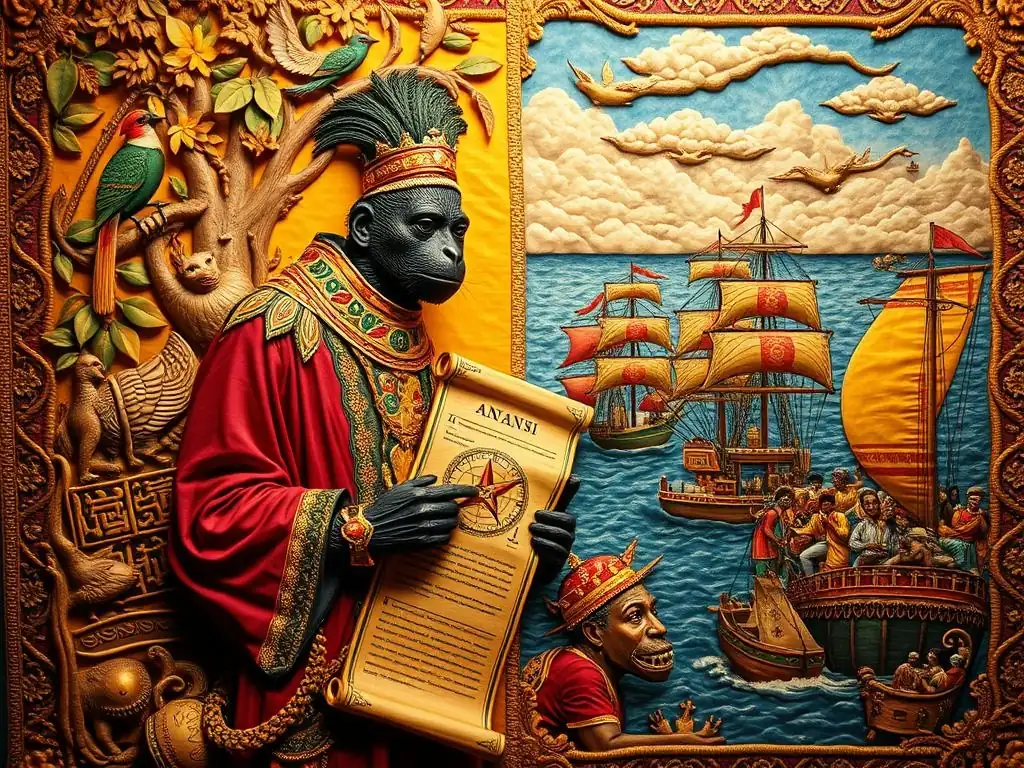
Analyzing the Migration of "Anansi and the Pot of Wisdom" to Jamaica
The Original Ashanti Version
In the Ashanti version of the story, often titled "How Anansi Got All the Stories" or similar, Anansi desires to acquire all the stories held by the sky god Nyame. Nyame agrees to give Anansi the stories if he can capture four formidable creatures: Osebo the leopard, Mmoatia the fairy, Onini the python, and Mframa the hornets. Anansi, through cleverness rather than strength, devises elaborate traps and tricks to capture each creature.
For example, he tricks the python into letting himself be measured on a pole, tying him up in the process. After successfully completing these impossible tasks, Anansi brings the creatures to Nyame, who is so impressed by his ingenuity that he grants Anansi possession of all stories.
This original tale emphasizes the value of cunning over might and explains why spiders are often found in the corners of roofs (where Anansi supposedly stored the stories). The moral often relates to the power of intellect.
The Jamaican Adaptation and its Significance
The Jamaican adaptation of this story, while retaining the core premise of Anansi acquiring something valuable through trickery, often focuses on the "Pot of Wisdom" rather than "all stories." In many Jamaican versions, Anansi is tasked with gathering 'wisdom' or 'sense'. He collects this wisdom in a pot, but in his attempt to hide it high in a tree (sometimes to prevent his son, Kweku Anansi Jr., from accessing it), he struggles clumsily.
His son, observing his father's difficulty, points out that it would be easier to tie the pot to his back. Anansi, in a fit of frustration or realization, breaks the pot, scattering wisdom all over the world, which is why everyone now possesses some wisdom, but no one has it all.
This Jamaican adaptation shifts the focus from the acquisition of stories (representing cultural capital) to the distribution of wisdom (representing shared knowledge). The inclusion of Anansi's son introduces a generational dynamic and a lesson about the limits of hoarding knowledge and the potential for younger generations to possess insight. The ending, explaining why wisdom is fragmented, provides a different kind of cosmological explanation than the Ashanti version.
This adaptation reflects the changing social context – perhaps subtly commenting on the distribution of knowledge and power in a society shaped by slavery and its aftermath. The story retains the core trickster motif but applies it to a different lesson, demonstrating the fluidity of African folklore migration patterns and their capacity for reinvention.
Exploring the Influence of Anansi Folklore on African American Vernacular English
The Use of Anansi-like Cleverness in Storytelling
While Anansi himself is not as central a figure in African American folklore as he is in the Caribbean, the spirit of Anansi – the clever trickster who uses wit to overcome powerful adversaries – is undeniably present and has influenced storytelling styles and even linguistic patterns, including African American Vernacular English (AAVE). The emphasis on verbal dexterity, wordplay, and the use of indirection or coded language found in AAVE storytelling can be linked to the trickster tradition embodied by Anansi.
Narratives featuring other trickster figures, such as Br'er Rabbit (who shares many characteristics with Anansi, likely through a process of syncretism with other African trickster figures), exhibit similar narrative strategies: the smaller, seemingly weaker character outsmarting larger, stronger ones like Br'er Fox or Br'er Bear. This reflects a continuity of the clever narrative approach central to African folklore migration patterns.
The style of telling a story in AAVE often involves vivid description, dramatic pacing, and the use of specific linguistic features to emphasize points or create humor, all echoing the performative aspects of traditional West African storytelling. The ability to 'talk your way out of trouble' or 'play the fool' while secretly manipulating a situation are themes deeply embedded in both Anansi tales and African American narratives of resistance and survival.
This linguistic and narrative cleverness can be seen as a direct descendant of the Anansi tradition, a testament to the enduring influence of African folklore migration patterns on diaspora culture.
Thematic Connections to Freedom and Resistance
The themes prevalent in Anansi stories – particularly the triumph of the weak over the strong through cunning – held immense symbolic power for enslaved and later, oppressed African Americans. Anansi's ability to navigate a dangerous world using his wits resonated deeply with the need for enslaved people to be clever, deceptive, and resourceful to survive and resist the brutal system of slavery. Stories about tricking the master, escaping bondage, or subtly subverting authority share a thematic core with Anansi's exploits.
These narratives provided a psychological release, a sense of agency, and practical lessons in survival. The trickster archetype became a potent symbol of resistance, often serving as a coded way to express defiance and hope for freedom.
The influence of Anansi-like themes persisted beyond emancipation, appearing in folklore, music (like the blues), and even in the rhetorical styles of African American leaders. The idea of using intellect and strategic maneuvering to challenge oppressive systems remained a powerful motif.
Understanding the thematic connections between Anansi folklore and narratives of freedom and resistance in the African American context reveals the profound impact of African folklore migration patterns on shaping identity, resilience, and strategies for survival and liberation. The trickster's journey across the Atlantic was not just the migration of a story, but the transmission of a potent symbol of hope and ingenuity in the face of adversity.
The Legacy: Anansi's Enduring Influence
The Impact of Anansi Folklore on Contemporary Caribbean Art and Music
Anansi's legacy is vibrantly alive in contemporary Caribbean art, literature, and music. The character and his stories continue to inspire artists across various mediums, serving as a powerful symbol of cultural heritage, identity, and the enduring spirit of resilience. In literature, Anansi has been a recurring figure in works by prominent Caribbean authors, often reinterpreted to explore modern social and political themes.
Visual artists frequently depict Anansi in his spider or human form, using his image to comment on cunning, survival, or the complexities of Caribbean identity. This continued artistic engagement demonstrates the lasting impact of African folklore migration patterns on regional culture.
In music, particularly genres like reggae, calypso, and dancehall, references to Anansi or the trickster archetype appear in lyrics and narratives. The storytelling tradition inherent in these musical forms often echoes the structure and themes of Anansi tales. Musicians use clever wordplay and double meanings, much like Anansi himself, to address social issues, critique authority, or simply entertain.
For example, some calypso songs directly tell Anansi stories, while reggae artists might use the figure metaphorically to represent the struggle against oppressive systems. This integration into popular music ensures that Anansi's influence reaches new generations, highlighting the dynamic evolution of African folklore migration patterns.
Preserving and Promoting Anansi Oral Traditions in the Diaspora
Efforts to preserve and promote Anansi oral traditions are ongoing throughout the African diaspora, particularly in the Caribbean and among communities with strong Caribbean ties. Storytelling festivals, cultural organizations, and educational programs play a crucial role in keeping these narratives alive. In countries like Jamaica and Suriname, Anansi stories are part of the school curriculum, ensuring that children learn their cultural heritage. Performers continue to tell Anansi tales in traditional styles, often incorporating music and audience participation, maintaining the interactive nature of the oral tradition. These initiatives are vital for safeguarding the rich history of African folklore migration patterns.
Digital archives, recordings, and publications also contribute significantly to preservation efforts, making stories accessible to a wider audience and documenting variations that have emerged over time. Community-based initiatives, such as local storytelling circles and cultural events, provide spaces for intergenerational transmission and creative adaptation. These concerted efforts reflect a recognition of the cultural value of Anansi stories not just as entertainment, but as historical documents, moral guides, and symbols of identity. Preserving these traditions ensures that the lessons and legacy of African folklore migration patterns continue to inform and inspire.
The Importance of Understanding Anansi's Cultural Adaptation for Identity
Understanding the journey and adaptation of Anansi folklore is crucial for comprehending the formation of identities in the African diaspora. Anansi is more than just a character; he is a symbol of survival, adaptability, and resistance. His transformation across the Atlantic mirrors the experiences of the people who carried his stories.
By studying how Anansi tales changed in response to new environments and challenges, we gain insight into the creative strategies employed by enslaved and free Black communities to maintain cultural continuity and forge new identities. This process highlights the dynamic nature of culture and the power of oral tradition as a tool for navigating historical trauma and building community.
For individuals in the diaspora, knowledge of Anansi and his stories provides a tangible link to their African ancestry and a narrative framework for understanding their history. It offers a sense of belonging and continuity, affirming that culture can survive and flourish even in the face of immense disruption. Recognizing the adaptations in the stories also validates the unique experiences and cultural innovations of diaspora communities.
It underscores that identity is not static but a constantly evolving process, shaped by both ancestral heritage and new realities. Thus, studying African folklore migration patterns, exemplified by Anansi, is essential for a holistic understanding of diaspora identity and cultural resilience.
Conclusion: Celebrating the Transatlantic Journey of Anansi and its Ongoing Relevance
The journey of Anansi the Spider from the Ashanti heartland of West Africa across the brutal Middle Passage to the vibrant cultures of the Americas is a powerful testament to the resilience and adaptability of oral traditions. Anansi, the cunning trickster and accidental wisdom-bringer, became a potent symbol of survival and resistance for enslaved Africans and their descendants. His stories, carried in memory and reshaped by new environments, languages, and social structures, demonstrate complex African folklore migration patterns.
From his roots in West African oral performance, through the trauma of forced migration, to his rebirth and transformation in the Caribbean and the Americas, Anansi's narrative illuminates the dynamic process of cultural preservation and adaptation. His influence persists in contemporary art, music, and language, a living legacy that continues to inform identity and inspire creativity.
Celebrating Anansi's transatlantic journey is not just about acknowledging the past; it is about recognizing the enduring power of storytelling to connect generations, transmit wisdom, and embody the indomitable spirit of a people who, against all odds, ensured their stories survived. The study of Anansi provides invaluable insights into the broader history and impact of African folklore migration patterns across the globe.
Frequently Asked Questions
How did African folklore travel to the Americas?
African folklore primarily traveled to the Americas through the transatlantic slave trade, with enslaved Africans carrying their oral traditions, beliefs, and stories with them. These narratives were then adapted and integrated into new cultural contexts.
What types of stories were most likely to survive the migration?
Stories with strong moral lessons, animal tricksters, and narratives of resistance or hope were more likely to survive the migration. These resonated with the experiences of enslaved people and offered a way to maintain cultural identity.
How did the experience of slavery affect the stories?
The experience of slavery profoundly affected the stories, often imbuing them with themes of suffering, oppression, and the desire for freedom. New characters and situations were added to reflect the realities of their new lives.
What impact did African folklore have on American culture?
African folklore had a significant impact on American culture, influencing music, dance, and literature. The Br'er Rabbit stories, for example, are a direct adaptation of African trickster tales.
Are there specific regions in the Americas where African folklore is more prevalent?
African folklore is particularly prevalent in regions with a high concentration of descendants of enslaved Africans, such as the Caribbean, the Southern United States, and parts of South America. These areas have retained and adapted African cultural traditions.
Final Reflection: Echoes Across the Ocean
The enduring power of African folklore is not merely a historical curiosity; it is a vibrant, living testament to the resilience and adaptability of the human spirit. The transatlantic slave trade forcibly uprooted millions, but it could not extinguish the flames of storytelling that burned within their hearts. These narratives, subtly altered yet fundamentally unchanged, continue to shape cultural identities across the Americas, proving the profound impact of migration on the preservation and evolution of oral traditions.
The journey of these stories, from the diverse landscapes of Africa to the plantations and cities of the Americas, is a testament to the human need for connection, meaning, and continuity. The subtle shifts in characters, settings, and morals reflect the complex interplay between cultural retention and adaptation in the face of unimaginable hardship. The stories we tell are not just entertainment; they are the very fabric of our being, passed down through generations, shaping our understanding of the world and our place within it.
This quote encapsulates the profound significance of these migrating narratives, highlighting their role in maintaining cultural identity and forging new ones in the face of adversity.
Consider the echoes of these ancient tales in your own life. Perhaps you've encountered a character, a motif, or a moral lesson that resonates with a deeper, ancestral understanding. Take a moment to reflect on the power of storytelling and its ability to transcend geographical boundaries and historical trauma.
Let the journey of these African narratives inspire you to explore your own heritage, to listen to the stories whispered through generations, and to appreciate the enduring strength of the human spirit in the face of adversity. By understanding the migration of these tales, we gain a deeper appreciation for the interconnectedness of our global community and the enduring legacy of African culture.
Uncover Your Ancestral Echoes: Continue the Journey!
Thanks for taking the time to explore the fascinating journey of storytelling from Africa to the Americas! You've now gained a deeper appreciation for the rich tapestry of myth and legend that connects our world. Ready to delve even further?
- Craft your own ancestral legend: Think about your family history, and create a short story incorporating elements that resonate with you from the traditions discussed. Let your imagination run wild!
- Share this story with others: Discuss this article and its insights with friends and family. Spark a conversation about the power of storytelling and its cultural impact.
- Explore related resources: Dive into our website's extensive library (MythologyAndLegends.org) on African and American mythology to learn more about specific traditions and uncover even more captivating tales.
What unique ancestral story will you share, and how will it connect with others?