
Scylla and Charybdis: The Impossible Choice That Defined Epic Survival?

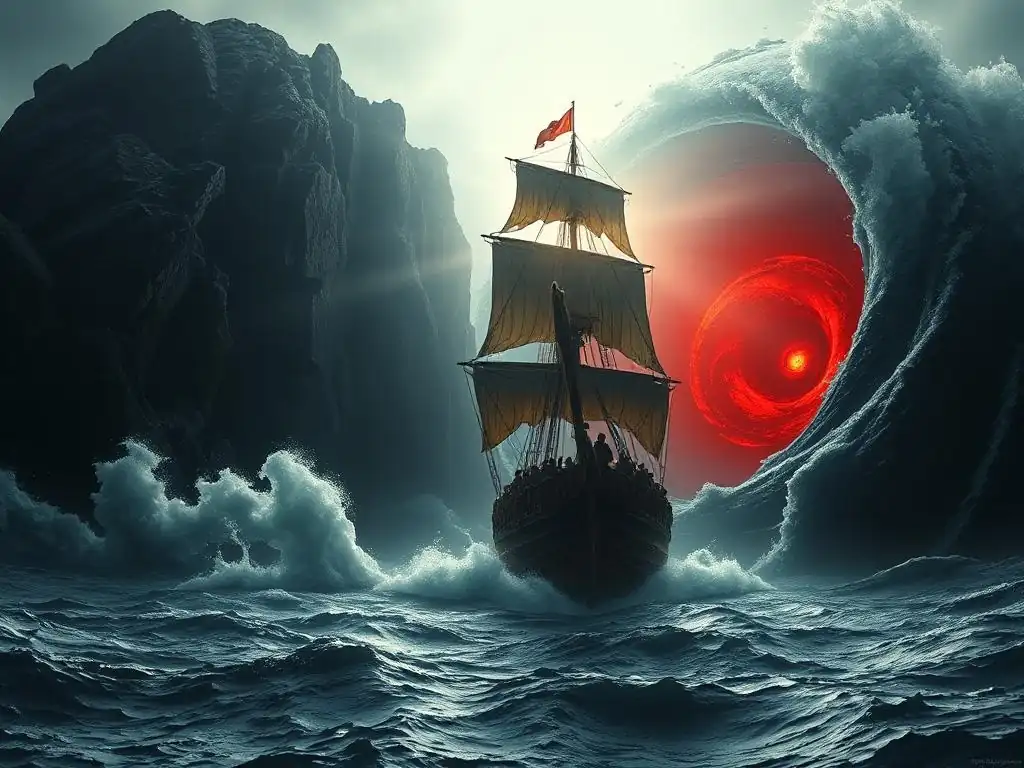
Welcome to Mythology and Legends, where ancient stories come alive.
Prepare to navigate treacherous waters as we delve into the legendary tale of Scylla and Charybdis. What drove heroes to face such impossible choices, and what can their struggles teach us about our own? Discover the profound impact of these mythical navigation challenges and prepare to question everything you thought you knew about epic survival. The journey begins here...
- The Straits of Messina: Navigating Real and Imagined Perils
- Introduction: The Enduring Allure of a Dangerous Passage
- The Realities of the Straits of Messina: Unveiling the Physical Challenges
- The Mythological Counterparts: Scylla and Charybdis
- Comparing Real and Mythological Dangers
- Historical Accounts of Navigating the Straits of Messina
- The Straits of Messina in Literature and Art: Beyond Homer
- Modern Navigation of the Straits of Messina
- Lessons Learned from the Straits of Messina
- Comparing the Straits of Messina to Other Challenging Waterways
- Conclusion: The Straits of Messina - A Timeless Tale of Real and Imagined Perils
-
Frequently Asked Questions
- What are Scylla and Charybdis in Greek mythology?
- Why was navigating between Scylla and Charybdis considered an "impossible choice"?
- Which famous hero faced the challenge of navigating Scylla and Charybdis?
- What does the idiom "between Scylla and Charybdis" mean in modern usage?
- How does the myth of Scylla and Charybdis impact contemporary society?
- Final Reflection: Navigating the Modern Scylla and Charybdis
- Unlock Your Inner Odysseus: Navigate the Myths of Choice
Introduction: The Enduring Allure of a Dangerous Passage
The Historical and Mythological Significance of the Straits of Messina
The Straits of Messina, a narrow stretch of water separating Sicily from the Italian mainland, holds a unique place in both history and mythology. For millennia, this passage has been a critical, yet formidable, waterway connecting the Tyrrhenian and Ionian Seas, part of the larger Mediterranean network. Its strategic location made it vital for trade, migration, and military movements, drawing the attention of numerous ancient civilizations, including the Greeks, Romans, and later powers.
Beyond its historical importance as a maritime highway, the Straits are famously intertwined with one of the most enduring tales of ancient Greek mythology: the story of Scylla and Charybdis. These two monsters, perched on opposite sides of the narrow channel, represented an impossible choice for sailors – face the six-headed beast on the rocks (Scylla) or risk being swallowed by the monstrous whirlpool (Charybdis). This myth profoundly shaped ancient perceptions of the Straits, embedding the idea of severe Scylla and Charybdis navigation challenges into the collective consciousness of mariners.
Setting the Stage: Understanding the Geopolitical Context
Throughout antiquity and into the medieval period, control of the Straits of Messina was paramount for regional dominance. Cities like Messina on the Sicilian side and Reggio Calabria on the mainland flourished due to their position overlooking this crucial choke point. Naval powers understood that controlling the Straits meant controlling access between significant parts of the Mediterranean, influencing trade routes and military logistics.
The inherent dangers of the Straits, amplified by the myth of Scylla and Charybdis, also played a role in geopolitical strategies. Navies had to account for the treacherous conditions, which could scatter fleets or force difficult tactical decisions. The perceived Scylla and Charybdis navigation challenges meant that passage was rarely easy or guaranteed, adding another layer of complexity to military campaigns and commercial voyages through this vital maritime corridor.
The Realities of the Straits of Messina: Unveiling the Physical Challenges
Strong Currents and Tidal Phenomena
Geological Formation and Resulting Hydrodynamics
The Straits of Messina owe their powerful currents primarily to their unique geological formation and the tidal dynamics of the Mediterranean Sea. The Straits act as a narrow funnel between the deeper Ionian Sea to the south and the shallower Tyrrhenian Sea to the north. Tidal flows push water between these two basins, but the constricted nature of the channel dramatically accelerates the movement of water. This creates a complex system of currents, known locally as the "Cariddi" currents, which can change direction and speed significantly throughout the day.
These currents are not uniform; they vary greatly depending on the phase of the moon, the time of day, and even prevailing winds. Speeds can reach up to 5 or 6 knots in the narrowest sections during peak flow, a considerable challenge for any vessel, particularly those relying on sail or low-powered engines. The interaction between the tidal flow and the seabed topography, which features significant variations in depth, further complicates the hydrodynamics, leading to turbulent water conditions.
Navigational Hazards Due to Current Strength
The sheer strength and variability of the currents in the Straits of Messina pose significant navigational hazards. Vessels attempting passage must carefully time their transit to coincide with slack tide or favorable current directions, often requiring detailed knowledge of local current tables. Sailing against a strong current can drastically reduce a ship's speed, consume excessive fuel, or even render steering difficult, potentially pushing the vessel off course towards submerged rocks or other dangers.
Furthermore, the rapid changes in current direction can surprise mariners, requiring swift adjustments to heading and speed. For smaller vessels or those with limited maneuverability, navigating these powerful flows can be particularly risky. The historical Scylla and Charybdis navigation challenges were undoubtedly rooted in these very real and formidable current conditions that have tested sailors for millennia.
Whirlpools and Rough Seas
Formation of Whirlpools in the Straits
The powerful currents and complex seabed topography of the Straits of Messina are also conducive to the formation of turbulent water and whirlpools. As the fast-moving currents flow over irregular underwater features or around obstacles, they can create eddies and vortexes. While not typically on the scale of legendary maelstroms, these whirlpools can be significant, especially during periods of strong tidal flow.
These swirling masses of water can affect a vessel's steering, pulling at the hull and potentially causing it to yaw off course. For ancient mariners in smaller, less stable vessels, encountering such turbulent patches would have been a disorienting and potentially dangerous experience, easily fueling tales of monstrous, ship-swallowing vortexes.
Impact on Maritime Traffic
The combination of strong currents, rough seas, and localized whirlpools significantly impacts maritime traffic in the Straits. While modern vessels are more capable of handling these conditions than their ancient counterparts, careful planning and execution are still required. The turbulent water increases the risk of collision, especially in a busy shipping lane, and can make maneuvering difficult, particularly when entering or leaving the ports of Messina or Reggio Calabria.
Navigation through the Straits often requires the assistance of experienced local pilots who possess intimate knowledge of the currents and local hazards. The perceived dangers, stemming from both the real physical phenomena and the historical tales of Scylla and Charybdis navigation challenges, necessitate strict adherence to traffic separation schemes and careful monitoring of weather and tidal conditions to ensure safe passage.
The Mythological Counterparts: Scylla and Charybdis
Scylla: The Rock and the Legend
Possible Inspirations for the Scylla Myth
The terrifying figure of Scylla in Greek mythology, a monster with twelve feet, six long necks, and six heads, each with a triple row of sharp teeth, residing in a cave on one side of a narrow strait, likely drew inspiration from the very real dangers of the coastline. The "rock" associated with Scylla is traditionally identified with the prominent cliff face on the Calabrian side of the Straits, near the modern town of Scilla. This rocky shore presents a tangible threat to ships, especially when strong currents or winds push vessels towards it.
Ancient mariners, navigating close to shore to avoid the central currents or other perceived dangers, would risk grounding or crashing against the rocks. The unforgiving nature of the coastline, combined with the destructive power of a shipwreck against stone, could easily be personified as a ravenous monster waiting to snatch sailors from their decks, embodying one half of the challenging Scylla and Charybdis navigation equation.
Location and Characteristics Attributed to Scylla
Homer, in the Odyssey, places Scylla's lair in a high, smooth cliff that "no man could climb." This description fits the imposing nature of the rock face on the northeastern side of the Straits. The myth states that Scylla would reach out with her heads and snatch sailors from passing ships. This imagery could reflect the sudden, unavoidable nature of being dashed against the rocks or caught by waves near the shore, a swift and deadly end for those attempting to navigate too close.
The monster's depiction as rooted to her cave emphasizes the fixed, immovable danger of the landmass itself. Unlike the dynamic, ever-changing threat of the whirlpool, Scylla represented a constant, static hazard that ships had to actively steer away from. Facing Scylla meant risking the loss of individuals, plucked from the ship, rather than the destruction of the entire vessel, offering a grim alternative to the complete annihilation threatened by Charybdis.
Charybdis: The Whirlpool's Personification
Possible Inspirations for the Charybdis Myth
Charybdis, the monstrous whirlpool on the opposite side of the strait from Scylla, was said to be a daughter of Poseidon and Gaia, cursed by Zeus to swallow vast amounts of water three times a day and then spew it out. This mythical depiction is widely believed to be inspired by the very real, powerful whirlpools and turbulent waters that occur in the central part of the Straits of Messina, particularly off the coast of Sicily near Capo Peloro.
The strong tidal currents, especially during periods of peak flow and transition, can indeed create significant vortexes and areas of extreme turbulence. While perhaps not capable of swallowing large ships whole in the dramatic fashion described in the myth, these natural phenomena could certainly disorient, disable, or even capsize smaller ancient vessels, pulling them towards collision with other hazards or overwhelming them with violent, swirling water, completing the pair of Scylla and Charybdis navigation challenges.
Location and Characteristics Attributed to Charybdis
Homer locates Charybdis directly opposite Scylla, under a fig tree. The myth describes her as actively sucking down and spitting out the sea, creating a terrifying maelstrom that threatened to engulf entire ships and their crews. This cyclical action described in the myth mirrors the ebb and flow of the powerful tidal currents in the Straits, which reverse direction approximately every six hours, leading to periods of intense flow and turbulence.
The personification of the whirlpool as Charybdis highlights the unpredictable and overwhelming nature of the sea's power. Unlike the stationary threat of Scylla, Charybdis represented a dynamic, destructive force that could appear and disappear, a force of nature personified as a hungry monster. Navigating Charybdis meant risking total destruction, the ship and all aboard vanishing into the abyss, a terrifying prospect that made the alternative – facing Scylla – seem, perhaps, marginally less catastrophic.
Comparing Real and Mythological Dangers
Overlaying the Myths on the Map: Identifying Potential Locations
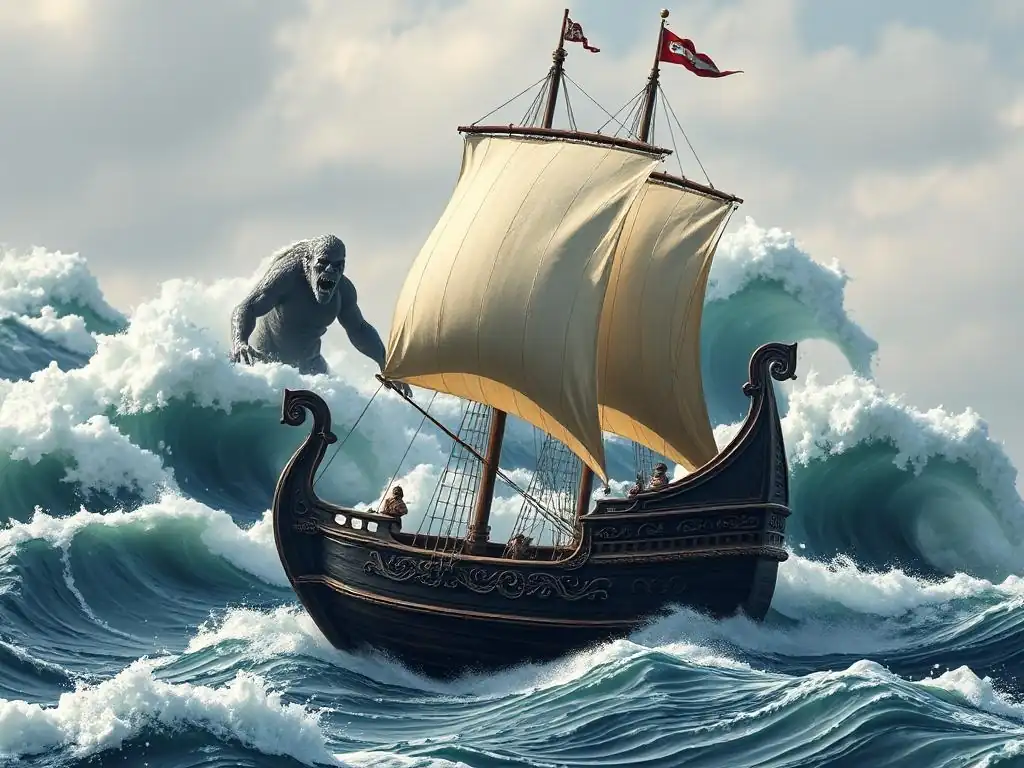
Efforts to pinpoint the exact locations of the mythical Scylla and Charybdis based on the realities of the Straits of Messina generally place Scylla on the Calabrian side, near the town of Scilla (from which the name is likely derived), where a prominent rock formation exists. Charybdis is typically located on the Sicilian side, off Capo Peloro, where the currents are known to be particularly strong and turbulent, often forming noticeable whirlpools.
The narrowest point of the Straits, where these two supposed locations lie in close proximity, is indeed the area where the real navigation challenges are most acute. The distance between the Calabrian coast and the Sicilian coast is only about 3.1 kilometers (roughly 1.9 miles) at the narrowest point. This geographical reality provides a plausible basis for the mythological scenario of having two distinct, unavoidable dangers on opposite sides of a passage, forcing mariners to choose between them and highlighting the inherent Scylla and Charybdis navigation challenges.
Distortions and Exaggerations in the Mythological Accounts
While the myth of Scylla and Charybdis is clearly rooted in the real-world dangers of the Straits of Messina, the mythological accounts feature significant distortions and exaggerations. The scale and power of the monsters are, naturally, far beyond the actual physical phenomena. Scylla, as a multi-headed monster snatching sailors, is a fantastical representation of the danger of being lost near the rocky coast. Charybdis, capable of swallowing and regurgitating the sea, is a dramatic overstatement of the power of the Straits' whirlpools and currents.
These exaggerations served a purpose within the narrative context of epic poetry, heightening the drama and emphasizing the heroic challenge faced by figures like Odysseus. They transformed dangerous but navigable conditions into seemingly insurmountable, monstrous threats, underscoring the peril of ancient maritime travel and the formidable Scylla and Charybdis navigation challenges faced by early sailors with limited technology.
Beyond the physical dangers, the psychological impact of navigating a passage known for its treacherous conditions and infamous myths cannot be underestimated. For ancient mariners, stories of Scylla and Charybdis would have instilled a deep sense of fear and apprehension before even entering the Straits. The knowledge that this passage was legendary for its perils would have added immense mental pressure to the already demanding task of sailing through strong currents and turbulent waters.
The "impossible choice" presented by the myth – face one monster or the other – likely reflected the real dilemma of navigating the narrow channel: stay close to shore and risk the rocks (Scylla), or venture into the turbulent center and risk being overwhelmed by currents and whirlpools (Charybdis). This psychological burden, fueled by myth and the reality of past shipwrecks, was a significant component of the overall Scylla and Charybdis navigation challenges.
Ancient mariners attempting to navigate the Straits of Messina faced immense challenges with limited technology. They relied heavily on favorable winds, knowledge of local currents and tides passed down through generations, and celestial navigation when conditions allowed. Sailing vessels were particularly vulnerable to the strong, variable currents, which could easily push them off course or render them immobile, drifting towards danger.
Without precise charts, reliable depth sounders, or powerful engines, navigating the Straits required exceptional seamanship, local knowledge, and often, sheer luck. The risks were high, and successful passage was a testament to the skill and bravery of the crew. The account of Odysseus's passage in Homer's Odyssey, where he loses six men to Scylla while successfully avoiding Charybdis, highlights the grim reality that even successful navigation often came at a cost when facing the Scylla and Charybdis navigation challenges.
Notable Shipwrecks and Maritime Incidents
Throughout history, the Straits of Messina have been the site of numerous shipwrecks and maritime incidents, a testament to their enduring dangers. While specific data on ancient shipwrecks is sparse, archaeological finds in the region confirm significant maritime activity and losses. In more recent history, the Straits have continued to pose challenges. For instance, during World War II, numerous vessels were sunk in the Straits due to both military action and the difficult navigational conditions.
Even in the modern era, with advanced technology, incidents still occur, often related to collisions in congested waters or vessels underestimating the strength of the currents. These real-world incidents underscore that the fundamental Scylla and Charybdis navigation challenges, rooted in the Straits' physical properties, remain relevant, even if the 'monsters' are now understood as natural phenomena rather than mythical beasts.
Over centuries, navigational aids and safety measures in the Straits of Messina have evolved dramatically to mitigate the inherent risks. From ancient coastal landmarks and simple bonfires to modern lighthouses, buoys, and electronic navigation systems, technology has played a crucial role in improving safety. Lighthouses like the Faro di Messina have long guided ships through the night.
Today, the Straits are equipped with a sophisticated Vessel Traffic Service (VTS) that monitors shipping movements, provides information on currents and weather, and helps prevent collisions in this busy waterway. Pilotage is mandatory for many vessels, ensuring that ships are guided by experts with intimate knowledge of the local conditions. These advancements have significantly reduced the risks, transforming the formidable Scylla and Charybdis navigation challenges of old into manageable tasks for modern shipping, though vigilance is still required.
The Straits of Messina in Literature and Art: Beyond Homer
Depictions in Art and Literature Through the Ages
The dramatic setting and mythological associations of the Straits of Messina have inspired artists and writers for centuries beyond Homer's epic. Roman poets like Virgil referenced Scylla and Charybdis, cementing their place in classical literature. Later, Renaissance and Baroque artists depicted scenes from the Odyssey featuring the monsters, often emphasizing the terror and chaos of the passage.
In literature, the Straits and their mythical guardians have served as powerful metaphors for difficult choices, unavoidable dangers, and the perils of journeys. Milton, in Paradise Lost, references Scylla and Charybdis to describe a perilous state. The imagery of being caught between two equally undesirable options, the "Scylla and Charybdis navigation challenges," has become a widely understood idiom in Western culture, a testament to the myth's lasting impact.
Modern Interpretations of the Straits as a Metaphor
In contemporary literature, art, and political discourse, the Straits of Messina and the Scylla and Charybdis myth continue to function as potent metaphors. They symbolize situations where one is forced to choose between two equally dangerous or unpleasant alternatives, often referred to as being "between Scylla and Charybdis." This idiom is used in business, politics, and personal life to describe difficult decisions with no easy way out.
The enduring power of this metaphor highlights how deeply the ancient perception of the Straits as a place of unavoidable peril has permeated Western thought. The story of navigating the Scylla and Charybdis navigation challenges remains a compelling narrative about human vulnerability in the face of overwhelming forces, both natural and perceived, and the difficult choices required for survival.
Current Maritime Traffic and Regulations
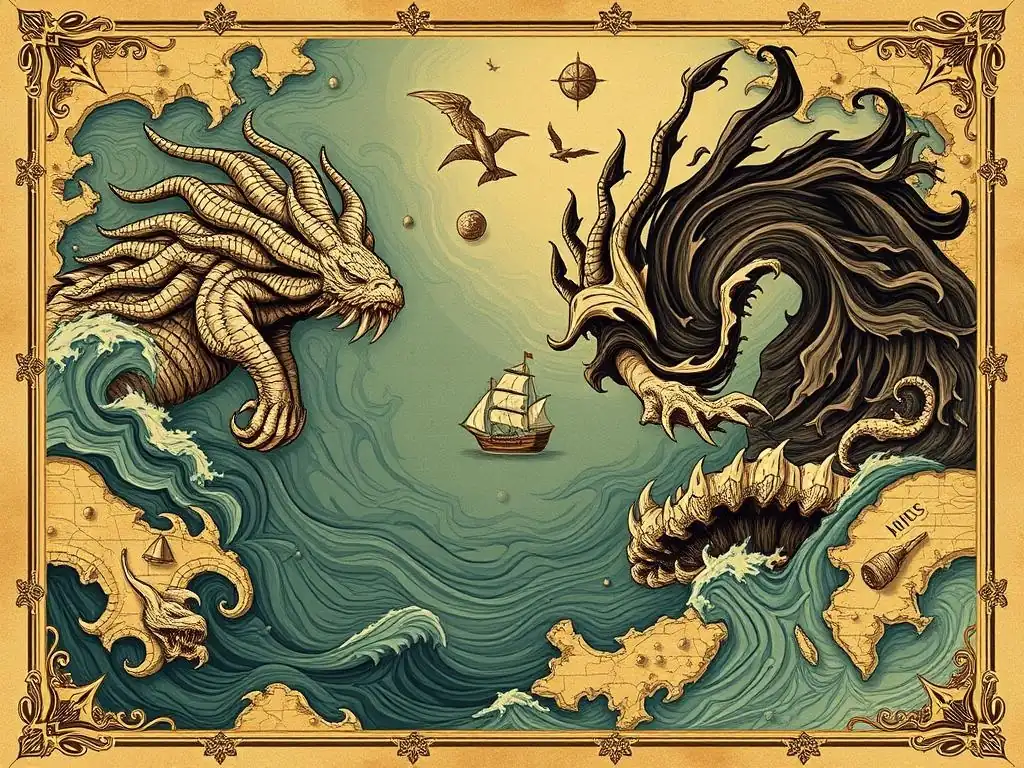
The Straits of Messina remain a vital and busy waterway today. Thousands of vessels, ranging from large container ships and ferries to fishing boats and pleasure craft, transit the Straits annually. This high volume of traffic, combined with the strong currents and narrow channel, necessitates strict regulations to ensure safety.
A mandatory traffic separation scheme (TSS) is in place to manage the flow of vessels and reduce the risk of collision. Specific lanes are designated for northbound and southbound traffic. Speed limits and reporting requirements are also enforced. Navigating the Straits successfully in the modern era requires not only an understanding of the physical environment but also strict adherence to these complex rules and procedures designed to mitigate the inherent Scylla and Charybdis navigation challenges.
Pilotage and Vessel Traffic Services
To further enhance safety, pilotage is compulsory for many types and sizes of vessels transiting the Straits of Messina. Local pilots, with their in-depth knowledge of the currents, local conditions, and traffic patterns, board vessels to guide them through the passage. This service is crucial, especially for large ships with limited maneuverability.
The Straits are also monitored by a sophisticated Vessel Traffic Service (VTS) center. The VTS uses radar, AIS (Automatic Identification System), and communication systems to track all vessels in the area, provide navigational assistance, and manage traffic flow. They issue warnings about current conditions, weather, and potential hazards, offering a layer of oversight that was unimaginable to ancient mariners facing the mythical Scylla and Charybdis navigation challenges.
Environmental Considerations and Conservation Efforts
Beyond navigation, the Straits of Messina are also recognized for their significant ecological importance. The unique hydrodynamics create a rich marine environment, attracting diverse species, including dolphins, whales, and various migratory fish. This has led to increased focus on environmental considerations and conservation efforts.
Regulations are in place to prevent pollution from shipping, and there are ongoing efforts to study and protect the marine life in the Straits. Balancing the needs of busy maritime traffic with the imperative to preserve this sensitive ecosystem is an ongoing challenge, adding another dimension to the modern management of the Straits beyond just the historical Scylla and Charybdis navigation challenges.
Lessons Learned from the Straits of Messina
Respecting the Power of Nature
One of the most enduring lessons from the history and mythology of the Straits of Messina is the fundamental importance of respecting the power of nature. From the ancient myths of monstrous forces to the modern reality of powerful currents and turbulent seas, the Straits serve as a constant reminder that natural forces can pose significant challenges to human endeavors.
Navigators, past and present, who have underestimated the currents or ignored weather warnings have often paid a high price. The tales of Scylla and Charybdis, while fantastical, encapsulate this core lesson: the sea is powerful, and attempting to conquer or ignore its forces is foolhardy. Successful navigation, whether in antiquity or today, requires humility and a deep respect for the environment.
The successful transit of the Straits of Messina throughout history has always relied heavily on navigational expertise. Ancient mariners needed generations of accumulated knowledge about the tides and currents. Modern sailors require rigorous training, sophisticated equipment, and often the guidance of local pilots.
The Scylla and Charybdis navigation challenges were, at their heart, challenges of seamanship. The ability to read the water, understand the forces at play, and make split-second decisions was, and remains, paramount. The Straits underscore that while technology can aid navigation, human skill, experience, and judgment are irreplaceable components of safe maritime travel.
The Enduring Appeal of Myth and Legend
Finally, the story of the Straits of Messina highlights the enduring appeal and cultural significance of myth and legend. The tale of Scylla and Charybdis transformed a dangerous but real geographical feature into a powerful narrative that has resonated for thousands of years. It speaks to universal human experiences: facing impossible choices, confronting terrifying unknowns, and battling forces beyond our control.
The myth provides a framework for understanding and communicating the real Scylla and Charybdis navigation challenges faced by ancient sailors. It reminds us how societies use stories to explain the world around them, to pass down knowledge (even if in allegorical form), and to grapple with the inherent risks and uncertainties of life and exploration.
Comparing the Straits of Messina to Other Challenging Waterways
Similar Straits and Their Challenges [Example: Strait of Magellan]
The Straits of Messina are not unique in presenting significant navigation challenges. Many other narrow passages around the world are known for powerful currents, turbulent waters, and unpredictable weather. For instance, the Strait of Magellan, located at the southern tip of South America, is notorious for its strong winds, unpredictable currents, narrow channels, and frequent fog.
Like the Straits of Messina, the Strait of Magellan historically represented a major hurdle for maritime trade and exploration, often forcing ships to navigate treacherous conditions or undertake much longer voyages. Both straits demonstrate how geography can create natural choke points that test the limits of maritime technology and human skill, presenting their own versions of 'impossible' navigation challenges.
What Makes the Straits of Messina Unique?
While sharing characteristics with other challenging straits, the Straits of Messina possess a unique blend of features that contribute to their legendary status. Firstly, their relatively narrow width combined with significant tidal flows creates exceptionally strong and turbulent currents in a contained area. Secondly, their location within the historically crucial Mediterranean Sea placed them at the crossroads of major ancient civilizations, ensuring their dangers were frequently encountered and widely reported.
Perhaps most significantly, the deep integration of the Straits' physical dangers with a powerful and enduring myth—the tale of Scylla and Charybdis—sets them apart. This mythological association transformed the real Scylla and Charybdis navigation challenges into archetypal symbols of impossible choices and unavoidable perils, giving the Straits a cultural resonance that few other waterways possess.
Conclusion: The Straits of Messina - A Timeless Tale of Real and Imagined Perils
The Continued Significance of the Straits Today
The Straits of Messina remain a profoundly significant waterway in the 21st century. They are a critical link in the Mediterranean shipping network, vital for trade, passenger ferry services connecting Sicily and the mainland, and naval movements. Their strategic importance endures, though now managed with modern technology and international regulations rather than solely by confronting mythical monsters.
The real physical challenges—the strong currents, whirlpools, and busy traffic—require constant vigilance and expertise from modern mariners. The successful management of this complex environment is a testament to centuries of accumulated knowledge and technological advancement aimed at overcoming the inherent Scylla and Charybdis navigation challenges that have always defined this passage.
Reflecting on the Lessons Learned from the Straits' History and Mythology
The history and mythology of the Straits of Messina offer valuable lessons that extend far beyond maritime navigation. The story of Scylla and Charybdis teaches us about facing difficult choices and the nature of risk. The reality of navigating the Straits underscores the importance of respecting natural forces, the value of expertise, and the continuous human effort to understand and adapt to our environment.
The Straits stand as a powerful symbol of the interplay between the real world and the stories we tell about it. They remind us that even as technology advances, the fundamental challenges posed by nature persist, and the ancient tales used to explain those challenges continue to shape our understanding and language, forever linking this narrow stretch of water to the concept of facing impossible Scylla and Charybdis navigation challenges.
Frequently Asked Questions
What are Scylla and Charybdis in Greek mythology?
Scylla and Charybdis are two monstrous hazards located in a narrow strait. Scylla is a six-headed sea monster, while Charybdis is a deadly whirlpool. They represent a difficult and dangerous choice.
Navigating between them meant certain peril. Avoiding Charybdis meant getting too close to Scylla, risking the loss of several men. Avoiding Scylla meant getting sucked into Charybdis and losing the entire ship.
Odysseus, the hero of Homer's Odyssey, famously faced this challenge. He chose to sail closer to Scylla, sacrificing six of his men to avoid the complete destruction of his ship by Charybdis.
What does the idiom "between Scylla and Charybdis" mean in modern usage?
The idiom means being caught between two dangers or difficult choices, where avoiding one leads to the other. It represents a dilemma with no easy solution.
How does the myth of Scylla and Charybdis impact contemporary society?
The myth serves as a powerful metaphor for difficult choices and unavoidable risks. It highlights the human struggle to navigate complex and dangerous situations in life, both literally and figuratively.
The impossible choices presented by Scylla and Charybdis resonate powerfully in our modern world, a stark reminder that progress often demands navigating treacherous straits between equally undesirable options. We face daily dilemmas mirroring Odysseus's plight, forced to weigh competing risks and make difficult decisions with incomplete information. From the ethical complexities of technological advancement to the environmental challenges of resource depletion, the need to skillfully navigate between seemingly unavoidable harms is a constant.
The enduring power of the Scylla and Charybdis myth lies not just in its dramatic narrative, but in its timeless reflection of the human condition. We are perpetually confronted with choices that force us to compromise, to accept some level of loss or damage in pursuit of a greater, albeit uncertain, good. This inherent tension shapes our societies, our economies, and our individual lives. Between Scylla and Charybdis, one must steer a middle course.
This ancient wisdom remains profoundly relevant, urging us to seek creative solutions and strategic compromises rather than succumbing to the paralysis of impossible choices.
Consider the challenges you face today. Are you caught between two undesirable options, forced to make a difficult decision with potentially significant consequences? I urge you to approach these dilemmas with the strategic foresight of Odysseus, seeking a path that minimizes harm while striving for progress. Embrace the inherent tension, learn from past mistakes, and remember that even in the face of seemingly insurmountable odds, skillful navigation can lead to unexpected triumphs. The journey itself, with all its inherent complexities, is a testament to the enduring human spirit.
Thanks for diving into the epic tale of Scylla and Charybdis! You've now gained a deeper understanding of the impossible choices faced by heroes throughout mythology. Ready to explore these timeless themes further?
- Dive deeper into the myths: Explore our extensive archive of articles on Greek mythology and discover other compelling tales of heroism, sacrifice, and fateful decisions. This will help you to further understand the context and themes of the Scylla and Charybdis myth.
- Share your insights: What impossible choice have you faced, and how did you navigate it? Start a discussion in the comments below – your perspective might just inspire others!
- Challenge your perception of "fate": Consider how the concept of choice impacts our own lives. Do we truly control our destinies, or are we, like Odysseus, navigating preordained paths?
What impossible choice defines your own personal odyssey?